
As the morning mist lifts over the fields of Rugao, a county in Jiangsu province, a quiet revolution is unfolding on its roads. On June 15, 2025, the first stop of the annual New Energy Vehicle (NEV)下乡 campaign—officially launched by five ministries including the Ministry of Industry and Information Technology (MIIT) and the National Development and Reform Commission (NDRC)—kicked off here, signaling a profound shift not just in transportation, but in rural lifestyles and economic prospects.
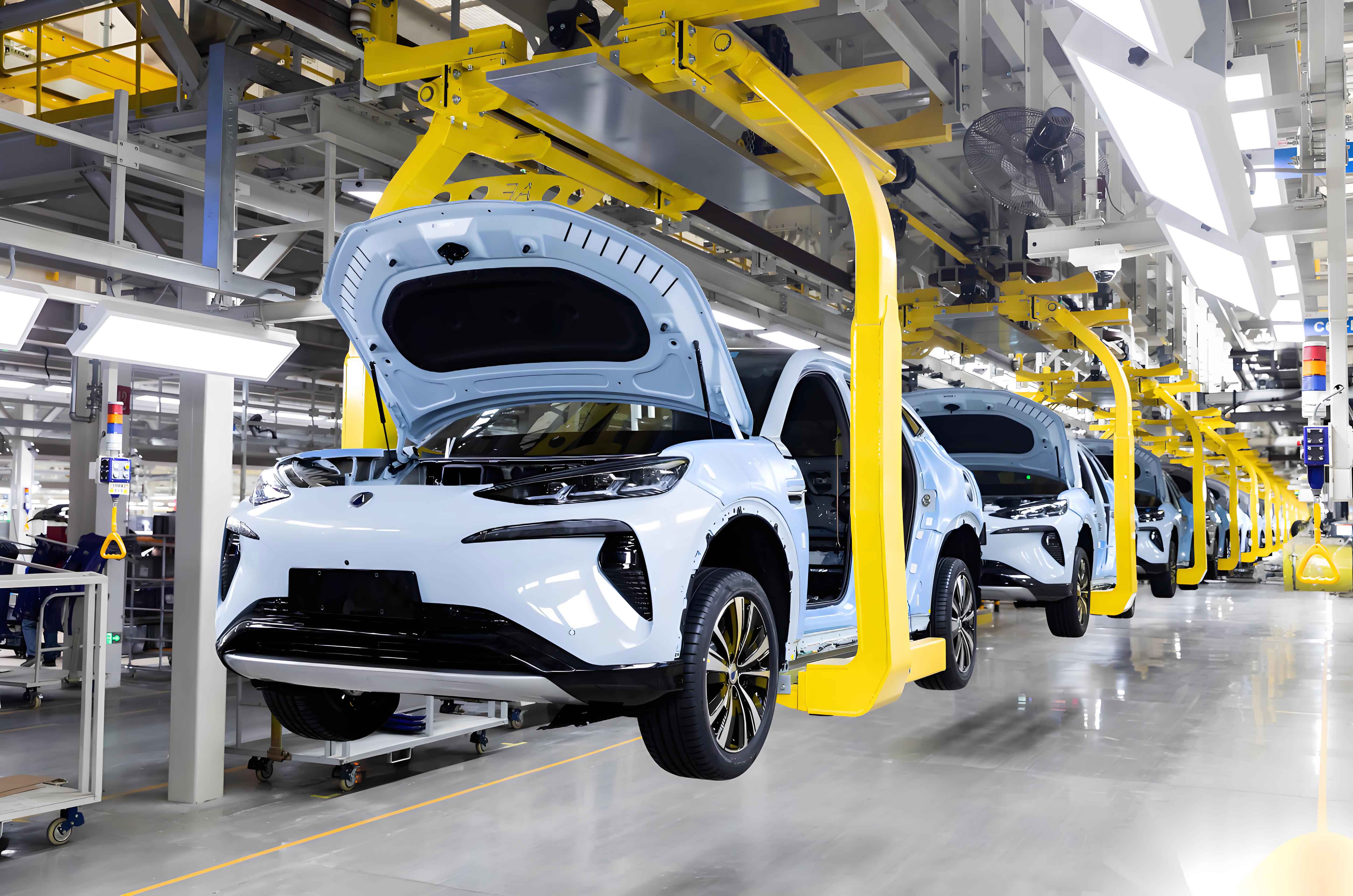
This year, 124 electric vehicle models have been selected for the program, a significant jump from 99 in 2024, marking the first time the list has exceeded 100 models. The expansion isn’t merely numerical. It reflects a strategic push to cover a full spectrum of vehicle types—from compact urban runabouts and plug-in hybrid SUVs to commercial vehicles and electric pickups—catering to both personal and business needs across rural China.
Perhaps most strikingly, the price range of recommended models now spans from ¥30,000 to ¥500,000, with Tesla’s Model Y and Model 3 making their debut on the list. This inclusion underscores a clear trend: the campaign is no longer just about affordability; it’s about offering premium choices and driving consumption upgrading in the countryside.
Data from the China Association of Automobile Manufacturers (CAAM) reveals the staggering growth of this initiative. Between 2020 and 2024, sales of electric vehicles under the program surged from 397,000 to nearly 7.6 million units. Rural markets are now outpacing urban ones in electric vehicle adoption rates, highlighting the vast, untapped potential of these regions.
With nearly 500 million people residing in rural areas—accounting for over a third of China’s population—the economic implications are enormous. In 2024, retail sales of consumer goods in rural areas reached ¥6.7 trillion, growing 4.3% year-on-year, 0.9 percentage points higher than in urban centers. These numbers are more than statistics; they are a testament to the rising purchasing power and changing consumption patterns in the countryside.
“The penetration rate of new energy vehicles in first-tier cities reached 46.5% as of January 2025, while lower-tier cities and rural areas still lag behind, with rates declining from 38.3% in third-tier cities to 27.2% in fifth-tier counties,” noted Zhu Junyu, Director of the Advanced Manufacturing Research Center at the CCID Research Institute under MIIT. “This gap represents a substantial growth opportunity for the electric vehicle industry.”
To harness this potential, the government is deploying a multi-faceted strategy. Yao Zhenzhi, Deputy Director of the Equipment Industry Development Center at MIIT, emphasized efforts to improve the entire vehicle lifecycle experience—from purchase and usage to maintenance—by integrating policies like trade-in programs and infrastructure upgrades. “We are strengthening policy coordination to channel high-quality resources toward rural areas,” he said.
These measures are expected to do more than just boost electric vehicle sales. They are poised to stimulate the entire automotive aftermarket, create new jobs, increase rural incomes, and revitalize local economies. Moreover, the widespread adoption of electric vehicles promises to transform rural mobility, enhance connectivity, and foster greater economic exchange with urban centers.
Yet, for all the optimism, challenges remain. Inadequate charging infrastructure has long been a major barrier to electric vehicle adoption in rural regions. Recognizing this, in April 2024, the Ministry of Finance, MIIT, and the Ministry of Transport jointly issued a notice launching a pilot program to address deficits in county-level charging and battery-swapping facilities.
The policy mandates that pilot counties build publicly accessible charging stations with availability rates exceeding 99% and power ratings of at least 120 kW. These facilities must be open to all users and prioritize smart fast-charging technologies. The goal is to establish demonstration zones in key villages and towns, featuring “well-planned, technologically advanced, and user-friendly” charging networks.
To accelerate deployment, the government is encouraging leading charging infrastructure operators to collaborate with power grid companies, postal services, and logistics firms to build open-access fast-charging stations in underserved areas. The aim is to cultivate a market-oriented operational model for public charging in rural China.
In March 2025, the Ministry of Finance announced a list of 75 pilot counties across 26 provinces—including Rugao—that will receive central government funding to support the construction and operation of charging infrastructure, as well as upgrades to local power grids. The initiative is expected to spur the installation of over 14,000 new charging points and 60 battery-swapping stations, equivalent to more than 35,000 standard charging piles with a total capacity exceeding 3 million kW.
A representative from the Ministry of Finance’s Economic Development Department stated that the program will not only address infrastructure gaps and improve the electric vehicle consumption environment but also better integrate consumption and investment. Each pilot county can receive up to ¥45 million in incentive funding during the demonstration period.
During the下乡 event in Rugao, more than ten charging equipment manufacturers showcased their latest solutions, signaling growing industry participation. Xu Haidong, Deputy Secretary-General of CAAM, believes that as acceptance of electric vehicles increases among consumers in lower-tier cities and rural areas, and as policies like the charging infrastructure pilot gain traction, electric vehicles will accelerate their penetration into the countryside.
The electric vehicle下乡 campaign is evolving from a sales-driven program into a holistic strategy for rural revitalization. It is fostering a new ecosystem where advanced technology, supportive policies, and rising consumer demand converge to create sustainable growth. For millions in rural China, the electric vehicle is no longer a distant luxury—it is becoming an accessible reality and a catalyst for a better, more connected life.
As the sun sets over Rugao, the quiet hum of an electric vehicle passing by is a sound of progress—a promise of what’s to come as China drives toward a greener, more inclusive future.