
The rapid advancement of electric vehicle technology has positioned it as a cornerstone of global efforts to reduce carbon emissions and achieve sustainable transportation. Electric vehicles offer numerous advantages, including lower operational costs and reduced environmental impact compared to internal combustion engine vehicles. However, challenges such as limited driving range, high maintenance expenses, low resale value, and multiple factors affecting energy consumption persist. This review provides a comprehensive analysis of the energy flow in electric vehicles, identifies key areas of energy consumption, and explores various energy-saving technologies, with a particular focus on solar-assisted charging. The discussion emphasizes the collaborative roles of designers and users in enhancing the efficiency of electric vehicles, especially in the context of China’s growing electric vehicle market.
The development of new energy industries is a critical pathway for energy conservation and emission reduction, representing a strategic move for China’s transition from a large automotive nation to a powerful one in the automotive sector. Electric vehicles have become a major trend in the automotive industry, with an increasing number of consumers opting for them. Despite their benefits, electric vehicles face issues like insufficient续航里程, which can be mitigated through innovative energy-saving approaches. This article delves into the energy dynamics of electric vehicles and proposes practical solutions to optimize their performance.
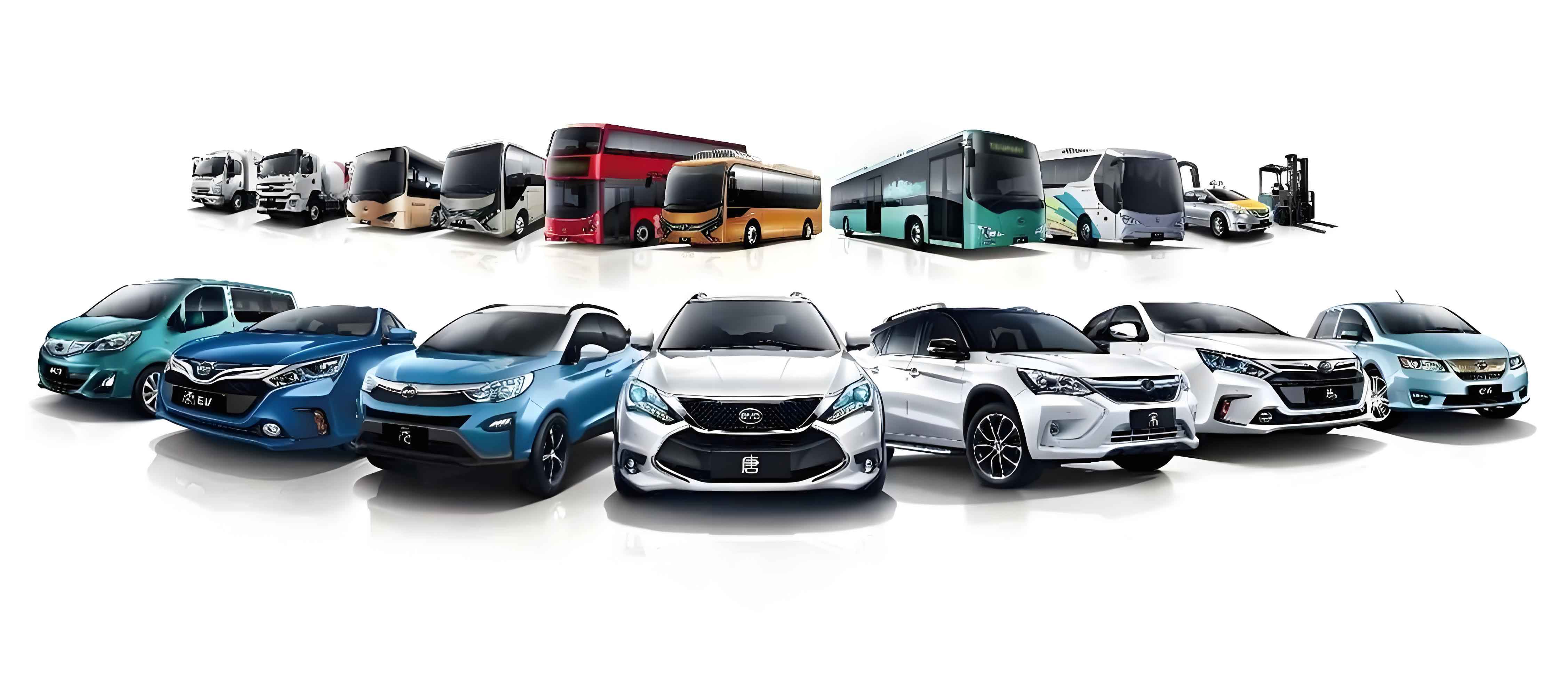
In recent years, China has witnessed a remarkable surge in the production and sales of electric vehicles. Data indicates that in 2023, China’s automotive industry achieved record highs, with production and sales reaching 30.161 million and 30.094 million units, respectively, representing year-on-year growth of 11.6% and 12%. Notably, new energy vehicles accounted for 9.587 million units in production and 9.495 million units in sales, reflecting increases of 35.8% and 37.9%, respectively, and capturing a market share of 31.6%. According to the Ministry of Public Security, by the end of 2023, the number of pure electric vehicles in China reached 15.52 million, with higher concentrations in economically developed regions and southern areas compared to the north. This growth underscores the rapid expansion of the electric vehicle sector in China, driven by substantial investments in technological research and development, leading to the introduction of intelligent and energy-efficient models. The term “China EV” frequently appears in discussions about this market, highlighting its significance in the global electric vehicle landscape.
Understanding the energy flow in electric vehicles is essential for identifying consumption patterns and implementing effective energy-saving measures. The energy in an electric vehicle originates from grid or household charging and is distributed between high-voltage and low-voltage systems. High-voltage energy consumption primarily includes the motor, air conditioning compressor, heating PTC (Positive Temperature Coefficient), and DC/DC converter. Low-voltage consumption covers lighting systems, comfort and safety features, entertainment systems, wipers, and control circuits for high-voltage accessories like the vehicle control unit, battery management system, motor controller, and electric air conditioning. The main energy consumers in an electric vehicle are the drive system, air conditioning and heating systems, and electrical accessories. A typical energy flow diagram illustrates how energy is channeled and recycled within the vehicle, such as through regenerative braking. For instance, experimental data from a specific electric vehicle under various driving conditions reveals that energy consumption is distributed across acceleration resistance, rolling resistance, air resistance, low-voltage power usage, and internal mechanical losses. The following table summarizes the energy consumption distribution in a CLTC-P (China Light-duty Vehicle Test Cycle-Passenger) cycle for a test model:
| Component | Percentage of Total Energy Consumption | Energy Value (kWh) |
|---|---|---|
| Acceleration Resistance | 54% | 1.422 |
| Rolling Resistance | 22% | 0.5924 |
| Air Resistance | 15% | 0.4015 |
| Low-Voltage Power Usage | 4% | 0.1 |
| Internal Mechanical Losses | 5% | 0.1221 |
The total driving resistance for an electric vehicle can be expressed mathematically using the following equation, which accounts for various forces acting on the vehicle during motion:
$$ \sum F = F_f + F_w + F_i + F_j $$
Where:
– \( F_f \) is the rolling resistance, given by \( F_f = mgf \cos \alpha \),
– \( F_w \) is the aerodynamic drag, calculated as \( F_w = \frac{C_D A}{21.15} u_a^2 \),
– \( F_i \) is the gradient resistance, expressed as \( F_i = mg \sin \alpha \),
– \( F_j \) is the inertia force, defined as \( F_j = \delta m \frac{du}{dt} \).
In these formulas, \( m \) represents the vehicle mass, \( g \) is the acceleration due to gravity, \( f \) is the rolling resistance coefficient, \( \alpha \) is the road gradient, \( C_D \) is the air drag coefficient, \( A \) is the frontal area, \( u_a \) is the vehicle speed, \( \frac{du}{dt} \) is the acceleration, and \( \delta \) is the mass factor. This equation highlights that energy consumption is influenced by factors such as vehicle weight, acceleration patterns, and aerodynamic properties. Reducing these resistances is crucial for improving the efficiency of electric vehicles.
Energy-saving technologies for electric vehicles can be categorized into three main paths: optimizing the drive system, enhancing the efficiency of air conditioning and heating systems, and minimizing energy use in electrical accessories. Each path involves contributions from both designers and users to achieve significant energy reductions. The drive system, being the largest consumer, offers substantial savings through innovative design and user behavior modifications. For designers, this includes developing lightweight materials, high-efficiency motors, and advanced transmission systems. For users, adopting smoother driving habits and utilizing intelligent navigation systems can reduce unnecessary energy expenditure. The table below outlines key strategies for energy savings in these areas:
| Area | Designer Contributions | User Contributions |
|---|---|---|
| Drive System | Implement lightweight materials (e.g., aluminum alloys), high-voltage platforms, multi-speed reducers, and integrated powertrain designs to reduce weight and improve efficiency. | Avoid rapid acceleration and braking; remove unnecessary heavy items from the vehicle; use smart route planning to minimize congestion and idling. |
| Air Conditioning and Heating | Adopt high-efficiency compressors, smart thermal management systems, and heat recovery from batteries and motors to reduce PTC heater usage. | Use sunshades or park in shaded areas; pre-ventilate the cabin; set moderate temperature levels to lower energy demand. |
| Electrical Accessories | Design low-power entertainment and lighting systems; upgrade to 48V low-voltage platforms to reduce line losses and improve overall efficiency. | Turn off unused devices like screens and seat heaters; prioritize essential functions to conserve battery power. |
In the drive system, weight reduction plays a pivotal role in decreasing energy consumption. For example, high-voltage platforms can reduce the weight of the electric drive by up to 20%, while integrated casting techniques for vehicle bodies can cut weight by 10–15%. Multi-speed transmissions allow the motor to operate more frequently in its high-efficiency range, potentially extending the driving range. Additionally, intelligent vehicle-to-everything (V2X) systems can optimize driving paths based on real-time traffic data, reducing instances of abrupt acceleration and braking. Studies show that aggressive driving can increase energy consumption by 5–10% due to acceleration and by 15–20% from frequent braking. Thus, collaborative efforts in design and usage are essential for maximizing the benefits of these technologies.
Air conditioning and heating systems are significant energy drains, particularly in extreme weather conditions. Designers can incorporate heat pump systems and improved insulation to minimize the load on PTC heaters, which are inherently inefficient. Smart controls that adjust settings based on ambient conditions can further enhance energy savings. For users, simple practices like using reflective window coatings or pre-cooling the vehicle while connected to the grid can reduce the need for high-power climate control. The energy consumption of these systems can be modeled using the following equation for thermal load:
$$ Q_{\text{thermal}} = m c_p \Delta T + h A \Delta T $$
Where \( Q_{\text{thermal}} \) is the thermal energy required, \( m \) is the air mass, \( c_p \) is the specific heat capacity, \( \Delta T \) is the temperature difference, \( h \) is the heat transfer coefficient, and \( A \) is the surface area. By optimizing these parameters, designers can lower the energy demand for cabin comfort.
Electrical accessories, though less impactful individually, collectively contribute to energy loss. Designers are focusing on developing energy-efficient components, such as LED lighting and low-power infotainment systems. Upgrading from 12V to 48V low-voltage systems can reduce current and associated losses, as power loss \( P_{\text{loss}} \) is proportional to the square of the current \( I \) and resistance \( R \):
$$ P_{\text{loss}} = I^2 R $$
Thus, for the same power output, a higher voltage system results in lower current and reduced energy dissipation. Users can contribute by disabling non-essential features, such as auxiliary lighting or entertainment displays, during drives.
Solar-assisted charging represents a promising supplementary technology for electric vehicles, leveraging renewable energy to extend driving range and reduce grid dependency. Solar panels integrated into vehicle surfaces, such as roofs or windows, can generate electricity for auxiliary systems or direct battery charging. For instance, models like the Aion S and Sonata Hybrid have incorporated solar roofs that power ventilation systems or provide additional charging capacity. In the Sonata Hybrid, a 1.76 kWh solar charging system can replenish 30–60% of the battery in about 6 hours under ideal conditions, potentially adding up to 1,300 km of range annually. Similarly, recreational vehicles often use deployable solar arrays to support onboard systems, demonstrating the practicality of this approach.
However, the efficiency of solar薄膜 in vehicles is currently limited compared to conventional glass coatings in terms of light transmission and insulation. Designers are exploring hybrid materials that combine photovoltaic properties with thermal management capabilities. For applications like refrigerated trucks, which have large surface areas and operate in sunny regions, solar integration can significantly offset the energy required for cooling. The power output from solar panels can be estimated using the formula:
$$ P_{\text{solar}} = \eta A G $$
Where \( P_{\text{solar}} \) is the power generated, \( \eta \) is the conversion efficiency, \( A \) is the panel area, and \( G \) is the solar irradiance. As solar technology advances, with efficiencies exceeding 20% in some cases, the potential for solar-assisted charging in electric vehicles will grow, making it a viable option for enhancing sustainability.
In conclusion, the widespread adoption of electric vehicles, particularly in markets like China, necessitates a focus on energy-saving technologies to address range limitations and overall efficiency. The collaboration between designers and users is crucial: designers must innovate in areas such as lightweight construction, efficient powertrains, and solar integration, while users should adopt energy-conscious driving habits and usage patterns. The future of electric vehicles depends on continuous improvement in these technologies, supported by policies and consumer awareness. As the electric vehicle ecosystem evolves, integrating renewable energy sources like solar power will play an increasingly important role in achieving carbon neutrality goals. This review underscores the importance of a holistic approach to energy conservation in electric vehicles, emphasizing that every stakeholder has a part to play in realizing a sustainable transportation future.