
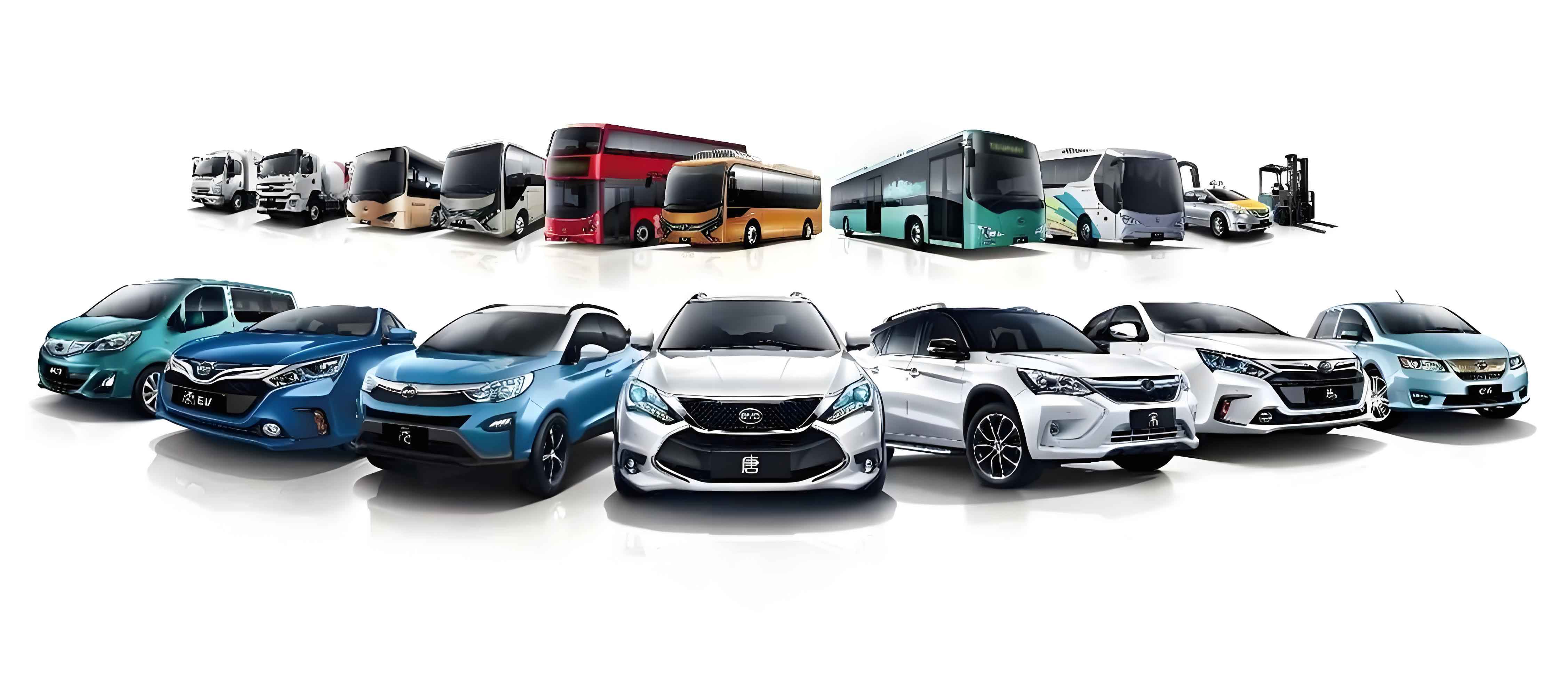
As a researcher deeply involved in the electric vehicle (EV) sector, I have witnessed the remarkable expansion of the China EV market. The proliferation of electric vehicle technology has led to the deployment of millions of permanent magnet synchronous motors (PMSMs), which are central to the propulsion systems of these vehicles. However, a persistent challenge that has emerged is the issue of bearing electrical corrosion, which adversely affects the motor’s reliability and overall vehicle performance, particularly in terms of Noise, Vibration, and Harshness (NVH). This phenomenon manifests as surface irregularities and corrosion on the bearing races, often resembling a fish-scale pattern, leading to increased vibration and reduced efficiency in electric vehicle applications.
The core of the problem lies in the generation of shaft voltage within the motor bearings, primarily induced by common-mode voltage from the inverter system. This common-mode voltage, a byproduct of the rapid switching of Insulated Gate Bipolar Transistors (IGBTs) in the power electronics, couples through the motor’s parasitic capacitances to the rotor shaft, resulting in shaft currents that cause electrical erosion. In this analysis, I explore the underlying mechanisms, key influencing factors such as IGBT switching characteristics, and potential mitigation strategies, with a focus on the context of electric vehicle development in China. The rapid adoption of electric vehicle technology in China necessitates a thorough understanding of such issues to ensure the longevity and performance of these systems.
Mechanism of Bearing Electrical Corrosion
The electrical corrosion of bearings in PMSMs for electric vehicle applications begins with the common-mode voltage generated by the three-phase inverter. This voltage is defined as the average of the three phase voltages relative to ground. Mathematically, the common-mode voltage \( V_{com-g} \) is expressed as:
$$ V_{com-g} = \frac{V_{u-g} + V_{v-g} + V_{w-g}}{3} $$
where \( V_{u-g} \), \( V_{v-g} \), and \( V_{w-g} \) represent the phase voltages of the motor windings with respect to ground. In electric vehicle drives, the use of Space Vector Pulse Width Modulation (SVPWM) and IGBT-based inverters results in high \( dv/dt \) transitions during switching events, typically in the nanosecond range. These fast transitions introduce high-frequency components into the common-mode voltage, which is the primary driver for shaft voltage formation.
The motor’s internal structure includes various parasitic capacitances that facilitate the coupling of common-mode voltage to the rotor shaft. Key capacitances include the stator-to-rotor capacitance \( C_{wr} \), the rotor-to-ground capacitance \( C_{rg} \), and the bearing capacitance \( C_b \). When the bearing is in a non-breakdown state, with a stable lubricating oil film acting as an insulator, the bearing behaves predominantly as a capacitive element. However, under certain operating conditions, such as during startup or low-speed operation, the oil film may be insufficient to withstand the shaft voltage, leading to breakdown and the formation of a conductive path characterized by resistive and inductive properties.
The equivalent circuit model for the motor system under bearing breakdown conditions can be represented using distributed parameters. The transfer function relating the motor bearing voltage \( V_{mot-bearing} \) to the common-mode voltage \( V_{com-g} \) is derived as:
$$ \frac{V_{mot-bearing}}{V_{com-g}} = \frac{s C_{wr} (L_{mot-bearing} s + R_{mot-bearing})}{1 + s C_{rg} (L_{mot-bearing} s + R_{mot-bearing}) + s C_{wr} (L_{mot-bearing} s + R_{mot-bearing})} $$
In this equation, \( L_{mot-bearing} \) and \( R_{mot-bearing} \) denote the equivalent inductance and resistance of the bearing during breakdown, respectively, and \( C_{rg} \) is the capacitance between the rotor shaft and ground. This transfer function highlights that the rate of change of the common-mode voltage (\( dv/dt \)) significantly influences the magnitude of the shaft voltage. Higher \( dv/dt \) values, resulting from faster IGBT switching, amplify the shaft voltage, increasing the risk of oil film breakdown and subsequent electrical corrosion in electric vehicle motors.
Key Factors Influencing Shaft Voltage in Electric Vehicle Motors
Among various factors, the switching speed of IGBTs in the inverter is a critical determinant of shaft voltage levels in electric vehicle applications. The IGBT’s turn-off time directly affects the \( dv/dt \) of the phase voltages, which in turn modulates the high-frequency content of the common-mode voltage. Shorter turn-off times lead to steeper voltage transitions, exacerbating the shaft voltage and current. This relationship is particularly relevant in the context of China EV manufacturing, where there is a push towards higher power density and efficiency, often achieved through faster semiconductor devices.
To quantify the impact of IGBT switching characteristics, I developed a simulation model in MATLAB based on the equivalent circuit described earlier. The model parameters, representative of a typical electric vehicle PMSM system, are listed in the following tables:
| Parameter | Value |
|---|---|
| Rated Power (kW) | 44 |
| Peak Power (kW) | 150 |
| Motor Poles & Slots | 8 poles & 48 slots |
| Parameter | Value |
|---|---|
| Stator Winding Inductance \( L_{u/v/w} \) (mH) | 0.24 |
| Stator Winding Resistance \( R_{u/v/w} \) (mΩ) | 12.5 |
| Controller Stray Inductance \( L_{c-IGBT} \) (mH) | 0.248 |
| Controller Equivalent Resistance \( R_{c-IGBT} \) (mΩ) | 0.89 |
| Inverter PN to Ground Capacitance \( C_{P/NG} \) (nF) | 425 |
| Inverter PN to Ground High-Frequency Resistance \( R_{P/NG} \) (kΩ) | 155 |
| Motor Stator Neutral to Ground Capacitance \( C_{NeuG} \) (nF) | 17.32 |
| Stator-to-Rotor Capacitance \( C_{wr} \) (nF) | 43.8 |
| Rotor-to-Ground Capacitance \( C_{rg} \) (pF) | 4.2 |
| Bearing Breakdown Inductance \( L_{mot-bearing} \) (μH) | 0.1 |
| Bearing Breakdown Resistance \( R_{mot-bearing} \) (Ω) | 4 |
The simulation results demonstrate that variations in IGBT turn-off time have a profound effect on shaft voltage and current. For instance, when the turn-off time is reduced from 500 ns to 200 ns, the common-mode voltage \( dv/dt \) increases from 5.2 kV/μs to 12.8 kV/μs, and the peak shaft current rises from 0.08 A to 0.15 A. Conversely, extending the turn-off time to 800 ns reduces both shaft voltage and current to negligible levels. This underscores the importance of optimizing IGBT switching speeds to mitigate bearing electrical corrosion in electric vehicle systems, especially as the China EV industry advances towards more aggressive switching regimes for improved efficiency.
Simulation and Experimental Validation
To validate the theoretical models and simulation findings, I constructed an experimental test bench designed to replicate real-world electric vehicle operating conditions. The setup involved insulating the motor bearing outer race from the housing and installing measurement probes to capture shaft voltage and current. A carbon brush was used to contact the rotating shaft for voltage measurements, while the common-mode voltage was monitored at the stator neutral point. This configuration allowed for precise data acquisition under controlled scenarios, such as varying IGBT modules with different switching characteristics.
In the experiments, I compared two distinct IGBT modules, labeled A29 and A12, under identical operating conditions: a DC bus voltage of 320 V, an output speed of 3000 rpm, and zero torque. The measured waveforms for shaft voltage, shaft current, and common-mode voltage revealed significant differences correlated with IGBT turn-off times. The A29 module, with a turn-off time of 360 ns, exhibited a peak shaft voltage of 14.18 V and a peak shaft current of 0.113 A. In contrast, the A12 module, with a longer turn-off time of 680 ns, showed reduced values of 12.91 V and 0.102 A, respectively. These results align with the simulation predictions, confirming that faster IGBT switching exacerbates shaft voltage and current in electric vehicle motors.
The relationship between IGBT switching speed and shaft parameters can be further summarized using the following equation derived from the transfer function analysis. The peak shaft voltage \( V_{shaft-peak} \) is approximately proportional to the product of the common-mode voltage \( dv/dt \) and the bearing circuit impedance:
$$ V_{shaft-peak} \propto \left( \frac{dV_{com-g}}{dt} \right) \times |Z_{bearing}| $$
where \( |Z_{bearing}| \) represents the magnitude of the bearing impedance at the dominant frequency. For electric vehicle applications, minimizing \( dv/dt \) through IGBT gate drive optimization is crucial for reducing bearing stress.
| IGBT Module | Turn-off Time (ns) | Peak Shaft Voltage (V) | Peak Shaft Current (A) |
|---|---|---|---|
| A29 | 360 | 14.18 | 0.113 |
| A12 | 680 | 12.91 | 0.102 |
Additionally, the experimental data highlight the role of parasitic capacitances in the system. The capacitance \( C_{wr} \) between the stator and rotor is a key parameter, as it directly influences the coupling efficiency of common-mode voltage to the shaft. In electric vehicle motors, this capacitance typically ranges from 20 to 50 nF, depending on the motor design and materials used. The empirical findings reinforce the need for comprehensive modeling that accounts for all parasitic elements to accurately predict bearing electrical corrosion risks in the rapidly evolving China EV market.
Mitigation Strategies for Bearing Electrical Corrosion
Given the inherent challenges in eliminating shaft voltage entirely, the electric vehicle industry has adopted two primary approaches to mitigate bearing electrical corrosion: “diverting” and “blocking” the shaft current. In the diverting strategy, additional components are introduced to provide an alternative path for the high-frequency currents, thereby bypassing the bearing. Common methods include installing capacitive coupling devices between the shaft and ground or using conductive carbon brushes. The capacitance \( C_{bypass} \) added in parallel with the bearing can be calculated to ensure it presents a lower impedance at the switching frequencies:
$$ Z_{bypass} = \frac{1}{2 \pi f C_{bypass}} $$
where \( f \) is the dominant frequency of the common-mode voltage. For typical electric vehicle inverters, \( f \) can be in the range of tens to hundreds of kHz, necessitating capacitances on the order of nanofarads to achieve effective diversion.
In the blocking strategy, the focus is on enhancing the bearing’s insulation properties to withstand higher voltages without breakdown. This often involves using ceramic rolling elements or specialized coating materials that offer superior dielectric strength. The breakdown voltage \( V_{bd} \) of such materials can be modeled as:
$$ V_{bd} = E_{bd} \cdot d $$
where \( E_{bd} \) is the dielectric strength of the material and \( d \) is the thickness of the insulation layer. For example, silicon nitride ceramics used in hybrid bearings have \( E_{bd} \) values exceeding 10 kV/mm, significantly reducing the risk of electrical discharge in electric vehicle applications.
The choice between these strategies depends on various factors, including cost, reliability, and specific operating conditions in electric vehicle systems. As the China EV industry continues to grow, integrating these mitigation techniques early in the design phase is essential for ensuring long-term motor durability and performance.
Conclusion and Future Perspectives
In summary, my investigation into bearing electrical corrosion in PMSMs for electric vehicle applications has revealed that the root cause is excessive shaft current driven by common-mode voltage from the inverter. The IGBT switching speed plays a pivotal role, with faster turn-off times leading to higher \( dv/dt \) and increased shaft voltage. Through simulation and experimental validation, I have demonstrated that optimizing IGBT characteristics can significantly reduce bearing stress. However, the trend towards higher power density and efficiency in the electric vehicle sector, particularly in China, is pushing the adoption of faster semiconductors like SiC and GaN, which may exacerbate this issue.
To address these challenges, a combination of diverting and blocking strategies is recommended. Future research should focus on developing integrated solutions that balance switching performance with bearing protection, ensuring the reliability of electric vehicle propulsion systems. The insights from this study provide a solid foundation for advancing motor design and control techniques in the rapidly expanding China EV market, ultimately contributing to the sustainable growth of electric mobility worldwide.