
As a key driver in the global shift toward sustainable transportation, China EV battery technology has undergone rapid evolution, with structural design and performance optimization of EV power battery packs standing at the forefront of innovation. I will explore the latest developments in battery pack architecture, material science, and management systems, focusing on how these elements collectively enhance the efficiency, safety, and longevity of China EV battery solutions. The integration of advanced materials, such as high-nickel cathodes and silicon-based anodes, has significantly boosted energy density, while innovations in electrolyte systems and manufacturing processes have addressed critical challenges like thermal stability and cycle life. In this discussion, I will delve into specific strategies for optimizing EV power battery performance, including material innovations, structural enhancements, and intelligent management techniques, all of which contribute to the broader adoption of electric vehicles. By examining these aspects in detail, we can better understand how China EV battery technology is shaping the future of mobility, with EV power battery systems becoming more reliable and cost-effective. Throughout this analysis, I will emphasize the importance of continuous improvement in China EV battery designs to meet growing demands for longer range and faster charging, ensuring that EV power battery solutions remain competitive in the global market.
The progress in China EV battery technology is largely driven by advancements in lithium-ion and solid-state batteries, which form the core of modern EV power battery systems. In lithium-ion batteries, for instance, electrode material innovations have led to substantial gains in energy density. High-nickel ternary cathode materials, such as NCM811 and NCA, offer specific capacities exceeding 200 mAh/g, compared to traditional NCM523, which typically ranges from 150 to 180 mAh/g. This improvement is crucial for extending the driving range of electric vehicles, a key metric for China EV battery adoption. However, these materials often suffer from reduced thermal stability, necessitating enhanced battery management and material modifications. Similarly, silicon-based anodes theoretically provide specific capacities up to 4200 mAh/g, far surpassing graphite anodes, but they face issues like volume expansion during charge-discharge cycles. To mitigate this, nanocomposite approaches, such as silicon-carbon hybrids, have been developed to maintain structural integrity and improve cycle life. These material-level optimizations are essential for advancing EV power battery performance, as they directly impact energy storage and safety. In the context of China EV battery development, such innovations are often supported by rigorous research and industrial applications, highlighting the country’s role as a leader in EV power battery technology. The following table summarizes key electrode material properties and their implications for China EV battery systems:
| Material Type | Specific Capacity (mAh/g) | Advantages | Challenges |
|---|---|---|---|
| NCM811 Cathode | >200 | High energy density, improved voltage platform | Lower thermal stability, requires management optimization |
| Silicon-Based Anode | ~4200 (theoretical) | Superior capacity compared to graphite | Volume expansion >300%, structural degradation |
| Graphite Anode | ~372 | Stable performance, widely used | Limited capacity for future demands |
Electrolyte improvements further enhance the performance of China EV battery systems. Traditional electrolytes, augmented with additives like fluoroethylene carbonate, facilitate the formation of stable solid-electrolyte interphase (SEI) layers, which improve cycle life and reliability. In recent years, high-concentration electrolyte systems have gained attention for their ability to increase ionic conductivity and electrochemical windows, thereby boosting overall battery performance. For example, certain high-concentration lithium salt electrolytes exhibit excellent compatibility with high-voltage cathode materials, making them ideal for advanced EV power battery applications. Additionally, solid-state electrolytes offer significant safety benefits due to their non-flammable nature, while also providing high ionic conductivity. Hybrid systems, combining solid and liquid electrolytes, create quasi-solid electrolyte setups that retain the conduction advantages of liquids while enhancing safety. This is particularly relevant for China EV battery innovations, where safety and performance are prioritized. The ionic conductivity in such systems can be modeled using the Arrhenius equation: $$ \sigma = \sigma_0 \exp\left(-\frac{E_a}{kT}\right) $$ where \(\sigma\) is the ionic conductivity, \(\sigma_0\) is a pre-exponential factor, \(E_a\) is the activation energy, \(k\) is Boltzmann’s constant, and \(T\) is temperature. This equation helps in optimizing electrolyte formulations for EV power battery packs, ensuring efficient ion transport under various operating conditions.
Structural design and encapsulation techniques play a pivotal role in maximizing the efficiency of China EV battery packs. Three-dimensional (3D) electrode structures, such as porous architectures, increase the contact area between electrodes and electrolytes, shortening ion transport paths and enhancing charge-discharge rates. This is critical for EV power battery systems, where high power output is often required for acceleration and regenerative braking. Moreover, the use of lightweight materials in battery encapsulation reduces overall pack weight, directly improving vehicle range—a key focus in China EV battery development. Advanced manufacturing processes, including automated assembly and precision coating, ensure consistent electrode thickness and minimize defects, which in turn extends battery life. For instance, high-precision electrode coating can achieve uniform material distribution, preventing localized current density issues that lead to premature degradation. The relationship between structural parameters and performance can be expressed through energy density calculations: $$ \text{Energy Density} = \frac{\text{Total Energy}}{\text{Volume}} = \frac{\sum (C \times V)}{A \times t} $$ where \(C\) is capacity, \(V\) is voltage, \(A\) is electrode area, and \(t\) is thickness. Optimizing these variables allows for higher energy storage within compact EV power battery packs, aligning with the goals of China EV battery initiatives to reduce size and cost while increasing capability.
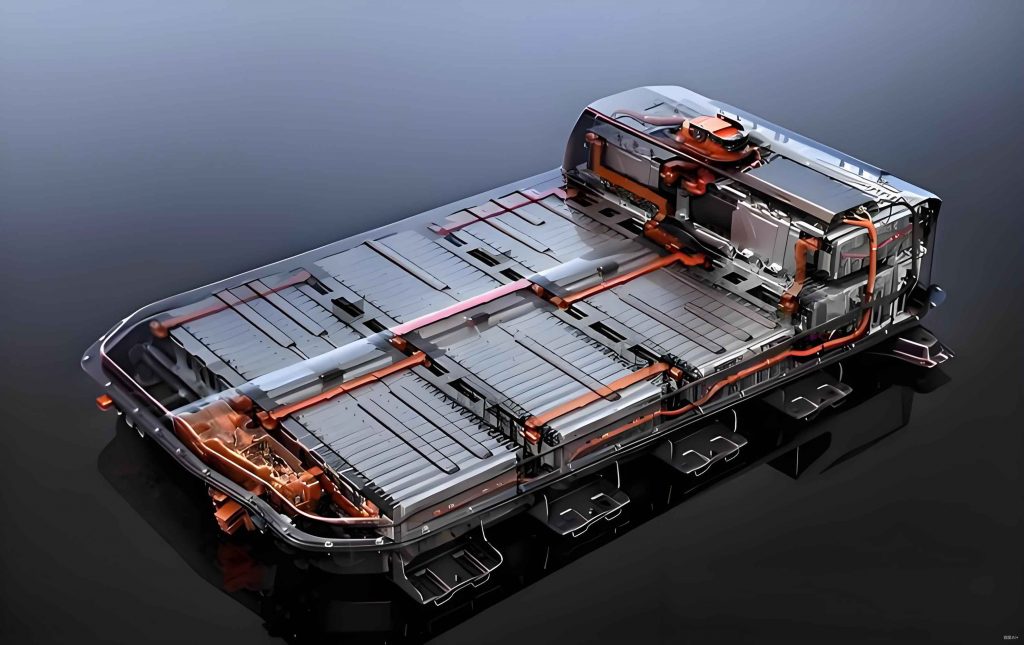
Solid-state battery technology represents another frontier in China EV battery evolution, offering potential breakthroughs in safety and energy density. Material selection is crucial here; oxide-based solid electrolytes provide high mechanical strength and chemical stability but often have lower ionic conductivity, while sulfide-based variants offer better conduction at the cost of stability. Polymer electrolytes, with their flexibility and ease of processing, are suitable for various applications but may degrade under high temperatures. To address these trade-offs, researchers in China EV battery projects are exploring doping and composite strategies, such as incorporating oxides into sulfide electrolytes to balance stability and conductivity. For example, doping can enhance ionic conductivity by modifying the crystal structure, as described by the equation: $$ \sigma_{\text{eff}} = \sigma_{\text{base}} + \Delta \sigma_{\text{dopant}} $$ where \(\sigma_{\text{eff}}\) is the effective conductivity, \(\sigma_{\text{base}}\) is the base material conductivity, and \(\Delta \sigma_{\text{dopant}}\) is the improvement from dopants. Additionally, interface engineering, through surface modification or nanostructured electrodes, improves compatibility between solid electrolytes and electrodes, facilitating efficient charge transfer in EV power battery systems. These advancements are vital for expanding the application of solid-state batteries in demanding scenarios, such as electric aviation, where China EV battery technology could play a transformative role.
Manufacturing process innovations are essential for scaling up solid-state China EV battery production. Techniques like thin-film deposition for solid electrolytes enable the creation of uniform, thin layers that enhance ionic transport while maintaining structural integrity. Automated production lines, coupled with parameter optimization, reduce variability and improve yield, making EV power battery systems more affordable and reliable. For instance, controlling the sintering temperature during electrolyte synthesis can minimize grain boundaries that impede ion flow, as per the relation: $$ D = D_0 \exp\left(-\frac{Q}{RT}\right) $$ where \(D\) is the diffusion coefficient, \(D_0\) is a constant, \(Q\) is the activation energy for diffusion, \(R\) is the gas constant, and \(T\) is temperature. By fine-tuning such parameters, China EV battery manufacturers can achieve higher performance and consistency, supporting the widespread adoption of EV power battery solutions in various sectors, including automotive and grid storage.
Turning to performance optimization strategies, enhancing the energy density of China EV battery packs is a primary objective. Material innovations, such as lithium-rich manganese-based cathodes, offer higher specific capacities and voltage platforms, directly boosting energy storage. The energy density can be calculated as: $$ \text{Energy Density} = \frac{\text{Capacity} \times \text{Voltage}}{\text{Mass or Volume}} $$ For example, if a battery has a capacity of 250 Ah and an average voltage of 3.7 V, with a mass of 10 kg, the gravimetric energy density would be: $$ \frac{250 \times 3.7}{10} = 92.5 \, \text{Wh/kg} $$ By adopting advanced materials, China EV battery systems can achieve values exceeding 300 Wh/kg, making them competitive globally. Structural optimizations, like multilayer electrode stacking, further increase energy density by maximizing active material usage within limited space. In China EV battery design, this often involves “cobalt-free” approaches that reduce costs and improve sustainability, while flat-shaped battery cells enhance space utilization in vehicle chassis. The table below compares different optimization approaches for energy density in EV power battery packs:
| Optimization Method | Impact on Energy Density | Application in China EV Battery |
|---|---|---|
| High-Nickel Cathodes | Increases by 20-30% | Widely used in commercial models |
| Silicon-Carbon Anodes | Potential 50% improvement | Under development for mass production |
| Multilayer Stacking | Enhances volumetric density | Implemented in compact pack designs |
Charging and discharging efficiency is another critical area for China EV battery improvement. Pulse charging techniques, which apply high-current pulses intermittently, can reduce charging time and minimize heat generation. The efficiency of such methods can be modeled as: $$ \eta_{\text{charge}} = \frac{E_{\text{stored}}}{E_{\text{input}}} \times 100\% $$ where \(E_{\text{stored}}\) is the energy stored in the battery and \(E_{\text{input}}\) is the energy supplied during charging. By optimizing pulse frequency and amplitude, China EV battery systems achieve faster recharge rates without compromising lifespan. Similarly, segmented constant-current constant-voltage (CC-CV) charging strategies adjust current levels based on battery state, improving efficiency in later charging stages. For discharge performance, electrode material enhancements, like nanostructuring, shorten ion diffusion paths, enabling higher power output. This is quantified by the diffusion equation: $$ J = -D \frac{\partial C}{\partial x} $$ where \(J\) is the flux of ions, \(D\) is the diffusion coefficient, \(C\) is concentration, and \(x\) is distance. In EV power battery management, artificial intelligence-based systems monitor parameters in real-time, dynamically adjusting discharge profiles to match driving conditions, such as uphill climbs or acceleration. This intelligence is a hallmark of modern China EV battery technology, ensuring reliable performance across diverse scenarios.
Battery longevity is paramount for the economic and environmental sustainability of China EV battery solutions. Manufacturing process refinements, including high-precision electrode coating and controlled production environments, reduce defects and extend cycle life. The cycle life can be estimated using empirical models, such as: $$ N = N_0 \exp\left(-\frac{E_a}{kT}\right) $$ where \(N\) is the number of cycles, \(N_0\) is a constant, and other terms are as defined earlier. By maintaining cleanrooms and automated equipment, China EV battery producers minimize contamination and variability, leading to more durable EV power battery packs. Additionally, battery management systems (BMS) play a vital role in lifespan optimization. Active balancing techniques redistribute charge among cells, preventing overcharging or over-discharging that accelerates degradation. For example, a BMS might use algorithms to calculate state of charge (SOC) and state of health (SOH): $$ \text{SOC} = \frac{Q_{\text{remaining}}}{Q_{\text{total}}} \times 100\% $$ and $$ \text{SOH} = \frac{C_{\text{current}}}{C_{\text{initial}}} \times 100\% $$ where \(Q\) represents charge and \(C\) capacity. Implementing these in China EV battery systems allows for proactive maintenance and longer service life, reducing total cost of ownership for consumers.
In conclusion, the continuous innovation in China EV battery technology, particularly in EV power battery pack design and performance optimization, is driving the global transition to electric mobility. Through material advancements, structural refinements, and intelligent management, China EV battery systems are achieving higher energy densities, faster charging, and extended lifespans. The integration of solid-state electrolytes, 3D electrode designs, and AI-driven BMS exemplifies the holistic approach needed to overcome existing challenges. As research progresses, further improvements in EV power battery efficiency and safety will solidify the position of China EV battery solutions as leaders in the industry, supporting sustainable transportation worldwide. The collaborative efforts in academia and industry will undoubtedly yield even more breakthroughs, making EV power battery technology more accessible and reliable for future generations.