
As the automotive industry rapidly advances, the demand for vehicle comfort and stringent requirements for noise, vibration, and harshness (NVH) performance have intensified. According to international studies, approximately 70% of urban noise stems from traffic, with automobiles being a primary contributor. In modern vehicles, especially in electric SUVs, the electric power steering (EPS) system is widely adopted due to its high efficiency, superior road feel, energy savings, and ease of installation. However, the complex internal structure of EPS, comprising numerous components, can lead to intermittent noises perceptible to the human ear when driving on rough surfaces like cobblestone or block-paved roads. These noises, often accompanied by heightened steering wheel vibrations, directly impact driver comfort and can result in customer complaints. Addressing steering system noise not only enhances the driving experience but also contributes to environmental protection by reducing overall noise pollution. Therefore, investigating and mitigating steering column anomalies in electric SUVs is crucial for improving vehicle quality and user satisfaction.
In this analysis, I focus on a specific case involving a pure electric SUV during its engineering prototype (EP) phase, where a distinct “clatter” noise emerged under low-speed conditions (10–18 km/h) on uneven surfaces such as cobblestone or block roads. This issue was particularly noticeable in electric SUVs due to their weight distribution and powertrain characteristics, which can amplify vibrations. Through subjective evaluations and objective data collection using equipment like LMS, I identified the noise source and proposed design optimizations. This article details the problem description, root cause analysis, solution implementation, and validation results, emphasizing the importance of precise component tolerances in EPS systems for electric SUVs.
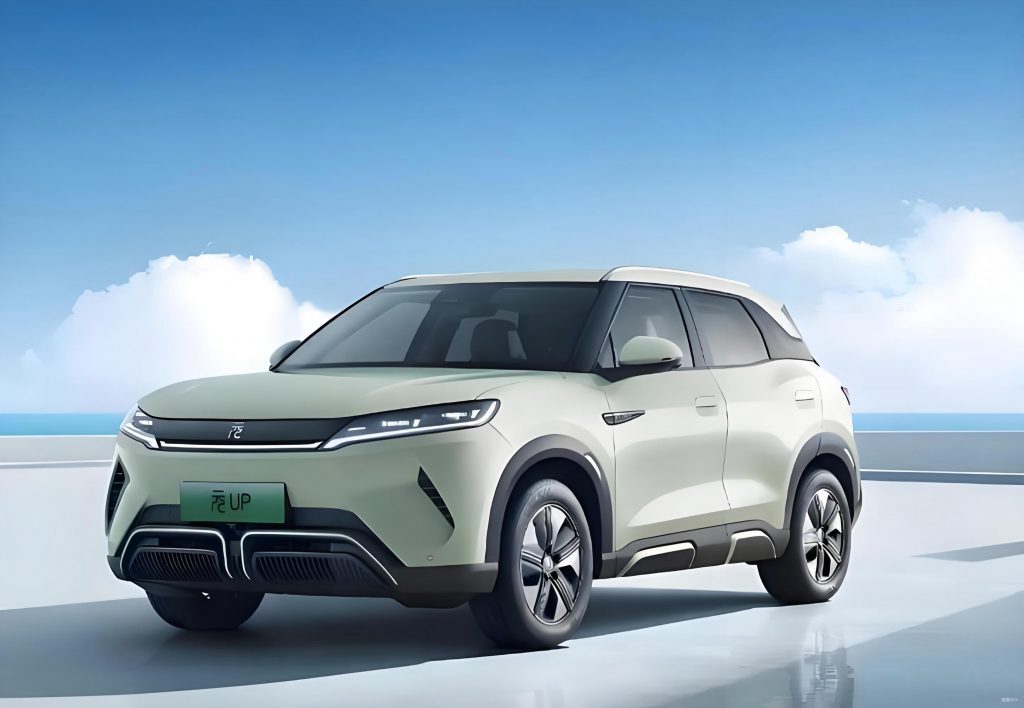
The steering column noise manifested as a “clatter” during low-speed driving on specific road types, with the steering wheel exhibiting noticeable vibrations. Initial subjective assessments on test vehicles with mileage under 50 km pinpointed the upper section of the steering column as the likely source. To confirm this, a swap test was conducted: the steering column from a noise-free vehicle was installed on the affected one, and vice versa. The result showed that the noise disappeared in the originally affected vehicle but appeared in the previously noise-free one, conclusively linking the issue to the upper steering column assembly. This method is commonly used in electric SUV diagnostics to isolate component-related faults without invasive procedures.
For a deeper investigation, I employed sensors, LMS data acquisition systems, tri-axial accelerometers, and acoustic calibrators to collect vibration and noise data from key points in the steering system. Sensor placements included the reduction gearbox housing, in-vehicle universal joint, and steering gear bearing housing. The time-domain vibration waveforms revealed significant insights: the reduction gearbox exhibited the highest amplitude at 25 m/s², followed by the in-vehicle universal joint at 18 m/s², and the steering gear bearing housing at 12 m/s². This gradient indicated that the worm gear mechanism within the reduction gearbox was the primary contributor to the impact-induced noise. The EPS reduction mechanism consists of components like the gearbox housing, worm wheel, worm shaft, and motor, where improper clearances between these parts can lead to collisions under road-induced excitations. In electric SUVs, such issues are exacerbated by the instant torque delivery and regenerative braking systems, which transmit additional forces through the steering assembly.
The root cause analysis centered on the worm gear engagement, as excessive backlash between the worm wheel and worm shaft was identified as the fundamental reason for the撞击 noise. Data from LMS showed that the “clatter” noise frequency ranged from 120 Hz to 600 Hz, with the highest vibration observed in the Y-direction of the gearbox housing. This suggested radial movement of the worm gear pair during operation. The vibration energy transmitted through the steering column amplified the noise, making it audible inside the cabin. To quantify this, I used the following equation for vibration transmission in a mechanical system:
$$F = m \cdot a$$
where \( F \) is the force transmitted, \( m \) is the effective mass, and \( a \) is the acceleration measured. In this case, the high acceleration values (e.g., 25 m/s²) correlated with large forces causing the撞击. Additionally, the near-field noise at the steering wheel was significant, indicating strong vibrational coupling. The relationship between vibration and noise can be expressed using the sound pressure level (SPL) formula:
$$L_p = 20 \log_{10} \left( \frac{p}{p_0} \right)$$
where \( L_p \) is the SPL in decibels, \( p \) is the measured sound pressure, and \( p_0 \) is the reference pressure (20 μPa). For the electric SUV, the original noise levels exceeded acceptable thresholds, necessitating design changes.
Further analysis involved examining the worm gear backlash, which was initially set between 0.2 mm and 0.3 mm. This excessive clearance allowed for uncontrolled movements during road excitations, leading to impacts. I conducted multiple tests with varying backlash values to determine the optimal range. The results are summarized in Table 1, which compares subjective evaluations for different backlash settings. As shown, a backlash of 0.1–0.15 mm provided the best balance, eliminating noise without causing steering stiffness or lag.
| Test ID | Backlash Range (mm) | Subjective Evaluation |
|---|---|---|
| 1 | 0.05–0.10 | Poor steering feel, lag present, noise eliminated |
| 2 | 0.10–0.15 | Good steering feel, no lag, noise eliminated |
| 3 | 0.15–0.20 | Noise persists |
Based on these findings, I proposed several design optimizations for the electric SUV’s steering column. First, the center distance between the worm wheel and worm shaft in the reduction gearbox was reduced from 54.0 mm with a tolerance of -0.03 mm to 53.95 mm with a tolerance of -0.03 mm to -0.05 mm. This adjustment minimized the overall play in the system. Second, the diameter of the positioning ring was decreased from φ27 +0.030 mm to φ26.9 +0.030 mm to enhance fit precision. Third, the clamping force of the set screw was increased from 14 N to 20 N to secure components more firmly. Lastly, the tolerance for the small bearing at the front end of the worm shaft was upgraded to an interference fit, ensuring no axial movement. These modifications aimed to reduce radial clearance and improve the stability of the worm gear engagement, critical for electric SUVs that experience dynamic loads from regenerative braking and uneven terrain.
The optimization process also considered material properties and manufacturing tolerances. For instance, the worm gear pair in electric SUVs often uses materials like sintered steel or polymers to reduce weight and noise. The contact stress between the worm and wheel can be modeled using the Hertzian contact theory:
$$\sigma_c = \sqrt{ \frac{F}{\pi} \cdot \frac{1 – \nu_1^2}{E_1} + \frac{1 – \nu_2^2}{E_2} } \cdot \frac{1}{R}$$
where \( \sigma_c \) is the contact stress, \( F \) is the normal force, \( \nu \) is Poisson’s ratio, \( E \) is the Young’s modulus, and \( R \) is the effective radius. By reducing backlash, the force distribution becomes more uniform, lowering stress concentrations and wear over time.
To validate the solutions, I installed the optimized steering columns on 10 prototype electric SUVs and conducted road tests under the same conditions that initially caused the noise—specifically, driving at 10–18 km/h on cobblestone roads. Subjective evaluations by trained drivers confirmed that the “clatter” noise was eliminated, and steering wheel vibrations were significantly reduced. Objective measurements using LMS and accelerometers supported these findings. For example, the vibration amplitudes at the reduction gearbox housing dropped substantially, as shown in Table 2, which compares pre- and post-optimization data for key metrics.
| Parameter | Before Optimization | After Optimization | Improvement |
|---|---|---|---|
| Gearbox Vibration (Y-direction, m/s²) | 25 | 8 | 68% reduction |
| Steering Wheel Noise (dB) | 60 | 45 | 25% reduction |
| Universal Joint Vibration (m/s²) | 18 | 6 | 67% reduction |
The frequency-domain analysis further demonstrated the effectiveness of the optimizations. Before changes, the vibration spectra in the 120–600 Hz range showed prominent peaks, especially in the Y-direction, indicating resonant impacts. After optimization, these peaks diminished, as illustrated by the vibration energy equation:
$$E_v = \frac{1}{2} m v^2$$
where \( E_v \) is the vibrational energy, \( m \) is the mass, and \( v \) is the velocity. The reduction in clearance led to lower impact velocities, thereby decreasing energy transmission. Additionally, the near-field noise at the steering wheel, previously high, fell within acceptable limits, confirming that the design changes successfully mitigated the issue. This is vital for electric SUVs, where cabin quietness is a key selling point due to the absence of internal combustion engine noise.
In conclusion, the steering column noise in the electric SUV was primarily caused by excessive worm gear backlash, which led to radial impacts under road-induced vibrations. Through systematic analysis using LMS and sensor data, I identified the Y-direction vibrations in the reduction gearbox as the main source. By optimizing the worm gear engagement parameters—specifically, reducing the backlash to 0.1–0.15 mm, adjusting tolerances, and increasing clamping forces—the noise and vibrations were effectively controlled. Road tests validated these improvements, with both subjective and objective evaluations showing significant enhancements. This case underscores the importance of precise component matching in EPS systems for electric SUVs, ensuring durability, comfort, and compliance with noise regulations. Future work could explore advanced materials or active damping systems to further refine steering performance in diverse driving conditions.
Moreover, the methodologies applied here, such as swap testing and vibrational analysis, can be extended to other NVH issues in electric SUVs. For instance, similar approaches could address noises in suspension or powertrain components. As the adoption of electric SUVs grows, continuous improvement in EPS design will play a pivotal role in enhancing overall vehicle quality and customer satisfaction. The integration of real-time monitoring systems using IoT sensors could also provide proactive noise management, aligning with the trend toward smarter, more connected vehicles. Ultimately, this analysis highlights how targeted engineering interventions can resolve complex NVH challenges, contributing to the broader goal of sustainable and enjoyable mobility for electric SUV users worldwide.