
In recent years, the global digital economy has profoundly reshaped international trade patterns and industrial division systems. As a critical carrier for global energy transition, China’s electric vehicle industry has achieved leapfrog development through technological innovation and industrial chain integration. The 20th National Congress of the Communist Party of China emphasized the need to “accelerate the development of the digital economy and build internationally competitive digital industrial clusters” while “consolidating and expanding the leading advantages in industries such as new energy vehicles.” Data from the China Association of Automobile Manufacturers reveals that by 2023, China’s electric vehicle market reached approximately 9.5 million units, a surge of 37.9%, securing the top position with 66.5% of the global market share. This underscores the growing competitiveness of China EV exports, entering a “golden window” for international expansion.
OECD countries represent significant target markets for Chinese electric vehicle enterprises seeking to expand globally. The deepening cooperation and exchanges between China and OECD nations facilitate the upgrading and transformation of China’s electric vehicle industry. Therefore, studying the measurement of digital economy levels in these countries and exploring their impact on China EV exports can help businesses better understand market demands, competitive landscapes, and policy environments, thereby formulating effective market strategies.
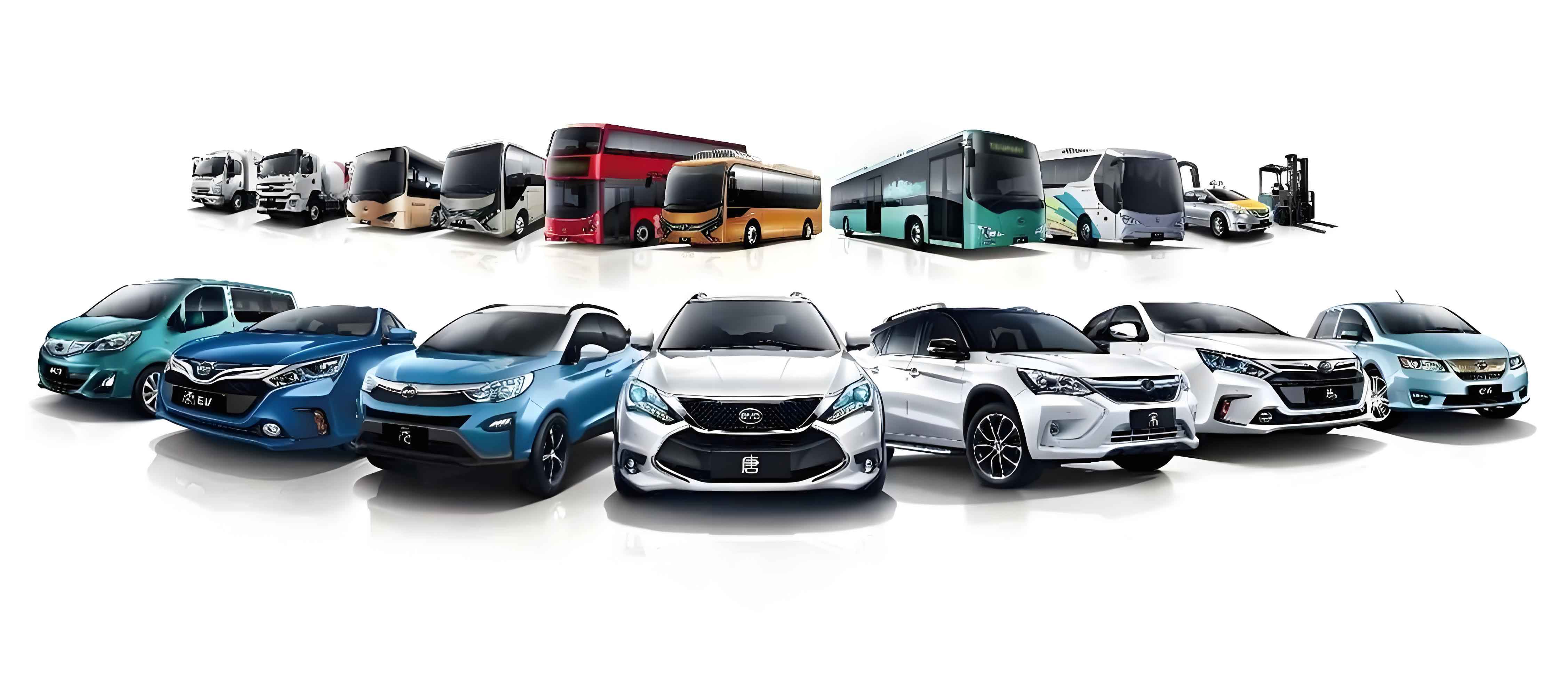
This article examines the influence of digital economy development on China’s electric vehicle exports from two perspectives. First, research on the impact of digital economy development on export trade indicates that the digital economy has become a key engine for global economic growth, with its effects on international trade and underlying mechanisms being a focal point for scholars. Some studies found that the enhancement of digital economy levels in EU member states significantly increased China’s export trade gains to Europe while effectively reducing bilateral trade costs and improving export product technological complexity and coverage. Others introduced variables like industrial structure upgrading, revealing that the rapid advancement of the digital economy accelerates the optimization and upgrading of industrial structures, providing robust support for high-quality regional foreign trade development. Further research at meso and micro levels demonstrated that the improvement in the digital economy level of importing countries positively drives the export trade of enterprises from exporting nations, with digital technologies significantly negatively impacting trade costs.
Second, studies on the current state of China’s electric vehicle industry show that in recent years, China’s electric vehicle sector has demonstrated strong competitiveness in the international trade landscape, particularly in pure electric passenger vehicles, with the EU and Asian markets becoming primary export destinations. Recent research using social network analysis methods indicates that the global automobile trade network exhibits a core-periphery structure, driven by factors such as geographical proximity and institutional similarity, with significant asymmetric trade flows between network nodes. However, amidst the “going global”热潮, Chinese electric vehicle enterprises face multiple challenges, including rising global tariff barriers, insufficient internationalization and localization capabilities, increasing investment restrictions, and industrial “involution.” Existing research from multidimensional perspectives suggests that digital transformation enhances industrial system resilience by influencing the embedded technology in imported intermediates.
Given the relative scarcity of empirical analyses examining the impact of digital economy development on China’s electric vehicle exports to OECD countries, this article further investigates this issue based on existing literature. The innovations are threefold: clarifying the pathways through which digital economy development affects China EV exports, while creatively exploring how the economic development of other countries promotes China’s electric vehicle exports, offering a new perspective for international economic exchanges; constructing an indicator system for the digital economy development level of OECD countries, comprehensively and systematically reflecting the multidimensional characteristics of how digital economy development influences exports; and examining the varying degrees of this impact across OECD countries based on geographical location and economic development level heterogeneity.
Empirical Research
Model Construction
Based on data availability and research objectives, we employ an extended gravity model for this study. The final model is specified as follows:
$$ \ln(\text{exa}_{it}) = \alpha_0 + \alpha_1 \ln(\text{dei}_{it}) + \gamma X_{it} + \varphi_i + \varphi_t + \varepsilon_{it} $$
where \( i \) denotes an OECD country, and \( t \) denotes the year. The variable \( \ln(\text{exa}_{it}) \) represents the logarithm of the total quantity of electric vehicles exported from China to country \( i \) at time \( t \). The variable \( \ln(\text{dei}_{it}) \) primarily examines \( \text{dei}_{it} \), indicating the digital economy development index of country \( i \) in period \( t \). \( \alpha_0 \) is the constant term, \( X_{it} \) is a set of control variables influencing China’s electric vehicle exports, including the OECD country’s GDP, distance to the capital, political stability and absence of violence index, and exchange rate. \( \varphi_i \) represents the individual fixed effects controlling for country-specific characteristics, \( \varphi_t \) represents the year fixed effects, and \( \varepsilon_{it} \) is the random disturbance term.
Data Selection and Variable Description
Dependent Variable
The dependent variable is the total volume of China’s electric vehicle exports to OECD countries. According to the HS code classification standard in the 2022 version of China’s Customs Harmonized System and referencing academic product classification methods for electric vehicles, we categorize exported electric vehicles into nine product types. By matching corresponding customs HS codes and aggregating export data for each sub-category, we construct a panel dataset of free-on-board (FOB) values for China’s electric vehicle exports to 38 countries from 2013 to 2023.
Core Explanatory Variable
The core explanatory variable is the digital economy development level of OECD countries. Based on the core connotations of the digital economy proposed at the G20 Summit, combined with the deeply intertwined technical and economic attributes of the digital economy, we systematically review literature on digital economy measurement and refer to evaluation frameworks released by authoritative institutions such as the China Academy of Information and Communications Technology. Following the principles of indicator representativeness and relevance, we construct a comprehensive evaluation system encompassing four dimensions: digital infrastructure, digital industrialization level, digital talent reserve, and digital innovation capability. During the indicator system construction, we pay particular attention to the synergistic effects between digital technology and the economic system, ultimately using the entropy method to determine the weight allocation for each hierarchical indicator.
| Primary Indicator | Secondary Indicator | Indicator Weight | Data Source |
|---|---|---|---|
| Digital Infrastructure | Fixed broadband subscriptions per 100 people | 0.021 | International Telecommunication Union (ITU) |
| Fixed telephone subscriptions per 100 people | 0.021 | International Telecommunication Union (ITU) | |
| Mobile cellular subscriptions per 100 people | 0.005 | World Bank WDI | |
| Active mobile broadband subscriptions | 0.167 | International Telecommunication Union (ITU) | |
| Secure Internet servers per million people | 0.125 | International Telecommunication Union (ITU) | |
| Digital Industrialization | Percentage of individuals using the Internet | 0.007 | International Telecommunication Union (ITU) |
| ICT goods exports (% of total goods exports) | 0.070 | World Bank WDI | |
| ICT services exports (% of service exports, BoP) | 0.069 | World Bank WDI | |
| Medium and high-tech exports (% of total exports) | 0.013 | World Bank WDI | |
| Digital Talent | Government expenditure on education (% of GDP) | 0.015 | World Bank WDI |
| Tertiary education enrollment rate | 0.012 | World Bank WDI | |
| Digital Innovation | Research and development expenditure (% of GDP) | 0.037 | World Bank WDI |
| Patent applications | 0.298 | World Intellectual Property Organization (WIPO) | |
| Scientific and technical journal articles | 0.138 | World Bank WDI |
Data Sources and Description
We primarily select panel data from 2013 to 2023 for China and 38 OECD member countries. After conducting baseline regression analysis on annual data, we perform heterogeneity tests and robustness checks to enhance external validity and ensure result reliability. For missing data in certain countries and years, we use trend model prediction or forward/backward filling methods for endpoints and linear interpolation for intermediate missing values to ensure data completeness. Ultimately, we calculate panel data for various indicators across 38 OECD countries. Descriptive statistics for specific variables are shown in Table 2.
| Variable | Symbol | Observations | Mean | Median | Std. Dev. | Min | Max | Data Source |
|---|---|---|---|---|---|---|---|---|
| Dependent Variable | lnexa | 418 | 14.48 | 14.09 | 3.648 | 6.908 | 22.49 | UN Comtrade |
| Core Explanatory Variable | lndei | 418 | 0.126 | 0.106 | 0.0680 | 0.0450 | 0.385 | World Bank WDI |
| Control Variables | lngdp | 418 | 26.79 | 26.75 | 1.527 | 23.50 | 30.94 | World Bank WDI |
| lndistcap | 418 | 13.17 | 13.22 | 0.569 | 10.60 | 14.54 | CEPII | |
| Pvest | 418 | 0.573 | 0.731 | 0.659 | -2.007 | 1.620 | World Bank WDI | |
| Exrate | 418 | 4.783 | 6.755 | 3.330 | 0.002 | 10.13 | Bank of China |
To preliminarily explore trends among variables and relationships between the dependent variable, independent variable, and control variables, we conduct a correlation test. The results indicate a significant positive correlation between the digital economy development index and China’s electric vehicle exports.
We test for multicollinearity by calculating the variance inflation factor (VIF) and its reciprocal (1/VIF) for each variable. The results show a mean VIF of 1.440, significantly below the critical value of 10, confirming no multicollinearity among the explanatory variables in the model.
Empirical Results Analysis
After constructing the model, we use Stata software for empirical testing with the extended gravity model. Comparing FE (fixed effects) and OLS (ordinary least squares) test results, we significantly reject the null hypothesis, indicating that FE provides a better fit. When comparing RE (random effects) and OLS, the LM test results also significantly reject the null hypothesis, showing RE is superior to OLS. Finally, using the Hausman test to compare FE and RE, we obtain a p-value of 0.00, thus rejecting the null hypothesis and deciding to adopt the FE model.
Baseline Regression Results and Analysis
Considering model robustness and estimation efficiency, we employ regression analysis using OLS, FE, and RE effects. Based on this, we establish Models 1, 3, and 5 as baseline regressions and extend Models 2, 4, and 6 for comparative analysis. Ultimately, based on the regression results, we determine Model 4 as the best explanatory model. The regression results analysis is shown in Table 3.
| VARIABLES | Pooled OLS | Fixed Effects (FE) | Random Effects (RE) | |||
|---|---|---|---|---|---|---|
| Model 1 | Model 2 | Model 3 | Model 4 | Model 5 | Model 6 | |
| lndei | 3.148*** (0.344) | 2.778*** (0.473) | 15.168*** (0.824) | 10.068*** (1.045) | 6.585*** (0.576) | 7.109*** (0.716) |
| lngdp | 0.394*** (0.140) | 8.555*** (1.232) | -0.199 (0.256) | |||
| lndistcap | 0.890*** (0.310) | -0.614 (0.404) | 1.161*** (0.380) | |||
| Pvest | 0.069 (0.257) | -0.106 (0.854) | -0.318 (0.461) | |||
| Exrate | -0.060 (0.050) | -1.230*** (0.325) | -0.101 (0.095) | |||
| Constant | 21.153*** (0.746) | -1.672 (5.322) | 46.626*** (1.749) | -179.349*** (32.189) | 28.438*** (1.263) | 20.258** (8.600) |
| Observations | 418 | 418 | 418 | 418 | 418 | 418 |
| R² | 0.168 | 0.207 | 0.472 | 0.543 | ||
| Adjusted R² | 0.166 | 0.198 | 0.419 | 0.492 | ||
Note: Standard errors in parentheses; *, **, and *** denote significance at the 10%, 5%, and 1% levels, respectively.
From Models 1 to 6, the core explanatory variable digital economy development index is positive and significant, indicating that the digital economy development in OECD countries promotes the growth of China’s electric vehicle exports. This may be attributed to the optimization role of digital technology in supply chain management, further enhancing logistics efficiency and reducing costs. This allows Chinese electric vehicle manufacturers to leverage digital technologies for better global supply chain management, thereby improving export efficiency. It could also be due to the increased demand for electric vehicles driven by digital economy development.
Mechanism Test
Trade cost is a key factor in export trade. Considering that digital economy development reduces information search and logistics costs through applications like big data and cloud computing, thereby promoting international trade, trade cost may play a crucial mediating role between digital economy development and China’s electric vehicle exports to OECD countries. We measure the bilateral trade costs between China and OECD member countries from 2013 to 2023, introducing trade cost COST as a mediating variable. The calculation formula is:
$$ \text{COST}_{it} = 1 – \left( \frac{x_{ij} x_{ji}}{x_{ii} x_{jj}} \right)^{\frac{1}{2(1-\sigma)}} $$
where \( i \) and \( j \) represent the OECD country and China, respectively. \( \text{COST}_{it} \) denotes the trade cost of country \( i \) in period \( t \). \( x_{ij} \) and \( x_{ji} \) represent the export values from country \( i \) to \( j \) and from \( j \) to \( i \), respectively. \( x_{ii} \) and \( x_{jj} \) denote internal trade totals, measured by the difference between GDP and total exports. According to existing literature, the substitution elasticity \( \sigma \) should be between 5 and 10; following Novy’s approach, \( \sigma \) is set to 8. Relevant data are sourced from the UN Comtrade database and World Bank WDI. The mediation effect models are as follows:
$$ \ln(\text{exa}_{it}) = \alpha_0 + \alpha_1 \ln(\text{dei}_{it}) + \gamma X_{it} + \varphi_i + \varphi_t + \varepsilon_{it} $$
$$ \text{COST}_{it} = \alpha_0 + \alpha_1 \ln(\text{dei}_{it}) + \gamma X_{it} + \varphi_i + \varphi_t + \varepsilon_{it} $$
$$ \ln(\text{exa}_{it}) = \alpha_0 + \alpha_1 \ln(\text{dei}_{it}) + b \text{COST}_{it} + \gamma X_{it} + \varphi_i + \varphi_t + \varepsilon_{it} $$
The regression results for the mediation effect are shown in Table 4. The baseline regression results in column (1) show the positive effect of the core explanatory variable, as previously verified. Column (2) focuses on the mediation mechanism test with trade cost as the mediator variable. The results indicate that the digital economy development in OECD countries helps reduce China’s trade costs, consistent with findings from some scholars. Column (3) shows the impact of OECD countries’ digital economy development and the mediator variable trade cost on China’s electric vehicle exports, also demonstrating the inhibitory effect of trade cost on China’s electric vehicle exports. Thus, the digital economy development in OECD countries promotes China’s electric vehicle exports through the mediation effect of trade cost. This is because the development of the digital economy level can improve the digital demand environment, reduce information search and communication costs for trade parties, lower market access conditions, and thereby stimulate China’s electric vehicle exports.
| VARIABLES | (1) lnexa | (2) COST | (3) lnexa |
|---|---|---|---|
| COST | -1.558** (0.679) | ||
| lndei | 2.778*** (0.473) | -0.0598* (0.0341) | 2.685*** (0.472) |
| Control Variables | Yes | Yes | Yes |
| Constant | -1.672 (5.322) | 5.013*** (0.384) | 6.138 (6.296) |
| Country Fixed Effects | Yes | Yes | Yes |
| Year Fixed Effects | Yes | Yes | Yes |
| Observations | 418 | 418 | 418 |
| R² | 0.207 | 0.571 | 0.217 |
Heterogeneity Analysis
OECD countries are distributed across five continents, primarily developed nations, with heterogeneity in geographical location and economic development levels. We group all subjects accordingly.
First, geographical heterogeneity. Since OECD member countries are mostly concentrated in Europe, with fewer members in Asia, the Americas, and other continents, we divide them into two groups: European countries (Group 1), such as the UK and Italy, and non-European countries (Group 2). As shown in Table 5, column (4) indicates that digital economy development has a significant effect on China’s electric vehicle exports to European countries, while column (2) shows no statistical significance in the non-European country sample, confirming spatial heterogeneity in this impact based on geographical location. The reason may be that compared to non-European OECD members, European countries have more完善的 data infrastructure and automotive industry supporting systems, and can leverage the digital economy to optimize supply chain management and enhance industrial efficiency. These factors may collectively make the impact of digital economy development on China’s electric vehicle exports to European countries more significant.
Second, economic development level heterogeneity. According to the World Bank’s classification by gross national income per capita, countries with income above $12,656 are high-income, and most OECD countries fall into this category, but internal differentiation is significant. Therefore, we further细分 OECD countries into “moderately developed group” (<$30,000) and “affluent developed group” (≥$30,000) based on per capita national income. The digital economy development index shows a significant positive effect in the affluent developed group in column (4) of Table 5, but not in the moderately developed group in column (3), indicating that when the importing country has a higher level of economic development, the driving effect on the quantity of China’s electric vehicle exports is stronger.
| VARIABLES | By Geography | By Economic Development | ||
|---|---|---|---|---|
| Europe (1) | Non-Europe (2) | Moderate (3) | Affluent (4) | |
| lndei | 3.029*** (5.38) | 0.782 (1.53) | 0.812 (1.05) | 2.218*** (3.28) |
| Control Variables | Yes | Yes | Yes | Yes |
| Constant | 0.106 (0.01) | 9.515* (1.77) | -5.788 (-1.21) | 2.028 (0.23) |
| Observations | 297 | 121 | 198 | 220 |
| R² | 0.217 | 0.866 | 0.607 | 0.212 |
| Country Fixed Effects | Yes | Yes | Yes | Yes |
| Year Fixed Effects | Yes | Yes | Yes | Yes |
Robustness Test
To further explain the robustness of the empirical results, we refer to the “Global Information Technology Report 2007–2008: Networked Readiness and National Innovation,” selecting the Networked Readiness Index (NRI) to replace the digital economy development index lndei, denoted as NRI. As shown in column (1) of Table 6, this index assesses the conditions and environmental maturity of countries leveraging information and communication technologies based on three aspects: regulation, overall business development trends, and infrastructure. Column (2) of Table 6 indicates that after replacing the core explanatory variable, it remains significant at the 1% level, meaning the digital economy development level of OECD countries significantly promotes China’s electric vehicle exports, and the empirical results are robust.
Additionally, when studying the correlation between digital economy development level and China’s electric vehicle exports, considering endogeneity issues, we refer to other scholars’ research and use the first lag of the digital economy development index as the core explanatory variable, employing the system generalized method of moments (GMM) to estimate a dynamic panel model to mitigate potential reverse causality problems. As shown in column (2) of Table 6, digital economy development significantly promotes China’s electric vehicle exports at the 1% confidence level, still supporting the previous conclusions.
| VARIABLES | GMM (1) | Replacement (2) |
|---|---|---|
| L.lnexa | -0.440 (0.435) | |
| NRI | 4.939*** (0.229) | |
| lndei | 32.33*** (11.77) | |
| Control Variables | Yes | Yes |
| Adjusted R² | 0.343 | |
| p-value | 0.232 | |
| Constant | 135.8 (131.1) | -39.14 (23.94) |
| Observations | 380 | 418 |
Conclusion and Policy Implications
Research Conclusions
Using panel data from OECD countries from 2013 to 2023 for empirical testing, and based on quantitative measurement of the digital economy development levels of various countries, we explore the impact and pathways of the digital economy development level of export destination countries on China’s electric vehicle exports, drawing the following conclusions: The digital economy development level of destination countries significantly promotes China’s electric vehicle exports, and this remains valid after considering endogeneity in robustness tests; studying its mechanism reveals that the digital economy development level of destination countries can reduce the trade costs of China’s electric vehicle exports, thereby affecting the export volume of China EV; the impact of the digital economy development level of destination countries on promoting China’s electric vehicle exports exhibits heterogeneity based on geographical location and economic development level, with the positive impact of digital economy development on China’s electric vehicle exports being more significant in European countries and countries with higher economic development levels.
Policy Implications
Based on the analysis results, we propose policies from three aspects: First, consolidate digital infrastructure and policy coordination, increase investment in new infrastructure such as 5G networks and cloud computing centers, incentivize enterprise digital transformation through tax incentives, and enhance the digital capabilities of the electric vehicle industry. Second, empower with digital technologies to reduce costs and increase efficiency, build smart customs systems and logistics big data platforms to compress trade costs, while promoting mutual recognition of digital trade rules with export target countries to reduce institutional friction. Third, implement market segmentation strategies, deepen local digital marketing cooperation in key regions such as Europe, and target the development of smart connected high-end models for high-income countries’ demands, using digital technologies to adapt to market gradients.
In summary, the digital economy plays a pivotal role in boosting China’s electric vehicle exports to OECD nations by streamlining trade processes and reducing associated costs. As the global shift towards electric vehicles accelerates, leveraging digital advancements will be crucial for sustaining the competitive edge of China EV in international markets. Future strategies should focus on enhancing digital infrastructure, fostering international digital cooperation, and tailoring approaches to diverse market conditions to ensure the long-term growth and resilience of China’s electric vehicle export sector.