
As a researcher in the field of automotive engineering, I have been closely studying the thermal comfort aspects of electric cars, which represent a critical intersection of energy efficiency and passenger well-being. The shift toward electric cars is driven by global carbon neutrality goals, but these vehicles face unique challenges due to their reliance on battery power. Unlike traditional internal combustion engine vehicles, electric cars cannot utilize waste heat from engines for cabin heating, leading to significant energy consumption from the battery for climate control. This accounts for about one-third of the total energy stored in an electric car’s battery, directly impacting driving range, especially under extreme weather conditions. In this article, I explore the factors influencing thermal comfort, review existing models, and discuss optimization measures, all while emphasizing the balance between comfort and energy conservation in electric cars. The growing adoption of electric cars worldwide underscores the importance of this research, as passenger thermal comfort not only affects health and alertness but also the overall acceptance and efficiency of these vehicles.
Thermal comfort in electric cars refers to the state of mind that expresses satisfaction with the thermal environment, influenced by a combination of environmental and personal factors. The cabin environment in an electric car is characterized by transient and non-uniform conditions, meaning that temperatures and other parameters can change rapidly and vary across different zones, such as between the driver’s seat and rear passenger areas. This complexity makes it challenging to maintain consistent comfort without excessive energy use. In my analysis, I consider how these factors interact and how they can be modeled to predict and improve comfort in electric cars. Furthermore, the integration of advanced materials and systems, such as smart glass and personalized ventilation, is revolutionizing the way we approach thermal management in electric cars. By delving into these aspects, I aim to provide a comprehensive overview that can guide future innovations in electric car design, ensuring that passengers enjoy a comfortable ride while maximizing the vehicle’s range.
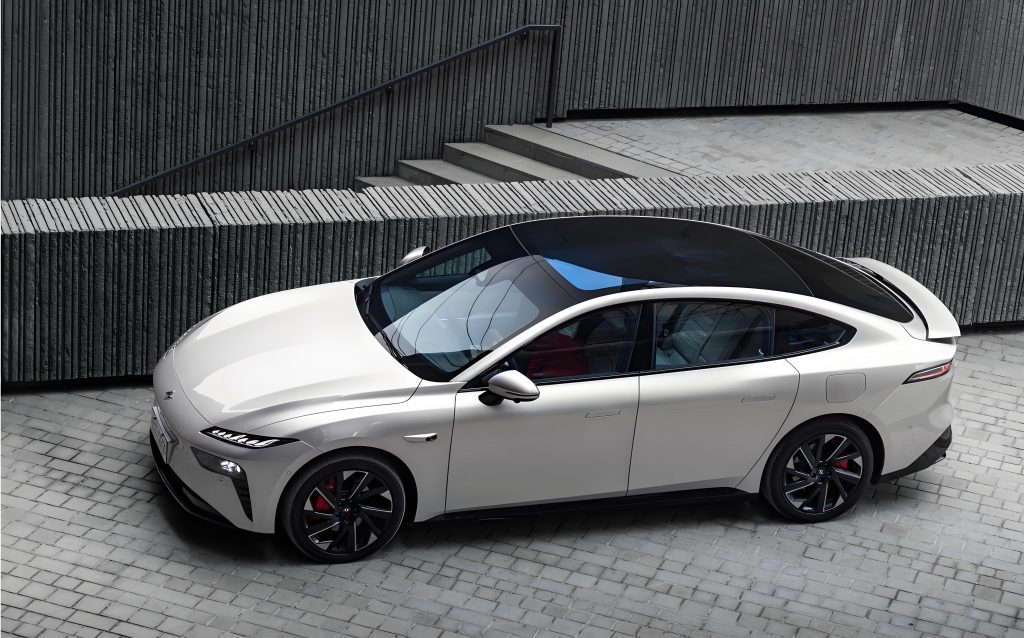
One of the primary environmental factors affecting thermal comfort in electric cars is air temperature. Due to the non-uniform nature of cabin spaces, air temperature can vary significantly between different areas, such as near windows versus the center of the cabin. This non-uniformity is exacerbated in electric cars because of their compact design and the need to minimize energy consumption. For instance, in summer, solar radiation can cause localized hot spots, while in winter, cold drafts from doors may create discomfort. Studies have shown that even small variations in air temperature, such as a difference of 2–3°C between the head and foot levels, can lead to dissatisfaction among passengers in an electric car. To quantify this, the heat balance equation for the human body can be expressed as:
$$ M – W = H + E + C + R + S $$
where \( M \) is metabolic rate, \( W \) is external work, \( H \) is sensible heat loss, \( E \) is evaporative heat loss, \( C \) is convective heat loss, \( R \) is radiative heat loss, and \( S \) is heat storage. In an electric car cabin, this equation must account for rapid changes, making it essential for designing effective climate control systems that adapt to transient conditions without draining the battery excessively.
Air velocity is another critical environmental factor in electric cars. It influences convective heat transfer, where higher velocities can enhance cooling in warm conditions but may cause draft discomfort if too high. In electric cars, airflow is often managed through ventilation systems, but the placement and angle of vents can lead to uneven distribution. For example, if air velocity exceeds 0.2 m/s in certain areas, passengers might perceive it as a draft, reducing comfort. Research indicates that optimizing airflow patterns in an electric car can improve thermal comfort by up to 60% while only increasing cooling load by 4.5%. This is particularly important for electric cars, where energy efficiency is paramount. The relationship between air velocity and comfort can be modeled using the following equation for convective heat transfer:
$$ q_c = h_c \cdot A \cdot (T_s – T_a) $$
where \( q_c \) is convective heat flux, \( h_c \) is the convective heat transfer coefficient, \( A \) is surface area, \( T_s \) is skin temperature, and \( T_a \) is air temperature. In electric cars, this coefficient varies with velocity, and studies suggest that maintaining velocities between 0.1 and 0.3 m/s in occupant zones can balance comfort and energy use.
Relative humidity plays a significant role in thermal comfort within electric cars, as it affects evaporative heat loss from the skin. High humidity levels, often above 60%, can impede sweat evaporation, leading to a clammy feeling and reduced comfort, especially in summer. Conversely, low humidity below 30% can cause dry skin and respiratory irritation. In electric cars, where cabin space is limited, humidity control must be efficient to avoid excessive energy use from dehumidification systems. Research has demonstrated that simultaneously controlling relative humidity and dry-bulb temperature in an electric car cabin can accelerate the achievement of a comfortable state compared to temperature control alone. The psychrometric equations, such as those for wet-bulb temperature, are useful here:
$$ WBT = T \cdot \arctan[0.151977 \cdot (RH + 8.313659)^{0.5}] + \arctan(T + RH) – \arctan(RH – 1.676331) + 0.00391838 \cdot RH^{1.5} \cdot \arctan(0.023101 \cdot RH) – 4.686035 $$
where \( T \) is dry-bulb temperature and \( RH \) is relative humidity. Implementing such models in electric car HVAC systems can enhance comfort while optimizing energy consumption.
Solar radiation is a major contributor to thermal loads in electric cars, accounting for up to 70% of the total heat gain through windows. This can raise cabin temperatures significantly, sometimes exceeding outdoor levels by 10–15°C, and increase the cooling demand, thereby reducing the range of an electric car. The mean radiant temperature, which represents the average temperature of surrounding surfaces, is influenced by solar radiation and can be calculated using:
$$ T_{mr} = \left( \sum F_i \cdot T_i^4 \right)^{0.25} $$
where \( F_i \) is the view factor and \( T_i \) is the temperature of surface i. In electric cars, using spectrally selective glass that reflects infrared radiation can reduce this heat gain by up to 60%, improving comfort without additional energy cost. Personal factors, such as age, gender, clothing insulation, and metabolic rate, also significantly impact thermal comfort in electric cars. For instance, older passengers may prefer warmer settings, while higher metabolic rates from stress or activity can alter comfort perceptions. Clothing insulation, measured in clo units, where 1 clo equals 0.155 m²·K/W, can vary from 0.5 for summer wear to 1.5 for winter clothing, affecting the heat balance in an electric car cabin. Adaptive models that account for these variables are essential for personalized comfort systems in electric cars.
| Factor | Typical Range in Electric Cars | Impact on Comfort | Energy Implications |
|---|---|---|---|
| Air Temperature | 20–28°C | Directly influences heat balance; non-uniformity causes local discomfort | Heating/cooling can consume 30–40% of battery energy |
| Air Velocity | 0.1–0.5 m/s | High velocities improve cooling but may cause drafts; optimal range enhances comfort | Increased fan speed raises energy use by 5–10% |
| Relative Humidity | 30–70% | High humidity reduces evaporative cooling; low humidity causes dryness | Dehumidification adds 10–15% to HVAC load |
| Solar Radiation | Up to 800 W/m² | Increases mean radiant temperature; leads to overheating | Reflective glass can save 20–30% in cooling energy |
Thermal comfort models are essential tools for predicting and enhancing passenger experience in electric cars. These models can be categorized into physiological and psychological types. Physiological models simulate the human body’s thermal regulation processes, while psychological models focus on subjective perceptions of comfort. In electric cars, where energy efficiency is critical, these models help design systems that maintain comfort with minimal power draw. I have reviewed several key models, starting with physiological ones like the two-node model developed by Gagge et al., which simplifies the body into core and skin nodes. This model includes equations for vasoconstriction, vasodilation, and sweating, but it is limited to short exposure times, making it less ideal for long journeys in an electric car. The model can be represented as:
$$ T_c’ = \frac{M – W – H – E – C – R}{c} $$
$$ T_s’ = \frac{H + E + C + R}{c_s} $$
where \( T_c’ \) and \( T_s’ \) are the rates of change in core and skin temperatures, \( c \) and \( c_s \) are heat capacities, and other terms are as defined earlier. For electric cars, this model has been adapted to account for transient cabin conditions, but its simplicity may not capture local variations.
The Stolwijk model expands on this by dividing the body into 25 nodes, including segments like head, torso, and limbs, each with unique thermal properties. This allows for a more detailed simulation of heat exchange in non-uniform environments, such as an electric car cabin where sun exposure varies. The heat balance for each node i is given by:
$$ m_i c_i \frac{dT_i}{dt} = M_i + \sum k_{ij} (T_j – T_i) + h_i A_i (T_a – T_i) + \sigma \epsilon_i A_i (T_{mr}^4 – T_i^4) $$
where \( m_i \) is mass, \( c_i \) is specific heat, \( k_{ij} \) is conductance between nodes, \( h_i \) is convective coefficient, \( A_i \) is area, \( \sigma \) is Stefan-Boltzmann constant, and \( \epsilon_i \) is emissivity. This model is computationally intensive but valuable for electric cars, as it can predict local discomfort from heated seats or cool drafts. The Fiala model further refines this by incorporating passive and active systems; the passive system handles heat transfer through clothing and environment, while the active system simulates physiological responses like shivering or sweating. For electric cars, this model has been validated in dynamic settings, showing that it can predict comfort under varying HVAC operations.
Psychological models, such as the PMV/PPD model by Fanger, are widely used in electric cars to assess overall comfort. The PMV (Predicted Mean Vote) index ranges from -3 (cold) to +3 (hot), and it is derived from factors like air temperature, humidity, air velocity, clothing, and metabolic rate. The equation for PMV is:
$$ PMV = [0.303 \exp(-0.036M) + 0.028] \cdot (M – W – H – E – C – R) $$
where the terms are as defined in the heat balance equation. The PPD (Predicted Percentage of Dissatisfied) relates to PMV through:
$$ PPD = 100 – 95 \exp(-0.03353 \cdot PMV^4 – 0.2179 \cdot PMV^2) $$
In electric cars, this model helps set baseline comfort levels, but it may not fully capture transient effects. The Berkeley model, a multi-node psychological model, divides the body into 16 segments and integrates local sensations into overall comfort. For example, in an electric car, it can predict how warm feet from a floor heater might offset cool air from vents. Zhang et al. developed a model that focuses on local thermal sensations, using equations like:
$$ TS_i = a \cdot T_{s,i} + b \cdot \frac{dT_{s,i}}{dt} + c $$
where \( TS_i \) is the thermal sensation for body part i, \( T_{s,i} \) is local skin temperature, and a, b, c are coefficients. This is particularly useful for electric cars with personalized climate zones, as it allows for targeted comfort improvements without overall energy waste.
| Model Type | Key Features | Applications in Electric Cars | Limitations |
|---|---|---|---|
| Physiological (e.g., Two-Node) | Simplified core-skin nodes; includes basic regulatory responses | Quick comfort assessments for short trips; energy-efficient control | Less accurate for long exposures; ignores local variations |
| Stolwijk Model | 25-node division; detailed heat exchange simulation | Predicts local discomfort in non-uniform cabins; useful for seat heating design | High computational cost; complex parameter tuning |
| Fiala Model | Passive and active systems; dynamic response prediction | Adapts to transient conditions in electric cars; validates HVAC strategies | Requires extensive calibration; may over-simplify clothing effects |
| PMV/PPD Model | Psychological index based on environmental parameters | Standard for overall comfort evaluation; integrates with smart systems | Assumes steady-state; less effective for rapid changes in electric cars |
| Berkeley Model | 16-segment body; local and overall comfort integration | Enables personalized climate control in electric cars; reduces energy use | Data-intensive; requires user input for accuracy |
Recent advancements include machine learning-based models, which I find promising for electric cars. For instance, Lee et al. developed a personalized overall sensation model using algorithms that learn from individual preferences, improving prediction accuracy by 2.6 times compared to traditional methods. In an electric car, this can reduce energy consumption by about 10% by optimizing local radiant heaters. The general form of such a model can be expressed as:
$$ OS = f(T_{s,1}, T_{s,2}, …, T_{s,n}, V, RH, M) $$
where \( OS \) is overall sensation, \( T_{s,i} \) are local skin temperatures, and \( f \) is a function learned from data. This approach aligns with the trend toward AI-driven systems in electric cars, enhancing both comfort and efficiency.
Optimization measures for thermal comfort in electric cars focus on reducing energy consumption while maintaining passenger satisfaction. One key area is window design, where spectrally selective glass can reflect infrared radiation without compromising visibility. In my research, I have seen that such glass can decrease solar heat gain by up to 60%, which is crucial for electric cars as it lowers the cooling load and extends range. The effective temperature reduction can be modeled using the solar heat gain coefficient (SHGC):
$$ SHGC = \frac{Q_{total}}{Q_{solar}} $$
where \( Q_{total} \) is total heat gain and \( Q_{solar} \) is incident solar radiation. For electric cars, glasses with SHGC below 0.3 are ideal, as they minimize energy use while preventing overheating. Additionally, sunshades and reflective coatings can be integrated, but their effectiveness depends on the angle of incidence and cabin geometry in an electric car.
Seat-based systems are another optimization measure in electric cars. Heated seats provide localized warmth, allowing for lower ambient air temperatures and reducing HVAC energy by up to 20%. Studies show that heated seats can achieve comfort faster than air heating, which is beneficial for short trips in an electric car. The heat transfer from a seat to the body can be described by:
$$ q_{seat} = h_{contact} \cdot A_{contact} \cdot (T_{seat} – T_{skin}) $$
where \( h_{contact} \) is the contact conductance, typically around 100 W/m²·K for car seats. In electric cars, advanced seats with zonal heating target high-sensitivity areas like the lower back, improving comfort with minimal power draw. For example, a study on electric cars demonstrated that such seats could increase range by 1.2–1.5% by reducing the need for cabin-wide heating.
Ventilation and airflow management are critical for optimizing comfort in electric cars. The position and angle of air vents can significantly influence local air velocity and temperature distribution. Computational fluid dynamics (CFD) simulations are often used to model these effects, with equations like the Navier-Stokes for airflow:
$$ \rho \left( \frac{\partial \mathbf{v}}{\partial t} + \mathbf{v} \cdot \nabla \mathbf{v} \right) = -\nabla p + \mu \nabla^2 \mathbf{v} + \mathbf{f} $$
where \( \rho \) is density, \( \mathbf{v} \) is velocity vector, \( p \) is pressure, \( \mu \) is dynamic viscosity, and \( \mathbf{f} \) is body force. In electric cars, optimizing vent angles to 30–50 degrees can enhance comfort by reducing drafts and ensuring even distribution. Research indicates that this can lower energy consumption by 20–30% compared to standard settings, as it allows for lower fan speeds without sacrificing comfort.
Radiant heaters represent an innovative optimization measure for electric cars, particularly in winter. These heaters emit infrared radiation that warms occupants directly, rather than heating the air, leading to faster comfort with less energy. The radiant heat flux can be calculated using:
$$ q_r = \sigma \epsilon (T_{heater}^4 – T_{skin}^4) $$
where \( \epsilon \) is emissivity and \( T_{heater} \) is the heater surface temperature. In electric cars, combining radiant heaters with convective systems can achieve comfort at air temperatures 2–3°C lower, saving up to 15% in heating energy. However, their efficiency depends on placement and surface properties, requiring careful integration into the cabin design of an electric car.
| Measure | Description | Comfort Improvement | Energy Saving | Application in Electric Cars |
|---|---|---|---|---|
| Spectrally Selective Glass | Reflects IR radiation while maintaining visibility | Reduces local overheating; improves overall satisfaction | 20–30% reduction in cooling load | Standard in high-end electric cars; adaptable to all models |
| Heated Seats | Localized warming via electrical elements | Faster comfort achievement; allows lower air temperatures | Up to 20% savings in heating energy | Common in electric cars; evolving to zonal designs |
| Optimized Ventilation | Adjustable vent angles and airflow patterns | Reduces drafts; ensures uniform temperature distribution | 20–30% lower fan energy use | Integrated into HVAC systems; customizable per seat |
| Radiant Heaters | Infrared radiation for direct occupant warming | Enhances local comfort; works well in combination | 10–15% reduction in heating demand | Emerging technology; suitable for electric cars with low energy budgets |
In conclusion, the research on thermal comfort in electric cars highlights a delicate balance between passenger well-being and energy efficiency. As I have discussed, environmental factors like temperature, humidity, and solar radiation interact with personal variables to define comfort, and models ranging from physiological to psychological approaches help predict and optimize these conditions. The integration of optimization measures, such as advanced glazing, seat heaters, and radiant systems, can significantly enhance comfort while conserving battery power in electric cars. Looking ahead, I believe that machine learning and personalized systems will play a pivotal role in advancing thermal comfort for electric cars, enabling real-time adaptations that reduce energy consumption without compromising on experience. The ongoing development of electric cars must prioritize these aspects to support global sustainability goals and ensure widespread adoption. Ultimately, by focusing on innovative solutions, we can create electric cars that offer superior comfort and extended range, benefiting both users and the environment.
Future research should explore the integration of renewable energy sources, such as solar panels on electric car roofs, to power climate control systems independently. Additionally, more dynamic models that account for psychological factors like mood and fatigue could further refine comfort predictions in electric cars. As the industry evolves, collaboration between engineers, psychologists, and data scientists will be essential to overcome the challenges of thermal management in electric cars. I am optimistic that these efforts will lead to smarter, more efficient electric cars that redefine automotive comfort for generations to come.