
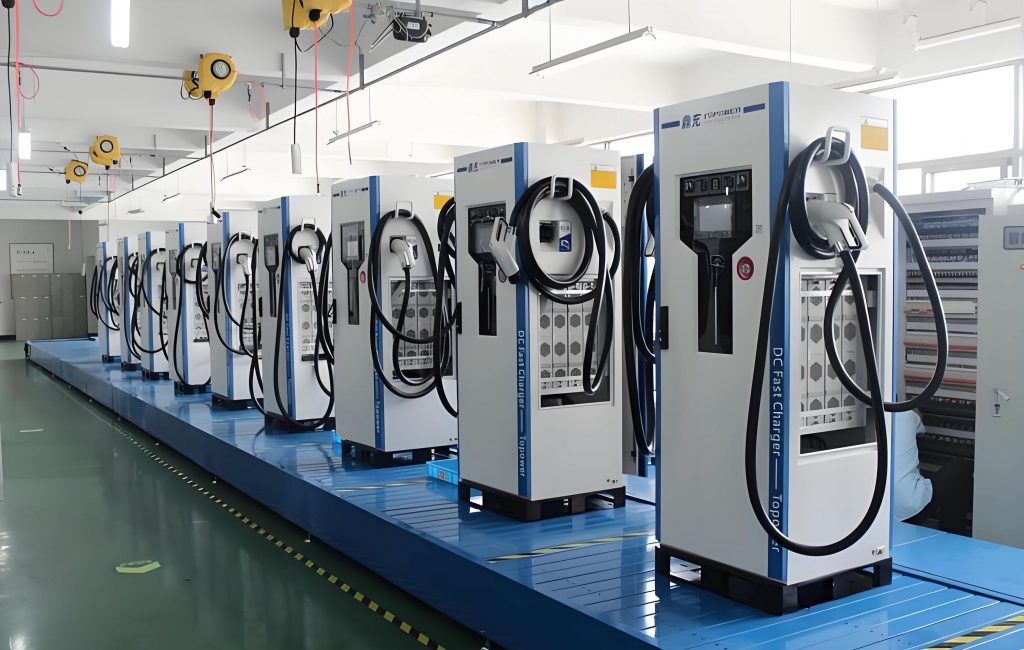
As the global energy landscape shifts towards sustainability and environmental consciousness deepens, electric vehicles (EVs) have emerged as a favored choice due to their zero emissions, low energy consumption, and high efficiency. The proliferation of EVs has accelerated the demand for EV charging stations, making them a critical component of the transportation ecosystem. In this analysis, I delve into the multifaceted user requirements for EV charging stations and propose comprehensive strategies to enhance service quality. By examining key aspects such as convenience, safety, compatibility, and economic factors, I aim to provide insights that can guide policymakers, industry stakeholders, and researchers in fostering a robust EV infrastructure. The widespread adoption of EVs hinges on the reliability and accessibility of EV charging stations, which serve as the backbone for sustainable mobility solutions.
The rapid growth in EV ownership has highlighted the importance of understanding user needs to drive improvements in EV charging station services. Users expect seamless experiences that align with their daily routines, whether in urban centers, residential areas, or remote locations. This article explores these expectations in detail, utilizing data-driven approaches, including tables and mathematical models, to quantify and address the challenges. For instance, the charging time for an EV can be modeled using the formula: $$ T_{charge} = \frac{C_{battery}}{P_{charge}} $$ where \( T_{charge} \) represents the charging time, \( C_{battery} \) is the battery capacity in kilowatt-hours (kWh), and \( P_{charge} \) is the charging power in kilowatts (kW). Such models help in optimizing the performance of EV charging stations and meeting user demands effectively. Furthermore, the integration of smart technologies and user-centric designs is essential for the evolution of EV charging stations, ensuring they become as ubiquitous and reliable as traditional fuel stations.
User Needs Analysis for EV Charging Stations
Understanding user needs is paramount for the successful deployment and operation of EV charging stations. These needs can be categorized into four primary dimensions: convenience, safety, compatibility, and economic considerations. Each dimension encompasses specific user expectations that influence their satisfaction and loyalty towards EV charging services. In this section, I analyze these aspects in depth, supported by empirical observations and theoretical frameworks. The goal is to identify gaps in current EV charging station offerings and propose targeted enhancements. For example, users often prioritize the ease of locating and using EV charging stations, which directly impacts their adoption of electric vehicles. By addressing these needs, stakeholders can foster a more supportive environment for EV growth.
Convenience Needs
Convenience is a cornerstone of user satisfaction with EV charging stations. Users demand widespread availability of charging points, intuitive operation, and minimal waiting times. The distribution of EV charging stations must cover diverse settings, including city centers, residential neighborhoods, highways, and rural areas, to ensure accessibility for all EV owners. A key aspect is the operational simplicity; users prefer EV charging stations that support multiple payment methods, such as mobile QR codes, contactless cards, or app-based transactions, to streamline the charging process. Additionally, real-time information on charging status, speed, and estimated costs through digital interfaces enhances user decision-making. The ability to reserve EV charging stations in advance via smart applications is increasingly important, especially for long-distance travelers who rely on predictable charging schedules.
To quantify convenience factors, consider the following table that outlines key user expectations and corresponding metrics for EV charging stations:
| Convenience Factor | User Expectation | Metric |
|---|---|---|
| Geographic Distribution | High density in urban and suburban areas | Number of EV charging stations per square kilometer |
| Operational Ease | Simple interface and multiple payment options | Average transaction time (minutes) |
| Information Availability | Real-time data on availability and pricing | Percentage of EV charging stations with live updates |
| Reservation Capability | Advance booking to avoid queues | Usage rate of reservation features (%) |
Mathematically, the convenience of an EV charging station network can be evaluated using an accessibility index. For instance, the average distance \( D_{avg} \) to the nearest EV charging station for users in a region can be calculated as: $$ D_{avg} = \frac{1}{N} \sum_{i=1}^{N} d_i $$ where \( N \) is the number of users, and \( d_i \) is the distance from user \( i \) to the closest EV charging station. A lower \( D_{avg} \) indicates higher convenience. Moreover, the charging speed plays a crucial role; faster EV charging stations reduce downtime, which is modeled by the power output and efficiency. The effective charging power \( P_{eff} \) considering losses can be expressed as: $$ P_{eff} = P_{rated} \times \eta $$ where \( P_{rated} \) is the rated power of the EV charging station, and \( \eta \) is the efficiency factor (typically between 0.9 and 0.95). These models underscore the importance of strategic placement and high-performance hardware in EV charging stations to meet convenience needs.
Safety Needs
Safety is a non-negotiable aspect of EV charging stations, as users entrust these facilities with their vehicles and personal well-being. Electrical safety is paramount, requiring EV charging stations to adhere to stringent standards that prevent risks like overcurrent, overvoltage, short circuits, and electrical fires. Physical security measures, such as vandal-resistant designs and weatherproofing for outdoor EV charging stations, are essential to withstand environmental challenges. Data security is equally critical, as EV charging stations often handle sensitive user information; encryption protocols must safeguard against breaches. Users expect proactive safety features, including fault detection systems and remote monitoring, which can alert operators to issues before they escalate. Regular maintenance and inspections of EV charging stations further reinforce user confidence, ensuring reliable operation over time.
The safety performance of an EV charging station can be assessed through risk metrics and compliance checks. For example, the probability of a safety incident \( P_{incident} \) can be modeled based on historical data: $$ P_{incident} = \frac{\text{Number of incidents}}{\text{Total charging sessions}} $$ A lower \( P_{incident} \) indicates a safer EV charging station network. Additionally, the following table summarizes key safety requirements and their implementation in EV charging stations:
| Safety Aspect | User Expectation | Implementation in EV Charging Stations |
|---|---|---|
| Electrical Safety | Protection against shocks and fires | Integrated circuit breakers, insulation monitoring |
| Physical Security | Durability and anti-tampering features | Reinforced casings, surveillance cameras |
| Data Protection | Privacy of personal and payment data | End-to-end encryption, secure authentication |
| Proactive Monitoring | Early fault detection and alerts | IoT sensors, real-time diagnostics |
From a technical perspective, the electrical integrity of an EV charging station can be evaluated using parameters like leakage current \( I_{leak} \), which should remain below a threshold (e.g., 5 mA) to ensure safety: $$ I_{leak} = V_{system} / R_{insulation} $$ where \( V_{system} \) is the system voltage, and \( R_{insulation} \) is the insulation resistance. Furthermore, the reliability of EV charging stations can be quantified using the mean time between failures (MTBF), a higher MTBF value indicating robust safety design. By prioritizing these aspects, operators can build trust and ensure that EV charging stations are perceived as secure hubs for energy replenishment.
Compatibility Needs
Compatibility is a vital user need for EV charging stations, as the diversity of electric vehicle models requires universal accessibility. Users expect EV charging stations to support a wide range of connectors and communication protocols, such as CCS (Combined Charging System), CHAdeMO, and Type 2 standards, to accommodate different EV brands. This interoperability reduces “range anxiety” and promotes EV adoption by ensuring that drivers can charge their vehicles regardless of make or model. Moreover, EV charging stations should offer varying power levels—from slow AC charging to rapid DC charging—to cater to diverse user scenarios, such as overnight charging at home or quick top-ups during travel. The evolution of wireless charging technology for EV charging stations further enhances compatibility by eliminating physical connectors, though standardization remains a challenge.
To illustrate compatibility requirements, the table below compares common charging standards and their adoption in EV charging stations:
| Charging Standard | Compatible EV Models | Typical Power Output | Prevalence in EV Charging Stations |
|---|---|---|---|
| CCS (Combo) | Many European and North American EVs | Up to 350 kW | High in public EV charging stations |
| CHAdeMO | Japanese EVs like Nissan Leaf | Up to 200 kW | Moderate, often in dedicated EV charging stations |
| Type 2 (Mennekes) | European EVs | Up to 22 kW (AC) | Common in residential EV charging stations |
| GB/T (China) | Chinese EVs | Up to 237.5 kW | Dominant in Chinese EV charging stations |
Mathematically, the compatibility of an EV charging station network can be expressed using a compatibility index \( C_index \), which measures the proportion of EV models that can use the stations: $$ C_index = \frac{M_{compatible}}{M_{total}} \times 100\% $$ where \( M_{compatible} \) is the number of compatible EV models, and \( M_{total} \) is the total number of EV models in the market. A higher \( C_index \) indicates better interoperability. Additionally, the charging efficiency \( \eta_c \) for different EV models at an EV charging station can vary based on the connector type and power delivery: $$ \eta_c = \frac{E_{delivered}}{E_{supplied}} $$ where \( E_{delivered} \) is the energy delivered to the EV battery, and \( E_{supplied} \) is the energy supplied by the EV charging station. By enhancing compatibility, EV charging stations can serve a broader user base and facilitate the transition to electric mobility.
Economic Needs
Economic considerations play a significant role in user decisions regarding EV charging stations. Users seek cost-effective charging solutions with transparent pricing structures that avoid hidden fees. The total cost of charging at an EV charging station includes electricity rates, service charges, and potential demand-based surcharges. Users often compare these costs to traditional fueling options, emphasizing the need for competitive pricing to justify the switch to EVs. Dynamic pricing models, such as time-of-use rates, can incentivize off-peak charging at EV charging stations, balancing grid load and reducing expenses for users. Furthermore, loyalty programs, discounts, and bundled services at EV charging stations enhance affordability and encourage repeated use. The economic viability of EV charging stations also depends on their operational efficiency, as higher utilization rates can lower per-session costs through economies of scale.
The economic aspects of EV charging stations can be analyzed using cost-benefit models. For instance, the total cost \( TC \) for a user to charge an EV at a station over a period can be calculated as: $$ TC = \sum_{i=1}^{n} (E_i \times P_i + S_i) $$ where \( E_i \) is the energy consumed in session \( i \) (in kWh), \( P_i \) is the price per kWh, \( S_i \) is the service fee, and \( n \) is the number of charging sessions. The following table outlines key economic factors and user expectations for EV charging stations:
| Economic Factor | User Expectation | Impact on EV Charging Station Design |
|---|---|---|
| Pricing Transparency | Clear breakdown of costs | Digital displays with real-time pricing |
| Cost Competitiveness | Lower than gasoline per mile | Strategic pricing models and subsidies |
| Payment Flexibility | Multiple payment options | Integration with mobile wallets and cards |
| Incentive Programs | Discounts for frequent users | Membership plans and reward systems |
From an operator’s perspective, the profitability of an EV charging station can be evaluated using the return on investment (ROI): $$ ROI = \frac{\text{Net Profit}}{\text{Total Investment}} \times 100\% $$ where net profit considers revenue from EV charging stations minus operational costs. Additionally, the levelized cost of charging (LCOC) for EV charging stations provides a standardized metric: $$ LCOC = \frac{\text{Total Lifetime Cost}}{\text{Total Energy Delivered}} $$ where total lifetime cost includes installation, maintenance, and electricity expenses for EV charging stations. By addressing economic needs, stakeholders can ensure that EV charging stations are not only accessible but also financially sustainable for users and operators alike.
Service Quality Improvement Strategies for EV Charging Stations
Enhancing the service quality of EV charging stations requires a multi-faceted approach that addresses the identified user needs. In this section, I propose strategies focused on infrastructure development, safety enhancements, compatibility improvements, and economic optimizations. These strategies are designed to elevate the overall user experience, foster trust, and promote the widespread adoption of EVs. By leveraging technological advancements and user feedback, EV charging stations can evolve into efficient, reliable, and user-friendly amenities. The implementation of these strategies should be iterative, with continuous monitoring and adjustments based on performance metrics and changing user expectations.
Enhancing Charging Infrastructure Construction
To meet the growing demand for EV charging stations, a concerted effort is needed to expand and optimize the charging infrastructure. This involves increasing the density of EV charging stations in high-traffic areas, such as urban centers and transportation hubs, while also ensuring coverage in underserved regions like rural communities and highways. Strategic planning should incorporate smart city concepts, where EV charging stations are integrated into urban development plans, including residential and commercial buildings. For instance, mandating that new constructions include provisions for EV charging stations can accelerate deployment. Additionally, upgrading existing EV charging stations with faster charging technologies, such as high-power DC chargers, reduces waiting times and improves user satisfaction. The use of modular designs in EV charging stations allows for scalability and easy maintenance, supporting long-term sustainability.
The impact of infrastructure enhancements can be quantified using spatial analysis and performance indicators. For example, the coverage ratio \( CR \) of EV charging stations in a region can be defined as: $$ CR = \frac{A_{covered}}{A_{total}} \times 100\% $$ where \( A_{covered} \) is the area within a certain distance (e.g., 5 km) of an EV charging station, and \( A_{total} \) is the total area of the region. A higher CR indicates better accessibility. The table below summarizes key infrastructure strategies and their expected outcomes for EV charging stations:
| Strategy | Description | Expected Outcome for EV Charging Stations |
|---|---|---|
| Urban Density Increase | Deploy more EV charging stations in cities | Reduced average distance to stations |
| Rural Expansion | Install EV charging stations in remote areas | Enhanced equity and travel range |
| Fast-Charging Upgrades | Integrate high-power chargers | Decreased charging times |
| Smart Integration | Use IoT for management and monitoring | Improved operational efficiency |
Moreover, the utilization rate \( U \) of EV charging stations can be optimized through demand forecasting models: $$ U = \frac{\text{Number of charging sessions}}{\text{Total available slots}} \times 100\% $$ Higher utilization rates justify investments in EV charging stations and reduce idle costs. By prioritizing infrastructure development, stakeholders can create a resilient network of EV charging stations that supports the evolving needs of EV users.
Improving Safety of Charging Facilities
Safety enhancements for EV charging stations are critical to building user trust and ensuring reliable operation. This involves adopting rigorous design standards, implementing advanced monitoring systems, and conducting regular safety audits. EV charging stations should be equipped with redundant safety mechanisms, such as ground fault circuit interrupters (GFCIs) and thermal sensors, to prevent electrical hazards. Physical security can be bolstered through robust materials, lighting, and surveillance at EV charging stations, deterring vandalism and theft. Cybersecurity measures, including encrypted data transmission and secure software updates, protect user information from breaches. Proactive maintenance schedules for EV charging stations, supported by remote diagnostics, enable early detection of faults, minimizing downtime and risks. User education on safe charging practices, such as proper cable handling and emergency procedures, further reinforces safety culture around EV charging stations.
The effectiveness of safety improvements can be measured using key performance indicators (KPIs). For instance, the incident rate \( IR \) for EV charging stations can be tracked over time: $$ IR = \frac{\text{Number of safety incidents}}{\text{Total operational hours}} $$ A decreasing IR indicates successful safety interventions. The following table outlines safety strategies and their implementation in EV charging stations:
| Safety Strategy | Implementation in EV Charging Stations | Expected Impact |
|---|---|---|
| Electrical Redundancy | Install backup circuits and fault detectors | Reduced risk of shocks and fires |
| Physical Hardening | Use weather-resistant and tamper-proof materials | Longer lifespan and fewer disruptions |
| Cybersecurity Protocols | Implement end-to-end encryption and audits | Protection of user data and payments |
| Preventive Maintenance | Schedule regular inspections and software updates | Higher reliability and user confidence |
From a technical standpoint, the safety margin \( SM \) of an EV charging station can be calculated for electrical components: $$ SM = \frac{V_{max} – V_{operating}}{V_{operating}} \times 100\% $$ where \( V_{max} \) is the maximum safe voltage, and \( V_{operating} \) is the operating voltage. A positive SM ensures a buffer against overloads in EV charging stations. By embedding these safety measures, EV charging stations can become exemplars of secure and dependable infrastructure.
Enhancing Compatibility of EV Charging Stations
Improving the compatibility of EV charging stations is essential to accommodate the diverse ecosystem of electric vehicles. This requires adherence to international standards and the adoption of multi-standard connectors that support various charging protocols. EV charging stations should be designed with modular interfaces, allowing for easy upgrades to new standards as technology evolves. Collaboration among EV manufacturers, charging equipment suppliers, and standards organizations is crucial to harmonize requirements for EV charging stations. Additionally, software updates can enhance compatibility by enabling communication between EV charging stations and different vehicle models through open protocols. The integration of universal adapters or wireless charging options in EV charging stations can further bridge compatibility gaps, providing flexibility for users with older or niche EV models.
The compatibility of EV charging stations can be evaluated using interoperability tests and user satisfaction surveys. For example, the compatibility score \( CS \) for a network of EV charging stations can be derived from user feedback: $$ CS = \frac{\sum_{j=1}^{k} S_j}{k} $$ where \( S_j \) is the satisfaction rating (on a scale of 1-5) for compatibility from user \( j \), and \( k \) is the number of respondents. A higher CS indicates better alignment with user needs. The table below presents strategies to enhance compatibility in EV charging stations:
| Compatibility Strategy | Description | Benefit for EV Charging Stations |
|---|---|---|
| Multi-Standard Connectors | Install CCS, CHAdeMO, and Type 2 in one unit | Wider vehicle coverage |
| Software Flexibility | Enable firmware updates for new protocols | Future-proofing against tech changes |
| Universal Adapter Kits | Provide adapters for less common EVs | Increased accessibility |
| Wireless Charging Integration | Deploy inductive charging pads | Convenience and reduced wear |
Mathematically, the efficiency of compatibility efforts can be assessed using the adaptation rate \( AR \), which measures how quickly EV charging stations adopt new standards: $$ AR = \frac{N_{new}}{N_{total}} \times 100\% $$ where \( N_{new} \) is the number of EV charging stations with updated compatibility features, and \( N_{total} \) is the total number of stations. By prioritizing compatibility, EV charging stations can serve as inclusive platforms that support the entire spectrum of electric vehicles.
Optimizing Charging Pricing and Services
Optimizing the pricing and service models of EV charging stations is key to attracting and retaining users while ensuring economic sustainability. Dynamic pricing strategies, such as time-based rates or demand-based discounts, can balance load on the grid and offer cost savings to users of EV charging stations. Transparent billing systems that clearly display energy consumption, service fees, and any surcharges build trust and reduce user frustration. Value-added services, including loyalty programs, subscription plans, and bundled offerings like Wi-Fi or rest areas at EV charging stations, enhance the overall experience. Operational efficiency can be improved through data analytics, which optimize pricing and resource allocation for EV charging stations based on usage patterns. Furthermore, partnerships with businesses or municipalities can subsidize costs for EV charging stations, making them more affordable for users.
The economic optimization of EV charging stations can be modeled using profit maximization frameworks. For instance, the optimal price \( P^* \) per kWh at an EV charging station can be determined by considering demand elasticity: $$ P^* = \frac{MC}{1 – \frac{1}{|E_d|}} $$ where \( MC \) is the marginal cost of supplying electricity, and \( E_d \) is the price elasticity of demand. The table below outlines pricing and service strategies for EV charging stations:
| Optimization Strategy | Implementation in EV Charging Stations | Expected Outcome |
|---|---|---|
| Dynamic Pricing | Adjust rates based on time and demand | Peak load reduction and user savings |
| Transparent Billing | Provide detailed invoices and real-time updates | Increased user trust and satisfaction |
| Loyalty Programs | Offer points or discounts for frequent use | Higher retention rates |
| Service Bundling | Combine charging with amenities like cafes | Enhanced user experience and revenue |
Additionally, the customer lifetime value (CLV) for users of EV charging stations can be calculated to guide long-term strategies: $$ CLV = \sum_{t=1}^{T} \frac{R_t – C_t}{(1 + d)^t} $$ where \( R_t \) is the revenue from a user in year \( t \), \( C_t \) is the cost to serve them, \( d \) is the discount rate, and \( T \) is the lifespan of the relationship. By refining pricing and services, EV charging stations can achieve a balance between user affordability and operational viability.
Conclusion
In summary, the analysis of user needs for EV charging stations reveals that convenience, safety, compatibility, and economic factors are pivotal to user satisfaction and the broader adoption of electric vehicles. The strategies proposed—enhancing infrastructure, improving safety, boosting compatibility, and optimizing pricing—provide a roadmap for elevating the service quality of EV charging stations. By implementing these approaches, stakeholders can address existing challenges and foster a supportive ecosystem for EVs. The evolution of EV charging stations will continue to be shaped by technological innovations and user feedback, ensuring they meet the dynamic demands of the mobility landscape. Ultimately, a user-centric focus on EV charging stations will drive sustainable transportation forward, contributing to environmental goals and enhanced quality of life.