
In the rapidly evolving automotive industry, the demand for enhanced comfort, reliability, and智能化 in electric MPV vehicles has positioned electric sliding doors as a critical feature. These doors not only improve passenger accessibility but also elevate the overall user experience through seamless automation. As autonomous driving technologies mature, the optimization of transmission systems, particularly gear-rack mechanisms, has become a focal point in electric MPV design. This article explores the rational layout and analysis of gear-rack transmission structures in electric MPV sliding doors, addressing common issues such as excessive noise, inadequate motion smoothness, and limited lifespan in traditional systems. By examining force calculations, meshing characteristics, material selection, noise control, and static analysis, I propose a solution that ensures efficiency, low noise, and longevity for electric MPV applications.
The gear-rack transmission system serves as the core component for precise control and smooth operation in electric MPV sliding doors. Its design and optimization directly impact the door’s performance, making it essential to adhere to rational layout principles. For electric MPV models, space constraints and weight considerations are paramount. The compact design of gears, racks, and associated linkages must minimize intrusion into the vehicle interior while employing lightweight materials like aluminum alloys or high-strength plastics to reduce mass and enhance fuel efficiency. Additionally, noise and vibration mitigation are crucial for passenger comfort in electric MPV systems; this involves optimizing gear tooth profiles, incorporating damping materials, and using low-friction components. Durability and reliability are equally vital, as electric MPV doors undergo frequent use under varying environmental conditions. Selecting wear-resistant materials, ensuring proper stress distribution, and implementing anti-corrosion treatments can extend the system’s lifespan. Finally, maintainability should be integrated into the design, allowing for easy inspection and replacement of components in electric MPV assemblies.
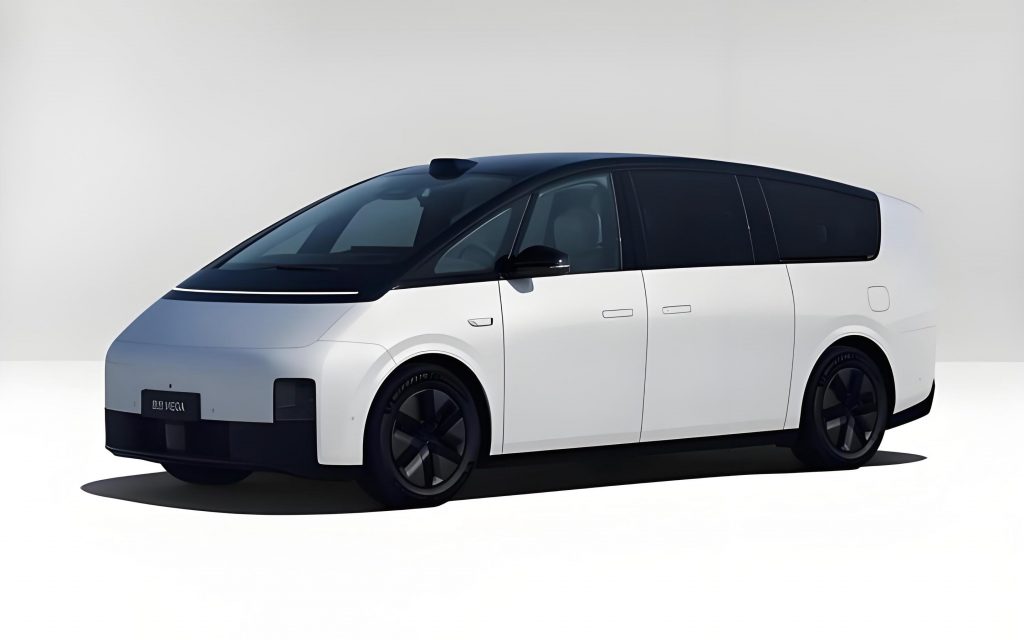
In the layout and design of the gear-rack transmission for electric MPV sliding doors, the system typically comprises an actuator (a geared motor) as the power source, intermediate gears for torque transmission, and a rack integrated into the vehicle’s guide rail. This configuration forms a semi-closed loop structure, where the electric drive unit is bolted to the door’s outer panel, and the rack replaces the manual guide rail on the body side. To meet space limitations and enable manual-override functionality in electric MPV doors, a three-stage gear reduction is often employed, balancing gear ratio and minimizing the number of components. For instance, with an output speed ratio of 1.4 and a motor rated torque of 4 N·m, the driving force can be calculated using the formula: $$ F_t = \frac{T \times i \times \eta}{r} $$ where \( T \) is the motor torque, \( i \) is the total gear ratio, \( \eta \) is the transmission efficiency (typically 0.9), and \( r \) is the pitch radius of the gear. Substituting values, such as \( T = 4 \, \text{N·m} \), \( i = 1.4 \), and \( r = 0.026 \, \text{m} \), yields \( F_t \approx 193.84 \, \text{N} \), which exceeds the measured pull force of 140 N on a 12-degree slope for electric MPV doors, ensuring reliability. The meshing principle requires the working pitch circle to align with the standard pitch circle, and the pressure angle \( \alpha’ \) to equal the standard pressure angle \( \alpha \) (usually 20°), satisfying the condition for continuous rotation with a contact ratio \( \varepsilon_\alpha \geq [\varepsilon_\alpha] \), where \( [\varepsilon_\alpha] \) ranges from 1.1 to 1.2.
Material selection and finite element analysis (FEA) are critical for addressing noise and durability in electric MPV gear-rack systems. Noise primarily stems from vibrations induced by meshing dynamics and structural angles, such as the 10-degree projection angle in the lower guide rail of electric MPV doors, which causes gravitational components to contribute to friction-induced vibrations. To mitigate this, composite materials like PA12 with 5% glass fiber are advantageous due to their damping properties, self-lubrication, and high internal loss, which absorb vibrational energy and reduce noise. For example, FFT analysis of composite gears shows a reduction in natural bending frequency forces, as illustrated in the following table comparing material properties:
| Material | Elastic Modulus (MPa) | Poisson’s Ratio | Density (g/cm³) | Noise Reduction Potential |
|---|---|---|---|---|
| Steel | 210,000 | 0.30 | 7.85 | Low |
| PA12 + 5% Glass Fiber | 262 | 0.34 | 1.3 | High |
Static stress analysis using software like SolidWorks Simulation validates the design for electric MPV applications. Consider a spur gear with 13 teeth and a rack segment with 29 teeth, module \( m = 2 \), pressure angle \( \alpha = 20^\circ \), and material properties: elastic modulus \( E = 262 \, \text{MPa} \) and Poisson’s ratio \( \nu = 0.34 \). The moment on the gear is calculated as: $$ M = K_a \times F \times L $$ where \( K_a = 1.66 \) (safety factor), \( F = 140 \, \text{N} \) (pull force), and \( L = 0.013 \, \text{m} \) (gear radius), giving \( M \approx 3.02 \, \text{N·m} \). FEA results indicate that the von Mises stress in both gear and rack remains below the allowable bending stress of the composite material, confirming the design’s suitability for electric MPV doors. This approach not only ensures lightweight and economical production but also enhances noise control through material innovation.
The assembly process for the gear-rack drive in electric MPV sliding doors must prioritize efficiency and maintainability. The electric drive unit is designed to fit within the spatial constraints of manual systems, allowing for straightforward integration into existing electric MPV production lines. The workflow involves mounting the drive unit to the door panel via bolts, similar to manual counterparts, followed by alignment with the body-mounted rack. This simplifies maintenance and replacement, reducing downtime and costs for electric MPV manufacturers. Key steps in the assembly process are summarized below:
| Step | Process Description | Considerations for Electric MPV |
|---|---|---|
| 1 | Mount electric drive unit to door | Ensure bolt compatibility with door panel |
| 2 | Align gear with rack on body | Verify meshing accuracy and clearance |
| 3 | Secure components and test operation | Check for noise and smooth motion |
| 4 | Final inspection and quality control | Confirm durability under load cycles |
In conclusion, the gear-rack transmission system for electric MPV sliding doors offers a robust solution compared to alternatives like wire ropes or synchronous belts, providing higher load capacity, wear resistance, and self-lubrication without tensioning requirements. However, noise remains a potential challenge in electric MPV applications, necessitating ongoing optimization through structural adjustments, material enhancements, and precision engineering. Future efforts should focus on parameters such as pressure angle optimization, contact ratio refinement, and tooth profile modifications to further reduce acoustic emissions. This analysis underscores the importance of integrated design and analysis in advancing electric MPV technologies, paving the way for quieter and more reliable automotive systems.
To further elaborate on the force dynamics in electric MPV gear-rack systems, the fundamental equations governing motion and efficiency are essential. The overall transmission efficiency \( \eta \) can be derived from the gear meshing losses and bearing friction, often expressed as: $$ \eta = \eta_g \times \eta_b $$ where \( \eta_g \) is the gear efficiency (typically 0.98–0.99 per pair) and \( \eta_b \) is the bearing efficiency (around 0.99). For a three-stage reduction in electric MPV doors, the cumulative efficiency is critical for calculating the actual driving force. Moreover, the contact stress between gear and rack teeth can be evaluated using the Hertzian contact formula: $$ \sigma_H = \sqrt{\frac{F_t}{b \cdot d_1} \cdot \frac{1}{\pi \cdot (1-\nu^2)} \cdot \frac{E}{2}} $$ where \( b \) is the face width, \( d_1 \) is the gear pitch diameter, and \( E \) is the equivalent modulus of elasticity. This ensures that the stress remains within material limits for electric MPV durability.
Another aspect to consider is the thermal expansion in electric MPV environments, which affects gear-rack clearance and noise. The linear expansion coefficient \( \alpha_t \) of composites like PA12 is approximately \( 8 \times 10^{-5} \, \text{/°C} \), leading to dimensional changes under temperature fluctuations. The change in length \( \Delta L \) is given by: $$ \Delta L = L_0 \cdot \alpha_t \cdot \Delta T $$ where \( L_0 \) is the initial length and \( \Delta T \) is the temperature change. Designing with appropriate tolerances minimizes binding and noise in electric MPV systems. Additionally, the natural frequency of the gear-rack assembly should be analyzed to avoid resonance. For a simplified model, the frequency \( f_n \) can be estimated as: $$ f_n = \frac{1}{2\pi} \sqrt{\frac{k}{m}} $$ where \( k \) is the stiffness from FEA and \( m \) is the effective mass. Keeping \( f_n \) away from operational frequencies reduces vibration in electric MPV doors.
In summary, the integration of gear-rack transmission in electric MPV sliding doors requires a holistic approach that balances mechanical design, material science, and production practicality. By leveraging computational tools and empirical data, engineers can achieve optimal performance for electric MPV applications, ensuring that these systems meet the high standards of modern automotive innovation. As the electric MPV market grows, continued research into noise reduction and efficiency will drive further advancements, making gear-rack mechanisms a cornerstone of intelligent vehicle design.