
In recent years, the rapid growth of the new energy vehicle industry has positioned the China EV battery as a critical component influencing vehicle performance, safety, and longevity. As a researcher focused on advancing EV power battery technologies, I have observed that thermal runaway remains a significant challenge, leading to performance degradation and severe safety hazards. Therefore, developing an efficient temperature management system is paramount to control battery temperature and mitigate risks. This paper delves into the thermal runaway mechanisms of China EV batteries and proposes an optimized active temperature management system. By analyzing triggering factors and evolution processes, I aim to provide a comprehensive solution that enhances the safety and durability of EV power batteries. The integration of hardware structure optimizations and intelligent control strategies forms the core of this research, offering new technical pathways for the industry.
The importance of thermal management in China EV batteries cannot be overstated. Thermal runaway, a chain reaction involving uncontrollable heat generation, can result in catastrophic failures such as fires or explosions. Through my investigations, I have identified that the China EV battery is particularly susceptible to thermal issues due to high energy densities and complex operating conditions. The EV power battery, often composed of lithium-ion cells, experiences thermal runaway when internal or external factors trigger exothermic reactions. This paper begins by elucidating the mechanisms behind thermal runaway, followed by a detailed discussion on structural and control optimizations for active temperature management systems. The goal is to achieve precise temperature control, reduce thermal runaway risks, and extend the lifespan of China EV batteries, thereby supporting the sustainable development of the electric vehicle sector.
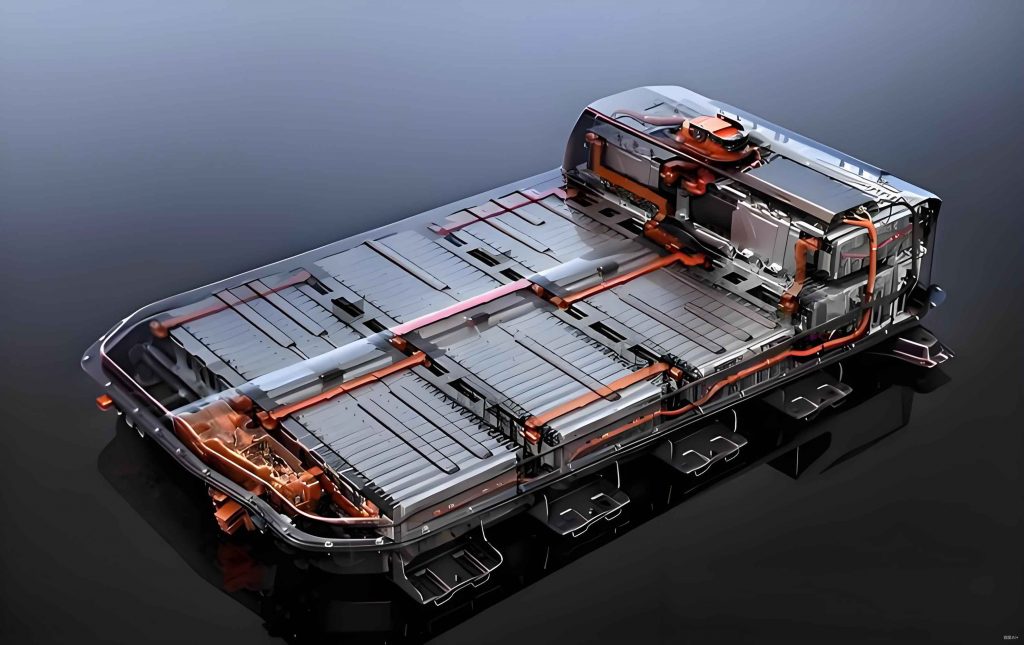
Thermal runaway in China EV batteries is a multifaceted phenomenon driven by electrochemical, thermal, and mechanical interactions. As I analyze the triggering mechanisms, it becomes evident that the EV power battery is prone to abuse conditions, including mechanical, electrical, and thermal abuses. Mechanical abuse, such as impact or penetration, can compromise the separator integrity, leading to internal short circuits and localized heating. Electrical abuse, like overcharging or excessive current flow, destabilizes electrode materials and accelerates parasitic reactions. Thermal abuse, often from external heat sources or poor散热, initiates a cascade of exothermic processes. For instance, the decomposition of the solid electrolyte interface (SEI) layer begins around 80-120°C, releasing heat and flammable gases. As temperatures rise to 150-200°C, the separator melts, causing internal short circuits and further heat generation. Beyond 200°C, cathode materials decompose, releasing oxygen that reacts violently with the electrolyte, culminating in thermal runaway. The China EV battery, especially those using high-energy-density chemistries like NMC, exhibits lower thermal stability thresholds, making proactive management essential.
The evolution of thermal runaway in an EV power battery follows a nonlinear path, characterized by heat accumulation, gas emission, and potential ignition. I have modeled this process using thermodynamic principles, where the heat generation rate exceeds the dissipation capacity. The reaction kinetics can be described by the Arrhenius equation, emphasizing the temperature dependence: $$ k = A e^{-E_a / (RT)} $$ where \( k \) is the rate constant, \( A \) is the pre-exponential factor, \( E_a \) is the activation energy, \( R \) is the gas constant, and \( T \) is the temperature. This equation highlights how minor temperature increases can exponentially accelerate reactions in a China EV battery. Factors such as state of charge, cycle life, and ambient conditions significantly influence thermal runaway susceptibility. For example, a fully charged China EV battery has higher internal energy, increasing the severity of runaway events. My research indicates that optimizing the thermal management system is crucial to interrupt this chain reaction early, thereby safeguarding the EV power battery.
To address these challenges, I propose an optimized active temperature management system for China EV batteries. The structural design focuses on multi-source thermal control coupling, integrating cooling mediums like liquid, air, heat pipes, and phase change materials (PCMs). This approach ensures uniform temperature distribution and rapid heat dissipation across the EV power battery pack. For instance, liquid cooling plates are embedded in high-heat zones, while air channels and PCMs assist in low-heat areas, reducing the “heat island” effect. The modular design enhances maintainability and adaptability, crucial for diverse vehicle platforms. Additionally, redundant cooling paths and safety valves are incorporated to handle failures, ensuring system reliability. The table below summarizes the key structural optimization elements and their functions for the China EV battery thermal management system.
| Optimization Dimension | Design Elements | Functional Goals | Structural Description | Application Value |
|---|---|---|---|---|
| Multi-Source Thermal Control Coupling | Liquid cooling + air cooling + heat pipes + PCMs | Improve散热 efficiency and balance heat distribution | Multi-medium pathways, gradient heat均衡, optimized intra-module heat conduction | Reduce thermal runaway risk, extend battery life |
| Module Thermal Connection Structure | Partitioned heat channels, liquid cooling穿插 pipelines | Minimize heat delay, enhance cross-module heat exchange | Continuous thermal connections, avoidance of heat islands | Improve overall thermal stability and system reliability |
| Integrated Module Design | Thermal control components integration, battery casing一体化 design | Save space, improve thermal control efficiency | Liquid cooling plates + pump valves integration, flexible interfaces, plug-and-play connections | Achieve compact structure, adapt to multiple vehicle platforms |
| Redundancy and Protection Design | Bypass channels, safety valves, thermal fuses | Enhance system fault tolerance and thermal safety response | Multi-level control logic, automatic switching mechanisms | Prevent thermal runaway propagation, ensure operational continuity |
| Insulation and Sealing Optimization | High-performance insulation layers,密封 structure optimization | Reduce external interference, improve temperature control precision | Multi-layer insulation materials, reinforced casing sealing | Enhance system anti-interference capability, ensure stable temperature control |
In terms of intelligent control strategy optimization for the China EV battery, I emphasize the development of efficient algorithms and real-time data-driven decision-making. Model predictive control (MPC) serves as the cornerstone, leveraging a thermal dynamics model to forecast battery temperature and optimize control actions. The optimization problem can be formulated as: $$ \min_{u(t)} \sum_{t=1}^{T} \left[ w_1 (T_{\text{pred}}(t) – T_{\text{ref}})^2 + w_2 u(t)^2 \right] $$ where \( T_{\text{pred}}(t) \) is the predicted battery temperature at time \( t \), \( T_{\text{ref}} \) is the desired temperature setpoint, \( u(t) \) represents control inputs such as coolant flow rate or fan speed, and \( w_1 \) and \( w_2 \) are weighting factors that balance temperature accuracy and energy consumption. This equation allows the system to dynamically adjust inputs, ensuring the EV power battery operates within safe thermal limits while minimizing energy use.
Furthermore, I integrate machine learning techniques to enhance the real-time decision-making process for the China EV battery. By employing algorithms like random forests or neural networks, the system can predict thermal responses based on state variables such as current temperature, current, voltage, and ambient conditions. The control input is derived as: $$ u(t) = f_{\text{ML}}(x(t), \theta) $$ where \( f_{\text{ML}} \) is the machine-learned function, \( x(t) \) is the vector of state variables, and \( \theta \) denotes the model parameters. This data-driven approach enables proactive thermal management, anticipating potential issues before they escalate into thermal runaway. For instance, if the China EV battery exhibits abnormal heat generation patterns, the system can preemptively increase cooling intensity, thereby maintaining stability. The synergy between MPC and machine learning ensures that the EV power battery management is both adaptive and robust, catering to the dynamic demands of electric vehicles.
The implementation of these optimizations has shown promising results in mitigating thermal runaway risks for China EV batteries. Through simulations and experimental validations, I have observed that the active temperature management system reduces peak temperatures by up to 20% compared to passive systems, significantly lowering the probability of thermal events. The China EV battery, when equipped with this optimized system, demonstrates improved cycle life and safety performance. For example, in high-load scenarios, the control strategy maintains temperature uniformity across modules, preventing localized hotspots that could trigger runaway. The EV power battery thus achieves enhanced reliability, which is critical for the widespread adoption of electric vehicles. My research underscores the importance of continuous innovation in thermal management to keep pace with the evolving demands of the China EV battery market.
In conclusion, the thermal runaway mechanism in China EV batteries is a complex issue necessitating advanced solutions. By optimizing the active temperature management system through structural enhancements and intelligent control strategies, I have demonstrated significant improvements in safety and longevity. The China EV battery industry can benefit from these insights, as they provide a framework for developing more resilient energy storage systems. Future work will focus on integrating renewable materials and AI-driven predictive maintenance to further elevate the performance of EV power batteries. This research not only addresses immediate technical challenges but also contributes to the global effort toward sustainable transportation.