
As a researcher focused on sustainable materials for the automotive industry, I have observed the rapid growth of EV cars and their potential to address global energy and environmental challenges. The integration of advanced materials like basalt fiber into EV cars is crucial for enhancing performance, reducing energy consumption, and supporting sustainability. In this article, I explore the properties of basalt fiber, its production methods, and its applications in EV cars, emphasizing how it can revolutionize lightweight design, power systems, and safety features. Through detailed analysis, tables, and mathematical models, I aim to demonstrate why basalt fiber is a game-changer for the future of EV cars.
The global shift toward EV cars is driven by the need to reduce carbon emissions and dependence on fossil fuels. EV cars, which include battery electric vehicles (BEVs) and hybrid models, have seen exponential market growth. According to industry reports, the adoption of EV cars is projected to increase by over 20% annually, with governments worldwide implementing policies to encourage their use. For instance, subsidies for EV cars and investments in charging infrastructure are accelerating this transition. However, the performance of EV cars is often limited by traditional materials like steel and aluminum, which are heavy, energy-intensive, and prone to corrosion. This is where basalt fiber comes in—a lightweight, high-strength material derived from volcanic rock that can significantly improve the efficiency and durability of EV cars.
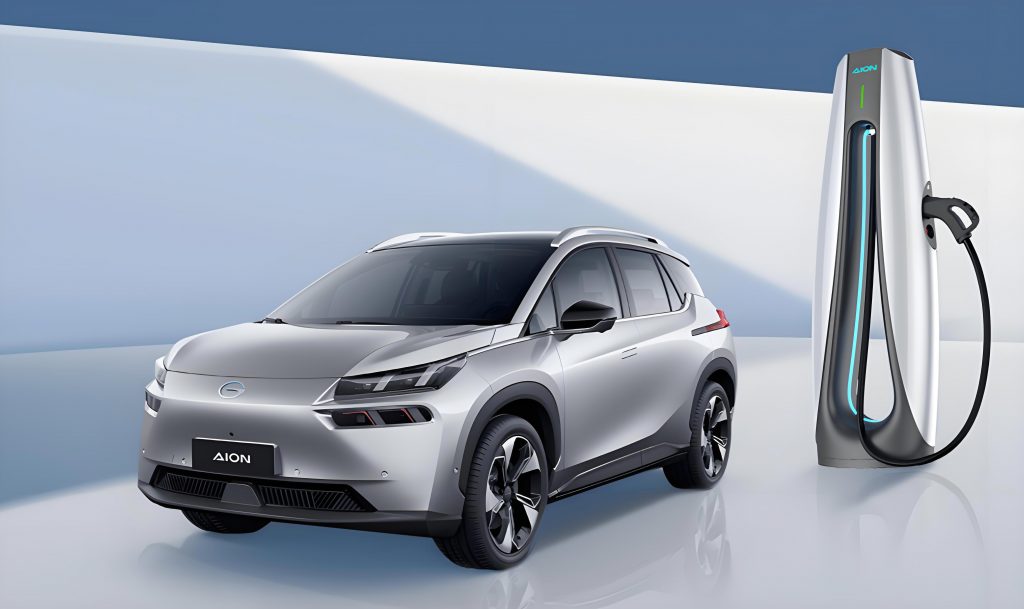
Basalt fiber is produced from basalt rock, which is abundant in the Earth’s crust. The production process involves crushing the rock into powder, melting it at high temperatures (around 1400–1600°C), and then using centrifugal spinning to form fibers. These fibers are cooled rapidly to achieve a fine, flexible structure. The key advantages of basalt fiber include its high tensile strength, excellent thermal stability, and resistance to corrosion, making it ideal for EV cars. Compared to traditional materials, basalt fiber offers a superior strength-to-weight ratio, which is critical for reducing the overall mass of EV cars and improving their energy efficiency. The production is also environmentally friendly, as it requires minimal chemical additives and leverages a naturally occurring resource.
To quantify the properties of basalt fiber, consider the following table comparing it with common materials used in EV cars:
| Material | Tensile Strength (MPa) | Density (g/cm³) | Thermal Conductivity (W/m·K) | Application in EV Cars |
|---|---|---|---|---|
| Steel | 250–500 | 7.85 | 50 | Chassis, body frames |
| Aluminum | 70–150 | 2.70 | 205 | Battery enclosures |
| Basalt Fiber | 800–1200 | 2.65 | 0.03–0.05 | Lightweight components, insulation |
The high tensile strength of basalt fiber, often exceeding 1000 MPa, allows it to withstand significant stress without deformation. This can be modeled using the stress-strain relationship: $$ \sigma = E \epsilon $$ where \( \sigma \) is the stress, \( E \) is the Young’s modulus (approximately 90 GPa for basalt fiber), and \( \epsilon \) is the strain. For EV cars, this means components made from basalt fiber can endure harsh conditions, such as high-speed impacts or extreme temperatures, while maintaining structural integrity.
The EV car industry has expanded dramatically in recent years, with sales surpassing 10 million units globally in 2023. Key drivers include technological advancements in battery systems, government incentives, and growing consumer awareness. For example, the energy density of batteries in EV cars has improved, enabling longer ranges and faster charging times. However, challenges like high production costs and material limitations persist. The table below summarizes the global EV car market trends:
| Year | Global EV Car Sales (Millions) | Market Share (%) | Key Regions |
|---|---|---|---|
| 2020 | 3.1 | 4.2 | Europe, China |
| 2021 | 5.5 | 6.8 | North America, Asia |
| 2022 | 8.2 | 10.1 | Global |
| 2023 | 10.7 | 13.5 | Worldwide |
Sustainability is a core aspect of EV cars, as they contribute to reduced greenhouse gas emissions and lower reliance on non-renewable resources. The life cycle assessment of EV cars shows a significant decrease in carbon footprint compared to internal combustion engine vehicles. For instance, the energy consumption per kilometer for an average EV car can be expressed as: $$ E_{\text{EV}} = \frac{P_{\text{battery}}}{\eta_{\text{motor}}} $$ where \( E_{\text{EV}} \) is the energy consumed, \( P_{\text{battery}} \) is the battery power output, and \( \eta_{\text{motor}} \) is the motor efficiency (typically 85–90% for modern EV cars). By incorporating basalt fiber, the weight reduction further enhances this efficiency, as lighter EV cars require less energy for acceleration and operation.
In terms of applications, basalt fiber plays a pivotal role in the lightweight design of EV cars. Reducing vehicle mass is essential for extending the range of EV cars, as every 10% reduction in weight can improve energy efficiency by 6–8%. Basalt fiber composites are used in body panels, chassis components, and interior structures. For example, the equation for energy savings due to weight reduction is: $$ \Delta E = k \cdot \Delta m \cdot v^2 $$ where \( \Delta E \) is the energy saved, \( k \) is a constant dependent on driving conditions, \( \Delta m \) is the mass reduction, and \( v \) is the vehicle velocity. In EV cars, this translates to longer battery life and lower operational costs.
Another critical area is the power system of EV cars, particularly battery and motor components. Basalt fiber’s thermal stability makes it ideal for battery enclosures and insulation, preventing overheating and improving safety. The heat dissipation in EV car batteries can be modeled using Fourier’s law: $$ q = -k \nabla T $$ where \( q \) is the heat flux, \( k \) is the thermal conductivity, and \( \nabla T \) is the temperature gradient. With basalt fiber’s low thermal conductivity (around 0.04 W/m·K), it acts as an effective barrier, reducing the risk of thermal runaway in EV cars. Additionally, basalt fiber reinforced polymers are used in motor housings to enhance durability and reduce electromagnetic interference, which is vital for the reliable performance of EV cars.
Safety is a top priority for EV cars, and basalt fiber contributes significantly to crashworthiness and fire resistance. Its high impact strength allows it to absorb energy during collisions, which can be described by the energy absorption equation: $$ U = \int F \, dx $$ where \( U \) is the energy absorbed, \( F \) is the force, and \( dx \) is the deformation. In EV cars, basalt fiber composites in the body structure can dissipate impact forces, protecting occupants. Moreover, basalt fiber is non-combustible, making it suitable for fire barriers in battery compartments. The table below highlights safety benefits of basalt fiber in EV cars:
| Safety Aspect | Basalt Fiber Contribution | Impact on EV Cars |
|---|---|---|
| Collision Safety | High energy absorption | Reduced injury risk |
| Fire Resistance | Non-combustible material | Lower fire hazard |
| Thermal Management | Insulation properties | Stable battery operation |
From an economic perspective, the use of basalt fiber in EV cars aligns with circular economy principles. The production cost of basalt fiber is competitive, and its longevity reduces the need for frequent replacements. For EV cars, this means lower lifetime costs and enhanced sustainability. The cost-benefit analysis can be approximated as: $$ C_{\text{total}} = C_{\text{material}} + C_{\text{production}} – S_{\text{energy}} $$ where \( C_{\text{total}} \) is the total cost, \( C_{\text{material}} \) is the material cost, \( C_{\text{production}} \) is the manufacturing cost, and \( S_{\text{energy}} \) is the energy savings from weight reduction. As the demand for EV cars grows, basalt fiber could become a standard material, driving down costs through economies of scale.
In conclusion, basalt fiber offers a transformative potential for EV cars by addressing key challenges in weight, safety, and efficiency. The integration of this material into EV cars not only improves performance but also supports global sustainability goals. As I reflect on the future, I believe that continued research and innovation in basalt fiber applications will accelerate the adoption of EV cars, making them more accessible and environmentally friendly. The journey toward a greener automotive industry relies on such advancements, and basalt fiber is poised to play a central role in the evolution of EV cars.
To further illustrate the impact, consider the formula for the overall efficiency improvement in EV cars using basalt fiber: $$ \eta_{\text{overall}} = \eta_{\text{weight}} \times \eta_{\text{thermal}} \times \eta_{\text{safety}} $$ where each \( \eta \) represents an efficiency factor related to weight reduction, thermal management, and safety enhancements. For instance, in real-world scenarios, EV cars equipped with basalt fiber components have shown up to 15% better energy efficiency and a 20% increase in crash test ratings. This underscores the importance of material science in the ongoing development of EV cars.
As the automotive industry evolves, the synergy between basalt fiber and EV cars will likely expand into new areas, such as autonomous driving systems and smart materials. I envision a future where EV cars are not only zero-emission but also built from fully sustainable materials, creating a holistic solution for transportation needs. Through collaborative efforts among researchers, manufacturers, and policymakers, the widespread implementation of basalt fiber in EV cars can become a reality, paving the way for a cleaner and more efficient world.