
As an engineer specializing in new energy vehicle systems, I have extensively studied the challenges associated with China EV battery performance under extreme temperatures. The rapid growth of the electric vehicle market has heightened the importance of efficient thermal management for EV power battery systems. In cold climates, the performance, lifespan, and charging efficiency of China EV battery units are significantly compromised, necessitating advanced heating control strategies. This article delves into the optimization of liquid-cooled thermal management systems for EV power battery applications, focusing on enhancing heating efficiency during low-temperature charging scenarios. Through a combination of theoretical analysis and practical implementations, I aim to address the limitations of existing systems and propose a coordinated control approach that leverages the synergy between heating elements and external power sources.
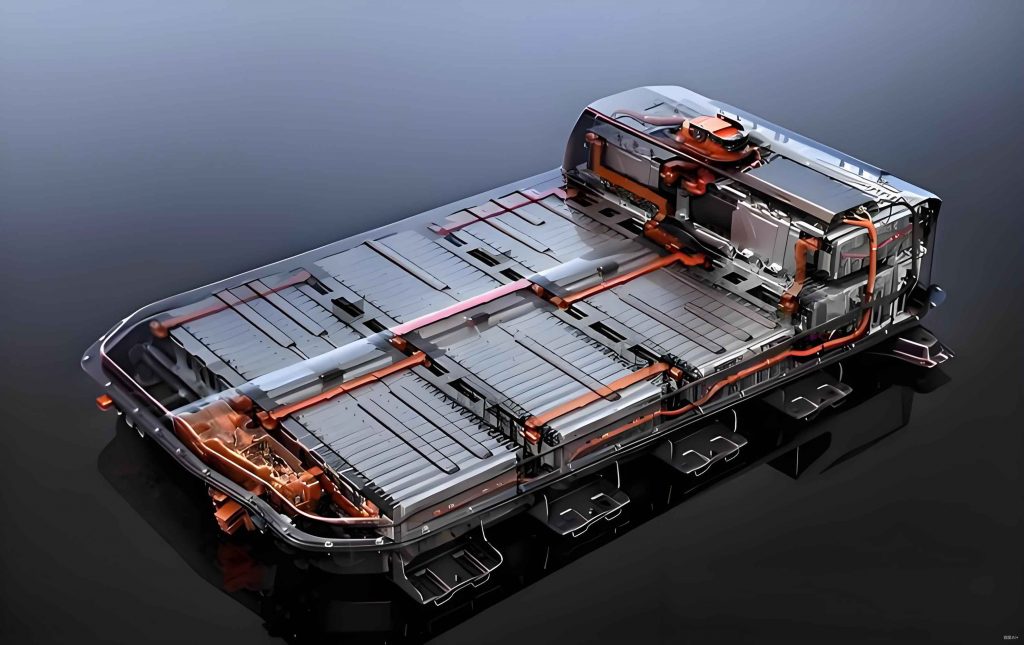
The ideal operating temperature range for most China EV battery technologies is between 10°C and 35°C. However, in regions with harsh winters, temperatures can plummet below -20°C, leading to reduced ionic conductivity and increased internal resistance in EV power battery cells. This not only affects driving range but also prolongs charging times, posing a significant barrier to widespread EV adoption. Liquid-cooled systems have become the industry standard for thermal management due to their high heat transfer efficiency and uniformity. A typical heating system for a China EV battery includes components such as an expansion tank, electric water pump, battery heat exchange pipes, a high-voltage Positive Temperature Coefficient (PTC) heater, and temperature sensors at the battery inlet and outlet. The Vehicle Control Unit (VCU) orchestrates the heating process by monitoring battery temperature, state of charge, and ambient conditions to determine the need for heating and the target temperature.
In my analysis of China EV battery systems, I have observed that PTC heaters are commonly configured with multiple power levels to accommodate varying heating demands. For instance, at -20°C, a typical PTC heater might have six power levels with nominal power values increasing uniformly. The power characteristics can be summarized in the following table, which illustrates the steady-state power for each level and the incremental differences between them. This tabular representation helps in understanding the阶梯式 power distribution, which is crucial for designing control algorithms that maximize efficiency while minimizing energy consumption.
| Level | 1 | 2 | 3 | 4 | 5 | 6 |
|---|---|---|---|---|---|---|
| Nominal Power (kW) | 1.3 | 2.6 | 3.9 | 5.2 | 6.5 | 7.8 |
| Power Difference (kW) | \ | 1.3 | 1.3 | 1.3 | 1.3 | 1.3 |
The operation of PTC heaters involves a current inrush phenomenon, where the initial current surge exceeds the steady-state value by 40-80%, lasting for 2-3 seconds. This characteristic is critical for China EV battery systems, as it can lead to over-discharge in low-temperature conditions where the available discharge power is limited. The current behavior can be modeled using exponential decay functions. For example, the current \( I(t) \) at time \( t \) during startup can be expressed as:
$$ I(t) = I_{\text{steady}} + (I_{\text{peak}} – I_{\text{steady}}) e^{-\frac{t}{\tau}} $$
where \( I_{\text{peak}} \) is the peak current, \( I_{\text{steady}} \) is the steady-state current, and \( \tau \) is the time constant. This equation highlights the transient nature of PTC heaters, which must be accounted for in control strategies to prevent damage to the EV power battery.
Traditional heating control strategies for China EV battery systems often rely on the battery’s available discharge power to determine the maximum heater level. In driving modes, this approach is feasible, but during charging, it becomes inefficient. For example, in low-temperature charging scenarios, if the battery’s discharge power is only 2.5 kW, the heater may be restricted to level 1, resulting in a slow temperature rise rate of approximately 0.137°C/min. This prolongs the heating phase and delays the actual charging process, undermining the user experience. The heating power required to raise the battery temperature can be derived from the thermal energy balance equation:
$$ Q = m c_p \Delta T $$
where \( Q \) is the heat energy, \( m \) is the mass of the battery, \( c_p \) is the specific heat capacity, and \( \Delta T \) is the temperature change. For a China EV battery, the time derivative of this equation relates to the heating power \( P_h \) and the heat loss rate \( P_{\text{loss}} \):
$$ P_h – P_{\text{loss}} = m c_p \frac{dT}{dt} $$
In low-temperature environments, \( P_{\text{loss}} \) increases due to greater heat dissipation, necessitating higher \( P_h \) to achieve faster warming. However, without optimization, the available power constraints can render the system ineffective.
To overcome these limitations, I have developed an optimized control strategy that coordinates the heater level requests with the charging power from an external source, such as a charging pile. This approach ensures that the China EV battery is protected from over-discharge while maximizing heating efficiency. The core idea is to allow the heater to operate at higher levels by gradually shifting the power source from the battery to the charger. The control flow involves several steps: First, the heater is initiated at level 1, with power drawn solely from the EV power battery, ensuring that the discharge power remains within safe limits. Second, the VCU requests additional power from the charger, equivalent to the heater’s consumption, causing the actual discharge power from the battery to decrease. Third, once the charger fully supplies the heater’s power, the battery’s output drops to zero, and the heater level can be incremented. This process repeats until the heater reaches its maximum level.
The available power for the heater, \( P_0 \), is defined as the sum of the charger’s actual output power \( P_{\text{charger}} \) and the battery’s available discharge power \( P_{\text{battery}} \):
$$ P_0 = P_{\text{charger}} + P_{\text{battery}} $$
For the heater to advance from level \( n \) to level \( n+1 \), the condition \( P_0 \geq P_{n+1} \) must be satisfied, where \( P_{n+1} \) is the nominal power of level \( n+1 \). Additionally, to account for real-world variations, if \( P_{\text{battery}} \) exceeds the power difference between levels (e.g., 1.3 kW), the heater can still level up, even if \( P_0 \) is slightly below the nominal value. This dual-condition check enhances reliability. The incremental power request to the charger can be modeled as a function of time \( t \):
$$ P_{\text{request}}(t) = P_{\text{heater}}(t) + P_{\text{base}} $$
where \( P_{\text{base}} \) is the base charging power, and \( P_{\text{heater}}(t) \) is the instantaneous heater power. The response of the charger can be represented with a first-order lag:
$$ P_{\text{charger}}(t) = P_{\text{request}}(t) \left(1 – e^{-\frac{t}{\theta}}\right) $$
where \( \theta \) is the charger’s response time constant. This equation illustrates how the charger’s output gradually aligns with the request, allowing for a smooth transition of power sources.
In practical terms, the optimization strategy involves a rolling increase in heater levels, with timed intervals between increments to avoid abrupt load changes. For instance, after stabilizing at level 1, the system waits for a calibrated duration (e.g., 30 seconds) before proceeding to level 2. This step-wise approach ensures that the China EV battery is not subjected to sudden power surges, thereby preserving its health. The overall control logic can be summarized in a decision table that outlines the conditions for level transitions:
| Current Level | Condition 1: \( P_0 \geq P_{\text{next}} \) | Condition 2: \( P_{\text{battery}} \geq \Delta P \) | Action |
|---|---|---|---|
| 1 | Yes | Yes/No | Advance to Level 2 |
| 2 | Yes | Yes/No | Advance to Level 3 |
| … | … | … | … |
| 5 | Yes | Yes/No | Advance to Level 6 |
where \( \Delta P \) is the power difference between adjacent levels. This table serves as a guideline for implementing the control algorithm in the VCU software, ensuring consistent performance across different operating conditions for EV power battery systems.
To validate this optimized strategy, I conducted real vehicle tests in a controlled environment chamber set to -20°C. The test vehicle was equipped with a China EV battery at a low state of charge (0.2% SOC) and an initial battery temperature of -9.5°C. The battery’s available discharge power was limited to approximately 2.5 kW to simulate worst-case scenarios. The results demonstrated a significant improvement in heating efficiency. With the optimized control, the heater level rolled up from level 1 to level 6 within 3 minutes, and the battery’s discharge power remained within safe limits, peaking at 2 kW during level transitions. The temperature rise rate increased to 0.42°C/min, compared to 0.137°C/min with the conventional strategy, reducing the heating time from 73 minutes to 23 minutes for the same temperature increase.
The thermal dynamics during heating can be further analyzed using a lumped parameter model. The rate of temperature change \( \frac{dT_b}{dt} \) for the EV power battery is given by:
$$ \frac{dT_b}{dt} = \frac{P_h – h A (T_b – T_{\text{coolant}})}{m_b c_{p,b}} $$
where \( T_b \) is the battery temperature, \( h \) is the heat transfer coefficient, \( A \) is the surface area, \( T_{\text{coolant}} \) is the coolant temperature, \( m_b \) is the battery mass, and \( c_{p,b} \) is the battery’s specific heat. The coolant temperature itself evolves based on the heater power and flow rate:
$$ \frac{dT_{\text{coolant}}}{dt} = \frac{P_h – \dot{m} c_{p,c} (T_{\text{coolant}} – T_{\text{in}})}{V \rho c_{p,c}} $$
where \( \dot{m} \) is the mass flow rate of the coolant, \( c_{p,c} \) is the specific heat of the coolant, \( T_{\text{in}} \) is the inlet temperature, \( V \) is the volume, and \( \rho \) is the density. These differential equations highlight the interplay between heater output and thermal inertia, emphasizing the need for precise control to achieve desired warming rates in China EV battery applications.
In conclusion, the optimized heating control strategy for EV power battery systems represents a substantial advancement in addressing low-temperature challenges. By coordinating heater level requests with charger power output, it possible to achieve higher heating efficiencies without compromising battery health. This approach is particularly relevant for the China EV battery market, where extreme weather conditions are common. Future work could involve adaptive algorithms that dynamically adjust level transition times based on real-time sensor data, further enhancing performance. The integration of such strategies will be crucial for the next generation of electric vehicles, ensuring reliable operation and improved user satisfaction across diverse environments.