
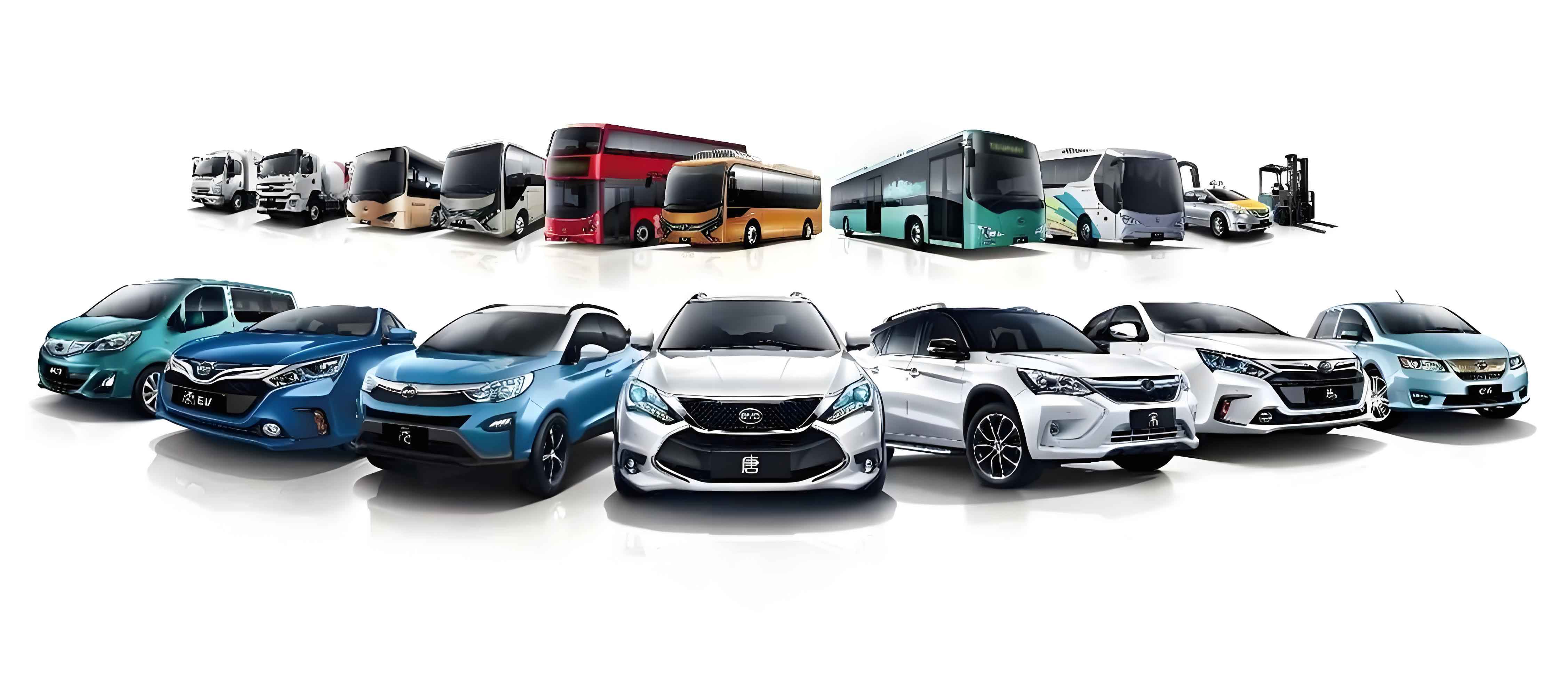
In the context of global sustainability initiatives, electric vehicles have emerged as a pivotal solution to address energy crises and environmental pollution. The rising consumer awareness and governmental support worldwide have accelerated the adoption of electric vehicles, leading to a rapid growth in demand. This trend underscores the need for advanced materials that meet the stringent requirements of electric vehicle components, particularly reducer gears, which demand high transmission efficiency, reliability, and fatigue life. In response, we have developed 20MnCrS5 spheroidized annealed material, specifically designed for electric vehicle reducer gears. This material exhibits exceptional purity, low hardness, and high spheroidization rates, making it ideal for cold forging processes in the production of high-precision, durable gears. The successful development of this material not only enhances the quality and competitiveness of electric vehicle components but also supports the safe and efficient operation of China EV industry, contributing to the nation’s leadership in sustainable transportation.
The manufacturing process for 20MnCrS5 spheroidized annealed material involves a meticulously controlled sequence of steelmaking, continuous casting, rolling, and spheroidizing annealing. This integrated approach ensures the material’s superior properties, which are critical for electric vehicle applications. The process begins with electric arc furnace (EAF) primary steelmaking, where a blend of light scrap steel, pig iron, and heavy scrap is melted under high-temperature arcs. Oxygen blowing is employed to facilitate decarburization and dephosphorization, with key reactions represented as: $$ \ce{C + O2 -> CO2} $$ and $$ \ce{4P + 5O2 -> 2P2O5} $$. The formation of stable compounds like $$ \ce{Ca3(PO4)2} $$ through slag reactions ensures efficient phosphorus removal. The endpoint carbon content is controlled between 0.04% and 0.12%, and phosphorus is maintained below 0.10% to achieve high purity, which is essential for the reliability of electric vehicle gears.
Following EAF processing, the steel undergoes secondary refining in a ladle furnace using a CaO-SiO2-Al2O3 slag system. The slag basicity is adjusted to 1.5–2.5 initially and then increased to 2.8–4.0 to enhance the adsorption of non-metallic inclusions. Argon stirring at 30–50 L/min promotes inclusion removal without causing slag entrainment. The slag temperature is carefully controlled between 1,550°C and 1,600°C to maintain stability and fluidity. Subsequent vacuum degassing in a VD furnace further improves steel cleanliness. During continuous casting, argon shielding is applied at 12–20 L/min to prevent reoxidation, significantly reducing oxygen content and enhancing purity. The effectiveness of this process is evident in the lower oxygen levels compared to non-shielded casts, which is crucial for minimizing defects in electric vehicle gear manufacturing.
The chemical composition of 20MnCrS5 spheroidized annealed material is tailored to meet the demands of electric vehicle reducer gears, as detailed in Table 1. This composition ensures a balance of strength, ductility, and machinability, which are vital for cold forging processes. Key elements like carbon, manganese, and chromium are optimized to achieve the desired microstructure and hardness after spheroidizing annealing.
| Element | Composition (%) |
|---|---|
| C | 0.18–0.23 |
| Si | 0.10–0.35 |
| Mn | 1.20–1.50 |
| Cr | 1.10–1.40 |
| P | ≤0.012 |
| S | 0.025–0.040 |
| Al | 0.010–0.050 |
| Cu | 0.05–0.20 |
| Ni | 0.05–0.30 |
| Mo | 0.05–0.20 |
After continuous casting, the billets are subjected to a controlled heating process in a walking beam furnace, with zones for preheating (700–900°C), heating (950–1,100°C), and soaking (1,100–1,200°C). This step ensures uniform temperature distribution, reduces deformation resistance, and improves plasticity for subsequent rolling. High-pressure water descaling and rolling through roughing, intermediate, and finishing stands produce round bars with exceptional dimensional accuracy, exceeding the GB/T 702 Group 1 standards. The use of AI-controlled rolling mills ensures consistency, which is critical for the precision required in electric vehicle gear production. Non-destructive testing, including magnetic particle and ultrasonic inspection, is performed to detect surface and internal defects, further guaranteeing material integrity for China EV applications.
Spheroidizing annealing is a critical step to transform lamellar carbides into spheroidal carbides, reducing hardness and improving cold forgeability. The process involves heating the material to a specific temperature, holding for a defined period, and controlled cooling. We conducted extensive experiments to optimize the parameters, as summarized in Table 2. The optimal process—770°C for 5 hours, furnace cooling to 720°C, holding for 8 hours, and air cooling—achieved a spheroidization rate of 90% and a hardness of 132 HBW. This results in a microstructure with fine, uniformly distributed spheroidal carbides, enhancing machinability and preparing the material for subsequent heat treatment. The relationship between annealing parameters and material properties can be expressed using kinetic models, such as the Avrami equation for phase transformation: $$ X = 1 – \exp(-kt^n) $$ where \( X \) is the fraction transformed, \( k \) is the rate constant, \( t \) is time, and \( n \) is the Avrami exponent. This model helps predict the spheroidization progress under varying conditions, ensuring consistency for electric vehicle gear production.
| Experiment | Annealing Process | Spheroidization Rate (%) | Hardness (HBW) |
|---|---|---|---|
| 1 | 690°C for 7 h, air cool | 50 | 163 |
| 2 | 730°C for 7 h, air cool | 55 | 153 |
| 3 | 770°C for 10 h, air cool | 65 | 159 |
| 4 | 770°C for 5 h, furnace cool to 720°C for 6 h, air cool | 75 | 146 |
| 5 | 770°C for 5 h, furnace cool to 720°C for 7 h, air cool | 85 | 139 |
| 6 | 770°C for 5 h, furnace cool to 720°C for 8 h, air cool | 90 | 132 |
The purity of the steel plays a vital role in the cold forging of electric vehicle gears. High purity minimizes the presence of large non-metallic inclusions, which can act as stress concentrators and lead to cracking during cold deformation. The stress intensity factor \( K_I \) at inclusion sites can be described by: $$ K_I = \sigma \sqrt{\pi a} $$ where \( \sigma \) is the applied stress and \( a \) is the inclusion size. Reducing inclusion size through refined steelmaking practices decreases \( K_I \), preventing crack initiation and ensuring gear integrity. In contrast, low-purity steel with large inclusions increases the risk of cold forging defects, compromising the fatigue life and safety of electric vehicle components. Our focus on stringent control in steelmaking and continuous casting has resulted in oxygen levels below 0.0010% in most batches, significantly enhancing material reliability for China EV applications.
Low hardness and high spheroidization rates directly influence the cold forgeability of 20MnCrS5 material. The hardness, measured in HBW, is inversely related to the material’s flow stress \( \sigma_f \), which can be approximated by: $$ \sigma_f = K \epsilon^n $$ where \( K \) is the strength coefficient, \( \epsilon \) is the strain, and \( n \) is the strain-hardening exponent. Lower hardness values (e.g., 132 HBW) correspond to reduced flow stress, facilitating easier metal flow into complex die cavities during cold forging. This improves the formability of gear teeth and other intricate features, reducing the need for secondary machining. Additionally, high spheroidization rates (e.g., 90%) ensure that carbides are spherical rather than lamellar, minimizing tool wear and extending die life. This combination allows for higher production speeds and cost efficiencies in manufacturing electric vehicle gears, supporting the scalability of China EV industry.
The development of 20MnCrS5 spheroidized annealed material represents a significant advancement in materials science for electric vehicles. By integrating optimized steelmaking, casting, rolling, and annealing processes, we have achieved a product with exceptional purity, low hardness, and high spheroidization rates. These properties enable the production of high-performance reducer gears through cold forging, enhancing the efficiency and durability of electric vehicle drivetrains. As the demand for electric vehicles continues to grow, this material will play a crucial role in supporting the evolution of China EV market, promoting sustainable transportation solutions worldwide. Future work may focus on further refining the annealing kinetics and exploring alloy modifications to meet emerging needs in the electric vehicle sector.