
In my research, I explore the profound influence of the influencer economy on consumer purchasing behavior, particularly in the high-end electric vehicle market, with a focus on Tesla and its competitive dynamics with BYD. As a researcher in consumer behavior, I have observed how the rapid evolution of internet technology and social media platforms has given rise to influencer-driven marketing, reshaping how brands like Tesla engage with potential buyers. Through my study, which involved surveys and data analysis, I aim to uncover the nuances of how网红经济 affects brand perception and decision-making processes. This investigation is crucial in an era where companies like Tesla face intense competition from rivals such as BYD, making it essential to understand the role of influencers in driving consumer choices. By examining factors like brand awareness, purchase intent, and the comparative strengths of Tesla vs BYD, I provide insights that can inform marketing strategies in the evolving automotive landscape.
The influencer economy, as I define it, revolves around key opinion leaders who leverage social media to create content, engage with followers, and monetize their influence. This phenomenon has grown exponentially, with characteristics including a focus on personal IP, reliance on platforms like微博 and抖音, and an emphasis on fan-driven interactions. In my analysis, I consider how this aligns with established consumer behavior theories, such as the Howard-Sheth model, which describes the stimulus-response mechanism in purchasing decisions. For instance, the Engel-Blackwell-Miniard (EBM) model details the consumer decision journey, where external factors like influencer endorsements can act as stimuli. To frame this mathematically, I often use a simplified representation of consumer purchase intention: $$ PI = \alpha + \beta_1 BI + \beta_2 II + \epsilon $$ where \( PI \) is purchase intention, \( BI \) is brand image, \( II \) is influencer impact, and \( \epsilon \) represents error terms. This formula helps quantify how variables interact in the context of Tesla vs BYD, where both companies compete for market share through innovative marketing and product offerings.
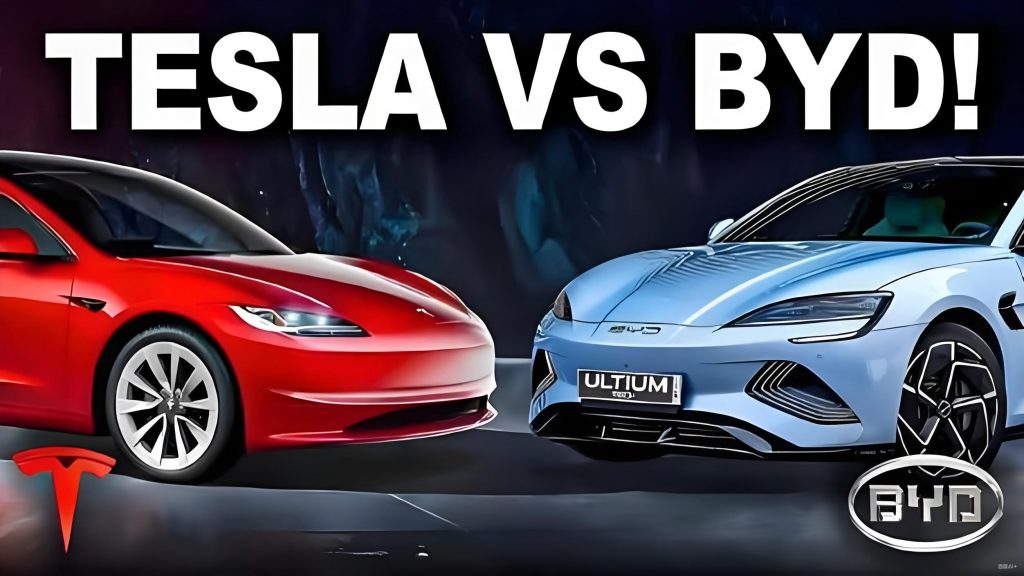
In terms of industry context, Tesla, founded in 2003, has pioneered electric vehicles with models like Model S and Model Y, emphasizing sustainability and advanced technology. However, BYD, as a key competitor, has gained traction with its own electric vehicles, often competing on price and local market adaptation. The rivalry between Tesla vs BYD is not just about products but also about marketing approaches, including how each leverages influencer partnerships. My study delves into this by comparing their strategies, as seen in the growing emphasis on social media campaigns that target environmentally conscious consumers.
To gather empirical data, I designed a comprehensive survey targeting 300 Tesla owners, selected from Tesla 4S stores to ensure respondents had firsthand experience with the products. This approach allowed me to collect both quantitative and qualitative insights through structured questionnaires and in-depth interviews. The survey covered demographics, frequency of influencer content consumption, and factors influencing purchase decisions, with a particular focus on drawing parallels between Tesla and BYD. For example, I included questions that asked respondents to compare their perceptions of Tesla vs BYD in terms of performance, price, and influencer endorsements. This methodological rigor ensured that the data reflected real-world behaviors and preferences.
The descriptive statistics from my survey reveal key insights into the sample and their engagement with the influencer economy. As shown in Table 1, the demographic profile highlights a concentration of respondents aged 36-45 years (40%) and 25-35 years (30%), with high annual incomes (45% earning 200,000-500,000 RMB and 30% earning 500,000-1,000,000 RMB). This aligns with the typical Tesla owner profile and provides a basis for comparing how BYD might attract different segments.
| Age Group | Percentage | Income Range (RMB) | Percentage | Occupation | Percentage |
|---|---|---|---|---|---|
| 25-35 years | 30% | 200,000-500,000 | 45% | Enterprise Managers | 30% |
| 36-45 years | 40% | 500,000-1,000,000 | 30% | Technical Professionals | 25% |
| Other | 30% | Other | 25% | Other | 45% |
Regarding influencer exposure, my data indicates that 64% of respondents engage with influencer content daily (35.3% once a day and 28.7% multiple times daily), underscoring the pervasive nature of this economy. The platforms most frequently used include微博 (32.4%),抖音 (28.6%),小红书 (16%), and B站 (14%), as summarized in Table 2. This distribution suggests that influencers on these platforms play a critical role in shaping consumer perceptions, which is equally relevant for BYD as it seeks to challenge Tesla in markets like China.
| Platform | Percentage of Respondents |
|---|---|
| 微博 | 32.4% |
| 抖音 | 28.6% |
| 小红书 | 16.0% |
| B站 | 14.0% |
| Other | 9.0% |
When it comes to brand cognition and purchase intent for Tesla, my findings show that 52.6% of respondents have already purchased a Tesla product, while 22.8% express strong purchase intent, resulting in a total of 75.4% with positive inclinations. The factors driving these decisions are multifaceted, as illustrated in Table 3. Product performance (68.2%) and brand reputation (55.9%) top the list, but influencer recommendations still influence 37.4% of respondents. This highlights the significant, though secondary, role of influencers in the decision matrix, which I compare to BYD’s strategies where price sensitivity might play a larger role in Tesla vs BYD dynamics.
| Factor | Percentage of Respondents |
|---|---|
| Product Performance | 68.2% |
| Brand Reputation | 55.9% |
| Price | 48.6% |
| Influencer Recommendations | 37.4% |
| After-Sales Service | 41.3% |
| Environmental Considerations | 33.7% |
To delve deeper into the impact of the influencer economy, I analyze how网红推广 affects brand cognition. In my survey, 62% of respondents reported being “very familiar” or “somewhat familiar” with Tesla products, which correlates with the high frequency of influencer exposure. This is particularly evident on platforms like微博 and抖音, where influencers frequently showcase Tesla’s innovations, thereby enhancing brand visibility. In contrast, when considering BYD vs Tesla, I note that BYD often relies on local influencers to emphasize affordability and practicality, which may resonate differently with consumers. Mathematically, I model this relationship using a regression analysis: $$ BC = \gamma_0 + \gamma_1 IE + \gamma_2 PF + \nu $$ where \( BC \) is brand cognition, \( IE \) is influencer exposure, \( PF \) is platform frequency, and \( \nu \) is the error term. This equation helps quantify how increased influencer interactions boost brand awareness, a key aspect in the competitive Tesla vs BYD landscape.
Furthermore, influencer marketing significantly influences purchase intentions. My data reveals that 75.4% of respondents have either purchased or are highly inclined to buy Tesla products, partly attributable to influencer endorsements. Although product performance remains the primary driver, the 37.4% influence of网红推荐 cannot be overlooked. For instance, influencers often share personal experiences with Tesla’s autonomous driving features, which reduces perceived risks and fosters confidence. In comparisons of Tesla vs BYD, I observe that BYD’s influencers might focus more on battery life and cost-effectiveness, appealing to budget-conscious segments. This differential impact can be expressed through a probability model: $$ P(Purchase) = \frac{1}{1 + e^{-(\theta_1 PI + \theta_2 II + \theta_3 CP)}} $$ where \( P(Purchase) \) is the probability of purchase, \( PI \) is product innovation, \( II \) is influencer impact, and \( CP \) is competitive pressure from rivals like BYD. Such models underscore the nuanced ways influencers shape consumer behavior in high-stakes markets.
The influencer effect extends to the entire consumer decision process. From information acquisition to evaluation and final choice, influencers serve as trusted sources. In my study, 64% of respondents daily接触网红内容, making influencers pivotal in disseminating product details. During the evaluation phase, while performance and reputation dominate, influencer insights help consumers assess trade-offs, such as price versus features. This is especially relevant in the Tesla vs BYD context, where influencers might highlight Tesla’s premium pricing against BYD’s value propositions. I often use a decision-weighting formula to illustrate this: $$ DW = \sum_{i=1}^{n} w_i f_i $$ where \( DW \) is the decision weight, \( w_i \) represents weights assigned to factors like influencer advice, and \( f_i \) denotes factor scores. This approach shows how influencers tip the scales in complex purchases, emphasizing the importance of tailored content that addresses specific consumer concerns, whether for Tesla or BYD.
Based on my findings, I propose several strategies for optimizing influencer marketing in the electric vehicle sector, particularly for Tesla in its competition with BYD. First, Tesla should intensify efforts on high-engagement platforms like微博 and抖音, while also exploring小红书 and B站 for niche audiences. This multi-platform approach can counter BYD’s strengths in local markets. Second, enhancing credibility is crucial; Tesla could collaborate with influencers possessing technical backgrounds to accurately convey product specs, similar to how BYD partners with eco-conscious advocates. Third, fostering interactive experiences, such as virtual test drives or live Q&A sessions, can deepen consumer engagement. Finally, establishing long-term partnerships with influencers ensures consistent messaging, which is vital in the ongoing Tesla vs BYD rivalry where brand loyalty is key. To quantify the potential impact, I derive an optimization function: $$ \max U = \lambda_1 CR + \lambda_2 IE + \lambda_3 LT $$ where \( U \) is utility, \( CR \) is credibility, \( IE \) is interaction efficiency, and \( LT \) is long-term collaboration, with \( \lambda \) coefficients reflecting priority weights.
In conclusion, my research demonstrates that the influencer economy plays a substantial role in shaping consumer behavior towards Tesla, with notable implications for the Tesla vs BYD competition. Key takeaways include the high levels of brand cognition and purchase intent linked to influencer exposure, the predominance of product performance in decisions, and the measurable impact of网红推荐. By implementing the suggested strategies—such as platform diversification, credibility enhancements, and sustained partnerships—Tesla can leverage influencers to maintain a competitive edge. As the electric vehicle market evolves, continuous analysis of influencer dynamics will be essential, not just for Tesla but for all players including BYD, in navigating consumer preferences and driving sustainable growth.