
As a technician specializing in electric vehicles, I often encounter complex issues in BYD EV models, particularly with the infinite fan system in the BYD e5. This BYD car relies on a sophisticated cooling mechanism to manage heat generated by high-power components like the motor controller and battery. In this article, I will delve into the composition, control strategies, fault symptoms, and diagnostic procedures for the infinite fan in BYD EV systems. My goal is to provide a comprehensive guide for fellow technicians, using real-world examples and data-driven approaches to troubleshoot common problems in this BYD car. Throughout, I will emphasize the importance of understanding the underlying electronics and control logic in BYD EV designs.
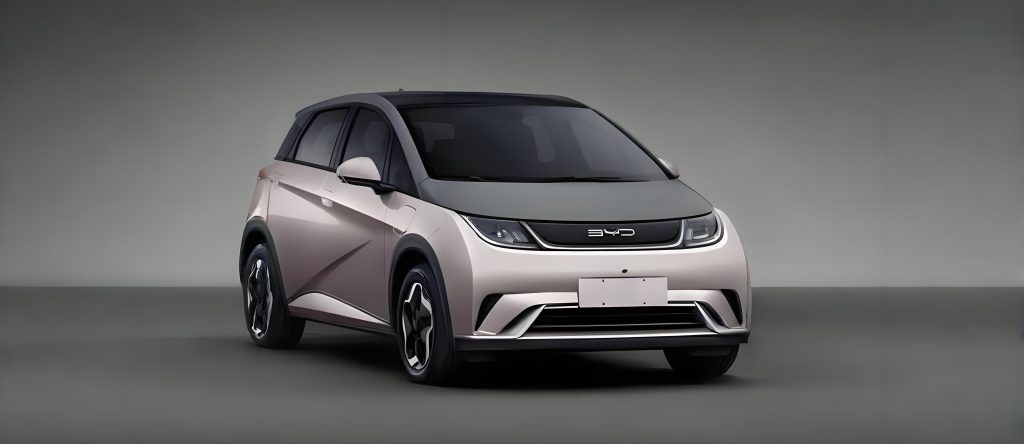
The cooling system in a BYD EV, such as the BYD e5, is integral to maintaining optimal performance. It consists of several key components: the radiator, drive motor, electric water pump, infinite fan, expansion tank, motor controller, and associated piping. This system dissipates heat from critical elements like the power battery and onboard charger, ensuring the BYD car operates efficiently. The infinite fan, controlled by a dedicated module, adjusts its speed based on inputs from the vehicle control unit (VCU). In my experience with BYD EV models, failures in this system can lead to overheating, reduced power, or even component damage. For instance, the infinite fan in a BYD car might run continuously at high speed, indicating a fault that requires immediate attention.
To understand the infinite fan’s operation in a BYD EV, let’s examine its control strategy. The VCU receives signals from various modules, including the motor controller and air conditioning system, and determines the required fan speed by selecting the highest duty cycle request. This is communicated via a PWM (Pulse Width Modulation) signal to the infinite fan control module. The relationship between the duty cycle and fan speed can be expressed using the formula for PWM control: $$ \text{Duty Cycle} = \frac{T_{\text{on}}}{T_{\text{total}}} \times 100\% $$ where \( T_{\text{on}} \) is the time the signal is high, and \( T_{\text{total}} \) is the period of the waveform. For example, in a BYD car, a duty cycle of 10% typically initiates fan rotation, while higher percentages increase speed proportionally. This control mechanism allows for seamless adjustment in the BYD EV, optimizing cooling without unnecessary energy consumption.
Common fault symptoms in the BYD EV infinite fan system include the fan not spinning, inability to operate at low or high speeds, or continuous high-speed operation. These issues often stem from failures in components like fuses, relays, the fan itself, the VCU, or wiring harnesses. In many BYD car cases, diagnostic tools reveal fault codes such as P1D8E00, which points to overheating or electronic errors. To systematically address these, I rely on data streams and voltage measurements. Below is a table summarizing typical fault codes and their implications in a BYD EV:
| Fault Code | Description | Common Causes in BYD EV |
|---|---|---|
| P1D8E00 | Infinite Fan Overheat Protection | Wiring issues, VCU failure |
| Other Codes | Electronic Errors | Relay or fuse damage |
When diagnosing a BYD EV, I start with a visual inspection under de-energized conditions. I check the coolant level and inspect the infinite fan wiring and connectors for damage, such as burns or breaks. This initial step is crucial in a BYD car to rule out obvious physical defects. Next, I proceed to electrical testing. For instance, I measure voltages at key points in the circuit, like the infinite fan control module connector B14. The voltage at B14-2 should be approximately 12V (or higher, due to the DC-DC converter supplying the low-voltage battery in a BYD EV). If not, I investigate upstream components like fuses F1/19 and relay K1-5. Similarly, B14-5 should show 12V when the ignition is on, indicating a proper ON signal. A multimeter set to 20V range is ideal for these checks in a BYD car.
For more detailed analysis, I use an oscilloscope to examine the PWM waveform at the VCU output (BK49-19) and the fan module input (B14-3). In a functioning BYD EV, both points should display identical PWM signals. The voltage relationship can be described by Ohm’s law for verification: $$ V = I \times R $$ where \( V \) is voltage, \( I \) is current, and \( R \) is resistance. If the waveforms differ or show abnormalities, it suggests issues like open or short circuits in the wiring. For example, in one BYD car case, I found a significant voltage drop between these points, indicating a break in the wire. This highlights the importance of thorough testing in BYD EV diagnostics.
Let me share a real-world case from my work on a BYD EV used as a taxi. The infinite fan was running continuously at high speed upon power-up, with no overtemperature warnings on the dashboard. Using a VDS2000 diagnostic tool, I retrieved fault code P1D8E00 from the VCU, with data streams showing a fan request state of 10%. Other modules, like the BMS, showed no anomalies. Voltage measurements revealed 13.10V at B14-3 but nearly 0V at BK49-19, indicating an open circuit in the connecting wire. After repairing the break and clearing the fault code, the BYD car returned to normal operation. This example underscores how data-driven approaches are essential for efficient repairs in BYD EV systems.
In summary, troubleshooting the infinite fan in a BYD EV requires a methodical approach. Technicians should leverage diagnostic tools, interpret data streams, and understand circuit diagrams. For instance, the control logic can be modeled using transfer functions: $$ G(s) = \frac{K}{1 + \tau s} $$ where \( G(s) \) represents the system response, \( K \) is gain, and \( \tau \) is time constant. This theoretical foundation, combined with practical skills, enables effective fault isolation in a BYD car. I encourage continuous learning in automotive electronics, as it empowers us to tackle evolving challenges in BYD EV technologies. By focusing on evidence-based diagnostics, we can ensure reliable performance and longevity for these vehicles.
To further illustrate common measurements in a BYD EV infinite fan system, here is a table of typical voltage values and their interpretations:
| Test Point | Expected Voltage (V) | Fault Indication in BYD Car |
|---|---|---|
| B14-2 | ~12-14 | Fuse or relay issue if low |
| B14-5 | ~12 (with ignition on) | IG3 relay failure if absent |
| B14-1 | 0 (ground) | Poor ground if resistance high |
Additionally, the PWM duty cycle correlation with fan speed in a BYD EV can be expressed mathematically: $$ \text{Fan Speed} \propto \text{Duty Cycle} $$ This linear relationship simplifies diagnostics, as deviations often point to module or wiring faults. In my practice, I’ve found that mastering these concepts is key to maintaining the reliability of BYD car systems. As BYD EV models evolve, staying updated with technical manuals and training will remain vital for any technician aiming to excel in this field.