
The development and promotion of energy-saving and environmentally friendly electric vehicles (EV cars) have become a critical initiative in the global automotive industry. For China, advancing EV cars is strategically significant in addressing environmental degradation and reshaping future technological landscapes. However, the rapid growth in EV car ownership has highlighted issues such as slow charging speeds, range anxiety, and inadequate infrastructure, which remain major barriers to consumer adoption. Among various solutions, battery swapping mode offers advantages like reduced energy replenishment time and extended battery life, presenting a promising alternative. This paper explores the pricing strategies for EV cars under charging and battery swapping modes, alongside government policies aimed at promoting these technologies. We develop a Stackelberg game model to analyze optimal pricing, production, and profits for EV car manufacturers, as well as government decisions on subsidies and tax incentives. Our findings emphasize the impact of factors like battery leasing costs and environmental benefits on policy effectiveness, providing insights for fostering the adoption of EV cars.
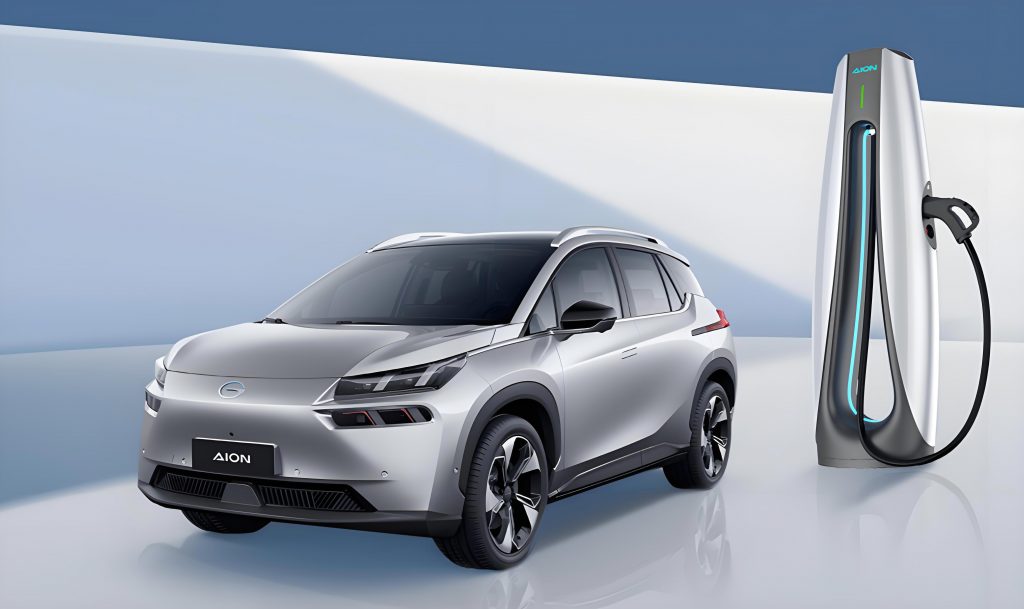
In recent years, the EV car industry has made significant strides in standards, alliances, corporate strategies, and technological研发. Governments worldwide have introduced policies to support EV cars, such as purchase subsidies and tax exemptions, which play a vital role in enhancing sustainability. According to data from the China Association of Automobile Manufacturers, EV car production and sales reached 4.717 million and 4.567 million units, respectively, from January to September 2022, representing year-on-year growth of 120% and 110%, with a market share of 23.5%. Despite this progress, challenges like charging infrastructure gaps persist. Consumers prefer EV cars with better performance, where driving range is a key factor. Longer ranges alleviate range anxiety, thereby increasing the likelihood of purchase. However, high battery costs and capacity issues hinder widespread adoption, while insufficient charging facilities exacerbate these difficulties. Studies indicate that public charging infrastructure positively influences EV car purchases, as greater density reduces time costs and boosts consumer confidence. For instance, research by Globisch et al. highlights that inadequate charging stations are a major obstacle, whereas improvements in charging convenience stimulate consumer preference.
The “New Energy Vehicle Industry Development Plan (2021-2035)” and the “2021 China Electric Vehicle Battery Swapping Ecological Development White Paper” advocate for battery swapping models to diversify EV car offerings. Battery swapping mode shortens energy replenishment time, prolongs battery lifespan, and mitigates range limitations, making it an attractive option. Consequently, designing effective policies to promote battery swapping mode is crucial. Scholars have found that policies such as purchase subsidies, environmental regulations, and road priority incentives significantly affect consumer willingness to buy EV cars. For example, Li et al. emphasize that policy consistency enhances purchase intentions, while Xiong and Wang demonstrate that subsidies, tax reductions, and infrastructure drive EV car adoption. Similarly, Fan et al. use Stackelberg models to show that policies increase demand for EV cars and social welfare. This paper builds on such work by focusing on battery swapping mode, comparing consumer subsidies and tax减免 policies, and analyzing their effects under varying costs and prices.
Problem Description and Assumptions
We consider a market where an EV car manufacturer produces and sells two types of EV cars: charging mode and battery swapping mode. In charging mode, consumers purchase the entire vehicle, including the battery, and rely on charging stations for energy. In battery swapping mode, consumers buy the EV car body separately and lease the battery from the manufacturer, who manages charging and maintenance through centralized stations. The manufacturer aims to maximize profits by setting prices for both types of EV cars, while the government, as the leader in a Stackelberg game, implements policies to promote battery swapping mode. Consumers choose between the two modes or opt out based on utility maximization.
Key assumptions are as follows:
- Assumption 1: The manufacturer sells both charging and battery swapping EV cars. The government can implement policies such as consumer subsidies for battery swapping EV cars or tax减免 for manufacturers.
- Assumption 2: The price of charging EV cars is denoted as \( P_t \), and for battery swapping EV cars as \( P_s \), with \( 0 < P_s < P_t \). Consumers pay a battery leasing and usage cost \( b \) for battery swapping EV cars, which includes rental and replacement fees over the vehicle’s lifespan. The manufacturing cost for both types of EV cars is identical, denoted as \( C \).
- Assumption 3: The government provides a subsidy of \( \gamma P_s \) (where \( 0 < \gamma < 1 \)) to consumers purchasing battery swapping EV cars, or a tax减免 of \( m \) per unit for the manufacturer. Each sale of a battery swapping EV car yields an environmental benefit \( d \) for the government, while each charging EV car sale yields \( h \), with \( d > h \) due to better battery utilization in swapping mode.
- Assumption 4: Consumer utility for battery swapping EV cars is \( V – P_s – b \), where \( V \) represents psychological satisfaction, uniformly distributed in [0, 1]. For charging EV cars, utility is \( \alpha V – P_t \), with \( 0 < \alpha < 1 \) accounting for lower satisfaction due to higher costs.
- Assumption 5: The decision-making sequence involves the government as the leader, followed by the manufacturer and consumers, in a Stackelberg game. We do not consider battery station operators separately.
- Assumption 6: Three scenarios are analyzed: Case N (no policy), Case M (consumer subsidy), and Case O (tax减免). The manufacturer sets prices independently for both EV car types to maximize profits.
Based on these assumptions, we derive utility functions and demand for each scenario. For instance, in Case N, the utility for battery swapping EV cars is \( U^N_s = V – P_s – b \), and for charging EV cars is \( U^N_t = \alpha V – P_t \). Consumers will choose the option that provides the highest utility, leading to demand functions derived from indifference points. Similar approaches are applied to Cases M and O, with adjustments for subsidies and tax incentives.
Model Formulation and Solution
We formulate the model using Stackelberg game theory, where the government first sets policies, followed by the manufacturer determining prices for EV cars, and finally consumers making purchase decisions. The manufacturer’s profit functions are constructed based on demand and costs, while social welfare includes consumer surplus, manufacturer profits, and environmental benefits, minus any policy costs.
Case N: No Policy
In this scenario, the government does not implement any promotion policies. The utility functions for battery swapping and charging EV cars are as described above. The demand for battery swapping EV cars, \( q^N_s \), and charging EV cars, \( q^N_t \), depends on the prices and costs. For example, in the S1 sub-scenario where \( P_s > \frac{P_t – \alpha b}{\alpha} \), the demands are:
$$ q^N_s = \frac{1 – \alpha – P_s – b + P_t}{1 – \alpha} $$
$$ q^N_t = \frac{\alpha (P_s + b) – P_t}{\alpha (1 – \alpha)} $$
The manufacturer’s profit functions are:
$$ \Pi^N_s = \frac{(P_s – C)(1 – \alpha – P_s – b + P_t)}{1 – \alpha} $$
$$ \Pi^N_t = \frac{(P_t – C)[\alpha (P_s + b) – P_t]}{\alpha (1 – \alpha)} $$
Consumer surplus (CS) is the sum of utilities for all consumers, and social welfare (SW) includes CS, profits, and environmental benefits. Solving the profit maximization problems yields optimal prices, demands, and profits. For instance, the optimal prices are:
$$ P^{N*}_s = \frac{\alpha(2 – b) + 2b – 3C – 2}{\alpha – 4} $$
$$ P^{N*}_t = \frac{\alpha^2 – \alpha(b + C + 1) – 2C}{\alpha – 4} $$
We analyze sensitivities, such as how prices change with costs. For example, \( \frac{\partial P^{N*}_s}{\partial C} > 0 \), indicating that higher manufacturing costs increase prices for battery swapping EV cars. Similarly, \( \frac{\partial P^{N*}_s}{\partial b} < 0 \), showing that higher battery leasing costs reduce prices to maintain competitiveness.
Case M: Consumer Subsidy Policy
Here, the government provides a subsidy \( \gamma P_s \) to consumers purchasing battery swapping EV cars, with tax减免 \( m = 0 \). The utility for battery swapping EV cars becomes \( U^M_s = V – P_s(1 – \gamma) – b \), while for charging EV cars, it remains \( U^M_t = \alpha V – P_t \). Demand functions adjust accordingly, and the manufacturer’s profit functions incorporate the subsidy. For example, in the S2 sub-scenario:
$$ q^M_s = \frac{1 – \alpha – P_s(1 – \gamma) – b + P_t}{1 – \alpha} $$
$$ q^M_t = \frac{\alpha [P_s(1 – \gamma) + b] – P_t}{\alpha(1 – \alpha)} $$
The profit functions are:
$$ \Pi^M_s = \frac{(P_s – C)[1 – \alpha – P_s(1 – \gamma) – b + P_t]}{1 – \alpha} $$
$$ \Pi^M_t = \frac{(P_t – C)\{ \alpha [P_s(1 – \gamma) + b] – P_t \}}{\alpha(1 – \alpha)} $$
Social welfare includes the subsidy cost. Optimal prices are derived as:
$$ P^{M*}_s = \frac{2 + C(3 – 2\gamma) – 2b + \alpha(b – 2)}{(\gamma – 1)(\alpha – 4)} $$
$$ P^{M*}_t = \frac{\alpha^2 + \alpha[C(\gamma – 1) – b – 1] – 2C}{\alpha – 4} $$
We find that subsidies can increase demand for battery swapping EV cars (\( \frac{\partial q^{M*}_s}{\partial \gamma} > 0 \)) but reduce demand for charging EV cars (\( \frac{\partial q^{M*}_t}{\partial \gamma} < 0 \)). The government’s optimal subsidy rate \( \gamma^* \) is determined by maximizing social welfare, and it decreases with higher battery leasing costs \( b \) and increases with higher environmental benefits \( d \).
Case O: Tax减免 Policy
In this case, the government provides a tax减免 \( m \) per unit for battery swapping EV cars, with no consumer subsidy (\( \gamma = 0 \)). The utility functions match those in Case N, but the manufacturer’s profit for battery swapping EV cars includes the tax benefit: \( \Pi^O_s = \frac{(P_s + m – C)(1 – \alpha – P_s – b + P_t)}{1 – \alpha} \). Optimal prices are:
$$ P^{O*}_s = \frac{2m + 2b + \alpha(2 – b) – 3C – 2}{\alpha – 4} $$
$$ P^{O*}_t = \frac{\alpha^2 + \alpha(m – b – C – 1) – 2C}{\alpha – 4} $$
Tax减免 leads to lower prices for both types of EV cars (\( \frac{\partial P^{O*}_s}{\partial m} < 0 \), \( \frac{\partial P^{O*}_t}{\partial m} < 0 \)) and increases demand for battery swapping EV cars (\( \frac{\partial q^{O*}_s}{\partial m} > 0 \)). The optimal tax减免 \( m^* \) is derived from social welfare maximization and is influenced by costs and environmental benefits.
Numerical Analysis
To validate our model, we conduct numerical analyses using parameters based on literature: manufacturing cost \( C = 0.2 \), utility deviation coefficient \( \alpha = 0.75 \), environmental benefit for battery swapping EV cars \( d = 0.15 \), and for charging EV cars \( h = 0.1 \). We compare the three cases under different battery leasing costs \( b \).
For example, in the S-scenario analysis, we examine demand, social welfare, profits, consumer surplus, and prices. The results show that policies generally enhance social welfare, profits, and consumer surplus compared to no policy. Specifically, when battery leasing costs are low, subsidy policies (Case M) outperform tax减免 policies (Case O) in terms of demand for battery swapping EV cars. However, as battery leasing costs increase, tax减免 policies become more effective. The table below summarizes key comparisons under varying \( b \) values:
| Scenario | Battery Swapping EV Car Demand | Charging EV Car Demand | Social Welfare | Manufacturer Profit | Consumer Surplus |
|---|---|---|---|---|---|
| Case N (No Policy) | Decreases with \( b \) | Increases with \( b \) | Lower | Lower | Lower |
| Case M (Subsidy) | Higher for low \( b \) | Lower | Higher | Higher | Higher |
| Case O (Tax减免) | Increases with \( m \) | Decreases with \( m \) | Higher for high \( b \) | Higher | Higher |
In the T-scenario analysis, where battery swapping EV car prices are below a threshold, tax减免 policies yield higher social welfare, profits, and consumer surplus than subsidy policies, especially when battery leasing costs are controlled. This underscores the importance of maintaining low battery leasing costs to make policies effective.
Conclusions and Recommendations
Our study demonstrates that government policies, such as subsidies and tax减免, positively impact the adoption of battery swapping mode for EV cars. Key conclusions include:
- Policies consistently improve social welfare, manufacturer profits, and consumer surplus compared to no intervention, highlighting the role of government in promoting EV cars.
- Battery leasing and usage costs significantly influence demand; if these costs exceed a threshold, demand for battery swapping EV cars drops to zero, rendering policies ineffective. Thus, controlling these costs is crucial.
- When prices for battery swapping EV cars are low, tax减免 policies are superior to subsidies in boosting demand and welfare; conversely, at higher prices, the optimal policy depends on battery leasing costs.
- Factors like manufacturing costs and environmental benefits affect policy design: higher environmental benefits from battery swapping EV cars justify stronger incentives, while higher costs from charging EV cars reduce policy intensity.
Based on these findings, we recommend:
- Infrastructure Investment: Governments should invest in battery swapping stations and charging facilities to reduce battery leasing costs, ensuring that policies for EV cars are viable. Prior to policy implementation, market research on these costs is essential.
- Policy Differentiation: Initially, consumer subsidies can be applied, tailored to EV car performance metrics like range and efficiency. As the EV car industry matures, transition to tax减免 for manufacturers, focusing on R&D and innovation incentives. Accelerated depreciation policies for EV car production assets can also support growth.
- Battery Management: For battery swapping EV cars, standardize technologies to enable cross-brand compatibility and use AI for efficient battery management. For charging EV cars, expand fast-charging infrastructure to enhance user experience. Developing hybrid models that combine charging and swapping can address range anxiety and promote EV car adoption.
- Regulatory Oversight: Governments should monitor battery recycling and reuse processes to ensure safety and compliance. Strict evaluation of subsidized projects is necessary, with penalties for underperformance to maintain accountability in the EV car sector.
In summary, the promotion of EV cars through battery swapping mode requires coordinated efforts in policy, infrastructure, and technology. By aligning incentives with market conditions, stakeholders can accelerate the transition to sustainable transportation, benefiting both the economy and the environment.