
In recent decades, rapid global economic growth has intensified energy consumption and environmental pollution, posing significant challenges to sustainable development. Countries worldwide are actively exploring effective pathways to achieve economic growth while reducing carbon emissions and pollution. The concept of synergistic effects in pollution reduction and carbon emission reduction, introduced by the Intergovernmental Panel on Climate Change in 2001, emphasizes achieving multiple goals—such as pollution control, carbon reduction, and economic growth—through policy interventions and institutional innovations. However, implementing these synergies in practice faces numerous obstacles, as carbon reduction policies do not always yield co-benefits in pollution control or economic growth. Thus, identifying strategies to achieve these synergistic effects remains a critical issue.
The transportation sector is a major contributor to energy consumption and environmental degradation. Traditional internal combustion engine vehicles, in particular, are significant sources of air pollutants and greenhouse gases. According to the International Energy Agency (IEA), in 2023, the transportation sector accounted for approximately 60% of global oil demand, 23% of carbon emissions, and 20% of particulate matter emissions. Within this sector, conventional vehicles are responsible for about 70% of oil consumption, 70% of carbon emissions, and 40% of particulate emissions. As a result, transitioning to cleaner transportation options, such as electric cars, is essential for reducing pollution and carbon emissions in urban areas.
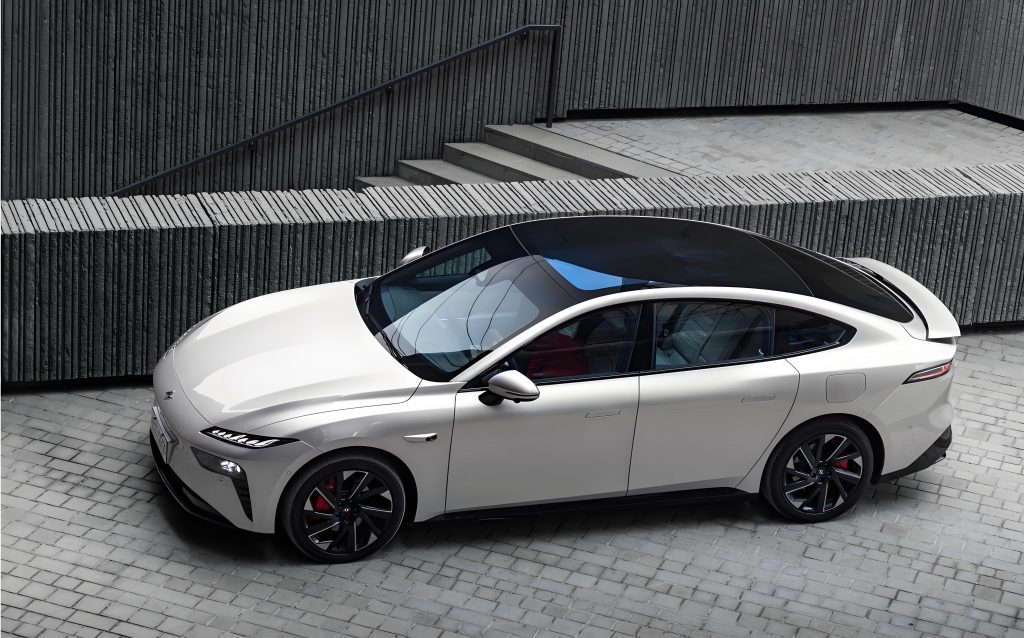
Many countries have adopted strategies to promote the adoption of electric cars as part of their low-carbon transportation initiatives. For instance, China launched its electric car strategy in 2009, beginning with the “Ten Cities, One Thousand Vehicles” program, which expanded to 88 pilot cities by 2013. These policies aim to accelerate the adoption of electric cars through incentives like subsidies, charging infrastructure development, and research support. By 2024, China accounted for over 70% of global electric car sales, highlighting the potential of such policies to drive market transformation. Electric cars, as efficient and clean vehicles, can reduce reliance on fossil fuels, decrease emissions, and stimulate economic growth through technological advancements and green investments.
This study examines the impact of electric car pilot policies on urban synergistic effects in pollution reduction and carbon emission reduction. Using panel data from 282 Chinese cities between 2004 and 2021, a multi-period difference-in-differences model is employed to assess the policy’s effectiveness. The findings indicate that electric car pilot policies significantly enhance synergistic effects, with stronger impacts in cities with low thermal power generation structures, high intelligent transportation levels, and those located in acid rain or sulfur dioxide control zones. Mechanisms include technological progress, energy structure optimization, and green investment. Additionally, spatial spillover effects are observed, where pilot policies benefit neighboring cities through knowledge diffusion and investment attraction.
Literature Review
Research on synergistic effects in pollution reduction and carbon emission reduction primarily focuses on indicator measurement and influencing factors. Studies often use coupling coordination models to quantify these synergies, integrating indicators such as air pollution, carbon emissions, and economic growth. For example, coupling coordination degree models are widely applied to evaluate the coordination between environmental and economic systems. In terms of drivers, various environmental policies—such as carbon emission trading, low-carbon city pilots, and energy rights trading—have been shown to promote synergistic effects. However, some studies, like that of Sun et al. (2022), found that environmental and low-carbon policies may not always synergize effectively and could even increase carbon emissions in certain contexts.
Regarding electric cars, existing literature covers industrial policies and environmental effects. Industrial policies, including fiscal incentives and non-fiscal support like charging infrastructure, have been shown to expand the electric car market. For instance, Xing et al. (2021) demonstrated that federal tax credits in the United States boosted electric car sales. Environmental studies highlight that electric cars can improve energy efficiency, foster renewable energy innovation, and reduce air pollution and carbon emissions. However, the effectiveness of electric cars in emission reduction depends on regional factors, such as the electricity generation structure. In regions with high reliance on coal-based power, electric cars may have limited benefits or even exacerbate carbon emissions, as noted by Su et al. (2021).
While some studies, such as Zhang et al. (2020) and Ercan et al. (2022), have explored the role of electric car policies in reducing pollution and carbon emissions, they often focus on specific regions or use simulation models. This study contributes by analyzing the broader impact of electric car pilot policies across multiple cities, examining transmission mechanisms, and assessing spatial spillover effects. The use of a multi-period difference-in-differences model with comprehensive data enhances the robustness of the findings.
Theoretical Framework and Hypotheses
The electric car pilot policy is designed to promote the adoption of electric vehicles through government incentives and target constraints, ultimately contributing to urban synergistic effects in pollution reduction and carbon emission reduction. The direct impact hypothesis posits that these policies stimulate market demand for electric cars, accelerate the replacement of conventional vehicles, and drive the electrification of the transportation sector. This reduces dependence on fossil fuels, leading to lower emissions of pollutants and carbon dioxide. Additionally, the development of the electric car industry fosters economic growth by creating new industries and job opportunities. Thus, Hypothesis 1 is proposed:
Hypothesis 1: Electric car pilot policies can enhance urban synergistic effects in pollution reduction and carbon emission reduction.
The mechanisms through which electric car pilot policies influence synergistic effects are multifaceted. First, technological progress plays a crucial role. Policies that support research and development in electric car technologies, such as batteries and energy management systems, can lead to innovations that improve energy efficiency and reduce emissions. The advancement in electric car technologies not only mitigates environmental impacts but also drives economic growth by enhancing industrial competitiveness. This leads to Hypothesis 2:
Hypothesis 2: Electric car pilot policies promote synergistic effects by fostering technological progress.
Second, optimizing the energy structure is essential. Electric cars rely on electricity, and if the power generation mix is dominated by renewable sources, their environmental benefits are maximized. Pilot policies encourage the integration of renewable energy into the grid, reducing the carbon intensity of electricity used by electric cars. This shift from fossil fuels to clean energy sources directly contributes to pollution reduction and carbon emission reduction while supporting sustainable economic development. Hence, Hypothesis 3:
Hypothesis 3: Electric car pilot policies promote synergistic effects by optimizing the energy structure.
Third, green investment is a key channel. Electric car pilot policies attract investments in green technologies and infrastructure, such as charging stations and renewable energy projects. These investments not only fund environmental initiatives but also stimulate economic activity by creating new markets and enhancing productivity. As investors increasingly prioritize sustainability, electric car projects become attractive opportunities, leading to Hypothesis 4:
Hypothesis 4: Electric car pilot policies promote synergistic effects by guiding green investment.
Model Specification and Variable Description
To evaluate the impact of electric car pilot policies, a multi-period difference-in-differences model is specified as follows:
$$ \text{Syneff}_{it} = \alpha_0 + \alpha_1 \text{NEV}_{it} + \eta \mathbf{CV}_{it} + v_i + \varphi_t + \varepsilon_{it} $$
where Syneffit represents the synergistic effect of pollution reduction and carbon emission reduction for city i in year t. NEVit is a binary variable indicating whether city i implemented the electric car pilot policy in year t. CVit denotes a vector of control variables, including economic development, foreign direct investment, technological support, government intervention, and environmental regulation. vi and φt are city and year fixed effects, respectively, and εit is the error term.
The synergistic effect (Syneff) is measured using a coupling coordination degree model, which integrates indicators of air pollution, carbon emissions, and economic growth. Air pollution is represented by a composite index (AP) derived from PM2.5, industrial SO2, and industrial dust emissions using the entropy method. Carbon emissions (CO2) are total CO2 emissions, and economic growth is measured by GDP. The coupling coordination degree is calculated as:
$$ C = \sqrt[3]{\frac{AP \times CO_2 \times GDP}{\left( \frac{AP + CO_2 + GDP}{3} \right)^3}} $$
$$ T = w_1 AP + w_2 CO_2 + w_3 GDP $$
$$ \text{Syneff} = \sqrt{C \times T} $$
where C is the coupling degree, T is the comprehensive coordination index, and weights w1, w2, and w3 are set to 1/3. Syneff ranges from 0 to 1, with higher values indicating better synergistic effects.
Control variables include:
– Pgdp: Log of per capita GDP.
– FDI: Ratio of foreign direct investment to GDP.
– Tech: Ratio of government science and technology expenditure to total expenditure.
– Gover: Ratio of government expenditure to GDP.
– ER: Frequency of environment-related terms in government work reports.
Data sources include the CEADs carbon database, atmospheric composition data from Dalhousie University, patent data from the Chinese Patent Database, and statistical yearbooks. Missing data are addressed using imputation methods.
| Variable | Mean | Std. Dev. | Min | Max |
|---|---|---|---|---|
| Syneff | 0.45 | 0.12 | 0.20 | 0.85 |
| NEV | 0.15 | 0.36 | 0 | 1 |
| Pgdp | 10.50 | 0.80 | 8.90 | 12.10 |
| FDI | 0.03 | 0.02 | 0.01 | 0.08 |
| Tech | 0.04 | 0.01 | 0.02 | 0.07 |
| Gover | 0.18 | 0.05 | 0.10 | 0.30 |
| ER | 0.12 | 0.08 | 0.02 | 0.35 |
Empirical Results and Analysis
Baseline Estimation Results
The baseline regression results, presented in Table 2, show that the coefficient for NEV is positive and statistically significant at the 1% level across all specifications. This indicates that electric car pilot policies significantly enhance synergistic effects in pollution reduction and carbon emission reduction. For instance, in the full model (Column 6), the coefficient is 0.0055, suggesting that the policy increases the synergistic effect by approximately 0.55 percentage points. Control variables such as per capita GDP and technological support also show positive effects, while government intervention has a negative impact, possibly due to inefficiencies in public spending.
| Variable | (1) | (2) | (3) | (4) | (5) | (6) |
|---|---|---|---|---|---|---|
| NEV | 0.0077*** | 0.0093*** | 0.0093*** | 0.0071*** | 0.0056*** | 0.0055*** |
| Pgdp | 0.0467*** | 0.0468*** | 0.0463*** | 0.0411*** | 0.0412*** | |
| FDI | -0.0096 | 0.0020 | 0.0296 | 0.0296 | ||
| Tech | 0.2626*** | 0.1946*** | 0.1943*** | |||
| Gover | -0.0834*** | -0.0834*** | ||||
| ER | 0.0294 | |||||
| Constant | 0.4582*** | -0.0262 | -0.0269 | -0.0253 | 0.0435 | 0.0432 |
| City FE | Yes | Yes | Yes | Yes | Yes | Yes |
| Year FE | Yes | Yes | Yes | Yes | Yes | Yes |
| Observations | 5076 | 5076 | 5076 | 5076 | 5076 | 5076 |
| R-squared | 0.9519 | 0.9588 | 0.9588 | 0.9593 | 0.9603 | 0.9603 |
Note: Standard errors in parentheses; ***, **, * denote significance at 1%, 5%, and 10% levels.
Robustness Checks
To ensure the reliability of the results, several robustness tests are conducted. First, a parallel trends test using event study methods confirms that pre-treatment trends between pilot and non-pilot cities are similar, with significant effects emerging only after policy implementation. Second, a placebo test involving 500 random assignments of pilot cities shows that the estimated coefficients are centered around zero, with the true coefficient (0.0055) lying outside the distribution, indicating that the results are not driven by unobserved factors.
Third, concerns about heterogeneous treatment effects are addressed using the Bacon decomposition and heterogeneous-robust estimators. The Bacon decomposition reveals that only 2.71% of the weight comes from “bad controls” (early vs. late treated cities), while 93.23% comes from “good controls” (never treated vs. timing groups), minimizing bias. The event study graph from heterogeneous-robust estimation shows no pre-treatment differences and significant post-treatment effects, supporting the use of the multi-period difference-in-differences model.
Additional tests include:
– Replacing the dependent variable with separate indicators for pollution reduction, carbon reduction, and economic growth, which yield consistent results.
– Addressing non-random selection by including interactions between city attributes (e.g., northern cities, economic zones) and time trends.
– Using double machine learning models with random forests to reduce model specification errors.
– Applying propensity score matching with difference-in-differences (PSM-DID) to correct for sample selection bias.
– Testing for anticipation effects by advancing the policy timing by one year, which shows no significant impact.
– Controlling for other policies like carbon emission trading, low-carbon city pilots, and energy rights trading, which does not alter the main findings.
These tests confirm that electric car pilot policies robustly contribute to synergistic effects.
Heterogeneity Analysis
The impact of electric car pilot policies varies across cities based on local conditions. Heterogeneity analysis is conducted by grouping cities according to power generation structure, intelligent transportation levels, and environmental regulation zones.
Power Generation Structure: Cities are divided into high and low thermal power generation groups based on 2021 data. The results in Table 4 (Columns 1-2) show that electric car pilot policies have a stronger effect in cities with low thermal power generation. This is because these cities often rely on renewable energy sources, such as hydro, solar, and wind, which align better with the clean energy requirements of electric cars. In contrast, cities with high thermal power generation may experience locked-in effects from fossil fuel infrastructure, limiting the benefits of electric cars.
Intelligent Transportation Level: Using keyword frequency in government reports (e.g., “smart transportation,” “autonomous driving”), cities are categorized into high and low groups. Table 4 (Columns 3-4) indicates that policies are more effective in cities with high intelligent transportation levels. Intelligent systems optimize traffic flow, reduce congestion, and enhance energy efficiency, amplifying the environmental and economic benefits of electric cars.
Acid Rain or Sulfur Dioxide Control Zones: Cities in these zones, established in 1998, face stricter environmental regulations. Table 4 (Columns 5-6) reveals that electric car pilot policies have a significant impact only in these zones. Stricter regulations compel local governments to adopt cleaner technologies, such as electric cars, to meet environmental targets, thereby fostering synergistic effects.
| Variable | Low Thermal Power | High Thermal Power | High Intelligent Transport | Low Intelligent Transport | Acid Rain Control Zone | Non-Control Zone |
|---|---|---|---|---|---|---|
| NEV | 0.0108*** | 0.0032 | 0.0064** | 0.0023 | 0.0064*** | -0.0014 |
| Controls | Yes | Yes | Yes | Yes | Yes | Yes |
| City FE | Yes | Yes | Yes | Yes | Yes | Yes |
| Year FE | Yes | Yes | Yes | Yes | Yes | Yes |
| Observations | 1908 | 3168 | 2103 | 2973 | 2700 | 2376 |
| R-squared | 0.9732 | 0.9529 | 0.9658 | 0.9616 | 0.9796 | 0.9317 |
Mechanism Tests
To examine the transmission channels, mediation models are estimated using the following equation:
$$ M_{it} = \mu_0 + \mu_1 \text{NEV}_{it} + \eta \mathbf{CV}_{it} + \nu_i + \varphi_t + \varepsilon_{it} $$
where Mit represents mediating variables: technological progress, energy structure, and green investment.
Technological Progress: Measured by the log of patent applications from electric car enterprises, including independent and joint innovations. Table 5 (Columns 1-2) shows that electric car pilot policies significantly increase both independent and joint innovation. Technological advancements in electric car components, such as batteries and energy management systems, improve efficiency and reduce emissions, thereby enhancing synergistic effects.
Energy Structure: Represented by the share of clean energy (solar, wind, hydro, nuclear) and coal in total energy consumption. Table 5 (Columns 3-4) indicates that policies increase clean energy share and decrease coal share. This shift reduces the carbon intensity of electricity used by electric cars, contributing to pollution reduction and carbon emission reduction.
Green Investment: Captured by the log of green investors in electric car enterprises and the ratio of energy investment to GDP. Table 5 (Columns 5-6) demonstrates that policies attract green investors and increase energy investments. These investments fund infrastructure and innovation, driving both environmental and economic benefits.
| Variable | Independent Innovation | Joint Innovation | Clean Energy Share | Coal Share | Green Investors | Energy Investment |
|---|---|---|---|---|---|---|
| NEV | 0.6952*** | 0.5252*** | 0.0036*** | -0.0119*** | 0.3279*** | 0.1050*** |
| Controls | Yes | Yes | Yes | Yes | Yes | Yes |
| City FE | Yes | Yes | Yes | Yes | Yes | Yes |
| Year FE | Yes | Yes | Yes | Yes | Yes | Yes |
| Observations | 5076 | 5076 | 4709 | 4709 | 5076 | 5076 |
| R-squared | 0.8159 | 0.6579 | 0.9286 | 0.9420 | 0.6779 | 0.8133 |
Spatial Spillover Effects
Given the cross-border nature of environmental pollutants, spatial dependencies are considered. A spatial Durbin difference-in-differences model (SDID-SDM) is used to assess spillover effects:
$$ \text{Syneff}_{it} = \lambda_0 + \rho W \text{Syneff}_{it} + \lambda_1 \text{NEV}_{it} + \theta_1 W \text{NEV}_{it} + \lambda_2 \mathbf{CV}_{it} + \theta_2 W \mathbf{CV}_{it} + \nu_i + \varphi_t + \varepsilon_{it} $$
where W is a spatial weight matrix. Two matrices are employed: economic distance matrix (W1) and economic-geographic weight matrix (W2). Global Moran’s I tests confirm positive spatial autocorrelation in synergistic effects.
Table 6 presents the spatial regression results. The coefficient for W×NEV is positive and significant, indicating that electric car pilot policies have positive spatial spillover effects. Decomposition of effects shows significant direct and indirect impacts, meaning that policies in pilot cities benefit both local and neighboring areas. This occurs through mechanisms like knowledge diffusion and investment attraction, where innovations and green investments in pilot cities spread to adjacent regions.
| Variable | Economic Distance Matrix (W1) | Economic-Geographic Matrix (W2) |
|---|---|---|
| NEV | 0.0032** | 0.0021* |
| W×NEV | 0.0089*** | 0.0095*** |
| ρ | 0.0625** | 0.1818*** |
| Direct Effect | 0.0033*** | 0.0024* |
| Indirect Effect | 0.0096*** | 0.0117*** |
| Total Effect | 0.0129*** | 0.0141*** |
| Log-Likelihood | 12621.5270 | 12811.1240 |
| Observations | 5076 | 5076 |
| R-squared | 0.3577 | 0.6322 |
Further analysis of spatial mechanisms (Table 7) reveals that spillovers are driven by joint innovation and green investor entry, but not by energy structure optimization or independent innovation. This suggests that collaborative research and investment flows are key to spreading benefits, while energy mix changes remain localized due to infrastructure constraints.
| Variable | Joint Innovation | Green Investors |
|---|---|---|
| NEV | 0.4019*** | 0.2374*** |
| W×NEV | 0.1528* | 0.1387*** |
| γ | 0.1040*** | 0.2748*** |
| Direct Effect | 0.4051*** | 0.2463*** |
| Indirect Effect | 0.2110** | 0.2708*** |
| Total Effect | 0.6161*** | 0.5171*** |
| Log-Likelihood | -3907.6157 | -476.8767 |
| Observations | 5076 | 5076 |
| R-squared | 0.1113 | 0.0018 |
Conclusion and Policy Implications
This study demonstrates that electric car pilot policies significantly enhance urban synergistic effects in pollution reduction and carbon emission reduction. The policies are particularly effective in cities with low thermal power generation, high intelligent transportation levels, and stringent environmental regulations. Mechanisms include technological progress, energy structure optimization, and green investment, with additional spatial spillover benefits to neighboring cities.
Based on these findings, the following policy recommendations are proposed:
First, governments should continuously refine electric car pilot policies to maximize their impact. This includes promoting public awareness of electric cars through media campaigns and exhibitions, offering subsidies and privileges like free parking, and expanding charging infrastructure to reduce barriers to adoption.
Second, policies should be tailored to local conditions. In regions reliant on thermal power, carbon pricing and renewable energy incentives can accelerate the transition. For cities with low intelligent transportation, investments in digital infrastructure, such as smart traffic systems, are essential. In non-regulated zones, integrating environmental performance into government evaluations can encourage the adoption of electric cars and other green technologies.
Third, strengthening the identified mechanisms is crucial. Governments should support research and development in electric car technologies, promote renewable energy integration, and attract green investments through favorable policies and market signals.
Finally, regional cooperation should be enhanced. City clusters can coordinate electric car policies, infrastructure, and data sharing to overcome local protectionism and achieve broader environmental and economic benefits. By fostering collaboration, electric car pilot policies can serve as a catalyst for sustainable urban development.