
In the development of electric multi-purpose vehicles (MPVs), low-frequency road noise remains a critical challenge that directly impacts passenger comfort and overall vehicle quality. As the automotive industry shifts toward electrification, the absence of traditional engine noise amplifies the significance of addressing structural vibrations and acoustic coupling within the cabin. This article presents a comprehensive study on the analysis and optimization of low-frequency road noise in an electric MPV, employing experimental and simulation-based approaches to identify and mitigate noise contributors. The focus is on frequencies below 50 Hz, where structural resonances and acoustic modes interact, leading to undesirable booming and pressure sensations inside the vehicle.
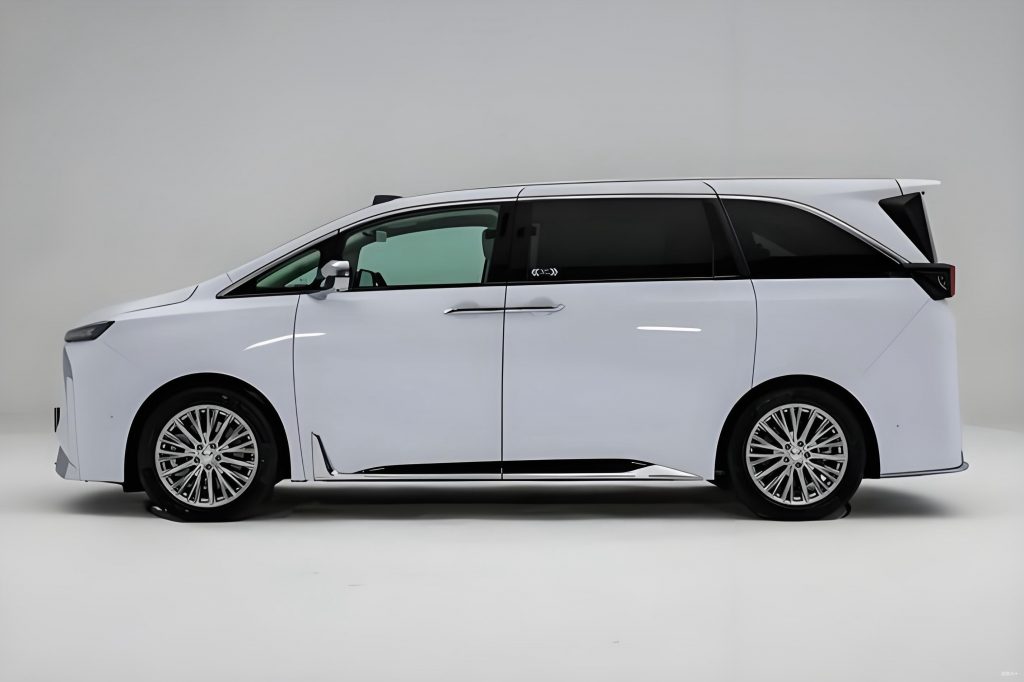
Low-frequency road noise in electric MPV models often arises from the interaction between suspension dynamics, body structure vibrations, and interior acoustic cavities. Unlike conventional vehicles, electric MPVs lack the masking effect of internal combustion engines, making low-frequency issues more perceptible and critical to address. In this study, I investigate the root causes of noise peaks at 27 Hz and 43 Hz through transfer path analysis (TPA), modal testing, and operational deflection shapes (ODS) analysis. The goal is to develop effective optimization strategies that enhance the noise, vibration, and harshness (NVH) performance of electric MPV vehicles without compromising other design constraints.
The methodology begins with problem identification through objective testing and subjective evaluation. For the electric MPV under study, interior noise measurements revealed prominent peaks at 27 Hz and 43 Hz, exceeding target levels and causing discomfort. Preliminary analysis indicated that structural paths, particularly from the rear suspension, were the primary contributors. To quantify these contributions, I implemented a classical TPA framework, which decomposes the total noise response into contributions from individual paths. The fundamental TPA equation is expressed as:
$$P(\omega) = \sum_i F_i(\omega) \times A_i(\omega) + \sum_j F_j(\omega) \times B_j(\omega)$$
where \(P(\omega)\) represents the total noise contribution at frequency \(\omega\), \(F_i(\omega)\) and \(F_j(\omega)\) denote structural and acoustic path transfer functions, and \(A_i(\omega)\) and \(B_j(\omega)\) are the corresponding loads. For this electric MPV, the analysis focused on structural paths due to their dominant role in low-frequency noise transmission.
The TPA model incorporated 12 attachment points on the suspension and body structure, resulting in 36 individual paths considering three directional components (X, Y, Z) per point. Operational data were collected under rough road conditions at 60 km/h, with accelerometers placed at passive-side attachment points and microphones inside the cabin to capture noise responses. Transfer functions were measured using impact hammer testing under free-boundary conditions to ensure accuracy. The inverse matrix method was applied to solve for the operational loads, as described by:
$$\begin{bmatrix} F_1(\omega) \\ F_2(\omega) \\ \vdots \\ F_n(\omega) \end{bmatrix} = \begin{bmatrix} H_{11}(\omega) & H_{21}(\omega) & \cdots & H_{n1}(\omega) \\ H_{12}(\omega) & H_{22}(\omega) & \cdots & H_{n2}(\omega) \\ \vdots & \vdots & \ddots & \vdots \\ H_{1v}(\omega) & H_{2v}(\omega) & \cdots & H_{nv}(\omega) \end{bmatrix}^{-1} \begin{bmatrix} \alpha_1(\omega) \\ \alpha_2(\omega) \\ \vdots \\ \alpha_v(\omega) \end{bmatrix}$$
where \(F_n(\omega)\) is the force vector, \(\alpha_v(\omega)\) represents the operational response vector, and \(H_{nv}^{-1}(\omega)\) is the inverse transfer function matrix from input to indicator points. This approach enabled the decomposition of noise contributions at 27 Hz and 43 Hz, revealing that the rear suspension’s X-direction paths, particularly at the twist beam attachments, were the most significant.
To further isolate the problem components, I conducted modal analysis and ODS testing on the electric MPV’s body and suspension systems. The modal analysis identified natural frequencies and mode shapes, while ODS visualized operational deformations under actual driving conditions. For instance, at 27 Hz, the rear twist beam exhibited a rigid body mode in the X-direction at 27.4 Hz, and the tailgate showed a first-order rigid swing mode at 29.5 Hz. Similarly, at 43 Hz, the panoramic sunroof (referred to as the “sky window”) demonstrated a first-order mode at 45 Hz, coupled with the acoustic cavity mode at 40 Hz. The modal assurance criterion (MAC) was used to validate the correlation between experimental and simulated mode shapes, with values above 0.8 considered acceptable. The MAC is defined as:
$$\text{MAC}(\phi_i^A, \phi_i^B) = \frac{[(\phi_i^A)^T \phi_i^B]^2}{[(\phi_i^A)^T \phi_i^A][(\phi_i^B)^T \phi_i^B]}$$
where \(\phi_i^A\) and \(\phi_i^B\) are the simulated and experimental modal vectors, respectively. This correlation ensured the reliability of subsequent simulation models.
Based on these findings, I developed a finite element model of the electric MPV’s trimmed body (TB) to simulate and optimize the problematic components. The model included shell elements for metal panels, rigid body elements (RBE) for connections, and bushing elements for elastic components. After calibration with experimental data, the model showed less than 5% frequency error and high MAC values, as summarized in Table 1.
| Component | Experimental Frequency (Hz) | Simulated Frequency (Hz) | Frequency Error (%) | MAC Value |
|---|---|---|---|---|
| Tailgate First Order | 29.5 | 29.2 | -1.0 | 0.92 |
| Tailgate Second Order | 39.4 | 38.0 | -3.6 | 0.85 |
| Sunroof First Order | 39.7 | 37.8 | -4.8 | 0.87 |
| Sunroof Second Order | 57.8 | 60.4 | 4.5 | 0.80 |
For the 27 Hz issue, I proposed three optimization schemes for the tailgate structure, aimed at increasing its natural frequency to decouple it from the suspension mode. The schemes involved reinforcing the lock hook area, adding stiffeners to the inner panel, and enhancing the outer panel connectivity. The mass and performance changes are compared in Table 2.
| Scheme | Structural Modifications | Mass Increase (kg) | Noise Reduction at 27 Hz (dB(A)) – Front Row | Noise Reduction at 27 Hz (dB(A)) – Rear Row |
|---|---|---|---|---|
| Scheme 1 | Reinforce lock hook nut plate | 0.02 | -1.2 | -1.0 |
| Scheme 2 | Reinforce lock hook and add inner panel stiffeners | 0.50 | -3.0 | -2.0 |
| Scheme 3 | Reinforce lock hook, inner panel, and outer panel with connectors | 0.70 | -3.5 | -2.2 |
Scheme 2 was selected for implementation in the electric MPV due to its balanced trade-off between mass addition and noise reduction. It increased the tailgate’s first-order modal frequency from 29.2 Hz to 32.9 Hz, effectively decoupling it from the suspension excitation. The optimization process involved applying operational loads from TPA to the simulation model and evaluating the noise response. The improvement in noise reduction can be modeled as a function of the frequency shift, using the general formula for structural-acoustic response:
$$\Delta P = 20 \log_{10} \left( \frac{f_{\text{new}}}{f_{\text{original}}} \right) \times K$$
where \(\Delta P\) is the noise reduction, \(f_{\text{new}}\) and \(f_{\text{original}}\) are the optimized and original frequencies, and \(K\) is a coupling coefficient derived from experimental data.
For the 43 Hz noise peak, which stemmed from the coupling between the sunroof modal and acoustic cavity modes, I optimized the sunroof’s curvature by raising the center portion by 20 mm and flattening the rear section. This reduced the sunroof’s first-order modal frequency from 37.8 Hz to 32.1 Hz, moving it away from the acoustic cavity resonance. The modal shapes before and after optimization are illustrated in the simulation results, showing reduced deformation amplitudes. The effectiveness of this modification was quantified through simulation-based acoustic analysis, which predicted a noise reduction of approximately 5 dB(A) in the 36–44 Hz range.
To validate these optimizations, I conducted real-vehicle tests on the electric MPV under the same road conditions. Additional mass blocks were installed to simulate the tailgate reinforcements, and the modified sunroof was evaluated. The results, as shown in Table 3, confirm significant improvements in interior noise levels.
| Frequency of Interest | Component Optimized | Noise Reduction Front Row (dB(A)) | Noise Reduction Rear Row (dB(A)) | Overall Improvement |
|---|---|---|---|---|
| 27 Hz | Tailgate | 4.0 | 6.4 | Substantial |
| 43 Hz | Sunroof | 7.0 | 3.0 | Significant |
The TPA contribution analysis post-optimization showed a marked decrease in path contributions from the rear suspension and body structures. For example, the twist beam X-direction path contribution at 27 Hz dropped by over 60%, while the sunroof-related paths at 43 Hz were reduced by nearly 50%. These outcomes highlight the importance of frequency decoupling and structural stiffening in electric MPV designs to mitigate low-frequency road noise.
In conclusion, this study demonstrates a systematic approach to diagnosing and optimizing low-frequency road noise in electric MPV vehicles. By integrating experimental TPA, modal analysis, and finite element simulations, I identified and addressed key noise contributors at 27 Hz and 43 Hz. The tailgate optimization through stiffness enhancement and the sunroof curvature adjustment proved effective in reducing noise levels by up to 7 dB(A), significantly enhancing passenger comfort. The methodologies and results presented here provide valuable insights for NVH development in electric MPV applications, emphasizing the role of structural-acoustic decoupling in achieving superior noise performance. Future work could explore active noise control or material-based solutions for further refinements in electric MPV designs.