
Driven by global “dual-carbon” objectives, the automotive market is witnessing a rapid expansion of new energy vehicles. Among these, Plug-in Hybrid Electric Vehicles (PHEVs) have gained significant consumer acceptance, largely due to their advantage in extended electric-only range which alleviates range anxiety. However, emission and fuel consumption regulations impose stringent and complex testing requirements on hybrid electric vehicles, which are notably more demanding than those for traditional internal combustion engine vehicles. The large battery capacity in PHEVs allows for more flexible engine operation, aiming to maximize fuel efficiency. This strategy often results in frequent engine start-stop events. These frequent cold starts, where the engine and aftertreatment system are not fully warmed, place considerable pressure on pollutant and particulate matter (PM) emissions. Effective off-engine purification measures, such as optimally matched Three-Way Catalysts (TWC) and Gasoline Particulate Filters (GPF), are therefore crucial. As emission regulations become increasingly stringent, the demands on these aftertreatment systems intensify. The use of substrates with lower thermal mass (e.g., ultra-thin-wall carriers) facilitates faster warm-up, while optimized precious metal distribution enhances cold-start performance. Furthermore, with the high cost of Platinum (Pt), Palladium (Pd), and Rhodium (Rh), adopting new aftertreatment technologies to reduce overall precious metal loading is essential for lowering development costs and enhancing the competitiveness of vehicle models.
This study is based on the development platform for a plug-in hybrid electric vehicle powertrain. We focus on matching and developing emission aftertreatment technical solutions. The evaluation begins with a thorough assessment of performance on an engine bench, comparing the results of new coating technologies applied on ultra-thin-wall substrates. These bench performance results are then used to screen candidate technologies for subsequent vehicle emission testing. The ultimate goal is to identify a low-cost, high-performance emission aftertreatment solution that complies with the current China 6b and Real Driving Emissions (RDE) regulations. By comparing bench data on light-off temperature, oxygen storage capacity (OSC), and back pressure, we select superior aftertreatment configurations for comprehensive vehicle emission testing over the Worldwide Harmonized Light Vehicles Test Cycle (WLTC) and RDE procedures. Additionally, we contrast the engine operating characteristics of hybrid electric vehicles with those of conventional vehicles, summarize the key considerations for aftertreatment selection in PHEVs, and provide recommendations. This process aims to achieve cost reduction for platform models and reserve new technologies for future regulatory upgrades.
Emission Aftertreatment System for Plug-in Hybrid Electric Vehicles
Characteristics of Plug-in Hybrid Electric Vehicles
Plug-in Hybrid Electric Vehicles (PHEVs) have experienced rapid growth in recent years, offering significant advantages such as lower operating costs, elimination of range anxiety, eligibility for green license plates in many regions, and noticeable power enhancement. The defining feature of a PHEV is its dual energy sources: a high-voltage battery and an internal combustion engine. A hybrid electric vehicle can operate in various driving modes, including pure electric drive, series hybrid mode (engine acts as a generator), parallel hybrid mode (both engine and motor drive the wheels), and direct engine drive. This flexibility allows the vehicle’s energy management system to optimize the energy source pathway for maximum overall efficiency. Key operational characteristics include a large battery capacity, plug-in charging capability, long electric-only range, and exceptionally low fuel consumption (under 2L/100km for smaller models under favorable charging conditions). As the electric motor and battery share the propulsion load, the engine operates more frequently within stable and efficient points. Crucially, the frequency of engine start-stop events is far higher in a hybrid electric vehicle compared to a conventional vehicle.
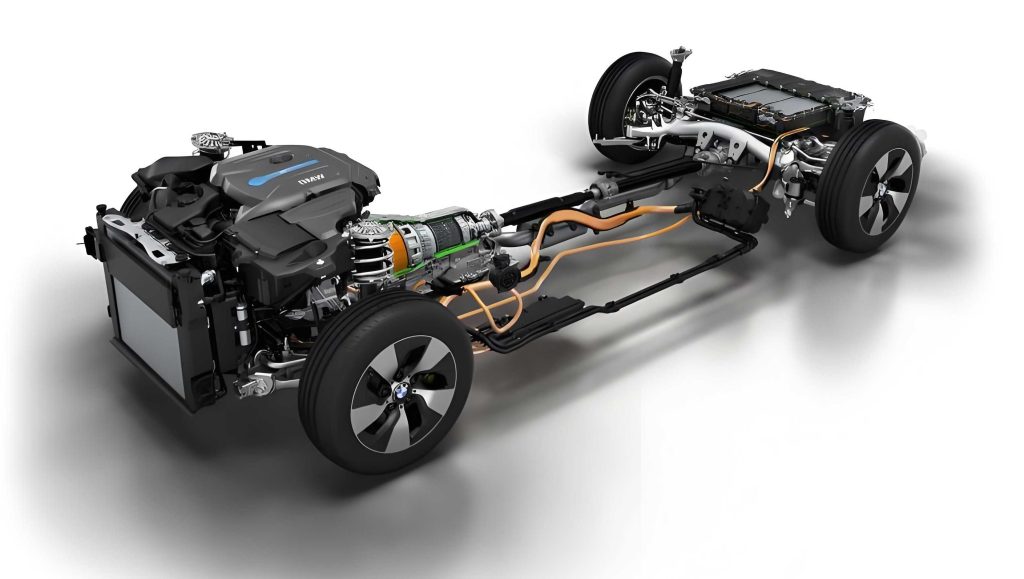
Overview of Emission Aftertreatment for Hybrid Electric Vehicles
The emission aftertreatment system for a gasoline hybrid electric vehicle typically comprises a catalyst coating and a substrate. This study investigates different catalyst coating technologies while keeping the substrate parameters constant. The design of the coating方案 is informed by the specific characteristics of the PHEV, including its start-stop strategy, engine displacement, and air-fuel ratio control, combined with data from previous mass-production projects to define the precious metal loading range and coating technology options.
The aftertreatment system generally includes a Three-Way Catalyst (TWC) and a Gasoline Particulate Filter (GPF). The TWC consists of the coating and precious metals. The coating is composed of materials like alumina (Al2O3), ceria-zirconia mixed oxides, and other rare-earth metals. The precious metals, primarily Pt, Pd, and Rh, are quantified in grams per cubic foot (g/cft3). The GPF is an exhaust aftertreatment device designed to trap and treat particulate matter (PM). GPFs can be uncoated (bare substrate) or coated (c-GPF). A coated GPF, sometimes termed a Four-Way Catalyst, possesses the dual capability of trapping particles and converting gaseous pollutants (THC, CO, and NOx). For the hybrid electric vehicle in this study, the aftertreatment system employs a close-coupled TWC+GPF layout, where the TWC is positioned very close to the engine exhaust manifold. This proximity is beneficial for rapid catalyst warm-up and improving pollutant conversion during the critical cold-start phase.
Vehicle and Test Parameters
The试验 was conducted on a plug-in hybrid electric vehicle platform. Key parameters are summarized in Table 1. Testing was performed on an engine dynamometer and in a vehicle emission test chamber, with ambient conditions controlled to a temperature range of 22–25°C and a humidity of 45% ± 8% using a climate control system.
| Item | Parameter |
|---|---|
| Battery Capacity | 19 kWh |
| Engine Specification | 1.5L Turbocharged Gasoline Direct Injection (TGDI) |
| TWC Volume / Cell Density / Wall Thickness | 0.82 L; 600 CPSI / 2 mil |
| GPF Volume / Cell Density / Wall Thickness | 1.39 L; 300 CPSI / 8 mil |
| Curb Weight / Gross Weight (Base Vehicle H) | 1980 kg / 2406 kg |
| Curb Weight / Gross Weight (Derivative Vehicle L) | 2115 kg / 2590 kg |
Test Methodology and Catalyst Selection Criteria
The catalyst selection followed a two-stage process. The initial screening was based on the performance results from engine bench tests. The final qualification criterion was that the aged catalyst must achieve emission levels below 80% of the legislative limits for the corresponding vehicle. Results from fresh catalysts were also considered, accounting for the deterioration factors recommended by regulations.
The technical specifications for the candidate aftertreatment solutions are listed in Table 2. All selected configurations underwent accelerated aging on the engine bench using the GMAC875 cycle for 100 hours (a duration based on empirical correlation with real-world SRC cycles). Following aging, comprehensive bench performance testing was conducted. The most promising technologies were then evaluated for emission performance on the base platform vehicle to make a final integrated judgment.
| Powertrain Platform | TWC Technology | GPF Technology | Precious Metal Loading (g) | Remarks | ||
|---|---|---|---|---|---|---|
| Pt | Pd | Rh | ||||
| 1.5TGDI | A-1 | E-1 | 0.16 | 1.50 | 0.21 | Next-gen coating for wider conversion window. |
| B-1 | E-2 | 0.16 | 1.25 | 0.16 | Improved PGM dispersion, better HC cold-start efficiency, lower Pd. | |
| C-1 | F-1 | 0.00 | 1.82 | 0.14 | Excellent light-off & dynamic OSC, good high-speed conversion. | |
| D-1 | F-2 | 0.00 | 1.58 | 0.14 | ||
The performance of a TWC can be modeled in terms of conversion efficiency ($\eta$) as a function of temperature ($T$) and space velocity ($SV$). A simplified representation for light-off is:
$$ \eta_{HC,CO}(T) \approx \frac{1}{1 + \exp(-k(T – T_{50}))} $$
where $T_{50}$ is the light-off temperature (50% conversion) and $k$ is a kinetic rate constant. A lower $T_{50}$ indicates superior cold-start performance, which is paramount for a hybrid electric vehicle.
Test Results and Analysis
This section analyzes the engine bench performance data for the various technical solutions. Based on this analysis, selected configurations proceed to full vehicle emission performance testing. The goal is to identify and summarize the superior technical方案, providing a basis for cost-reduced product development and reserving new coating technologies for future applications.
Bench Performance Comparison of Aftertreatment Solutions
Bench performance metrics include light-off characteristics, oxygen storage capacity (OSC), and back pressure. These four key performance indicators are compared to analyze the advantages of each technology before selecting candidates for vehicle testing.
Light-Off Performance
Figures 1 through 6 (data represented in tables below) show the light-off temperatures ($T_{50}$ and $T_{90}$) for fresh and aged states of each technology方案. The observations are as follows:
a) Fresh Catalysts: The C-1方案 shows a slight advantage in $T_{50}$. The B-1方案 demonstrates a clear advantage in $T_{90}$, being 5–8°C lower than the higher-loaded A-1 and C-1方案s.
b) Aged Catalysts: The B-1方案 exhibits the best overall light-off performance after aging. All pollutant $T_{50}$ and $T_{90}$ values for B-1 are approximately 5°C lower than those of the A-1 and C-1方案s, with NOx $T_{50}$ being about 8°C lower.
c) Performance Deterioration: The B-1方案 shows the smallest increase in $T_{50}$ after aging, indicating better durability of its light-off characteristics.
In summary, regarding bench light-off performance, the B-1 technical方案 performs best, despite having a lower total precious metal loading.
| Technology | CO $T_{50}$ | THC $T_{50}$ | NOx $T_{50}$ | |||
|---|---|---|---|---|---|---|
| Fresh | Aged | Fresh | Aged | Fresh | Aged | |
| A-1 | 289 | 353 | 308 | 351 | 292 | 350 |
| B-1 | 297 | 345 | 297 | 347 | 298 | 343 |
| C-1 | 289 | 351 | 295 | 351 | 292 | 352 |
| D-1 | 292 | 359 | 298 | 359 | 298 | 359 |
| Technology | CO $T_{90}$ | THC $T_{90}$ | NOx $T_{90}$ | |||
|---|---|---|---|---|---|---|
| Fresh | Aged | Fresh | Aged | Fresh | Aged | |
| A-1 | 306 | 368 | 318 | 376 | 308 | 368 |
| B-1 | 300 | 367 | 310 | 371 | 301 | 360 |
| C-1 | 304 | 367 | 319 | 376 | 308 | 368 |
| D-1 | 308 | 370 | 323 | 376 | 309 | 371 |
Note: $T_{50}$/$T_{90}$: Temperature at which 50%/90% conversion efficiency is achieved. Lower values indicate better light-off performance. Testing was performed on the integrated (TWC+GPF) system.
Oxygen Storage Capacity (OSC) Performance
Figures 7 and 8 (data in tables below) compare the OSC of the different技术方案s under two test conditions. The results are detailed as follows:
a) Fresh Catalysts: B-1 shows the highest OSC at both low and high temperature/flow conditions. D-1, with its reduced precious metal loading, exhibits about a 5% lower OSC compared to C-1.
b) Aged Catalysts: B-1 maintains the highest OSC after aging, approximately 20% higher than the other方案s.
c) Deterioration Rate: The OSC degradation for the A-1 and B-1方案s is generally lower than that for the C-1 and D-1方案s.
Note: OSC was measured on the TWC only. Higher OSC is beneficial for converting CO and NOx under high exhaust flow conditions, which can occur during high-power demands even in a hybrid electric vehicle.
The oxygen storage process can be described by the ceria (Ce) redox reaction:
$$ 2\text{CeO}_2 \rightleftharpoons \text{Ce}_2\text{O}_3 + \frac{1}{2}\text{O}_2 $$
The total available oxygen storage capacity ($\text{OSC}_{\text{max}}$) is a critical parameter for handling transient air-fuel ratio excursions.
| Technology | Fresh OSC (mg) | Aged OSC (mg) | Deterioration Rate |
|---|---|---|---|
| A-1 | 646 | 613 | 5.2% |
| B-1 | 865 | 733 | 15.2% |
| C-1 | 742 | 594 | 20.0% |
| D-1 | 717 | 587 | 18.2% |
| Technology | Fresh OSC (mg) | Aged OSC (mg) | Deterioration Rate |
|---|---|---|---|
| A-1 | 636 | 582 | 8.6% |
| B-1 | 861 | 725 | 15.9% |
| C-1 | 805 | 585 | 27.3% |
| D-1 | 698 | 572 | 18.1% |
Back Pressure Performance
Figure 9 (data in table below) compares the bench-measured back pressure for the GPF components of the different方案s.
a) GPF Back Pressure: The方案s using E-type GPF technology (A-1, B-1) exhibit lower back pressure, approximately 4.4 kPa (or 24%) lower than the方案s using F-type technology (C-1, D-1) under fresh conditions.
b) GPF Back Pressure Increase Rate: After aging, the back pressure increase rate for the F-technology GPFs is as high as 30%, compared to a negligible increase for the E-technology GPFs. This significant difference is strongly correlated with the coating methodology and washcoat loading. The F-technology employs a coating designed for higher particle filtration efficiency, which inherently results in higher initial back pressure and a more pronounced increase after aging due to soot and ash accumulation. The E-technology represents a different balance, offering lower initial back pressure and better pressure stability over time.
| GPF Technology | Fresh Back Pressure (kPa) | Aged Back Pressure (kPa) | Pressure Increase Rate |
|---|---|---|---|
| E-1 | 15.35 | 15.64 | 1.9% |
| E-2 | 15.21 | 15.30 | 0.6% |
| F-1 | 19.88 | 26.54 | 33.5% |
| F-2 | 19.43 | 24.28 | 25.0% |
Bench Performance Summary: The B-1技术方案 demonstrates superior performance in light-off, OSC, and GPF back pressure characteristics. The F-coating technology series, while potentially offering higher filtration efficiency, results in significantly higher GPF back pressure and a large back pressure increase upon aging. Considering the precious metal loading, the combinations B-1/E-2 and D-1/F-2 (both with lower total PGM) were selected for the next stage of vehicle emission testing.
Vehicle Emission Performance Comparison
The base vehicle H was used as the test vehicle for the aftertreatment selection. The combinations B-1/E-2 and D-1/F-2 were validated for整车 emissions. The derivative vehicle L was also tested for verification purposes (vehicle specifications in Table 1).
Technical方案 Selection for Base Vehicle H and Derivative Vehicle L
The整车 emission results for the aged, low-cost方案s B-1/E-2 and D-1/F-2 are summarized below. Both方案s meet the development target of being below 80% of the legislative limits for both vehicle H and L. The D-1/F-2方案 shows a slight advantage in NMHC emissions. The majority of pollutant emissions occur during the first few engine starts of the test cycle. The overall emission levels are a low percentage of the legal limits, comfortably below the 80% target. However, considering that the D-1/F-2方案’s GPF technology has a significantly higher back pressure (which could impact engine performance and fuel economy) and a slightly higher precious metal cost than B-1/E-2, the B-1/E-2方案 is deemed more suitable for the 1.5TGDI engine platform in vehicle H.
The total vehicle emissions over a drive cycle can be expressed as the sum of contributions from different phases (e.g., cold start, hot operation):
$$ E_{\text{total}} = \sum_{i=1}^{n} \int_{t_{i,\text{start}}}^{t_{i,\text{end}}} \dot{m}_{\text{engine}}(t) \cdot \text{EF}(\theta(t), T_{\text{cat}}(t)) \cdot (1 – \eta(T_{\text{cat}}(t), SV(t))) \, dt $$
where $E_{\text{total}}$ is total mass of pollutant, $\dot{m}_{\text{engine}}$ is exhaust mass flow rate, $\text{EF}$ is engine-out emission factor as a function of engine load ($\theta$) and catalyst temperature ($T_{\text{cat}}$), and $\eta$ is aftertreatment conversion efficiency. For a hybrid electric vehicle, the integration intervals are heavily influenced by the start-stop strategy.
| Pollutant | Vehicle H | Vehicle L | ||
|---|---|---|---|---|
| B-1/E-2 | D-1/F-2 | B-1/E-2 | D-1/F-2 | |
| CO | 12% | 10% | 14% | 13% |
| THC | 25% | 22% | 28% | 25% |
| NOx | 18% | 20% | 22% | 24% |
| PN | 30% | 28% | 33% | 31% |
RDE Emissions for Base Vehicle H
RDE testing was conducted on vehicle H equipped with the selected B-1/E-2方案, with the air conditioning system activated. Results are shown in Table 9. Both fresh and aged catalysts demonstrate NOx and PN emissions well within 20% of the RDE conformity factor limits, indicating substantial compliance margin. The highest emissions during RDE testing were observed in “Sport” mode. Key emission events include pollutant peaks during the cold-start catalyst heating phase, and PN peaks during rapid acceleration transients and high-speed driving, coinciding with gear shifts and air-fuel ratio fluctuations. Given the large margins for PN and NOx relative to the RDE limits, the B-1/E-2方案 satisfactorily meets RDE requirements. This方案 also has the lowest precious metal loading, lower GPF back pressure with minimal aging increase, and consequently the lowest cost.
The RDE conformity factor ($CF$) for a pollutant is calculated as:
$$ CF = \frac{M_{\text{RDE}}}{N_{\text{type-approval}} \cdot DF} $$
where $M_{\text{RDE}}$ is the mass emission result from the RDE trip, $N_{\text{type-approval}}$ is the WLTC type-approval limit, and $DF$ is the dynamic conformity factor prescribed by the regulation (e.g., 1.5 for NOx in a certain phase). A $CF \leq 1.5$ (or other specified limit) is required for compliance. The B-1/E-2方案 achieved $CF$ values significantly below these thresholds.
| Driving Mode | Catalyst State | NOx (mg/km) | NOx (% of RDE Limit) | PN (#/km) | PN (% of RDE Limit) |
|---|---|---|---|---|---|
| Normal | Fresh | 1.9 | 3.3% | 3.5E+10 | 2.8% |
| Sport | Fresh | 9.8 | 16.8% | 2.4E+10 | 1.9% |
| ECO | Fresh | 2.9 | 4.9% | 4.8E+10 | 3.8% |
| Normal | Aged | 19.1 | 18.2% | 1.9E+10 | 1.6% |
| Sport | Aged | 19.9 | 19.0% | 1.2E+10 | 0.9% |
In conclusion, based on both WLTC and RDE vehicle emission results, the selected B-1/E-2方案 fully meets the stringent RDE legislative requirements, including PN emissions for fresh systems. Therefore, for the 1.5TGDI powertrain platform in vehicle H, the B-1/E-2方案 is the most suitable and cost-effective choice.
Emission Operational Characteristics of Hybrid Electric Vehicles and Implications for Aftertreatment Selection
The operating profile of the engine in a hybrid electric vehicle differs substantially from that in a conventional vehicle due to the support provided by the battery and electric motor during low-speed/low-load or high-power demand conditions. This has direct implications for aftertreatment design. Analysis of engine operating points during RDE tests reveals:
(1) Hybrid Electric Vehicle: The engine operating points (speed and load) are more concentrated, primarily clustered within regions of high thermal efficiency. The engine is activated less frequently and operates in a narrower, more optimized band.
(2) Conventional Vehicle: The engine operating points are more dispersed across the map. At high vehicle speeds, the engine tends to operate at higher loads, closer to the full-load envelope, with larger load fluctuations.
These observations lead to important conclusions for aftertreatment engineering in a hybrid electric vehicle. The challenge of controlling CO and NOx emissions is generally lower, as the engine less frequently enters high-load, fuel-enrichment regimes (used for component protection in conventional vehicles) that are detrimental to TWC efficiency. Conversely, the challenge for THC/NMHC emissions is heightened due to the increased number of cold-start events. Consequently, for a hybrid electric vehicle’s catalyst方案, the TWC should prioritize coating technologies with excellent light-off performance, and the zonal distribution of precious metals might be adjusted accordingly. Given the lower probability of sustained high space velocity operation, the Rhodium content in the close-coupled GPF could potentially be optimized. Furthermore, the reduced overall engine runtime and different load profile significantly alter the thermal aging history. The standard accelerated aging cycles developed for conventional vehicles may be excessively severe for a hybrid electric vehicle application. Therefore, the aftertreatment aging validation protocol and the required catalyst thermal durability can be tailored, potentially allowing for further cost optimization in catalyst formulation for hybrid electric vehicles.
Conclusions
(1) This study on emission aftertreatment selection for a plug-in hybrid electric vehicle employed a two-stage process. Initial screening via engine bench tests for light-off temperature, oxygen storage capacity, and back pressure identified the key characteristics of each candidate technology. Among them, the B-1/E-2 and D-1/F-2方案s offered lower precious metal loadings coupled with superior light-off and OSC performance. However, the F-2 GPF technology exhibited higher initial back pressure and a significantly higher back pressure increase rate after aging. This technology may be reserved for vehicle applications with inherently higher engine-out particulate matter, requiring the highest filtration efficiency.
(2) The superior aftertreatment技术方案s were validated through整车 WLTC and RDE emission tests. Both方案s achieved WLTC emissions below 80% of the legal limits and RDE emissions below 20% of the applicable conformity factor limits. The B-1/E-2方案 was selected as it fully meets the plug-in hybrid electric vehicle’s aftertreatment development requirements while having the lowest technical cost among the方案s evaluated.
(3) Given the operational profile of a hybrid electric vehicle—characterized by frequent start-stops and engine operation concentrated in high-efficiency zones—it is recommended that aftertreatment selection for such vehicles prioritize technologies with excellent light-off performance. The requirement for high conversion efficiency at very high space velocities is reduced. This allows for optimization in precious metal allocation within the system (e.g., between TWC and GPF) and potentially a revision of the catalyst aging validation protocol to better reflect real-world usage. Tailoring the aftertreatment system specifically to the hybrid electric vehicle duty cycle is key to maximizing cost-effectiveness while ensuring robust regulatory compliance.