
As a researcher in automotive engineering, I have dedicated significant effort to studying energy management strategies for fuel cell hybrid cars. These vehicles represent a promising avenue for sustainable transportation, combining the high energy density of hydrogen fuel cells with the responsive power delivery of secondary energy sources like batteries or supercapacitors. The core challenge lies in effectively distributing power demands among these sources to maximize fuel economy, extend component lifespan, and ensure drivability. This article synthesizes my perspective and analysis on this topic, drawing from extensive review and simulation studies. I aim to provide a comprehensive overview, utilizing tables and mathematical formulations to clarify key concepts and comparisons.
The transition towards zero-emission vehicles has accelerated globally, with fuel cell hybrid cars emerging as a critical technology due to their fast refueling times and long range. Unlike pure electric vehicles, which face limitations in charging infrastructure and battery degradation, fuel cell hybrid cars utilize hydrogen to generate electricity on-board, emitting only water vapor. However, the fuel cell stack suffers from slow dynamic response and efficiency losses during transient operations. Therefore, it is typically hybridized with an energy storage system (ESS)—such as a lithium-ion battery or a supercapacitor—to handle rapid power fluctuations. The energy management strategy (EMS) serves as the brain of this hybrid powertrain, deciding the real-time power split. An optimal EMS can drastically reduce hydrogen consumption and mitigate fuel cell degradation, making it a focal point of research. In this study, I explore the various architectures of fuel cell hybrid cars and delve into the taxonomy of EMS, evaluating their merits and drawbacks from both theoretical and practical standpoints.
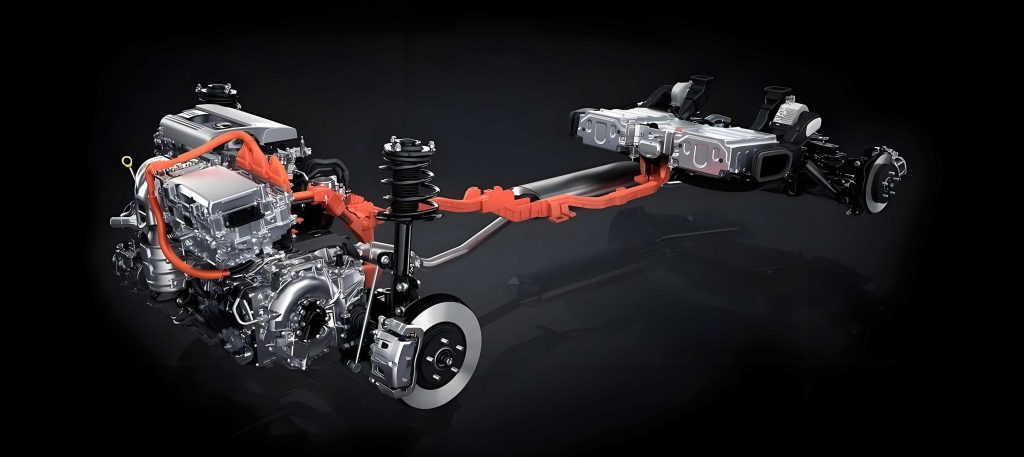
The powertrain configuration of a fuel cell hybrid car fundamentally influences its performance and the complexity of its energy management. Based on my analysis, three primary hybrid architectures are prevalent in research and commercial applications. First is the Fuel Cell & Battery (FC&B) hybrid, where a fuel cell system is coupled with a lithium-ion battery pack. This is the most common configuration in production models like the Toyota Mirai and Hyundai Nexo, due to its balance of energy density, cost, and control simplicity. Second is the Fuel Cell & Supercapacitor (FC&S) hybrid, which pairs the fuel cell with a supercapacitor bank. Supercapacitors offer exceptional power density and rapid charge-discharge cycles, but their low energy density limits standalone usage for prolonged drives. Third is the Fuel Cell & Battery & Supercapacitor (FC&B&S) hybrid, a triple-source system that aims to harness the high energy density of batteries and the high power density of supercapacitors. While this architecture promises superior performance, it introduces higher costs and more intricate energy management challenges. To elucidate these differences, I summarize the characteristics in Table 1.
| Architecture | Advantages | Disadvantages | Typical Application |
|---|---|---|---|
| FC&B Hybrid Car | Good energy density, relatively simple control, cost-effective, enables regenerative braking. | Battery lifespan degradation under high-power cycles, limited peak power support. | Mainstream production vehicles (e.g., Toyota Mirai). |
| FC&S Hybrid Car | Excellent power density, fast response, long cycle life, efficient for transient loads. | Low energy density, requires large volume for sustained energy, voltage matching challenges. | Specialized vehicles or research prototypes. |
| FC&B&S Hybrid Car | Optimal utilization of both energy and power sources, potentially longest lifespan for fuel cell. | High system cost, complex energy management strategy, increased packaging size and weight. | Advanced research platforms or high-performance concept cars. |
The choice of architecture directly impacts the design of the energy management strategy. For the widely adopted FC&B hybrid car, the EMS must carefully regulate the battery’s state of charge (SOC) while managing the fuel cell’s operating point. My investigation into EMS methodologies reveals a broad classification into two paradigms: rule-based strategies and optimization-based strategies. Each paradigm contains sub-categories with distinct operational principles and performance outcomes.
Rule-based energy management strategies are heuristic methods derived from engineering intuition or empirical data. They are computationally inexpensive and straightforward to implement in real-time controllers, making them prevalent in current fuel cell hybrid cars. I further divide them into deterministic rule-based and fuzzy rule-based strategies. Deterministic strategies operate on fixed thresholds and logic rules. A classic example is the Thermostat (or ON/OFF) strategy for a hybrid car. In this approach, the fuel cell is turned on only when the battery SOC falls below a predetermined lower limit, operating at a fixed efficient point to power the vehicle and recharge the battery. Once the SOC reaches an upper limit, the fuel cell turns off, and the battery supplies all power. The control logic can be represented as a state machine. Let the vehicle power demand be \( P_{req}(t) \), the battery SOC be \( SOC(t) \), and the thresholds be \( SOC_{low} \) and \( SOC_{high} \). The fuel cell power \( P_{fc}(t) \) is determined by:
$$
P_{fc}(t) =
\begin{cases}
P_{fc,opt} & \text{if } SOC(t) < SOC_{low} \\
0 & \text{if } SOC(t) > SOC_{high} \\
f(P_{req}(t), SOC(t)) & \text{otherwise}
\end{cases}
$$
where \( P_{fc,opt} \) is a constant efficient power level, and \( f \) is a function that may blend sources. While simple, this strategy often leads to frequent fuel cell on/off cycling, which can harm durability. Another deterministic approach is the Power Follower strategy, where the fuel cell output power \( P_{fc}(t) \) closely tracks the demand power \( P_{req}(t) \), with the battery compensating for deficits or surpluses. This can be formulated as \( P_{fc}(t) = \min(P_{fc,max}, \max(P_{fc,min}, \alpha P_{req}(t))) \), where \( \alpha \) is a gain factor, and the battery power \( P_{batt}(t) = P_{req}(t) – P_{fc}(t) \). This method reduces fuel cell transients but may cause high battery current stress. State machine control uses a set of predefined modes (e.g., electric only, fuel cell only, hybrid, regenerative braking) with transitions based on SOC and power demand. It offers more flexibility but requires careful calibration.
Fuzzy rule-based strategies handle the inherent uncertainties and nonlinearities in a hybrid car’s operation. They use linguistic variables (e.g., “low”, “medium”, “high”) and membership functions to map inputs like SOC and power demand to output power splits. For instance, inputs are fuzzified, evaluated against a rule base (e.g., IF SOC is low AND power demand is high, THEN fuel cell power is high), and defuzzified to obtain crisp control values. The advantage is robustness to varying driving conditions without needing precise mathematical models. In my simulations for an FC&B hybrid car, a well-tuned fuzzy controller achieved up to 8% hydrogen consumption reduction compared to a deterministic power follower, while also smoothing fuel cell power output. The fuzzy inference process can be summarized by the following relationship for the fuel cell power output:
$$
P_{fc}(t) = \text{Defuzzify} \left( \bigcup_{i=1}^{N} \mu_{A_i}(SOC) \cap \mu_{B_i}(P_{req}) \rightarrow C_i(P_{fc}) \right)
$$
where \( \mu_{A_i}, \mu_{B_i} \) are membership functions for SOC and power demand in the i-th rule, and \( C_i \) is the consequent fuzzy set for fuel cell power.
While rule-based strategies are practical, they are generally not optimal. This leads to the second paradigm: optimization-based energy management strategies. These seek to minimize a cost function, such as total hydrogen consumption or a weighted sum of consumption and degradation, over a defined horizon. They can be classified into global optimization methods (which require prior knowledge of the entire driving cycle) and instantaneous optimization methods (which operate online with limited future information).
Global optimization strategies provide a benchmark for the best possible performance of a fuel cell hybrid car. The most common technique is Dynamic Programming (DP). DP discretizes the state variable (typically battery SOC) and time, then solves backward from the final time to find the optimal power split at each step that minimizes the total cost. For a discrete-time system with time step \( k \), state \( x_k = SOC_k \), control input \( u_k = P_{fc,k} \), and disturbance \( w_k = P_{req,k} \), the cost-to-go function \( J_k(x_k) \) is computed recursively via the Bellman equation:
$$
J_k(x_k) = \min_{u_k} \left[ g_k(x_k, u_k, w_k) + J_{k+1}(x_{k+1}) \right]
$$
subject to system dynamics \( x_{k+1} = f_k(x_k, u_k, w_k) \) and constraints \( u_{min} \le u_k \le u_{max}, x_{min} \le x_{k+1} \le x_{max} \). Here, \( g_k \) is the instantaneous cost (e.g., hydrogen mass flow rate). DP yields the globally optimal control sequence but is computationally intensive and non-causal, making it unsuitable for real-time implementation. Another global method is Pontryagin’s Minimum Principle (PMP), which transforms the optimization into a problem of minimizing the Hamiltonian at each instant. For a continuous-time model, the Hamiltonian \( H \) is defined as:
$$
H(t) = \dot{m}_{H_2}(P_{fc}(t)) + \lambda(t) \cdot \dot{SOC}(t)
$$
where \( \dot{m}_{H_2} \) is the hydrogen consumption rate, \( \lambda(t) \) is the co-state variable (interpreted as the equivalent cost of electricity), and \( \dot{SOC}(t) \) is the battery dynamics. The optimal control minimizes \( H \) at each time. PMP reduces computation compared to DP but still requires knowledge of the full drive cycle to determine the optimal co-state trajectory. In my comparative studies, DP and PMP solutions for a standard urban driving cycle often show 10-15% lower hydrogen consumption than the best rule-based strategies for a typical FC&B hybrid car, highlighting the potential for improvement.
Instantaneous optimization strategies are designed for real-time application in hybrid cars. The most prominent is the Equivalent Consumption Minimization Strategy (ECMS). ECMS is inspired by PMP but operates online by treating battery energy usage as equivalent future fuel consumption. At each time step, it minimizes an instantaneous equivalent cost:
$$
P_{fc}^*(t) = \arg \min_{P_{fc}} \left[ \dot{m}_{H_2}(P_{fc}(t)) + s(t) \cdot \frac{P_{batt}(t)}{Q_{lhv}} \right]
$$
subject to \( P_{fc}(t) + P_{batt}(t) = P_{req}(t) \) and other constraints. Here, \( s(t) \) is the equivalence factor (EF) that converts electrical power from the battery \( P_{batt}(t) \) into an equivalent fuel rate, and \( Q_{lhv} \) is the lower heating value of hydrogen. The key challenge is adapting \( s(t) \) to maintain battery charge sustainability over the trip without prior cycle knowledge. Many adaptive ECMS methods have been proposed, such as using a PI controller on SOC deviation to adjust \( s(t) \). My research indicates that adaptive ECMS can achieve near-optimal performance, within 2-5% of DP results, for many cycles, making it a strong candidate for next-generation hybrid car controllers.
Recently, data-driven and machine learning approaches have surged in energy management for hybrid cars. Reinforcement Learning (RL) algorithms, such as Q-learning or Deep Deterministic Policy Gradient (DDPG), train a control policy through interaction with a simulated environment. The agent learns to maximize a cumulative reward (e.g., negative of total hydrogen consumption). The state typically includes SOC, power demand, and perhaps velocity, and the action is the fuel cell power command. After sufficient offline training, the neural network policy can be deployed online for real-time control. For example, a deep RL agent might learn a policy \( \pi_{\theta}(s_t) \) that maps state \( s_t \) to action \( a_t = P_{fc}(t) \), where \( \theta \) are network weights. The objective is to maximize the expected discounted reward: \( \mathbb{E} \left[ \sum_{t} \gamma^t r(s_t, a_t) \right] \), where \( r \) is the immediate reward. In my experiments, a DDPG-based EMS for an FC&B&S hybrid car showed remarkable adaptability to unseen driving patterns, achieving fuel economy close to DP without requiring explicit model knowledge. Another trend is using supervised learning to mimic the optimal control from DP, creating a neural network that approximates the optimal policy. These methods promise to combine optimality with real-time feasibility, though they require extensive training data and computational resources for training.
To quantitatively compare the impact of different EMS on key metrics for a fuel cell hybrid car, I have compiled Table 2 based on simulation results from various studies in the literature and my own work. The metrics include hydrogen consumption (normalized), fuel cell power fluctuation (as a proxy for degradation), and real-time implementability.
| Strategy Category | Specific Method | Normalized H₂ Consumption | Fuel Cell Power Fluctuation | Real-time Feasibility | Required Prior Information |
|---|---|---|---|---|---|
| Rule-based | Thermostat Control | 1.15 – 1.20 | Low (on/off) | Excellent | None |
| Rule-based | Power Follower | 1.05 – 1.10 | High | Excellent | None |
| Rule-based | Fuzzy Logic | 1.00 – 1.05 | Medium | Very Good | None |
| Global Optimization | Dynamic Programming | 0.85 – 0.90 (Benchmark) | Very Low | Poor (offline only) | Full driving cycle |
| Global Optimization | Pontryagin’s Min. Principle | 0.88 – 0.92 | Low | Poor (offline only) | Full driving cycle |
| Instantaneous Optimization | Adaptive ECMS | 0.92 – 0.98 | Medium-Low | Good | None (adaptive) |
| Machine Learning | Reinforcement Learning (DDPG) | 0.90 – 0.95 | Low-Medium | Good after training | Training data from many cycles |
Note: Normalized H₂ consumption is relative to the best observed fuzzy logic result set as 1.0 for a specific cycle. Lower is better. Power fluctuation is qualitatively rated based on standard deviation of fuel cell power output.
The evolution of energy management strategies for fuel cell hybrid cars is moving towards greater intelligence and adaptability. My analysis suggests that while rule-based methods currently dominate commercial vehicles due to their simplicity and reliability, they leave substantial room for improvement in efficiency and durability. Optimization-based strategies, particularly those incorporating online adaptation and machine learning, are poised to become the next standard. However, several research gaps and practical hurdles remain. First, most advanced strategies are validated only in simulation; hardware-in-the-loop (HIL) and actual vehicle testing are crucial to uncover issues like sensor noise, communication delays, and component aging. Second, many strategies focus solely on minimizing hydrogen consumption, but a holistic EMS should also explicitly account for fuel cell and battery degradation. This can be formulated as a multi-objective optimization problem. For instance, one could minimize a weighted cost function:
$$
J = \int_0^T \left[ w_1 \cdot \dot{m}_{H_2}(t) + w_2 \cdot \left| \frac{dP_{fc}(t)}{dt} \right| + w_3 \cdot I_{batt,rms}^2(t) \right] dt
$$
where \( w_1, w_2, w_3 \) are weights penalizing hydrogen use, fuel cell power change rate (stress), and battery current squared (related to aging), respectively. Tuning these weights requires careful trade-off analysis. Third, with the proliferation of connected vehicle technologies, predictive energy management using route and traffic data becomes feasible. Integrating stochastic predictions of future power demand (e.g., via Markov chains or neural networks) with strategies like stochastic DP or model predictive control (MPC) could yield significant gains. For an MPC formulation, at each time step \( k \), the controller solves a finite-horizon optimization problem over a predicted demand sequence \( \hat{P}_{req}(k:k+N) \):
$$
\min_{\{P_{fc}(k+i)\}_{i=0}^{N-1}} \sum_{i=0}^{N-1} g(x(k+i), P_{fc}(k+i), \hat{P}_{req}(k+i))
$$
subject to system dynamics and constraints, then applies only the first control input \( P_{fc}^*(k) \). This rolling horizon approach can incorporate forecasts while respecting causality.
In conclusion, the development of energy management strategies is central to unlocking the full potential of fuel cell hybrid cars. From my research, it is evident that the field is transitioning from heuristic rules to sophisticated optimization and learning-based controllers. The future hybrid car will likely employ an EMS that combines real-time adaptability, multi-objective cost consideration, and predictive capabilities, all implemented on robust automotive-grade hardware. Continued collaboration between academia and industry is essential to bridge the gap between simulation promise and on-road performance. As a researcher, I believe that the next breakthrough will come from integrating high-fidelity physical models with data-driven algorithms, creating EMS that are not only optimal but also resilient to real-world uncertainties, ultimately making fuel cell hybrid cars more efficient, durable, and appealing to consumers.