
In the context of global energy crises and environmental challenges, the promotion and application of new energy vehicles have become a focal point for governments and enterprises worldwide. Electric vehicles, as exemplars of green transportation, are proliferating at an unprecedented rate, demonstrating vast development prospects and market potential. EV charging stations, as indispensable supporting infrastructure, play a critical role. However, during actual operation, the noise generated by EV charging stations has emerged as a significant issue, adversely affecting residential environments and public space tranquility. To address this, we propose a novel noise-reducing and sound-insulating aluminum alloy composite material specifically designed for EV charging stations, aiming to mitigate operational noise while enhancing heat dissipation performance.
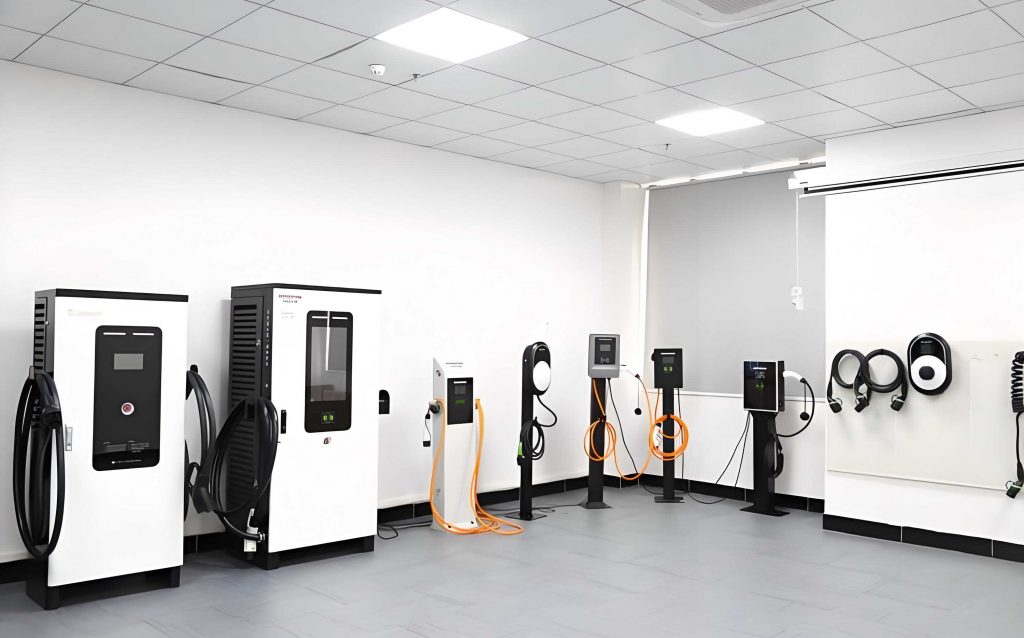
Existing studies on aluminum alloy composites for noise reduction have revealed limitations, such as poor sound insulation in closed-cell foams, uneven dispersion of carbon nanotubes, and challenges in achieving uniform density and porosity. These shortcomings hinder effective noise control and thermal management in EV charging station applications. Our research focuses on developing a foam aluminum alloy composite with tailored porosity to optimize both acoustic and thermal properties for EV charging stations. The methodology involves selecting appropriate base materials, utilizing advanced preparation techniques, and evaluating performance through rigorous testing.
The base materials selected for preparing the noise-reducing foam aluminum alloy composite include carbon nanotubes (CNTs) with purity >95%, aluminum powder (Al) of 400 mesh and purity >99%, pore-forming agents, and analytical pure substances such as anhydrous ethanol and methanol nitric acid. Other materials include stearic acid, urea, deionized water, titanium tetrabutylate, glycerin, and Co salt. The equipment used in the preparation process is listed in Table 1.
| Equipment/Instrument Name | Model | Manufacturer |
|---|---|---|
| High-Precision Balance | YT1004 | Exhibition Electromechanical Enterprise Co., Ltd. |
| Measuring Cup | – | Feiyao Plastic Products Co., Ltd. |
| Ultrasonic Emulsifier | JH-BLG2 | Shengxi Ultrasonic Instrument Co., Ltd. |
| Water Bath | PBB8 | Prima UK |
| Drying Oven | DZF-6050 | Yiheng Scientific Instrument Co., Ltd. |
| Atmosphere Tube Furnace | KSKQ-2 | Sante Furnace Technology Co., Ltd. |
| Wire Cutting Machine | DK7745 | Sanlin Technology Equipment Co., Ltd. |
| Ball Mill | Medium | Jinyida Machinery Equipment Manufacturing Co., Ltd. |
| Cold Press Equipment | Small | Hongteng Machinery Equipment Co., Ltd. |
The preparation of the aluminum alloy composite involves several steps: first, the synthesis of carbon nanotube-reinforced aluminum alloy composite powder using vacuum cold spray deposition (VCD); second, mixing the powder with pore-forming agents; third, cold pressing to form specimens; and finally, removal of pore-forming agents. The VCD process begins by weighing aluminum powder and Co salt, adding them to anhydrous ethanol, and subjecting the mixture to ultrasonic emulsification for 30 minutes. The mixture is then placed in a water bath at 60°C for magnetic stirring until the ethanol evaporates, followed by drying at 85°C for 6 hours to obtain the catalyst precursor. This precursor is calcined and reduced in an argon atmosphere tube furnace to produce Co/Al catalyst, which is then subjected to catalytic cracking with acetylene gas at 550°C to yield the carbon nanotube aluminum alloy composite powder.
For the mixing step, urea particles are sieved to retain diameters between 0.6 mm and 2 mm, dried at 85°C for 40 minutes, and then ball-milled with the composite powder in a ball mill at a ball-to-powder ratio of 10:1, speed of 500 rpm, and duration of 2 hours. The mixture is handled in a vacuum to prevent oxidation. To achieve different porosities (55%, 65%, 75%), the mixed powder is combined with pore-forming agents, anhydrous ethanol, methanol nitric acid, glycerin, and titanium tetrabutylate in specific proportions, stirred for 15 minutes to obtain a homogeneous mixture. The cold pressing process involves applying a pressure of 500 MPa for 6 minutes using a mold lubricated with stearic acid, producing specimens of size 30 × 30 mm³, which are then cut to size. The pore-forming agents are removed by immersing the specimens in deionized water at 85°C for 6 hours, with water changes every 1.5 hours, followed by sintering in an argon atmosphere at 400°C with a heating rate of 5°C/min for 20 minutes. The resulting specimens are labeled L-1, L-2, and L-3 based on porosity.
To evaluate the application performance for EV charging stations, we conducted tests on heat dissipation and noise reduction capabilities. The heat dissipation performance is assessed by measuring the convective heat transfer, where the heat flux λ is given by:
$$ \lambda = A_i h \Delta T $$
Here, \( A_i \) represents the contact area between the specimen and air fluid, \( h \) is the surface heat transfer coefficient, and \( \Delta T \) is the temperature difference between the air fluid and the specimen surface. The heat absorption \( Q \) during heat exchange is calculated as:
$$ Q = c m \Delta T $$
where \( c \) is the specific heat capacity, \( m \) is the mass, and \( \Delta T \) is the temperature difference. In active heat dissipation tests, we simulated conditions where an EV charging station’s battery pack discharges at 2C, and the maximum temperature of the battery pack is monitored over time. The results, shown in Figure 1, indicate that higher porosity specimens, such as L-3, exhibit superior temperature reduction, enhancing the heat dissipation efficiency for EV charging stations.
| Specimen | Porosity (%) | Temperature Reduction at 60 min (°C) |
|---|---|---|
| L-1 | 55 | 12.5 |
| L-2 | 65 | 15.8 |
| L-3 | 75 | 18.3 |
Furthermore, the relationship between heat transfer coefficient and air velocity for different porosity specimens is analyzed. As air velocity increases, the heat transfer coefficient rises, but specimens with lower porosity show higher coefficients at the same air velocity due to reduced solid skeleton volume fraction and diminished air disturbance. This is crucial for optimizing the thermal management in EV charging stations. The data is summarized in Table 3.
| Air Velocity (m/s) | L-1 Heat Transfer Coefficient (W/m²·K) | L-2 Heat Transfer Coefficient (W/m²·K) | L-3 Heat Transfer Coefficient (W/m²·K) |
|---|---|---|---|
| 1.0 | 45.2 | 42.1 | 38.5 |
| 2.0 | 58.7 | 54.3 | 49.8 |
| 3.0 | 72.4 | 67.9 | 61.2 |
For noise reduction performance, the sound absorption coefficient \( \alpha \) is used as a metric, defined as:
$$ \alpha = \frac{E_{\text{absorbed}}}{E_{\text{incident}}} $$
where \( E_{\text{absorbed}} \) is the absorbed sound energy and \( E_{\text{incident}} \) is the incident sound energy. The sound absorption coefficient ranges from 0 to 1, with higher values indicating better noise reduction. Tests are conducted on specimens of varying thicknesses and at different sound frequencies to simulate real-world conditions in EV charging stations. The results demonstrate that sound absorption coefficients increase exponentially with specimen thickness, and higher porosity specimens generally exhibit better performance, though differences are minor due to resonance effects. For instance, at a thickness of 20 mm, the sound absorption coefficients are as follows: L-1 (0.62), L-2 (0.68), L-3 (0.71). This highlights the importance of porosity in enhancing acoustic insulation for EV charging stations.
Additionally, noise reduction tests across different sound frequencies show that the L-3 specimen (75% porosity) achieves the most significant noise attenuation, particularly at high frequencies common in EV charging station operations. The data is presented in Table 4, emphasizing the material’s effectiveness in diverse acoustic environments.
| Frequency (Hz) | L-1 Noise Reduction (dB) | L-2 Noise Reduction (dB) | L-3 Noise Reduction (dB) |
|---|---|---|---|
| 500 | 8.5 | 9.2 | 10.1 |
| 1000 | 12.3 | 13.5 | 14.8 |
| 2000 | 15.7 | 17.2 | 18.9 |
| 4000 | 18.4 | 20.1 | 22.3 |
In conclusion, our research on noise-reducing aluminum alloy composites for EV charging stations demonstrates that materials with higher porosity, such as the L-3 specimen, offer superior heat dissipation and noise reduction capabilities. The preparation method, involving VCD, mixing, cold pressing, and pore-forming agent removal, proves effective in producing composites with tailored properties. For EV charging stations, selecting composites with appropriate porosity can significantly enhance operational efficiency and user comfort by mitigating noise and improving thermal management. Future work will focus on optimizing the cost-effectiveness and scalability of these materials for widespread adoption in EV charging infrastructure.