
In the context of rapid development in the electric vehicle industry, I have observed that researching maintenance technologies and fault issues for electric vehicle drive systems holds significant practical value. As a professional in this field, I focus on the core components of electric vehicles, particularly the drive system, which directly impacts vehicle performance and safety. With China EV markets expanding, understanding these systems is crucial for technicians and engineers. This article delves into the structure, common faults, and repair methodologies, incorporating tables and formulas to summarize key points.
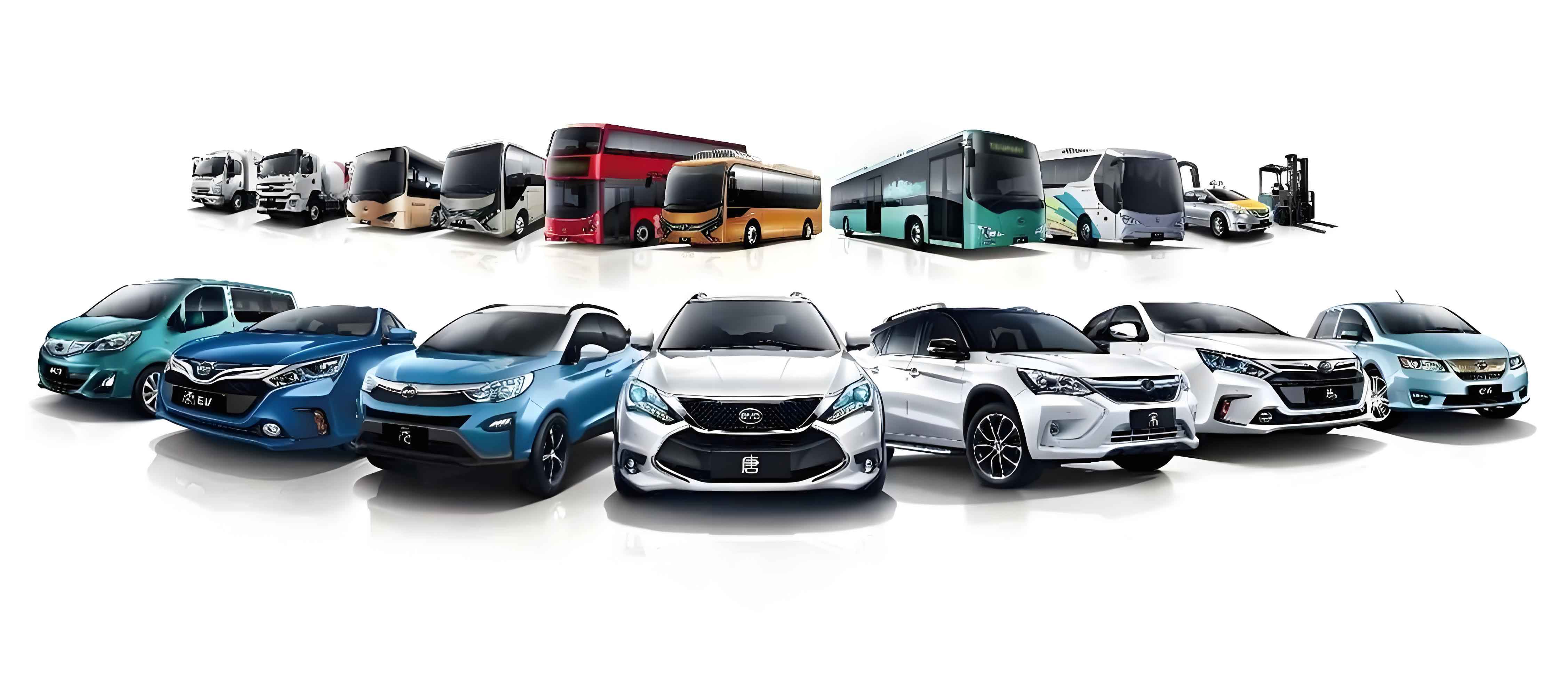
The drive system in an electric vehicle consists primarily of the drive motor and the motor controller. The drive motor serves as the power source, executing driving commands, while the motor controller regulates power and maintains communication with the vehicle control unit (VCU) to ensure safe operation. Additionally, components like temperature sensors and resolvers are integrated into the motor assembly. In my experience, the complexity of these systems in China EV models necessitates a thorough understanding of their interdependencies. For instance, the motor’s performance can be modeled using basic electrical equations, such as the torque equation: $$T = k_t \cdot I$$ where \(T\) is the torque, \(k_t\) is the torque constant, and \(I\) is the current. Similarly, the power output relates to voltage and current: $$P = V \cdot I$$ where \(P\) is power, \(V\) is voltage, and \(I\) is current. These formulas help in diagnosing issues during maintenance.
To better illustrate the drive system components, I have compiled a table summarizing their functions and common parameters. This table is based on my observations in various electric vehicle models, including those prevalent in the China EV sector.
| Component | Function | Common Parameters |
|---|---|---|
| Drive Motor | Converts electrical energy to mechanical motion | Torque: 100-500 Nm, Speed: 0-10,000 RPM |
| Motor Controller | Regulates power flow and communicates with VCU | Current rating: up to 800 A, Voltage: 300-800 V |
| Temperature Sensor | Monitors motor temperature to prevent overheating | Range: -40°C to 150°C |
| Resolver | Measures rotor position and speed | Accuracy: ±0.1°, Frequency: 1-10 kHz |
In my work, I often encounter abnormal vibrations in electric vehicles. For example, a vehicle might exhibit severe shaking, reduced acceleration, and increased noise. Upon analysis, I attribute this to factors like motor imbalance, loose bolts, or rotor dynamic imbalance. The vibration frequency \(f\) can be related to the rotational speed \(N\) (in RPM) by the formula: $$f = \frac{N}{60}$$ where \(f\) is in Hz. To diagnose this, I perform a series of checks, including mechanical inspections and electrical tests using vibration analyzers. The table below outlines the diagnostic steps I follow for such faults in electric vehicle drive systems.
| Step | Procedure | Tools Used |
|---|---|---|
| 1. Basic Inspection | Check motor mounting bolts for looseness or breakage | Torque wrench, visual inspection |
| 2. Vibration Source Localization | Use vibration analyzers to measure amplitude and frequency | Vibration analyzer, disconnection tools |
| 3. Electrical Detection | Scan for fault codes and analyze three-phase current/voltage waveforms | Diagnostic scanner, oscilloscope |
| 4. Mechanical Check | Inspect rotor, bearings, and axial clearance | Micrometer, dial indicator |
Another common issue I have dealt with is motor overspeed in electric vehicles. This often results from faults in the accelerator pedal position sensor (APS), resolver errors, or controller malfunctions. The relationship between motor speed \(\omega\) (in rad/s) and the APS signal voltage \(V_{APS}\) can be expressed as: $$\omega = k \cdot V_{APS}$$ where \(k\) is a proportionality constant. In China EV models, I have observed that signal drift or loss can lead to overspeed, triggering fault codes like P0123 or P0500. To address this, I replace faulty components and recalibrate sensors, ensuring the air gap is set to the standard range of 0.1 mm to 0.3 mm. The following table summarizes the causes and solutions for motor overspeed based on my experiences.
| Cause | Description | Solution |
|---|---|---|
| APS Signal Anomaly | Signal drift or error leads to incorrect speed commands | Replace APS, check wiring |
| Motor Controller Fault | Circuit failure causes uncontrolled current flow | Repair or replace controller, update software |
| Resolver Malfunction | Inaccurate speed signal due to sensor issues | Reinstall resolver, calibrate zero position |
| Mechanical Disconnection | Reduced resistance in transmission system | Inspect gears and couplings, realign components |
| Power Interference | Battery management system anomalies affect speed | Check high-voltage circuits, shield against noise |
In cases of IGBT module failure leading to power loss, I have encountered scenarios where a vehicle suddenly loses动力, with dashboard warnings like “Check Power System.” Using diagnostic tools, I often find fault codes such as P1A49 (overcurrent protection) and P0A7F (IGBT overtemperature). The current \(I\) through an IGBT can be modeled by: $$I = \frac{V}{R}$$ where \(V\) is voltage and \(R\) is resistance, but in fault conditions, resistance drops to near zero, causing high currents like 800 A. To repair this, I replace the IGBT module using vacuum reflow soldering for better connectivity, clean cooling channels, and update controller software to optimize protection thresholds. The thermal management can be described by the heat dissipation formula: $$Q = h \cdot A \cdot \Delta T$$ where \(Q\) is heat transfer rate, \(h\) is heat transfer coefficient, \(A\) is area, and \(\Delta T\) is temperature difference. This emphasizes the importance of maintaining散热 systems in electric vehicles.
When performing maintenance on electric vehicle drive systems, I always prioritize safety. This includes disconnecting and discharging high-voltage systems, using CAT III 1000 V insulated tools, and wearing protective gear like insulated gloves and shoes. I adhere to electrical system维修准则, such as properly installing resolvers and temperature sensors to prevent demagnetization. For controller repairs, I ensure IGBT modules are correctly mounted with thermal paste to avoid uneven散热. The table below highlights key safety measures I follow during maintenance of China EV drive systems.
| Safety Measure | Purpose | Implementation |
|---|---|---|
| Discharge High-Voltage Systems | Prevent electric shock during repair | Use discharge tools, verify zero voltage |
| Use Insulated Tools | Avoid short circuits and injuries | CAT III 1000 V rated tools only |
| Wear Protective Gear | Ensure personal safety | Insulated gloves (1000 V+),绝缘 shoes |
| Insulate Exposed Terminals | Prevent accidental short circuits | Apply绝缘 tape or covers |
| Follow Electrical Standards | Maintain system integrity | Adhere to manufacturer guidelines for sensor installation |
In summary, I approach electric vehicle drive system maintenance by focusing on three diagnostic layers: signal, control, and mechanical. I start by checking accelerator pedal signals, speed sensors, and controller hardware using diagnostic tools to read fault codes. Safety is paramount, so I systematically eliminate faults while protecting myself. By consulting with drivers about vehicle behavior, I can quickly identify issues and improve repair efficiency. The growth of the China EV industry underscores the need for advanced maintenance strategies, and I continuously refine my methods based on evolving technologies. Through formulas like those for current and torque, and tables summarizing procedures, I aim to enhance the reliability and safety of electric vehicles worldwide.
To further elaborate, I often use mathematical models to predict system behavior. For instance, the efficiency \(\eta\) of a drive motor can be calculated as: $$\eta = \frac{P_{out}}{P_{in}} \times 100\%$$ where \(P_{out}\) is output power and \(P_{in}\) is input power. In electric vehicles, optimizing this efficiency is key to extending range and reducing energy consumption. Additionally, the relationship between motor speed and vehicle velocity \(v\) can be expressed as: $$v = \frac{\omega \cdot r}{G}$$ where \(r\) is wheel radius and \(G\) is gear ratio. These formulas assist in troubleshooting performance issues in China EV models.
In my experience, common fault patterns in electric vehicle drive systems can be categorized as shown in the table below, which I have developed from numerous repair cases. This helps in standardizing diagnostic approaches across different electric vehicle brands.
| Fault Type | Typical Symptoms | Recommended Actions |
|---|---|---|
| Abnormal Vibration | Shaking, noise, poor acceleration | Check bolts, balance rotor, replace bearings |
| Motor Overspeed | Sudden acceleration, fault codes | Inspect APS, calibrate resolver, update controller |
| IGBT Failure | Power loss, overheating warnings | Replace IGBT, clean冷却系统, optimize software |
| Sensor Malfunction | Inaccurate readings, performance drops | Test sensors, recalibrate, check wiring |
Finally, I emphasize the importance of continuous learning in the electric vehicle sector, especially with the rapid advancements in China EV technologies. By integrating theoretical knowledge with practical applications, such as using the formulas and tables provided, technicians can effectively address complex drive system issues. This comprehensive approach ensures that electric vehicles remain reliable and environmentally friendly, contributing to global sustainability goals.