
In the context of rapid global electric vehicle (EV) adoption, the management of EV power battery quality has emerged as a critical challenge. As a researcher focused on supply chain engineering, I have observed that the high energy density, long lifecycle, and stringent safety requirements of China EV battery systems necessitate a paradigm shift in quality control methodologies. Traditional approaches, which are rooted in mechanical component management, fall short when addressing the multi-scale, multi-physics nature of EV power battery technologies. This article presents a holistic framework based on full-lifecycle collaboration, integrating supplier quality engineering (SQE) principles with digital production systems to enhance reliability and efficiency across the battery value chain.
The exponential growth in EV adoption has intensified pressure on battery supply chains. According to industry analyses, global power battery shipments reached approximately 1157 GWh in 2024, reflecting a year-on-year increase of over 20%. However, the average defect rate remains high, at 800–1200 PPM, compared to fewer than 50 PPM for conventional internal combustion engine components. This disparity highlights the inherent complexities in managing China EV battery production, where factors such as material inconsistencies and process variations amplify risks. For instance, minor fluctuations in cathode material composition, such as nickel content variations of ±0.5%, can lead to cell capacity standard deviations of up to 3.2%, ultimately affecting module-level state-of-charge (SOC) balance. These challenges are compounded by the involvement of suppliers from non-automotive sectors, who may lack familiarity with standards like IATF 16949, resulting in higher defect rates in critical processes such as electrolyte filling.
To quantify the economic impact, consider the cost structure of a typical EV power battery pack: cells account for 65%, structural components 18%, battery management systems (BMS) 10%, and manufacturing expenses 7%. A slight decline in cell yield, say by 1%, can disproportionately increase total pack costs due to the cascading effect of defects. This relationship can be modeled as: $$\Delta C_{\text{pack}} = C_{\text{cell}} \times 0.65 \times \left( \frac{1}{(1 – Y)^2} – 1 \right) \times \Delta Y$$ where \(Y\) is the initial yield rate and \(\Delta Y\) is the change in yield. Empirical data shows that reducing \(Y\) from 95% to 94% elevates costs by approximately 2.7%. Moreover, defect multiplication effects are evident in real-world cases; for example, a pinhole defect in a separator costing $18 per unit can lead to module scrapping ($220), pack rework ($150), and even vehicle recalls, amplifying losses exponentially.
The evolution of safety standards further complicates quality management. Comparative analyses of standards like UL 2580:2013 and UL 2580:2022 reveal stricter requirements, such as flame propagation resistance between modules for at least 5 minutes, mechanical shock tolerance increased to 75g/11ms, and enhanced ingress protection (e.g., IPX9K for high-pressure steam testing). These updates demand material upgrades, such as switching from silicone to fluorocarbon rubber for seals, and redesigns of thermal barriers. The table below summarizes key comparisons:
| Test Item | UL 2580:2013 | UL 2580:2022 | Compliance Challenges |
|---|---|---|---|
| Thermal Runaway Propagation | No explicit requirement | ≥5 minutes flame blocking between modules | Redesign of module insulation topology |
| Mechanical Shock | 50g/6ms | 75g/11ms (simulating extreme collisions) | 37% increase in fatigue fracture risk for structural parts |
| Water Immersion Test | IP67/1 hour | IPX9K (high-pressure steam jet) | Seal material upgrade from silicone to fluorocarbon rubber |
In response to these challenges, I propose a three-stage, nine-dimensional quality control model that spans supplier development, process control, and failure prevention. This model addresses the “impossible triangle” of cross-scale characteristics, multi-physics coupling, and extended supply chains by leveraging digital twin technologies, real-time data analytics, and collaborative frameworks. The integration of Model-Based Systems Engineering (MBSE) enables dynamic mapping of quality characteristics to process parameters, ensuring that design intent is preserved throughout manufacturing. For instance, simulating electrode expansion forces helps define tolerance bands, which are then translated into laser welding parameters and monitored via infrared thermography.
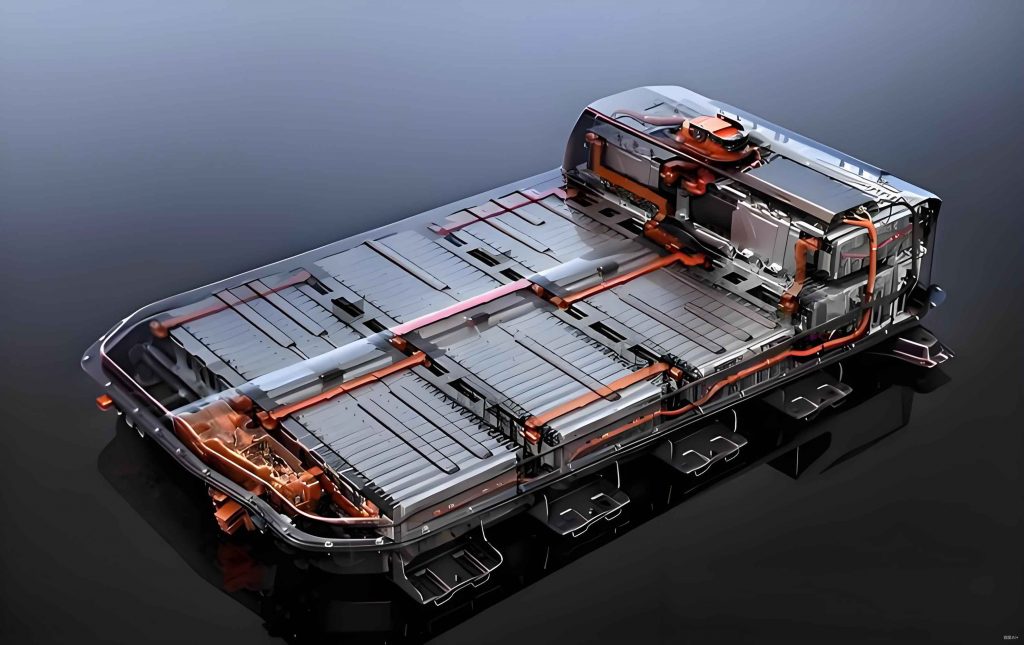
The core of this approach lies in redefining key quality characteristics (CTQs) for EV power batteries. Unlike traditional mechanical components, China EV battery systems involve dynamic, time-variant properties such as ion migration numbers and SEI film growth rates. These require advanced detection methods, including in-situ electrochemical impedance spectroscopy (EIS) and X-ray diffraction (XRD), to monitor parameters in real-time. The following table outlines critical CTQs across safety, performance, and reliability dimensions:
| Dimension | CTQ Indicator | Technical Definition | Control Threshold |
|---|---|---|---|
| Safety | Thermal Runaway Trigger | Onset temperature and propagation speed | ≥150°C for NCM cells; ≥5 min block time |
| Performance | Energy Density Decay | Capacity retention over cycles | ≥90% after 300 cycles at 1C |
| Reliability | Cycle Life | Number of cycles to 80% state of health (SOH) | ≥2000 cycles for passenger vehicles |
To operationalize these CTQs, I have developed a structured process that links design verification, process control, and mass production monitoring. Tools such as Design Failure Mode and Effects Analysis (DFMEA) and Statistical Process Control (SPC) are integrated with digital platforms to enable continuous improvement. For example, a CPK value of at least 1.67 is mandated for critical parameters like electrode coating density, with real-time adjustments via manufacturing execution systems (MES). The synergy between quality and production is further enhanced through blockchain-based traceability, which tracks materials from raw suppliers to end-products, reducing anomaly resolution time from hours to minutes.
In the supplier development phase, a multi-dimensional准入控制 ensures that only partners with robust technical, quality, and capacity capabilities are selected. Evaluation criteria include volume integration efficiency (≥75%), thermal runaway inhibition time (≥5 minutes), and process capability indices (e.g., CPK ≥1.67 for cell thickness). Digital twin simulations stress-test production scenarios, validating resilience to demand fluctuations. The table below compares two hypothetical suppliers:
| Supplier | Technical Score | Quality Score | Capacity Score | Conclusion |
|---|---|---|---|---|
| A | 92 (failed thermal simulation) | 88 | 95 | Rejected |
| B | 96 | 94 (weld penetration pass rate 98.3%) | 93 | Approved after rectification |
Process control focuses on micro-, meso-, and macro-level audits. At the cell level, X-ray fluorescence (XRF) density gauges monitor coating uniformity with a sampling frequency of 10 Hz, enabling closed-loop control of slurry pumps. The CPK is calculated as: $$C_{pk} = \min\left(\frac{USL – \mu}{3\sigma}, \frac{\mu – LSL}{3\sigma}\right)$$ where \(USL/LSL\) represent ±1.5% tolerance limits, and \(\sigma\) is maintained below 0.5%. For module assembly, coaxial vision systems and neural networks correlate plasma spectra with weld penetration depth, achieving an \(R^2\) of 0.96. At the pack level, helium leak testing ensures integrity, with thresholds below 0.5 Pa·m³/s.
Mass production safeguards incorporate three defensive lines: MES parameter monitoring, AI-based visual inspection, and thermal propagation tests. The first line uses 200+ sensors and edge computing to detect parameter deviations with 99.9% accuracy. The second employs YOLOv5 and Transformer models for sub-millimeter defect detection, while the third validates flame resistance through nail penetration tests. Empirical data from implementation shows a 62% reduction in pack-level PPM and a first-pass yield increase to 99.3% for modules.
A key innovation is the quality forward-shift mechanism, which embeds quality requirements into production preparation. Using MBSE, quality characteristics are mapped to process windows—for example, electrolyte moisture content is constrained to ≤15 ppm during filling, with real-time monitoring via Karl Fischer titration. Digital validation platforms simulate processes like electrode winding, predicting tension variations that could cause capacity inconsistencies. This proactive approach reduces physical trial costs by 35% and shortens process change validation from 72 hours to 8 hours.
Furthermore, zero-defect launch (ZDL) management enforces staged quality gates during pilot production. In stage one, soft tooling validation requires 100% CT scanning to identify electrode wrinkles. Stage two mandates pre-acceptance of process capabilities (CPK ≥1.33), and stage three uses AI models to forecast mass production risks based on 200+ parameters. Error-proofing devices, such as force-sensitive guides and 3D contour matching, are integrated into equipment design to prevent misassembly.
The synergy between quality and production is quantified through a Fusion Maturity Index (FMI): $$\text{FMI} = \frac{\sum_{i=1}^n (w_i \times s_i)}{T_{\text{response}} \times \ln(D_{\text{integration}})}$$ where \(w_i\) represents weights for data integration, \(s_i\) denotes adjustment speeds, \(T_{\text{response}}\) is the delay in addressing anomalies, and \(D_{\text{integration}}\) measures cross-system data alignment. Implementations in China EV battery projects have demonstrated a 40% reduction in quality-related costs and a 25% shorter time-to-market for new products.
In conclusion, the full-lifecycle quality management system for EV power batteries represents a transformative approach that harmonizes digital and physical flows. By addressing the interplay between electrochemical dynamics, supply chain volatility, and irreversible processes, this framework enhances both reliability and scalability. Future work will explore adaptations for solid-state batteries and AI-driven predictive maintenance. As the EV industry evolves, such integrative strategies will be pivotal in sustaining the growth of China EV battery technologies and global electrification efforts.