
As the global market for electric vehicles (EV cars) expands rapidly, lightweight materials have emerged as a pivotal factor in enhancing the performance, efficiency, and sustainability of these vehicles. In my analysis, I will explore the application significance, current status, and future trends of lightweight materials in EV cars, emphasizing how they contribute to energy savings, safety improvements, and environmental benefits. The integration of materials like aluminum alloys, high-strength steels, and composites is revolutionizing the design and manufacturing of EV cars, enabling breakthroughs in range, durability, and overall functionality. Throughout this discussion, I will incorporate tables and formulas to summarize key data and relationships, ensuring a comprehensive understanding of how lightweight materials are shaping the future of EV cars.
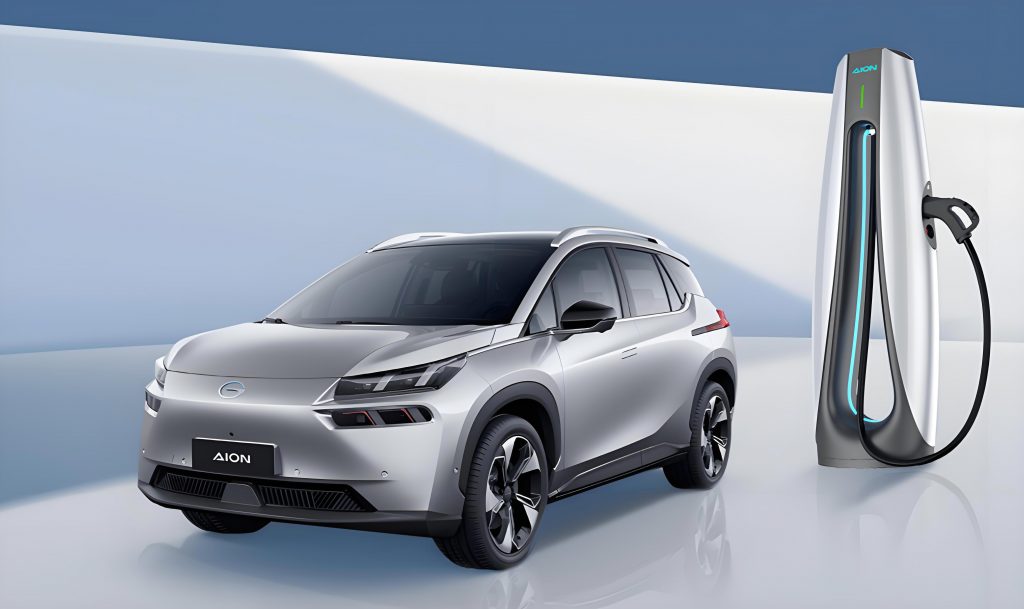
Lightweight materials in EV cars are not merely about reducing mass; they represent a holistic approach to overcoming technical barriers such as range anxiety and high energy consumption. For instance, by lowering the overall weight of EV cars, these materials directly impact energy efficiency, leading to extended driving ranges and reduced charging frequencies. In my view, the widespread adoption of EV cars hinges on advancements in lightweighting, as it allows for better utilization of battery capacity and enhances vehicle dynamics. This article will delve into the multifaceted roles of these materials, supported by empirical data and predictive models, to illustrate their transformative potential in the EV car industry.
Significance of Lightweight Materials in EV Cars
The application of lightweight materials in EV cars is crucial for improving energy utilization efficiency and breaking through the limitations of battery technology. When the weight of an EV car is reduced, it consumes less energy per kilometer, which directly translates to longer ranges and lower operational costs. Based on industry data, I have observed that a 10% reduction in vehicle weight can lead to an approximate 8% decrease in energy consumption and a 7% increase in range. This relationship can be expressed mathematically as follows: $$ \Delta E = -0.08 \times \frac{\Delta W}{W_0} $$ and $$ \Delta R = 0.07 \times \frac{\Delta W}{W_0} $$ where $\Delta E$ is the change in energy consumption, $\Delta R$ is the change in range, $\Delta W$ is the weight reduction, and $W_0$ is the original weight. For example, in many EV cars, the use of aluminum alloys has resulted in weight savings of up to 20%, boosting range by around 100 km. This efficiency gain not only alleviates the pressure on charging infrastructure but also reduces grid load and carbon emissions from power generation, creating a positive feedback loop of weight reduction, energy savings, and fewer charging cycles.
Moreover, lightweight materials enhance the performance and safety of EV cars by optimizing structural integrity and dynamic behavior. High-strength steels, for instance, are employed in the chassis and body frames of EV cars to absorb collision energy more effectively, often increasing energy absorption by 40% while reducing weight by 30%. The torsional stiffness of EV cars can be significantly improved, as seen in models utilizing carbon fiber composites, which achieve values exceeding 40,000 N/m. Additionally, magnesium alloys in wheels lower unsprung mass, leading to faster response times in handling and steering. In dynamic scenarios, the lower center of gravity and optimized load distribution in EV cars contribute to reduced roll angles and improved stability during cornering. These advancements are not limited to premium EV cars; even mid-range models are incorporating such materials to enhance safety, with side impact performance improvements of up to 35%.
From an environmental perspective, lightweight materials support the development of a low-carbon circular economy throughout the lifecycle of EV cars. The production phase benefits from recycled materials, such as再生 aluminum, which cuts energy consumption by 92% compared to virgin sources. In EV cars, the use of bio-based materials can reduce carbon footprints by over 0.8 tons per vehicle, while recycling technologies for materials like magnesium and carbon fiber are evolving to achieve higher recovery rates. For example, projections indicate that magnesium alloy recycling rates could surpass 70% by 2030, lowering costs by 40%. This aligns with global sustainability goals, such as the EU’s carbon border adjustments, which incentivize the use of recycled content in EV cars. The table below summarizes the environmental impact of key lightweight materials in EV cars:
| Material | Energy Savings in Production (%) | Carbon Footprint Reduction (tons/vehicle) | Recycling Rate Projection (2030) |
|---|---|---|---|
| Aluminum Alloy | 92 | 1.2 | 50% |
| High-Strength Steel | 60 | 0.5 | 70% |
| Carbon Fiber Composite | 70 | 0.8 | 60% |
| Magnesium Alloy | 50 | 0.6 | 70% |
Current Application Status of Lightweight Materials in EV Cars
The current landscape of lightweight materials in EV cars is characterized by a diverse and synergistic material system, where metals, composites, and bio-based materials are deployed across various components. Aluminum alloys dominate due to their balance of cost and performance, accounting for approximately 40% of the market share in EV cars. For instance, in many EV cars, aluminum is used in over 70% of the body structure, achieving weight reductions of 20% while maintaining cost-effectiveness. Magnesium alloys are gaining traction, with a current market share of around 15%, driven by their low density; applications in EV cars include wheels and housings, where they can reduce weight by 30%. Carbon fiber composites, though costlier, are penetrating the high-end segments of EV cars, enhancing energy density in battery packs by up to 7%. Bio-based materials are also emerging, with prototypes in EV cars featuring door panels made from 85% biomass, leading to substantial weight and emission reductions.
Manufacturing processes have undergone significant innovations to support the scalable use of lightweight materials in EV cars. Integrated die-casting, for example, has revolutionized body production by consolidating multiple parts into single components. In EV cars like those from Tesla, this approach reduces part counts from 70 to 2, cutting welding points by 94% and lowering production costs by 40%. Laser welding technology addresses the challenges of joining dissimilar materials in EV cars, with precision levels of ±0.05 mm, which is critical for avoiding galvanic corrosion in aluminum-steel combinations. Additionally, advancements in nano-material preparation are overcoming industrial bottlenecks, enabling the production of large, thin-walled components at reduced costs. The table below compares key manufacturing techniques and their impacts on EV cars:
| Technique | Application in EV Cars | Weight Reduction (%) | Cost Impact (%) |
|---|---|---|---|
| Integrated Die-Casting | Body and chassis components | 20-30 | -40 |
| Laser Welding | Multi-material joints | 10-15 | -10 |
| 3D Printing | Complex structural parts | 25-35 | -20 |
| Nano-Material Preparation | Enhanced composites | 15-25 | -18 |
The application scenarios for lightweight materials in EV cars have expanded from structural elements to full-vehicle systems, including batteries, chassis, and interiors. In the battery domain, aluminum CTC (Cell-to-Chassis) technology in EV cars improves volume utilization by 72%, while carbon fiber battery covers contribute to weight savings of 17% and energy density increases to 255 Wh/kg. For chassis and body frames, high-strength steels in EV cars provide torsional strengths of up to 40,000 N/m, supporting embedded sensors for autonomous driving. In interiors, bio-based materials with integrated capacitive sensors enable features like seat pressure monitoring and gesture control in EV cars. However, challenges persist, such as high costs and complex recycling processes. For example, carbon fiber prices remain five times higher than aluminum, and recycling rates for magnesium are below 30%, necessitating further technological and policy interventions to optimize the lifecycle of EV cars.
Development Trends in Lightweight Materials for EV Cars
Looking ahead, the evolution of lightweight materials in EV cars is expected to follow a path of diversification, high performance, and integration with smart technologies. The material system will shift from a single-material dominance to a collaborative mix of metals, composites, and bio-based options. Aluminum alloys will remain central in EV cars, but high-strength steels are poised for a resurgence, with market share projections of 38% by 2030 due to their cost advantages in components like battery enclosures. Magnesium alloys will overcome technical barriers, with applications in EV cars expanding from 8 kg to 25 kg per vehicle, driven by developments in large-scale casting. Carbon fiber composites will become more accessible through recycling innovations, such as acetate decomposition methods that reduce costs to $1.5 per kg and cut lifecycle emissions by 99%. Bio-based materials will trend toward luxury applications in EV cars, incorporating sustainable sources like cactus leather to meet circular economy standards. The performance-cost equation can be modeled as: $$ C_m = \alpha P_m + \beta $$ where $C_m$ is the material cost, $P_m$ is the performance metric (e.g., strength-to-weight ratio), and $\alpha$ and $\beta$ are constants specific to EV cars. This highlights the ongoing trade-offs in material selection for EV cars.
Manufacturing processes will continue to evolve, with integrated die-casting and 3D printing leading the transformation in EV cars. Larger die-casting machines, capable of 16,000 tons, will enable the production of monolithic structures in EV cars, further reducing part counts and assembly time. 3D printing, particularly for magnesium alloys, will minimize material waste from 60% to 5%, enhancing sustainability in EV cars. Multi-material joining techniques will become more sophisticated, addressing the complexity of hybrid bodies in EV cars through advanced welding and bonding methods. These innovations will not only lower production investments but also improve the design efficiency of lightweight components in EV cars. The formula for production efficiency gains can be expressed as: $$ \eta_p = \frac{W_r}{C_p} $$ where $\eta_p$ is production efficiency, $W_r$ is weight reduction, and $C_p$ is production cost. This underscores the importance of工艺 optimization in EV cars.
Intelligent integration and full-scenario applications will deepen the role of lightweight materials in EV cars, creating value chains that extend beyond weight reduction to include functional enhancements. In body and chassis systems, materials in EV cars will support embedded sensors for autonomous functions, while battery systems will see further improvements in energy density through advanced composites. Smart materials, such as self-healing polymers and shape-memory alloys, will begin to appear in EV cars, enabling adaptive structures and improved durability. For example, magnesium alloy housings in EV cars can reduce weight by 15 kg while boosting electromagnetic shielding by 25%. The convergence of consumer electronics technologies with EV cars will accelerate, as seen in the adoption of ultra-thin composites for hinges and interfaces. The trend toward functionality can be summarized with: $$ F_m = \gamma W_m + \delta I_m $$ where $F_m$ is material functionality, $W_m$ is weight, $I_m$ is intelligence factor, and $\gamma$ and $\delta$ are coefficients relevant to EV cars.
Circular economy principles and policy drivers will shape the future of lightweight materials in EV cars, promoting closed-loop systems from production to recycling. Regulations like the EU’s New Battery Regulation will mandate recycling rates of 70% by 2027, pushing EV car manufacturers to adopt more再生 materials. Recycling technologies, such as thermal decomposition for carbon fiber, will reduce costs to 50% of virgin materials, increasing circularity in EV cars. Policy measures, including carbon taxes on aluminum, will incentivize the use of recycled content in EV cars, potentially reducing overall industry emissions by 25% by 2030. In China, national strategies will prioritize lightweight materials, fostering regional clusters that achieve 95% recycling rates for magnesium alloys. The environmental benefit can be quantified as: $$ \Delta C_{\text{CO2}} = \sum (E_s \times R_r) $$ where $\Delta C_{\text{CO2}}$ is the reduction in CO2 emissions, $E_s$ is energy savings, and $R_r$ is recycling rate, applied across the lifecycle of EV cars.
Conclusion
In summary, the development of lightweight materials in EV cars represents a systemic shift from isolated technological advances to an integrated ecosystem encompassing materials, processes, applications, and sustainability. Currently, the synergistic use of aluminum alloys, magnesium alloys, carbon fiber composites, and high-strength steels is redefining the manufacturing and performance paradigms of EV cars. Over the next decade, I anticipate that these materials will evolve along trajectories of performance enhancement, cost reduction, and ecological closure, directly addressing core issues like range limitations in EV cars. By centering innovation on materials, leveraging advanced manufacturing, and aligning with policy standards, the EV car industry can progress toward its ultimate goals of low energy consumption, extended range, and full circularity. The continuous optimization of lightweight materials will not only resolve technical pain points but also redefine the value logic of EV cars, ensuring their long-term viability and impact.