
The transition to sustainable mobility is fundamentally powered by the advancement of the battery electric car. At the very heart of every performant, safe, and reliable battery electric car lies a sophisticated electronic guardian: the Battery Management System (BMS). As an engineer deeply involved in this field, I consider the BMS not merely a component but the central nervous system of the vehicle’s high-voltage energy storage. Its primary mandate is to ensure that the lithium-ion battery pack—a complex, expensive, and safety-critical assembly—operates within its ideal parameters throughout its entire lifecycle. The design and continuous optimization of this system are therefore paramount for unlocking the full potential of the modern battery electric car, directly influencing its driving range, longevity, charging speed, and, most critically, its operational safety.
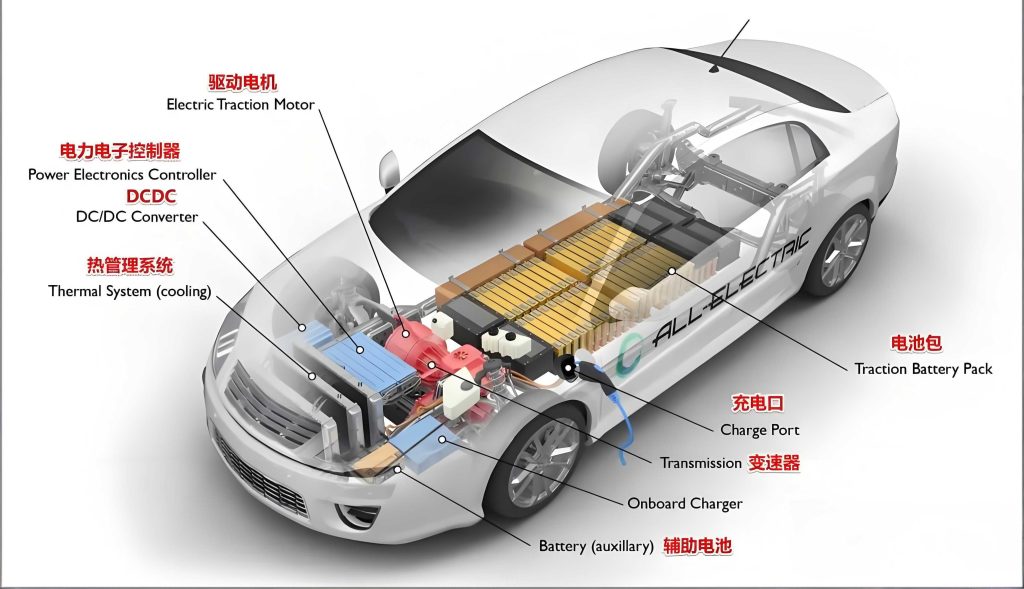
The core functions of a BMS in a battery electric car can be distilled into three interconnected pillars: State Monitoring & Estimation, Safety Protection, and Performance Optimization. State monitoring involves the precise, real-time measurement of fundamental physical parameters from every individual cell or module within the pack. This raw data is the foundation for all higher-level functions. Building upon this, state estimation employs advanced algorithms to deduce non-measurable but crucial states, primarily the State of Charge (SOC) and State of Health (SOH). SOC, often displayed as the “fuel gauge,” indicates the remaining usable energy, while SOH reflects the battery’s aging and remaining capacity relative to its original state. Accurate knowledge of these states is indispensable for effective energy management and longevity prediction in a battery electric car.
The safety protection pillar is non-negotiable. The BMS constantly guards against hazardous conditions such as over-voltage (overcharge), under-voltage (over-discharge), over-current (short circuit or surge), and extreme temperatures. Upon detecting a violation of pre-defined safe operating limits, the BMS must execute protective actions, typically by commanding the opening of contactors to isolate the battery pack from the rest of the vehicle’s powertrain or charging system. Finally, performance optimization focuses on maximizing efficiency and lifespan. This is largely achieved through cell balancing, which actively or passively corrects for capacity and voltage imbalances between cells that inevitably arise due to manufacturing variances and uneven operational conditions. A well-balanced pack ensures that no single cell limits the overall pack’s capacity or becomes a premature failure point, thereby extending the useful life of the battery in a battery electric car.
1. Foundational Design Elements of a Modern BMS
1.1 Hardware Architecture and Design Considerations
The hardware platform of a BMS must be a robust, precise, and reliable foundation. Its architecture is typically hierarchical, consisting of one or more primary control units and numerous cell monitoring circuits (CMC) distributed throughout the battery pack. The hardware design directly dictates the accuracy of measurements, the speed of control responses, and the system’s resilience to the harsh automotive environment.
The Central Processing Unit (CPU) or Microcontroller Unit (MCU) serves as the brain. For a modern battery electric car, this unit requires significant computational power to run complex estimation algorithms (like Kalman filters) and communication stacks, while also meeting stringent automotive-grade standards for operating temperature range and reliability. Architectures based on ARM Cortex-M or Cortex-R cores are prevalent. The Analog-to-Digital Converters (ADCs) are the sensory bridge. High-resolution (e.g., 16-bit to 24-bit), high-accuracy ADCs are critical for measuring cell voltages and current with minimal error. Even a small systematic error in voltage measurement can propagate into a large SOC estimation error over time. Current sensing is typically performed using a shunt resistor or a Hall-effect sensor, with the signal conditioned and digitized by a dedicated ADC. The Cell Monitoring Circuit (CMC), often an Application-Specific Integrated Circuit (ASIC), is responsible for measuring the voltage and temperature of a group of series-connected cells (e.g., 12-16 cells). These ICs must provide excellent measurement accuracy, galvanic isolation between the cell stack and the controller, and daisy-chain communication capabilities to minimize wiring complexity.
Protection circuits form the last line of hardware defense. These are often redundant to the software-based protections and can include dedicated ICs that monitor voltage and temperature independently, capable of directly driving safety contactors if critical thresholds are breached. Furthermore, designing for Electromagnetic Compatibility (EMC) is crucial. The BMS in a battery electric car operates in an electrically noisy environment with high-power inverters and motors. Careful PCB layout, shielding, and filtering are essential to ensure signal integrity and prevent malfunctions.
| Component | Key Function | Typical Specification / Technology | Critical Design Parameter |
|---|---|---|---|
| Microcontroller (MCU) | Algorithm execution, system control, data logging | ARM Cortex-M4/M7, Dual-core for ASIL-D, >200 MHz | Computational Performance, Memory, Safety Integrity Level (ASIL) |
| Cell Monitoring IC (AFE) | Precise cell voltage & temperature measurement | 14-16 channel, ±2mV accuracy, built-in passive balancing, daisy-chain comms | Measurement Accuracy, Isolation Voltage, Communication Robustness |
| Current Sensor | High-precision pack current measurement | Shunt-based with instrumentation amp, or Closed-Loop Hall Effect Sensor | Accuracy (~±0.5%), Bandwidth, Offset/Drift |
| Isolation & Communication | Data exchange between high-voltage and low-voltage domains | Isolated CAN transceiver, SPI via digital isolators | Isolation Rating (e.g., 1.5kV), Data Rate, EMC Performance |
| Protection IC (Secondary) | Independent hardware safety monitoring | Voltage and temperature watchdog with dedicated driver outputs | Response Time, Threshold Accuracy |
1.2 Software Control and Estimation Strategies
The software is the intelligence that transforms raw hardware data into actionable insights and commands. The most algorithmically intensive tasks are SOC and SOH estimation.
SOC Estimation: Coulomb counting (current integration) is simple but suffers from error accumulation due to sensor drift and unknown initial SOC. Voltage lookup methods are unreliable under dynamic load. Therefore, advanced model-based estimation techniques are standard. The Kalman Filter (KF) and its nonlinear variants (Extended KF, Unscented KF) are industry benchmarks. They use a model of the battery electric car’s battery (e.g., an equivalent circuit model) and treat SOC as a hidden state to be estimated from noisy measurements of voltage and current. The core algorithm involves a two-step process: prediction and update.
$$
\begin{aligned}
\text{Prediction:} & \\
\hat{x}_{k|k-1} &= f(\hat{x}_{k-1|k-1}, u_k) \\
P_{k|k-1} &= F_k P_{k-1|k-1} F_k^T + Q_k \\
\text{Update:} & \\
K_k &= P_{k|k-1} H_k^T (H_k P_{k|k-1} H_k^T + R_k)^{-1} \\
\hat{x}_{k|k} &= \hat{x}_{k|k-1} + K_k (z_k – h(\hat{x}_{k|k-1})) \\
P_{k|k} &= (I – K_k H_k) P_{k|k-1}
\end{aligned}
$$
Here, $\hat{x}$ is the state vector (including SOC), $P$ is the error covariance, $K$ is the Kalman gain, $z$ is the measurement, $f$ and $h$ are the state transition and observation models, $F$ and $H$ are their Jacobians, and $Q$ and $R$ are process and measurement noise covariances. This recursive filter provides a statistically optimal estimate with an associated uncertainty bound, typically achieving SOC errors below 3%.
SOH Estimation: SOH is commonly defined by capacity fade ($\text{SOH}_C$) and power fade (increase in internal resistance, $\text{SOH}_R$).
$$
\text{SOH}_C = \frac{C_{\text{current}}}{C_{\text{nominal}}} \times 100\%,\quad \text{SOH}_R = \frac{R_{\text{internal, nominal}} – R_{\text{internal, current}}}{R_{\text{internal, nominal}}} \times 100\%
$$
Estimating these in real-time is challenging. Methods include tracking total charge throughput (related to cycle life), analyzing incremental capacity (dQ/dV) curves during charging, or using model-based filters to jointly estimate SOC and parameters like capacity and resistance. Machine learning approaches using features from operational data are also emerging for predicting the remaining useful life (RUL) of a battery in a battery electric car.
1.3 Safety Protection Mechanisms
Safety is architected in layers, following the “safety island” concept. The first layer consists of continuous software monitoring of all critical parameters against configurable thresholds. The second layer is often a dedicated, simpler hardware safety controller that independently monitors the same signals and can override the main controller if a fault is confirmed. The protective actions follow a hierarchy: from derating power (reducing allowable charge/discharge current), to issuing warnings, to finally opening the main contactors for a hard disconnect.
| Fault Condition | Measured Parameter | Typical Thresholds (Example) | Primary Protective Action |
|---|---|---|---|
| Cell Overvoltage (Overcharge) | Individual Cell Voltage | Warning: 4.15V; Fault: 4.25V | Stop charging, open charge contactor |
| Cell Undervoltage (Over-discharge) | Individual Cell Voltage | Warning: 3.00V; Fault: 2.80V | Derate/disable discharge, open discharge contactor |
| Pack Overcurrent | Total Pack Current | Short-term peak: e.g., 500A for 10ms; Sustained: e.g., 300A for 2s | Derate current limit, open contactors if sustained |
| Overtemperature | Cell/Coolant Temperature | Warning: 45°C; Fault: 55°C | Derate power, request active cooling, open contactors |
| Undertemperature (Charge) | Cell Temperature | Charge inhibit: 0°C | Disable charging, request heating |
| Isolation Fault | Insulation Resistance | Fault: < 500 Ω/V | Illuminate warning, open contactors, prevent start |
1.4 Performance Optimization through Cell Balancing
Cell imbalance is a primary cause of premature capacity loss in a battery electric car’s pack. Balancing strategies aim to equalize the state of charge of all cells, especially when the pack is near full or empty. Passive balancing dissipates excess energy from higher-SOC cells as heat through resistors. It is simple and low-cost but inefficient and adds thermal load. Active balancing redistributes energy from higher-SOC cells to lower-SOC cells or the entire pack using capacitors, inductors, or transformers. It is far more efficient but increases system complexity and cost.
| Strategy | Mechanism | Efficiency | Complexity & Cost | Typical Application |
|---|---|---|---|---|
| Passive Balancing | Dissipates energy via shunt resistors across high-SOC cells. | Low (<10%) | Low | Economy and mid-range battery electric cars, mainly for top-balancing. |
| Active Capacitive Balancing | Uses switched capacitors to transfer charge between adjacent cells. | Medium (~70-85%) | Medium | Widely used for its good compromise. |
| Active Inductive/Transformer Balancing | Uses inductors or transformers to transfer energy between any cells or to/from the pack. | High (>90%) | High | High-performance or premium battery electric cars where efficiency is critical. |
2. Advanced Optimization Pathways for Next-Generation BMS
2.1 Hardware Optimization for Enhanced Fidelity and Reliability
Future BMS hardware must push the boundaries of precision and integration. The trend is towards higher levels of integration, such as incorporating the analog front-end (AFE), balancing circuits, and isolation into fewer, more robust packages. Increasing the sampling rate and synchronization accuracy of voltage/current measurements enables better dynamic characterization of the battery, improving the accuracy of model-based estimators. The integration of in-cell or on-cell temperature sensors, as opposed to module-level sensors, provides a much more granular and responsive view of thermal hotspots, crucial for safety and fast charging optimization in a battery electric car. Furthermore, the adoption of wireless BMS (wBMS) technology, which uses secure RF communication within the pack, can significantly reduce wiring harness weight and complexity, improve reliability, and enable more modular pack designs.
2.2 Algorithmic and Software Optimization
Software optimization focuses on improving accuracy, reducing computational load, and enhancing adaptability. Adaptive algorithms that can track changing battery parameters in real-time are key. Dual and joint estimators that simultaneously converge on SOC, SOH, and State of Power (SOP) are becoming standard. For instance, a Dual Extended Kalman Filter can run two filters in parallel: one for state estimation (SOC) and one for parameter estimation (internal resistance, capacity).
Machine Learning and AI are transformative. Neural networks can be trained to map complex, non-linear relationships between operational data (current, voltage, temperature sequences) and battery states (SOC, SOH, RUL) with high accuracy, potentially surpassing traditional model-based methods, especially for SOH estimation. These models can be deployed on the edge (on the BMS MCU) or used for cloud-based analytics to monitor fleet-wide battery health across many battery electric cars.
Optimization also extends to the balancing algorithm itself. Instead of simple threshold-based balancing, predictive balancing algorithms anticipate future imbalance based on load profiles and cell characteristics, initiating balancing actions proactively during periods of low power demand to minimize impact on vehicle operation.
2.3 Thermal Management Co-Design and Optimization
The BMS does not act alone in thermal management; it is the brain that orchestrates the thermal system. Optimization involves deep co-design between the BMS software and the thermal hardware (cooling plates, chillers, pumps, valves). Advanced BMS algorithms use high-fidelity thermal models of the pack, often reduced-order models for real-time use, to predict temperature evolution. The BMS can then proactively request cooling or heating from the vehicle’s thermal management system before critical thresholds are reached, optimizing for both performance and energy efficiency. For fast-charging scenarios, the BMS calculates a thermally-constrained charging curve in real-time, negotiating the maximum possible charge current with the charging station while ensuring cell temperatures remain safe, a critical feature for consumer acceptance of the battery electric car.
| Operating Scenario | Thermal Goal | BMS Action & Coordination |
|---|---|---|
| Fast Charging (DC) | Maximize charge speed while keeping cells below max temperature. | Calculate dynamic charge limit based on real-time cell temperature and coolant capability. Pre-condition battery to optimal temperature before charging starts. |
| High-Performance Driving | Dissipate heat from high continuous discharge, prevent derating. | Predict heat generation, request maximum cooling proactively. Derate power only as a last resort. |
| Cold Ambient Parking | Protect battery from freezing, prepare for efficient charging/driving. | Use grid or onboard power to maintain battery above minimum temperature. Heat battery to optimal range before user departure. |
| Uniform Aging | Minimize temperature gradients within the pack. | Control coolant flow distribution or heating elements to equalize temperatures across modules. |
2.4 System-Level Integration and Connectivity
The modern BMS is a deeply connected node in the vehicle’s network and beyond. System integration optimization ensures seamless communication with the Vehicle Control Unit (VCU), Motor Control Unit (MCU), charging controller, and telematics unit via CAN FD, Ethernet, or other automotive networks. The BMS provides the essential state information (SOC, SOH, SOP) that the VCU uses to manage overall vehicle energy flow and performance. Furthermore, over-the-air (OTA) update capability for the BMS software is now essential, allowing for bug fixes, algorithm improvements, and new feature deployments throughout the life of the battery electric car.
Cloud connectivity enables a new paradigm of “Battery Digital Twin.” Fleet-wide data from BMS units can be aggregated in the cloud to build ultra-high-fidelity models of battery aging and performance. Insights from the cloud can then be pushed back to individual vehicles to refine their onboard BMS algorithms, creating a continuous learning loop that benefits the entire fleet of battery electric cars.
| Interface Partner | Primary Communication | Data Sent by BMS | Data Received by BMS |
|---|---|---|---|
| Vehicle Control Unit (VCU) | CAN FD / Ethernet | Available Power (SOP), Available Energy, SOC, Fault Status | Driver Power Request, Vehicle Mode, Charger Status |
| Thermal Management System | CAN | Cell/Module Temperatures, Cooling/Heating Request | Coolant Temperature, Flow Rate, Chiller Status |
| On-board Charger (OBC) / DC-Inlet | CAN | Max Charge Voltage/Current, Battery Status | Charger Output Capability, Start/Stop Commands |
| Telematics / Gateway | CAN / Ethernet | Battery Health Data (SOH, RUL), Historical Statistics | OTA Update Commands, Cloud-Derived Calibration Parameters |
3. Performance Verification and Validation Methodologies
3.1 Comprehensive Testing Frameworks
Validating a BMS requires a multi-layered testing strategy that progresses from component-level to vehicle-level. Model-in-the-Loop (MIL) and Software-in-the-Loop (SIL) testing are used early in development to verify algorithm logic. Hardware-in-the-Loop (HIL) testing is indispensable. A real BMS controller is connected to a real-time simulator that models the battery pack, electrical loads, and vehicle dynamics with high fidelity. This allows for the safe, repeatable, and exhaustive testing of the BMS under all conceivable operating conditions and fault injections—including extreme cases that would be dangerous or impractical to test on a real battery pack. Rigorous environmental tests (temperature cycling, vibration, EMI/EMC) are conducted on the integrated BMS hardware to ensure it meets automotive durability standards.
3.2 Analysis, Evaluation, and Lifecycle Prognostics
Post-test analysis involves deep dives into data logs to evaluate key performance indicators (KPIs). For SOC estimation, error statistics (mean error, root-mean-square error) under diverse drive cycles are calculated. For safety functions, response times to injected faults are measured. A critical analytical tool is Failure Mode and Effects Analysis (FMEA), which systematically evaluates potential failure modes of the BMS hardware and software, their causes and effects, and the effectiveness of detection and mitigation mechanisms.
Furthermore, lifecycle prognostics based on accelerated aging tests and data from field deployments are used to validate SOH and RUL algorithms. By comparing the BMS’s predicted capacity fade with measured fade from test cells, the accuracy and conservatism of the algorithms can be tuned. This closed-loop feedback from testing and field data is fundamental to the iterative refinement and optimization of the BMS for the battery electric car.
4. Concluding Perspectives
The Battery Management System is the cornerstone of performance, safety, and value in a battery electric car. Its evolution from a simple monitoring unit to an intelligent, connected, and prognostic system reflects the rapid advancement of the technology. Future directions point towards even greater integration, leveraging artificial intelligence for state estimation and fault prediction, and deeper vehicle-level co-optimization for range and durability. The continuous refinement of BMS design and optimization is not just an engineering task; it is a critical enabler for the broader adoption of electric mobility, ensuring that every battery electric car delivers on its promise of efficiency, reliability, and safety throughout its entire service life. The journey involves a meticulous interplay of hardware innovation, algorithmic sophistication, and rigorous validation, all aimed at mastering the complex electrochemical system that powers our sustainable transportation future.