
As an automotive technician specializing in BYD EV models, I have encountered numerous cases involving advanced driver assistance systems (ADAS), particularly the adaptive cruise control (ACC) system. In this article, I will share my firsthand experience in diagnosing and repairing a common ACC fault in the BYD Song PLUS, a popular BYD car model. The ACC system is a critical component in modern BYD EV vehicles, enabling automatic speed control, distance maintenance, and follow-stop functions, which significantly enhance driving comfort and safety. With the rapid growth of the automotive智能化 market, ACC has become a standard feature in many BYD car models, and understanding its intricacies is essential for effective maintenance.
The adaptive cruise control system in BYD EV models like the Song PLUS integrates multiple sensors and control modules to function seamlessly. It operates within a speed range of 0-150 km/h, making it suitable for both congested urban roads and highways. In my work, I have observed that the ACC system relies on a fusion of millimeter-wave radar (MRR) and camera data to perceive the environment accurately. This integration is vital for handling complex scenarios such as intersections,恶劣 weather, and highway ramps. The core of the system is the ACC module, which includes an electronic control unit (ECU) and the MRR sensor. For BYD car owners, maintaining this system ensures optimal performance and safety.
To begin, let me outline the structural composition of the ACC system in a typical BYD EV. The system consists of three main parts: signal processing, sensors, and control modules. The signal processor digitizes data from sensors, while the control module executes functional commands based on this information. Key sensors include distance sensors, wheel speed sensors, accelerator pedal sensors, brake pedal sensors, and steering angle sensors. The human-machine interface involves cruise control switches and instrument display modules, whereas the execution unit comprises throttle controllers, brake controllers, steering controllers, and transmission controllers. In BYD car models, the environmental perception is achieved through a combination of millimeter-wave radar and a front-facing camera, which work together to detect obstacles, measure distances, and assess relative speeds.
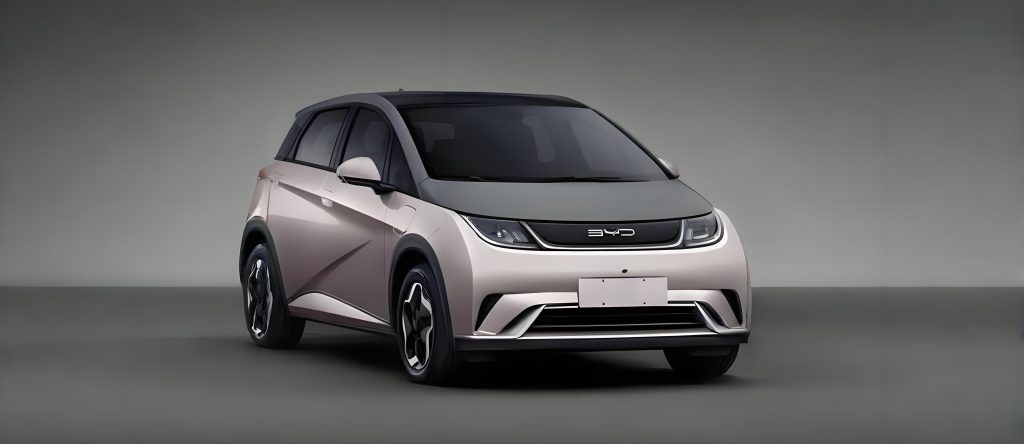
The millimeter-wave radar in BYD EV systems operates at wavelengths of 1-10 mm and frequencies of 30-300 GHz, offering advantages like long detection range, high accuracy, and all-weather capability. However, it struggles with identifying lane markings and traffic signs, which is why it is complemented by the camera. The ACC module in the BYD Song PLUS uses a mid-range millimeter-wave radar (MRR) mounted on the grille and front bumper. Through circuit analysis, I have found that the ACC module communicates with the multifunctional video controller (MPC) via a radar sub-network CAN bus. This sensor fusion strategy enhances reliability in diverse driving conditions, a hallmark of BYD car engineering.
In terms of working principles, the ACC system in BYD EV models requires specific conditions for activation. These include the electronic parking brake (EPB) being released, the gear in drive (D) position, no vehicle rollback, closed doors, fastened driver seatbelt, enabled ESP function (but not activated), vehicle speed ≤150 km/h, brake pedal depressed at zero speed or not depressed above zero speed, no network communication faults on the instrument panel, and no active automatic emergency braking. As a technician, I always verify these conditions before starting any repair, as ACC will not function if any are unmet. The control logic in BYD car systems typically involves three layers: the first layer processes signals from ACC radar, MPC camera, and wheel speed sensors to derive desired acceleration and torque; the second layer calculates desired motor drive torque, brake torque, and hydraulic brake torque; and the third layer outputs commands to control the drive motor and hydraulic braking system.
For instance, the network topology of the ACC system shows how modules interact. The body control module (BCM) sends ignition status and ACC configuration data to the ACC control module via the network. The steering column control module transmits ACC switch information, distance settings, and mode data. The dual electronic control system provides accelerator and brake pedal signals, and if overspeed occurs, it signals the ACC module to deactivate. Similarly, when the ESP is active, the ABS module sends a signal to disable ACC. The dual electronic control system also relays gear position data; if the gear is not in D, ACC is disengaged. During deceleration or warning scenarios, the ACC module sends commands via the CAN network to the instrument panel cluster (IPC), ABS module, and dual electronic control system, which then execute braking or energy recovery to maintain safe distances.
To illustrate the control mechanisms mathematically, consider the desired acceleration $a_d$ derived from sensor inputs. It can be expressed as:
$$a_d = f(v_r, d, v_f)$$
where $v_r$ is the relative velocity to the leading vehicle, $d$ is the distance, and $v_f$ is the follower vehicle’s speed. In BYD EV models, the desired motor torque $T_m$ is then calculated as:
$$T_m = k_p \cdot e + k_i \int e \, dt$$
where $e$ is the error between desired and actual acceleration, and $k_p$ and $k_i$ are proportional and integral gains, respectively. This formula ensures smooth acceleration and deceleration in BYD car ACC systems.
Now, let me describe a typical fault scenario I encountered in a BYD Song PLUS hybrid model. The driver reported an inability to activate the ACC, with an instrument panel warning: “Check Adaptive Cruise System.” Upon visual inspection, I found no obvious collision damage, obstructions in front of the ACC controller, or issues with the front bumper. The millimeter-wave radar and camera were properly installed without mechanical or electrical damage. This is a common issue in BYD EV vehicles, often related to module failures.
Following the diagnostic流程 for BYD car models, I used a VDS diagnostic tool to read fault codes from the ACC system. The code retrieved was “C2F9709,” indicating a control unit fault. Referring to the维修手册, I focused on the MRR module. Below is a table summarizing key fault codes and their descriptions for BYD EV ACC systems:
| Fault Code DTC | Description | Affected Module |
|---|---|---|
| U023587 | MRR Send Port Error (0x32D, 0x32E, 0x32F) | MRR Module |
| C2F0017 | ECU Voltage High | ECU Module |
| C2F0016 | ECU Voltage Low | ECU Module |
| C130204 | Reference Speed Unavailable | ESP Module |
| C2F9709 | Control Unit Fault | MRR Module |
| C2F964B | Radar Overheat Fault | MRR Module |
Next, I checked the power and ground lines of the ACC module. With the ignition ON, I disconnected the DB60 connector and used a multimeter to measure voltages and resistances. The results should fall within specified ranges; deviations indicate wiring issues. For example, the resistance between DB60-1 and ground should be less than 1 Ω, and voltage at DB60-8 should be around 12 V. If abnormal, I would inspect the wiring harness or the instrument panel fuse box. In this BYD car case, the measurements were normal, pointing to a module fault.
I then proceeded to check the CAN bus lines. With the DB60 connector disconnected, I measured voltages between DB60-2 and ground (2.5–3.5 V), DB60-3 and ground (1.5–2.5 V), and resistance between DB60-2 and DB60-3 (approximately 60 Ω). These values ensure proper communication in the BYD EV network. Since the lines were intact, I concluded that the ACC control unit was faulty, a common resolution for such issues in BYD car models.
The replacement process for the ACC module (MRR) in a BYD EV involves several steps. First, I removed the front bumper and radar cover, then disconnected the radar connector by pulling it outward toward the front of the vehicle. After installing the new radar with its bracket and securing it with clips, I reconnected the connector, reassembled the radar cover, and reinstalled the front bumper and grille cover. It is crucial to ensure proper alignment and gaps to prevent angle deviations, especially on rough roads, as this can affect ACC performance in BYD car systems.
After replacement, I conducted a road test to verify functionality. The ACC activated successfully, and no warnings appeared, confirming the repair. This experience underscores the importance of systematic diagnosis in BYD EV maintenance. The ACC system’s complexity requires a deep understanding of signal flow and control mechanisms. For instance, the relationship between sensor inputs and output commands can be modeled using transfer functions. In BYD car ACC systems, the overall response $G(s)$ might be represented as:
$$G(s) = \frac{K}{s^2 + 2\zeta\omega_n s + \omega_n^2}$$
where $K$ is the gain, $\zeta$ is the damping ratio, and $\omega_n$ is the natural frequency, ensuring stable operation.
In summary, diagnosing and repairing ACC faults in BYD EV models like the Song PLUS demands a methodical approach. Technicians must adhere to safety protocols, especially with high-voltage systems in BYD car vehicles. By leveraging diagnostic tools, circuit diagrams, and fusion principles, we can efficiently resolve issues and maintain the reliability of these advanced systems. The growing adoption of ACC in BYD car models highlights the need for continuous learning and adaptation in automotive repair.
To further aid in diagnostics, I often use tables to summarize measurement standards. For example, here is a table for power and ground terminal checks in BYD EV ACC modules:
| Connection Terminal | Condition | Normal Value |
|---|---|---|
| DB60-1 to GND | ON Ignition | < 1 Ω |
| DB60-8 to GND | ON Ignition | 12 V |
Similarly, for CAN line terminals:
| Connection Terminal | Condition | Normal Value |
|---|---|---|
| DB60-2 to GND | ON Ignition | 2.5–3.5 V |
| DB60-3 to GND | ON Ignition | 1.5–2.5 V |
| DB60-2 to DB60-3 | OFF Ignition, Battery Disconnected | ≈ 60 Ω |
Through such detailed checks, I ensure that BYD car systems operate at peak performance. The integration of sensor fusion in BYD EV ACC systems can be expressed mathematically using data fusion algorithms. For example, the combined output $y$ from radar and camera data might be:
$$y = w_r \cdot y_r + w_c \cdot y_c$$
where $y_r$ and $y_c$ are radar and camera outputs, and $w_r$ and $w_c$ are weights based on reliability, often optimized for BYD car environments.
In conclusion, my work on BYD Song PLUS vehicles has taught me that ACC faults often stem from module failures or wiring issues. By following structured diagnostic procedures and utilizing tools like oscilloscopes for signal analysis, I can quickly identify and resolve problems. The evolution of BYD EV technology continues to push the boundaries of automotive repair, and as a technician, I am committed to staying updated with the latest advancements in BYD car systems. This hands-on experience not only enhances my skills but also contributes to the broader knowledge base for maintaining these innovative vehicles.