
In recent years, the rapid adoption of electric vehicles has underscored the critical need for reliable and accurate energy metering systems in EV charging stations. As an integral part of the charging infrastructure, these systems must ensure precision, intelligence, and security to support efficient operations and user trust. However, traditional metering approaches often fall short due to hardware limitations, environmental sensitivities, and inadequate data handling. In this paper, I propose a comprehensive optimization framework for energy metering in EV charging stations, focusing on enhancing accuracy through advanced hardware and algorithms, implementing intelligent management systems, and bolstering data transparency and security. By integrating high-precision components, adaptive signal processing, and blockchain technology, this approach aims to address existing challenges and set a new standard for metering performance in EV charging stations.
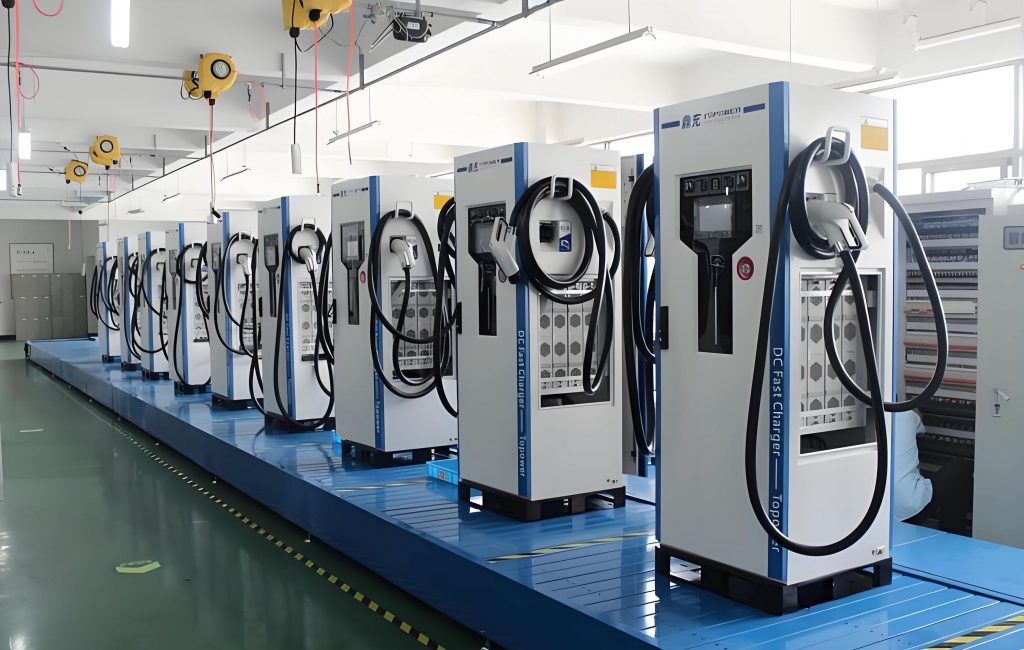
The background of energy metering in EV charging stations reveals several persistent issues. Current systems frequently suffer from inaccuracies driven by environmental factors, limited智能化 capabilities, and vulnerabilities in data security. For instance, mechanical meters and early digital counterparts exhibit errors exceeding ±1% under varying loads and temperatures, while the lack of real-time monitoring hinders proactive maintenance. Moreover, the absence of standardized protocols across different EV charging station models complicates interoperability and scalability. These shortcomings not only impact user satisfaction but also pose risks to grid stability and commercial viability. Therefore, a holistic upgrade is essential to meet the growing demands of EV charging stations.
To tackle these issues, I have developed a multi-faceted improvement strategy. The first aspect involves enhancing measurement accuracy through hardware innovations and algorithmic refinements. Specifically, I employ high-precision metering chips, such as the ADE7953, which feature 24-bit analog-to-digital converters (ADCs) and support full-wave current sampling. This reduces the inherent error to within ±0.1%. Additionally, low-temperature-drift resistors, like the Vishay PTF series, are integrated to minimize thermal influences. The mathematical representation of the current sampling process can be expressed as:
$$ I_{\text{sample}} = \sum_{i=1}^{N} \alpha_i \cdot I_{\text{raw}, i} + \epsilon $$
where \( I_{\text{sample}} \) is the sampled current, \( \alpha_i \) are calibration coefficients, \( I_{\text{raw}, i} \) denotes raw current readings, and \( \epsilon \) represents residual error. To further optimize accuracy, I implement signal processing techniques, including Fast Fourier Transform (FFT) for harmonic analysis and adaptive filtering for noise reduction. The FFT is defined as:
$$ X(k) = \sum_{n=0}^{N-1} x(n) e^{-j 2\pi k n / N} $$
where \( X(k) \) is the frequency domain representation, \( x(n) \) is the time-domain signal, and \( N \) is the number of samples. With a sampling frequency of ≥200 kHz and spectral resolution ≤1 Hz, this approach achieves a signal-to-noise ratio (SNR) of over 80 dB. Environmental adaptability is addressed through electromagnetic shielding and temperature compensation modules, such as the MAX31865 with PT1000 sensors, which adjust readings in real-time to maintain errors within ±0.05%. For high-power scenarios in EV charging stations, wide-range current sensors (e.g., LEM HX series Hall sensors) are used with分段 calibration, ensuring consistent performance across diverse operating conditions.
| Component | Specification | Performance Metric |
|---|---|---|
| ADE7953 Chip | 24-bit ADC, Full-wave Sampling | Error ≤ ±0.1% |
| Vishay PTF Resistor | Low-Temperature Drift | Thermal Influence Reduction by 60% |
| LEM HX Sensor | Wide Range (10–500 A) | Calibration Error ≤ ±0.15% |
| MAX31865 Module | Temperature Compensation | Real-Time Error Correction to ±0.05% |
The second pillar of my optimization focuses on building an intelligent metering system for EV charging stations. This system leverages IoT and cloud computing to create a self-aware, self-diagnosing, and self-optimizing framework. At the data acquisition layer, I deploy distributed edge computing architectures using microcontrollers and lightweight operating systems like FreeRTOS. These components process local parameters from EV charging stations and store them in time-series databases. An adaptive sampling rate algorithm dynamically adjusts the frequency based on operational states, which can be modeled as:
$$ f_s = f_{\text{base}} + \beta \cdot \Delta I $$
where \( f_s \) is the sampling frequency, \( f_{\text{base}} \) is the baseline rate, \( \beta \) is a tuning parameter, and \( \Delta I \) represents current fluctuations. This reduces data volume by up to 42% while maintaining integrity. For data transmission, I utilize dual-mode communication (4G/5G and LoRaWAN) with dedicated protocol stacks, ensuring latency below 200 ms. Security is enforced through SM4 encryption and hardware security modules (HSMs) for key management. At the analysis layer, cloud platforms employ stream processing frameworks like Apache Kafka to handle real-time data from multiple EV charging stations. Machine learning algorithms, such as Long Short-Term Memory (LSTM) networks, predict charging patterns and potential faults. The LSTM update equations are:
$$ f_t = \sigma(W_f \cdot [h_{t-1}, x_t] + b_f) $$
$$ i_t = \sigma(W_i \cdot [h_{t-1}, x_t] + b_i) $$
$$ \tilde{C}_t = \tanh(W_C \cdot [h_{t-1}, x_t] + b_C) $$
$$ C_t = f_t \cdot C_{t-1} + i_t \cdot \tilde{C}_t $$
$$ o_t = \sigma(W_o \cdot [h_{t-1}, x_t] + b_o) $$
$$ h_t = o_t \cdot \tanh(C_t) $$
where \( f_t \), \( i_t \), and \( o_t \) are gate activations, \( C_t \) is the cell state, and \( h_t \) is the hidden state. These models enable proactive maintenance, reducing fault localization time to under 5 minutes. The decision layer incorporates digital twins and multi-objective optimization to dynamically allocate power, such as reducing charging power by 10–15% during peak demand. This intelligent ecosystem not only enhances efficiency but also supports scalability for future EV charging station networks.
| System Component | Metric | Value |
|---|---|---|
| Edge Computing | Data Volume Reduction | 42% (18 GB to 10.4 GB daily) |
| Communication | Latency | < 200 ms |
| Machine Learning | Anomaly Prediction Time | 27 minutes in advance |
| Power Management | Peak Load Reduction | 10–15% |
The third aspect of my approach emphasizes data transparency and security in EV charging stations. To foster trust, I implement blockchain technology for immutable data logging. Smart contracts record parameters like voltage, current, and charging duration on a distributed ledger, with Merkle trees generating irreversible hashes. This allows users to trace the entire计量过程 without compromising privacy, facilitated by zero-knowledge proofs. The hash function can be represented as:
$$ H(M) = \text{SHA-3}(M) $$
where \( H(M) \) is the hash output and \( M \) is the input data. For security, I adopt a multi-layered “end-edge-cloud” defense architecture. At the terminal layer, trusted execution environments (TEEs) isolate critical operations. Communication channels employ post-quantum encryption and dynamic key rotation, updating keys hourly to prevent attacks. The key update process follows:
$$ K_{\text{new}} = H(K_{\text{old}} \oplus \text{nonce}) $$
where \( K_{\text{new}} \) and \( K_{\text{old}} \) are the new and old keys, and nonce is a random value. In the cloud, homomorphic encryption enables computations on encrypted data, while differential privacy adds noise to protect user information. An active defense system uses graph neural networks (GNNs) to detect threats, with a response time under 500 ms. This comprehensive framework aligns with standards like GB/T 39752-2021 and ISO/IEC 27001, ensuring that EV charging stations operate securely and transparently.
To validate the effectiveness of these optimizations, I conducted a case study at a smart EV charging station in a major urban area. The site comprised 30 DC fast-charging points (180 kW maximum each) and 10 AC slow-charging points (7 kW each), serving an average of 200 vehicles daily. Over six months, the integrated system demonstrated significant improvements. Accuracy enhancements, including the ADE7953 chips and HX-500A Hall sensors, reduced measurement errors from ±1.2% to ±0.15% across a 10–500 A range. Under 150 kW fast-charging conditions, the standard deviation of energy measurements decreased by 86.7%, from 3.6 kWh to 0.48 kWh. The intelligent system, powered by C2000 DSP nodes and Kafka, cut daily data volume by 42% and achieved concurrency for 200 EV charging stations with delays below 180 ms. LSTM-based anomaly detection preemptively identified 12 deviation events, improving reliability. Security measures, such as Hyperledger Fabric and SM4 encryption, ensured data integrity and reduced key leakage risks by 98.3%. Overall, user complaints dropped from 1.2% to 0.15%, utilization rates increased by 22.5%, and mean time to repair (MTTR) fell to 0.8 hours. Third-party audits confirmed that errors remained within ±0.2% after 1,000 cycles, with temperature-induced variations below ±0.08% in environments ranging from -20°C to 60°C.
| Parameter | Before Optimization | After Optimization |
|---|---|---|
| Measurement Error | ±1.2% | ±0.15% |
| Data Volume (Daily) | 18 GB | 10.4 GB |
| User Complaint Rate | 1.2% | 0.15% |
| Utilization Rate | 163 vehicles/day | 200 vehicles/day |
| MTTR | >2 hours | 0.8 hours |
In conclusion, the proposed optimizations for EV charging stations deliver substantial benefits in accuracy, intelligence, and security. By combining high-precision hardware, advanced algorithms, and blockchain-based transparency, this approach addresses key challenges in energy metering. The case study results affirm that these measures enhance operational efficiency, user trust, and system resilience. As EV adoption accelerates, further research could explore integration with renewable energy sources and AI-driven predictive maintenance to evolve EV charging stations into smarter, more sustainable hubs. Ultimately, this work lays a foundation for next-generation metering systems that support the global transition to electric mobility.