
As an engineer and researcher in the automotive industry, I have witnessed the rapid evolution of hybrid cars, which combine traditional internal combustion engines with electric propulsion systems. These vehicles offer a compelling solution to reduce emissions and enhance fuel efficiency, but they also introduce complex challenges, particularly in managing the thermal behavior of their battery packs. In this article, I will delve into the critical aspects of battery thermal management for hybrid cars, focusing on the technical nuances, common pitfalls, and innovative strategies that can ensure safety, performance, and longevity. The importance of this topic cannot be overstated, as ineffective thermal management can lead to catastrophic failures like thermal runaway, undermining the very benefits that hybrid cars promise to deliver.
Hybrid cars rely on high-energy-density battery packs to power their electric motors, and these batteries are subjected to frequent charge-discharge cycles, especially during regenerative braking or acceleration. This operational pattern generates significant heat, which, if not dissipated efficiently, can cause battery temperature to soar. Elevated temperatures accelerate degradation mechanisms, such as electrolyte decomposition and electrode material breakdown, leading to capacity fade and reduced cycle life. Conversely, low temperatures, often encountered in cold climates, increase internal resistance, impairing power delivery and charging efficiency. Thus, battery thermal management—encompassing cooling, heating, insulation, and temperature regulation—is paramount to maintain optimal operating conditions. For hybrid cars, which operate across diverse environments and driving modes, a robust thermal management system is not just an add-on but a cornerstone of vehicle safety and reliability. My experience in this field has shown that advancements in thermal management directly correlate with improved hybrid car adoption, as consumers demand longer ranges, faster charging, and unwavering safety.
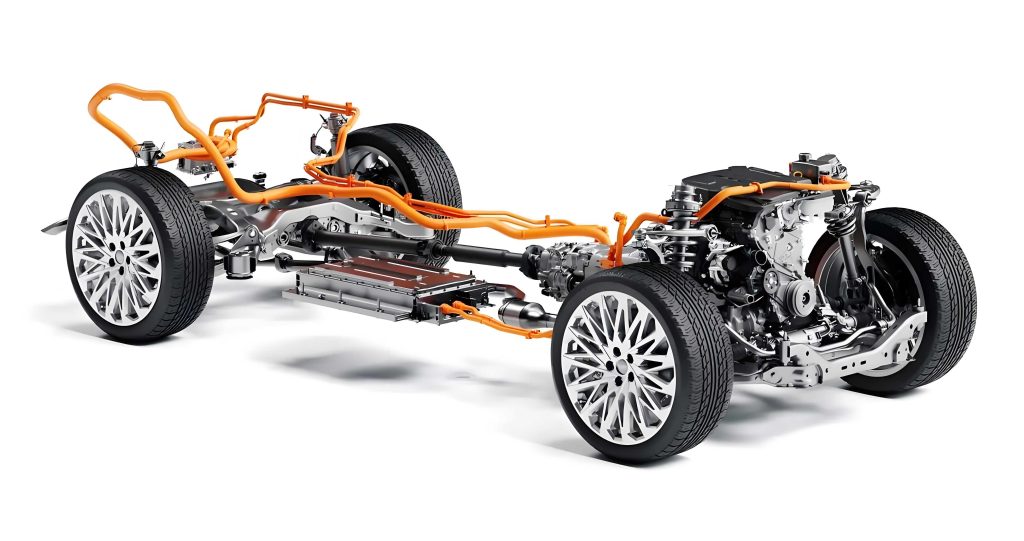
To understand the urgency of effective thermal management, we must first analyze the root causes of thermal runaway in hybrid car batteries. Thermal runaway is a self-sustaining exothermic reaction within a battery cell, triggered by factors like overheating, overcharging, or internal shorts, and it can result in fire or explosion. Through my research and industry case studies, I have identified several primary contributors to this phenomenon in hybrid cars. These include material defects, design flaws, manufacturing inconsistencies, improper usage, and inadequate thermal management. Material defects, such as impurities in cathode/anode materials or unstable electrolytes, can lower thermal stability thresholds. Design flaws, like poorly configured battery modules or insufficient venting, may lead to localized hotspots. Manufacturing issues, including weak welds or misaligned separators, create internal stress points. User behavior, such as aggressive driving or using non-standard chargers, exacerbates thermal stress. Most critically, thermal management failures—like inadequate cooling flow or sensor miscalibration—often act as the catalyst for runaway events. To summarize, the table below outlines these causes and their impacts on hybrid car battery safety.
| Cause Category | Specific Examples | Impact on Hybrid Car Battery |
|---|---|---|
| Material Defects | Impurities in electrodes, unstable electrolyte formulation | Reduced thermal stability, increased risk of exothermic reactions |
| Design Flaws | Insufficient cooling channels, poor module integration | Localized overheating, thermal gradient formation |
| Manufacturing Issues | Weak cell connections, separator misalignment | Internal short circuits, accelerated degradation |
| Improper Usage | Over-discharging, high-power fast charging | Excessive heat generation, structural damage |
| Thermal Management Failures | Inadequate coolant flow, faulty temperature sensors | Uncontrolled temperature rise, thermal runaway initiation |
Addressing these challenges requires a multifaceted approach to battery thermal management in hybrid cars. Based on my technical assessments, I propose several recommendations that span from fundamental research to system-level optimization. First, we must strengthen the study of battery thermal characteristics to refine design methodologies. The thermal behavior of batteries is governed by complex, nonlinear interactions between electrical, chemical, and thermal domains. For hybrid cars, which experience dynamic loads, understanding these interactions is crucial. I advocate for developing comprehensive multi-physics models that simulate battery thermal dynamics. For instance, the heat generation rate in a battery cell can be expressed as:
$$Q_{\text{gen}} = I^2 R_{\text{int}} + T \frac{\partial E}{\partial T} I$$
where \(Q_{\text{gen}}\) is the heat generation rate, \(I\) is the current, \(R_{\text{int}}\) is the internal resistance, \(T\) is temperature, and \(\frac{\partial E}{\partial T}\) is the entropy coefficient. This equation highlights how current and temperature interplay to produce heat. By integrating such models with computational fluid dynamics (CFD), we can predict temperature distributions under various hybrid car driving cycles. Moreover, design optimization should leverage advanced algorithms to balance thermal performance with weight and space constraints. The table below compares different thermal management approaches for hybrid car batteries, emphasizing their pros and cons.
| Management Approach | Mechanism | Advantages for Hybrid Cars | Disadvantages |
|---|---|---|---|
| Air Cooling | Forced convection using fans or vehicle airflow | Simple, low cost, lightweight | Limited heat dissipation, inefficient at high loads |
| Liquid Cooling | Coolant circulation through cold plates or jackets | High efficiency, uniform temperature control | Complex, heavier, potential leakage |
| Phase Change Materials (PCM) | Absorb heat during phase transition (e.g., solid to liquid) | Passive, high latent heat, reduces peak temperatures | Limited thermal conductivity, volume expansion |
| Thermoelectric Cooling | Peltier effect to pump heat electrically | Precise control, compact | Low efficiency, high power consumption |
Second, enhancing thermal management product development is vital for hybrid cars. As batteries evolve toward higher energy densities, thermal management components must become more integrated, lightweight, and modular. In my work, I have focused on innovating heat exchangers, cold plates, and heating elements like PTC (Positive Temperature Coefficient) devices. For example, optimizing the geometry of microchannel cold plates can improve heat transfer coefficients, which can be modeled using the following correlation for Nusselt number (\(Nu\)):
$$Nu = C Re^m Pr^n$$
where \(Re\) is Reynolds number, \(Pr\) is Prandtl number, and \(C, m, n\) are constants dependent on channel design. This allows for compact cooling solutions that fit within the tight packaging of hybrid car battery packs. Additionally, modular designs enable scalability across different hybrid car models, reducing development time and cost.
Third, optimizing whole-vehicle thermal management integration is essential for hybrid cars. The battery does not operate in isolation; it interacts with the motor, power electronics, cabin climate control, and engine waste heat. A systemic approach ensures holistic energy efficiency. For instance, in a hybrid car, waste heat from the engine can be harnessed to preheat the battery in cold conditions, reducing auxiliary heating energy. This can be quantified using an energy balance equation:
$$\sum Q_{\text{in}} = \sum Q_{\text{out}} + \Delta U$$
where \(Q_{\text{in}}\) includes heat from batteries and engine, \(Q_{\text{out}}\) is heat dissipated to environment, and \(\Delta U\) is the change in internal energy. By coordinating these flows, we can minimize overall energy consumption. The table below outlines key integration aspects for hybrid car thermal systems.
| Integration Aspect | Description | Benefit for Hybrid Cars |
|---|---|---|
| Battery-Motor Cooling Synergy | Shared coolant loops between battery and drive unit | Reduces component count, improves thermal inertia |
| Cabin-Battery Heat Exchange | Using cabin AC to assist battery cooling during peak loads | Enhances cooling capacity without extra hardware |
| Engine Waste Heat Recovery | Capturing exhaust or coolant heat for battery heating | Lowers auxiliary power use, extends range |
| Predictive Thermal Control | Using navigation and weather data to pre-condition battery | Optimizes temperature before driving, improves efficiency |
Fourth, perfecting thermal management strategy calibration is critical to adapt to the complex operational profiles of hybrid cars. These vehicles transition between electric, hybrid, and engine-only modes, each imposing distinct thermal loads on the battery. A dynamic control strategy must adjust cooling or heating outputs in real-time. From my perspective, this involves implementing multi-mode algorithms based on inputs like ambient temperature, state-of-charge (SOC), and power demand. For example, the cooling power (\(P_{\text{cool}}\)) can be regulated using a PID controller:
$$P_{\text{cool}} = K_p e(t) + K_i \int_0^t e(\tau) d\tau + K_d \frac{de(t)}{dt}$$
where \(e(t)\) is the error between desired and actual battery temperature, and \(K_p, K_i, K_d\) are tuning gains. This ensures precise temperature regulation during aggressive acceleration or fast charging in a hybrid car. Furthermore, machine learning techniques can be employed to predict thermal behavior from historical driving data, enabling proactive management. The goal is to maintain battery temperature within an optimal window, typically between 20°C and 40°C, to maximize lifespan and safety for hybrid cars.
To illustrate the interplay of these factors, consider the thermal resistance network model for a hybrid car battery pack. Each cell or module can be represented as a thermal node, and heat transfer paths are modeled as resistances. The overall temperature rise (\(\Delta T\)) can be approximated as:
$$\Delta T = Q_{\text{total}} \cdot R_{\text{th}}$$
where \(Q_{\text{total}}\) is the total heat generation from all cells, and \(R_{\text{th}}\) is the effective thermal resistance of the pack, including conduction through materials and convection to coolant. Minimizing \(R_{\text{th}}\) through design optimizations is key for hybrid cars. Additionally, safety margins can be incorporated by defining a critical temperature threshold (\(T_{\text{crit}}\)) for thermal runaway, often derived from accelerated rate calorimetry data. For instance, if \(T_{\text{cell}} > T_{\text{crit}}\), emergency cooling protocols should activate. This underscores the need for robust sensor networks and fail-safe mechanisms in hybrid car batteries.
In conclusion, battery thermal management is a pivotal technology for the advancement of hybrid cars. Through my research and practical engagements, I have seen that a concerted effort in thermal characterization, component innovation, system integration, and intelligent control can mitigate risks and enhance performance. The future of hybrid cars hinges on making batteries safer, more durable, and more efficient, and thermal management is at the heart of this endeavor. As the industry moves toward higher-voltage architectures and ultra-fast charging, thermal challenges will only intensify. Therefore, continuous investment in R&D and cross-disciplinary collaboration are imperative. By embracing these strategies, we can ensure that hybrid cars remain a sustainable and reliable transportation solution, paving the way for broader electrification. The journey is complex, but with meticulous attention to thermal details, the hybrid car ecosystem will thrive, delivering on its promise of reduced emissions and enhanced driving experiences.