
In recent years, the global shift toward sustainable transportation has accelerated, with electric cars leading the charge. As an educator and researcher in the field of automotive technology, I have witnessed firsthand how China EV initiatives are transforming the industry. The integration of digital technologies, such as virtual simulation, is not only enhancing educational methodologies but also driving innovation in electric car design and maintenance. This article explores the pivotal role of virtual simulation in advancing electric car education, with a focus on China EV developments, and incorporates quantitative analyses through tables and formulas to underscore key points.
The rise of electric cars is largely driven by environmental concerns and technological advancements. In China, government policies have fostered a robust ecosystem for China EV production, making it a global leader. For instance, the adoption of electric cars reduces carbon emissions, which can be modeled using the formula for CO2 savings: $$ \Delta CO_2 = (E_{ice} – E_{ev}) \times D \times F_c $$ where \( \Delta CO_2 \) is the reduction in CO2 emissions, \( E_{ice} \) is the emissions from internal combustion engines, \( E_{ev} \) is the emissions from electric cars, \( D \) is the distance traveled, and \( F_c \) is the fuel carbon factor. This highlights the environmental benefits of electric cars, which are central to China EV strategies.
Virtual simulation technology has emerged as a critical tool in educating the next generation of engineers for the electric car industry. By creating immersive, interactive environments, virtual simulation allows students to explore complex systems without the risks and costs associated with physical prototypes. In my experience, this approach is particularly valuable for China EV programs, where rapid innovation requires up-to-date training resources. For example, the dynamics of an electric car’s battery system can be simulated using mathematical models, such as the state of charge (SOC) estimation: $$ SOC(t) = SOC_0 – \frac{1}{C_n} \int_0^t I(\tau) \, d\tau $$ where \( SOC(t) \) is the state of charge at time \( t \), \( SOC_0 \) is the initial SOC, \( C_n \) is the nominal capacity, and \( I(\tau) \) is the current. Such formulas help students grasp abstract concepts in electric car technology.
To illustrate the growth of electric cars in China, consider the following table summarizing key metrics for China EV adoption from 2020 to 2024. This data underscores the rapid expansion and the need for advanced educational tools like virtual simulation.
| Year | Electric Car Sales (Millions) | Market Share (%) | Key China EV Policies |
|---|---|---|---|
| 2020 | 1.3 | 5.5 | Subsidies for EV purchases |
| 2021 | 2.0 | 7.8 | Expansion of charging infrastructure |
| 2022 | 3.1 | 10.2 | Mandates for EV production |
| 2023 | 4.5 | 13.5 | Integration of smart grid technologies |
| 2024 | 6.0 | 16.0 | Focus on autonomous electric cars |
In educational settings, virtual simulation bridges the gap between theory and practice for electric car systems. For instance, when teaching about electric car powertrains, I use simulations to model the efficiency of electric motors. The power output of a typical permanent magnet synchronous motor (PMSM) used in many electric cars can be expressed as: $$ P = \frac{3}{2} V_{ph} I_{ph} \cos \phi $$ where \( P \) is the power, \( V_{ph} \) is the phase voltage, \( I_{ph} \) is the phase current, and \( \cos \phi \) is the power factor. This formula, combined with interactive simulations, helps students understand how variations in parameters affect electric car performance, aligning with China EV standards that emphasize efficiency.
The advantages of virtual simulation in electric car education are multifaceted. Firstly, it allows for the replication of real-world scenarios, such as fault diagnosis in China EV models, without safety hazards. Secondly, it supports personalized learning; students can repeat simulations to master skills, which is crucial for complex topics like battery management systems in electric cars. The energy density of lithium-ion batteries, common in electric cars, can be analyzed using: $$ E_d = \frac{C \times V}{m} $$ where \( E_d \) is the energy density, \( C \) is the capacity, \( V \) is the voltage, and \( m \) is the mass. Through virtual labs, students experiment with these parameters, reinforcing their understanding of electric car technologies.
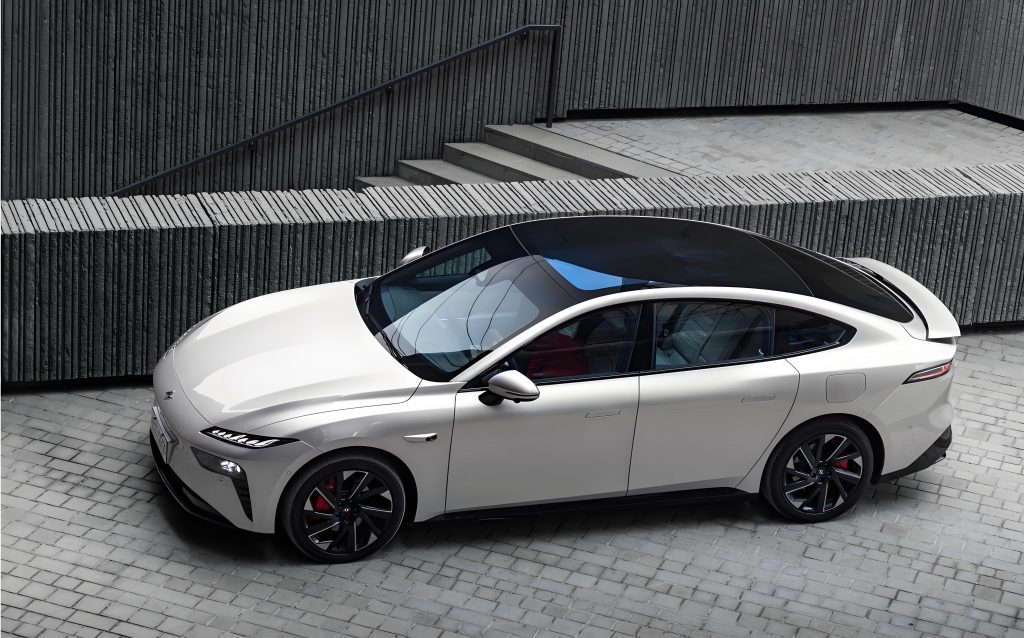
Moreover, virtual simulation facilitates collaboration in China EV research and development. In my projects, I have used cloud-based simulations to connect teams across regions, working on electric car innovations. For example, optimizing the aerodynamics of an electric car involves computational fluid dynamics (CFD) simulations, which can be summarized by the Navier-Stokes equations: $$ \rho \left( \frac{\partial \mathbf{v}}{\partial t} + \mathbf{v} \cdot \nabla \mathbf{v} \right) = -\nabla p + \mu \nabla^2 \mathbf{v} + \mathbf{f} $$ where \( \rho \) is density, \( \mathbf{v} \) is velocity, \( p \) is pressure, \( \mu \) is viscosity, and \( \mathbf{f} \) is body force. Such simulations are integral to designing electric cars with reduced drag, enhancing range—a key focus in China EV advancements.
To further elaborate on the technical aspects, the following table compares different electric car components and their simulation parameters, relevant to China EV applications. This aids in curriculum development and industry training.
| Component | Key Parameter | Simulation Metric | Typical Value for China EV |
|---|---|---|---|
| Battery Pack | Capacity (kWh) | Cycle Life Simulation | 60-100 kWh |
| Electric Motor | Efficiency (%) | Torque-Speed Curve Analysis | 90-95% |
| Power Inverter | Switching Frequency (Hz) | Thermal Management Simulation | 10-20 kHz |
| Charging System | Charging Rate (kW) | Grid Impact Simulation | 50-350 kW |
In addition to education, virtual simulation plays a crucial role in the lifecycle assessment of electric cars, which is vital for China EV sustainability goals. The total cost of ownership (TCO) for an electric car can be modeled as: $$ TCO = P_0 + \sum_{t=1}^n \frac{C_t}{(1+r)^t} $$ where \( P_0 \) is the initial purchase price, \( C_t \) is the annual cost in year \( t \), \( r \) is the discount rate, and \( n \) is the lifespan. Simulations allow policymakers and manufacturers in China to evaluate scenarios, such as the impact of battery degradation on TCO, promoting informed decisions for electric car adoption.
Looking ahead, the convergence of virtual simulation and artificial intelligence will further revolutionize electric car ecosystems. In China EV initiatives, AI-driven simulations can predict maintenance needs, reducing downtime. For instance, machine learning algorithms can estimate remaining useful life (RUL) of electric car components using: $$ RUL = f(SOC, T, I) $$ where \( T \) is temperature and \( I \) is current. By integrating such models into virtual platforms, educators and engineers can create adaptive learning systems that keep pace with the evolving electric car landscape.
In conclusion, the synergy between virtual simulation and electric car technology is reshaping education and industry, particularly in China EV contexts. Through immersive experiences and quantitative tools, we can equip learners with the skills to drive innovation. As I continue to explore this field, I am confident that virtual simulation will remain a cornerstone in advancing electric car solutions, fostering a sustainable future powered by China EV leadership.