
As a researcher in the field of electric vehicle (EV) technology, I have extensively studied the electromagnetic compatibility (EMC) of China EV power batteries, which are critical components for energy storage and delivery in modern transportation. The rapid growth of EVs as an eco-friendly alternative has heightened the importance of EMC evaluation to ensure safety, reliability, and global market acceptance. In this paper, I explore the EMC characteristics of EV power batteries, focusing on their immunity to electromagnetic interference, and present analysis based on practical test cases. The increasing complexity of EV systems, with numerous electronic devices and intricate wiring, makes EMC a pivotal aspect of design and validation for China EV batteries.
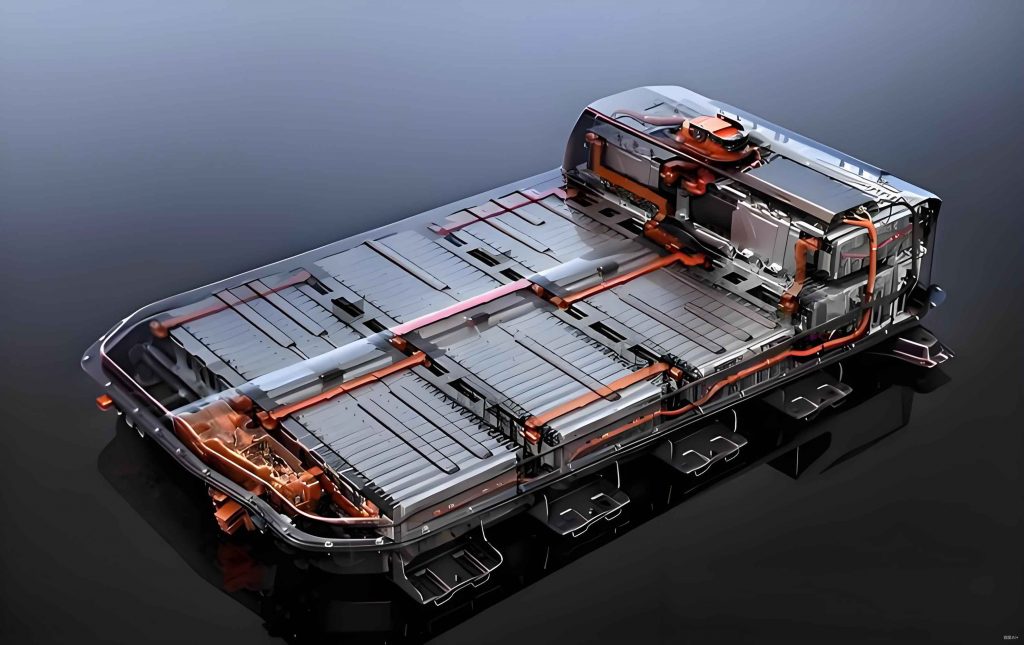
Electromagnetic compatibility refers to the ability of electrical equipment to function correctly in its electromagnetic environment without causing or suffering from interference. For China EV power batteries, this involves managing both emissions and susceptibility. The three fundamental elements of EMC—interference source, coupling path, and sensitive device—are particularly relevant. In EVs, the China EV battery can act as an interference source due to high-power switching operations, but it is also a sensitive device vulnerable to external disturbances. Coupling paths include conductive routes through cables and radiative paths through space. The radiative coupling, for instance, can be described by the electric field strength $E$ at a distance $r$, which relates to the source characteristics. A simplified model for the electric field in free space is given by $$E = \frac{1}{r} \sqrt{\frac{P G}{4 \pi}}$$ where $P$ is the radiated power and $G$ is the antenna gain. However, in real-world scenarios, reflections and multipath effects complicate this relationship, necessitating detailed analysis for China EV power batteries.
The evaluation of EMC for China EV power batteries involves a suite of tests designed to assess both emission and immunity aspects. These tests are crucial for identifying potential issues that could compromise the performance of EV power batteries in practical environments. Based on Chinese standards, which align with international norms, the key EMC test items include radiated emission, conducted emission, radiated immunity, conducted immunity, and electrostatic discharge. Each test targets specific aspects of EMC to ensure comprehensive coverage for China EV batteries. For example, radiated emission tests measure the electromagnetic fields emitted by the battery system, while immunity tests evaluate its resistance to external disturbances. The standards referenced, such as GB/T 18655-2025 and GB/T 33014.2-2016, provide detailed procedures and limits for these assessments.
| Test Item | Applicable Standard | Primary Objective | Key Parameters |
|---|---|---|---|
| Radiated Emission | GB/T 18655-2025 | Measure electromagnetic field emissions from China EV battery | Frequency range: 30 MHz – 1 GHz, Limit: e.g., 30 dBμV/m at 3 m |
| Conducted Emission | GB/T 18655-2025 | Assess disturbances coupled onto power and signal cables | Frequency range: 150 kHz – 108 MHz, Voltage limits in dBμV |
| Radiated Immunity | GB/T 33014.2-2016 | Evaluate resistance to radiated electromagnetic fields | Field strength: 30 V/m, Frequency: 80 MHz – 2 GHz |
| Conducted Immunity | GB/T 21437.2-2021 | Test immunity to disturbances on cables | Pulse types: e.g., Pulse 2b, 4; Voltage levels up to 100 V |
| Electrostatic Discharge | GB/T 17625.5-2019 | Assess resilience to electrostatic events | Discharge levels: ±4 kV contact, ±8 kV air |
In radiated immunity tests for China EV power batteries, the applied field strength $E$ is a critical parameter. The relationship between the transmitted power $P_t$ and the field strength in an anechoic chamber can be approximated by $$E = \frac{\sqrt{30 P_t G}}{d}$$ where $G$ is the antenna gain and $d$ is the distance from the antenna to the China EV battery. This formula is used to calibrate test setups, ensuring that the EV power battery is subjected to standardized field levels. Similarly, for conducted immunity, the injected current or voltage must meet specific profiles. For instance, in bulk current injection (BCI) tests, the current $I_{\text{inj}}$ is swept across frequencies, and the failure threshold can be modeled as $$I_{\text{threshold}}(f) = I_0 \cdot e^{-\beta f}$$ where $I_0$ and $\beta$ are constants derived from empirical data for China EV batteries. These mathematical models help in predicting and mitigating EMC issues in EV power batteries.
My investigations into EMC test failures for China EV power batteries have revealed several common issues that highlight the importance of rigorous assessment. Below, I summarize key failure cases from immunity tests, which demonstrate the vulnerabilities of EV power batteries to electromagnetic disturbances. These cases underscore the need for robust design and testing to ensure the reliability of China EV batteries in real-world conditions.
| Test Method | Failure Phenomenon | Frequency or Condition | Recovery Action | Impact on EV Power Battery |
|---|---|---|---|---|
| Bulk Current Injection (BCI) | Sample halted discharge, CAN communication lost | 100 MHz at 50 mA injection | Power cycling required | Temporary operational failure |
| Surge Test | Charging stopped, insulation busbar error | 1.2/50 μs voltage wave | Manual reset and power cycle | Risk of overvoltage damage |
| Transient Conducted Immunity | Relay sticking or failure to close | Pulse 4 and Pulse 2b injections | Component replacement needed | Potential safety hazard |
| Radiated Immunity | Discharge interruption, CAN timeout | 200 MHz at 30 V/m field | Power cycling necessary | Loss of vehicle power |
During BCI testing on China EV power batteries, we observed that failures often occurred when the injected current exceeded a frequency-dependent threshold. The BCI test, conducted per GB/T 33014.4-2016, involves injecting currents from 0.1 MHz to 400 MHz into the battery’s cables. The failure mechanism can be analyzed using the equivalent circuit of the China EV battery, where the impedance $Z_b$ includes parasitic elements: $$Z_b = R_s + j\omega L_s + \frac{1}{j\omega C_p}$$ Here, $R_s$ is the series resistance, $L_s$ is the stray inductance, and $C_p$ is the parasitic capacitance. At resonant frequencies, the impedance minima can lead to higher current coupling, causing malfunctions in the EV power battery control systems. For example, at 100 MHz, the injected current induced voltage spikes in the CAN bus, disrupting communication. The power required to cause failure can be estimated by $$P_{\text{failure}} = I_{\text{inj}}^2 \cdot \text{Re}(Z_b)$$ where $\text{Re}(Z_b)$ is the real part of the impedance. This highlights the sensitivity of China EV batteries to conducted interference.
Surge tests, based on GB/T 17625.5-2019, simulate voltage transients that China EV power batteries might encounter during charging or operation. The surge voltage $V_s(t)$ for a standard 1.2/50 μs wave is defined by $$V_s(t) = V_0 \left(1 – e^{-t/\tau_1}\right) e^{-t/\tau_2}$$ where $V_0$ is the peak voltage, $\tau_1$ is the rise time constant, and $\tau_2$ is the decay time constant. In one test on an EV power battery, a surge of 2 kV caused the battery management system to report an insulation fault, necessitating a reset. The energy dissipated during a surge event is $$E_s = \int_0^{\infty} V_s(t) I_s(t) dt$$ where $I_s(t)$ is the surge current. This energy can overwhelm protection circuits in China EV batteries, leading to permanent damage if not properly managed.
Transient conducted immunity tests, per GB/T 21437.2-2021, involve injecting pulses into the power lines of China EV power batteries. Pulse 4, which simulates inductive load switching, caused relay sticking in several samples. The voltage waveform for Pulse 4 can be represented as $$V_p(t) = V_{\text{peak}} \cdot e^{-t/\tau}$$ with $\tau$ around 10 ms. The failure occurred when the induced voltage exceeded the relay’s holding current threshold, calculated by $$I_{\text{hold}} = \frac{V_{\text{peak}}}{R_{\text{coil}}}$$ where $R_{\text{coil}}$ is the relay coil resistance. Similarly, Pulse 2b, simulating alternator field decay, led to relays failing to close, requiring manual intervention. These incidents emphasize the need for enhanced filtering and shielding in EV power batteries to withstand such transients.
Radiated immunity tests for China EV power batteries, conducted in anechoic chambers according to GB/T 33014.2-2016, exposed vulnerabilities to electromagnetic fields. The test applies a field strength $E$ across a frequency range, and failures often manifested as communication loss or operational halts. The power density $S$ incident on the China EV battery is related to the field strength by $$S = \frac{E^2}{120 \pi}$$ where $120 \pi$ is the intrinsic impedance of free space. At 200 MHz and 30 V/m, the power density is approximately 2.39 W/m², which can induce currents in internal circuits of the EV power battery. The induced voltage $V_{\text{ind}}$ in a loop of area $A$ is given by $$V_{\text{ind}} = j\omega \mu_0 H A$$ where $H$ is the magnetic field strength and $\mu_0$ is the permeability of free space. This can disrupt low-voltage signals in China EV batteries, leading to failures that require power cycling to resolve.
Beyond laboratory tests, real-world incidents involving China EV power batteries have demonstrated the consequences of EMC failures. In one documented case, an EV experienced a fire during charging, which was traced to electromagnetic incompatibility between the vehicle’s China EV battery and the charging infrastructure. The charging station emitted uncontrolled surges and pulses, which corrupted the battery management system of the EV power battery, causing thermal runaway. The energy transfer in such scenarios can be modeled using the formula for conducted energy: $$E_c = \sum_{i} V_i I_i \Delta t_i$$ where $V_i$ and $I_i$ are the voltage and current during disturbance intervals $\Delta t_i$. This incident underscores the importance of holistic EMC validation for both China EV batteries and associated systems to prevent hazardous outcomes.
To mitigate EMC issues in China EV power batteries, design improvements such as enhanced grounding, shielding, and filtering are essential. The shielding effectiveness $SE$ for a enclosure can be expressed as $$SE = 20 \log_{10} \left( \frac{E_{\text{without}}}{E_{\text{with}}} \right)$$ where $E_{\text{without}}$ and $E_{\text{with}}$ are the field strengths without and with shielding. For EV power batteries, using materials with high conductivity can reduce radiative coupling. Additionally, filter design for conducted immunity involves impedance matching, with the insertion loss $IL$ given by $$IL = 10 \log_{10} \left( \frac{P_{\text{in}}}{P_{\text{out}}} \right)$$ where $P_{\text{in}}$ and $P_{\text{out}}$ are the power levels before and after filtering. Implementing these strategies can significantly enhance the EMC performance of China EV batteries.
In conclusion, the electromagnetic compatibility assessment of China EV power batteries is a multifaceted process vital for the safety and functionality of electric vehicles. Through comprehensive testing, including immunity and emission evaluations, we can identify and address vulnerabilities in EV power batteries. The failure cases analyzed in this paper illustrate the susceptibility of China EV batteries to various electromagnetic disturbances, necessitating continuous innovation in EMC design and standards. As the EV industry evolves, ongoing research into the EMC of China EV power batteries will be crucial for advancing sustainable transportation and ensuring user confidence in these technologies.