
In recent years, the escalating concerns over global climate change and energy scarcity have propelled extensive research into new energy vehicles, with plug-in hybrid cars at the forefront. As a researcher in automotive thermal management, I have focused on understanding the intricate thermal systems that enable these hybrid cars to operate efficiently. The integration of multiple power sources, such as internal combustion engines and electric motors, along with components like batteries, chargers, and power electronics, necessitates advanced thermal management systems. These systems must cater to diverse temperature requirements, ranging from high-temperature zones for engines to low-temperature zones for batteries, all while ensuring passenger comfort. This article delves into the configuration and performance of thermal management systems in plug-in hybrid cars, drawing from experimental analyses to provide insights for design optimization.
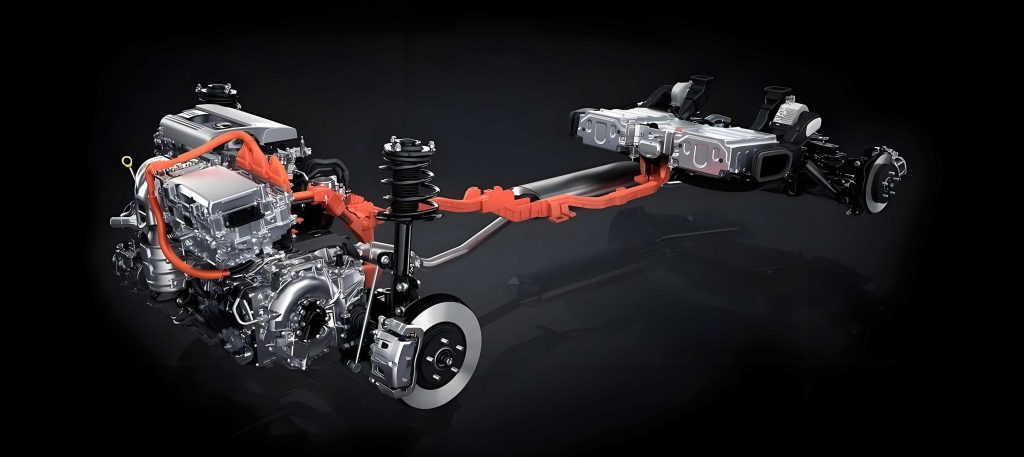
The thermal management system in a hybrid car is a complex network designed to regulate temperatures across various components. Based on my analysis, it typically comprises four independent cooling circuits, each targeting specific temperature ranges. These circuits ensure that components operate within their optimal thermal envelopes, enhancing efficiency and longevity. The following table summarizes the key circuits and their characteristics:
| Cooling Circuit | Target Components | Operating Temperature Range | Primary Cooling Method |
|---|---|---|---|
| High-Temperature Circuit | Engine, Engine Oil, Transmission | >95°C | Radiator with Fan |
| Medium-Temperature Circuit | Motor, Intercooler | ~65°C | Integrated Liquid Cooling |
| Medium-Low Temperature Circuit | Power Electronics, Charger | ~50°C | Low-Temperature Radiator |
| Battery Circuit | High-Voltage Battery Pack | <40°C | Refrigerant-Based Chiller |
The high-temperature circuit involves a radiator for dissipating heat from the engine and transmission, and it includes a heater core for cabin warming. During cold starts, an electric heater (PTC) can assist in rapid warm-up, switching to engine waste heat afterward to improve efficiency. The medium-temperature circuit utilizes a liquid-cooled intercooler integrated into the intake manifold, which offers compact packaging and superior cooling compared to air-cooled alternatives—a critical advantage in hybrid cars where space is at a premium. The medium-low temperature circuit employs a separate radiator to manage heat from power electronics, while the battery circuit relies on a chiller that uses refrigerant from the air-conditioning system to cool the battery coolant, ensuring the battery operates below 40°C in hot environments.
To model the thermal behavior, we can use heat balance equations. For instance, the heat dissipation rate in a cooling circuit can be expressed as: $$ Q = \dot{m} \cdot c_p \cdot (T_{out} – T_{in}) $$ where \( Q \) is the heat transfer rate, \( \dot{m} \) is the mass flow rate of coolant, \( c_p \) is the specific heat capacity, and \( T_{in} \) and \( T_{out} \) are the inlet and outlet temperatures, respectively. The cooling efficiency of a radiator can be approximated by: $$ \eta = \frac{T_{in} – T_{out}}{T_{in} – T_{amb}} $$ with \( T_{amb} \) as the ambient temperature. These formulas help in designing systems that maintain precise temperature control, which is vital for hybrid cars to balance performance and energy consumption.
The air-conditioning system in hybrid cars also plays a dual role: cooling the cabin and assisting in battery thermal management. It features a condenser followed by two parallel refrigerant paths—one to an evaporator for cabin cooling and another to a chiller for battery coolant cooling. This setup is controlled via solenoid valves and expansion valves to regulate refrigerant flow. The overall cooling capacity can be described by: $$ Q_{cool} = \dot{m}_{ref} \cdot (h_{evap,in} – h_{evap,out}) $$ where \( \dot{m}_{ref} \) is the refrigerant mass flow rate, and \( h \) represents enthalpy. This integrated approach is essential for hybrid cars to manage thermal loads efficiently under varying conditions.
To evaluate the performance of these thermal management systems, I conducted experiments in an environmental simulation chamber. The test setup included a chassis dynamometer, cooling fans, a solar simulation system, power analyzers, and temperature sensors. The hybrid car was subjected to high-temperature conditions (40°C with solar load) to assess cooling and air-conditioning efficacy. Different driving cycles and battery states of charge (SOC) were considered to mimic real-world scenarios. The test matrix is presented below:
| Test Case | Driving Profile | Environmental Conditions | Air-Conditioning Status | Battery SOC |
|---|---|---|---|---|
| Case 1 | 40 km/h, 10% grade (steady-state) | 40°C, solar load | On | Low (≤20%) |
| Case 2 | 40 km/h, 10% grade (steady-state) | 40°C, solar load | On | High (≥80%) |
| Case 3 | NEDC cycle | 40°C, solar load | On | Low (≤20%) |
| Case 4 | NEDC cycle | 40°C, solar load | On | High (≥80%) |
These cases allow for a comprehensive analysis of how hybrid cars manage thermal loads under stress, with SOC variations influencing system behavior due to differences in power distribution and heat generation.
The results from the cooling system tests reveal precise temperature regulation across circuits. For steady-state climbing at 40 km/h with a 10% grade, the high-temperature circuit stabilized at around 103°C, the medium-temperature circuit at 65°C, and the medium-low temperature circuit at 55°C. The battery circuit showed notable differences based on SOC: in low-SOC conditions, cooling intervention was delayed due to lower heat generation from reduced charging and discharging currents, but equilibrium temperatures converged to similar levels. This can be quantified by the heat generation rate in the battery: $$ Q_{batt} = I^2 \cdot R + \dot{m}_{batt} \cdot c_{p,batt} \cdot \Delta T $$ where \( I \) is current, \( R \) is internal resistance, and \( \dot{m}_{batt} \) is battery coolant flow rate. For NEDC cycles, temperatures rose gradually during urban phases and peaked during high-speed suburban sections, with engine coolant reaching 95°C, motor coolant below 60°C, and power electronics below 55°C. The table below summarizes key temperature data:
| Component | Steady-State (High SOC) Temperature | Steady-State (Low SOC) Temperature | NEDC Peak Temperature |
|---|---|---|---|
| Engine Coolant | 103°C | 103°C | 95°C |
| Motor Coolant | 65°C | 65°C | <60°C |
| Power Electronics Coolant | 55°C | 55°C | <55°C |
| Battery Coolant | ~40°C | ~40°C (delayed cooling) | ~40°C |
These findings underscore the adaptability of thermal management systems in hybrid cars, maintaining component integrity across diverse operating modes. The air-conditioning performance was equally robust: across all test cases, the outlet air temperature remained around 10°C, and the cabin head-level temperature was controlled between 26°C and 27°C, meeting thermal comfort standards. The cooling effect can be modeled using: $$ T_{cabin} = T_{amb} – \frac{Q_{evap}}{ \dot{m}_{air} \cdot c_{p,air} } $$ where \( Q_{evap} \) is evaporator cooling capacity and \( \dot{m}_{air} \) is airflow rate. In low-SOC scenarios, more refrigerant was allocated to the cabin circuit due to reduced demand from the battery chiller, resulting in slightly better cabin cooling—a nuance that highlights the interconnected nature of systems in hybrid cars.
Further analysis involves the energy efficiency of thermal management. The coefficient of performance (COP) for the air-conditioning system can be expressed as: $$ COP = \frac{Q_{cool}}{W_{comp}} $$ where \( W_{comp} \) is compressor work. In hybrid cars, this COP varies with SOC because the compressor power draw affects overall energy balance. For instance, high SOC may lead to increased compressor load for battery cooling, slightly reducing cabin cooling efficiency. This interplay is critical for optimizing hybrid car designs to minimize energy consumption while ensuring comfort and safety.
To generalize these insights, I derived empirical formulas for temperature stabilization. For the engine coolant, the time to reach equilibrium can be approximated by: $$ t_{eq} = \frac{m_{coolant} \cdot c_p}{UA} \ln \left( \frac{T_{initial} – T_{amb}}{T_{eq} – T_{amb}} \right) $$ where \( UA \) is the overall heat transfer coefficient of the radiator. Similarly, for battery cooling, the effectiveness of the chiller is given by: $$ \epsilon = \frac{T_{batt,in} – T_{batt,out}}{T_{batt,in} – T_{evap}} $$ with \( T_{evap} \) as evaporator temperature. These models aid in predicting system behavior during design phases for hybrid cars.
In conclusion, the thermal management system of plug-in hybrid cars is a sophisticated assembly of multiple cooling circuits and an integrated air-conditioning system. My experimental analysis confirms that these systems can precisely control coolant temperatures, ensuring reliable operation of components across temperature zones. The cabin environment is maintained within a comfortable range even under extreme heat, and battery SOC levels influence thermal management strategies, particularly in cooling timing and resource allocation. These findings offer valuable guidance for advancing thermal system designs in hybrid cars, emphasizing the need for adaptive controls and energy-efficient solutions. As hybrid cars evolve, continued research into thermal management will be pivotal for enhancing performance, range, and sustainability in the automotive sector.