
As a researcher in the field of new energy vehicles, I have dedicated significant effort to understanding and improving simulation models for EV power batteries, particularly focusing on China EV battery technologies. Lithium-ion batteries are widely used in electric vehicles and portable electronics due to their high energy density and low self-discharge rates. Accurate modeling of these batteries is crucial for designing and optimizing battery management systems. However, the complex chemical reactions, multi-scale processes, temperature and humidity effects, nonlinear characteristics during charging and discharging, and aging phenomena make precise modeling challenging. In this article, I will share my insights into the latest research progress on simulation models for EV power batteries, covering key aspects such as electrochemical models, equivalent circuit models, neural network models, and electro-thermal coupling models. I will also discuss the current challenges and future directions in this domain, with an emphasis on applications in China EV battery systems.
The state diagnosis of lithium-ion batteries involves critical parameters like thermal state, state of charge (SOC), state of health, and energy state. These internal properties are implicit and cannot be directly measured by sensors, making it essential to develop accurate models that map external characteristics to battery states. In my work, I have explored various modeling approaches to address these challenges, and I believe that a comprehensive understanding of these models is vital for advancing EV power battery technologies, especially in the context of China’s growing electric vehicle market.
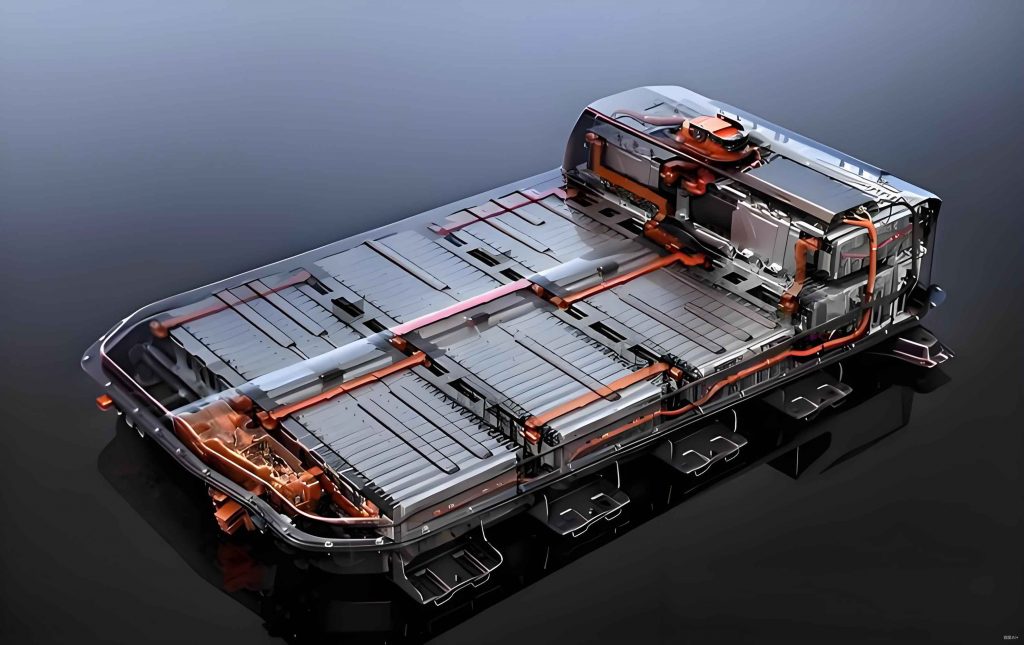
Electrochemical Models
Electrochemical models are based on the fundamental electrochemical reaction mechanisms within batteries, using partial differential equations to describe the kinetic behaviors of lithium-ion diffusion and migration. For instance, during charging, lithium ions deintercalate from the positive electrode, move through the electrolyte, and intercalate into the negative electrode, while the reverse occurs during discharging. These models offer high accuracy by providing insights into microscopic reactions, which is essential for enhancing the performance of EV power batteries. However, their computational complexity and long simulation times often limit real-time applications. A classic example is the pseudo-two-dimensional (P2D) model, which I have frequently used in my studies. Its mathematical formulation includes equations for lithium-ion diffusion in the liquid and solid phases, Ohm’s law for both phases, and the Butler-Volmer kinetics equation.
The diffusion of Li+ in the liquid phase is described by:
$$ \varepsilon_e \frac{\partial c_e}{\partial t} = \frac{\partial}{\partial x} \left( D^{\text{eff}} \frac{\partial c_e}{\partial x} \right) + \alpha (1 – t_0^+) j_r $$
where $\varepsilon_e$ is the volume fraction of the liquid phase, $c_e$ is the lithium-ion concentration in the electrolyte, $t$ is time, $x$ is the spatial coordinate along the electrode thickness, $D^{\text{eff}}$ is the effective diffusion coefficient in the liquid phase, $\alpha$ is the specific surface area of electrode particles per unit volume, $t_0^+$ is the transference number of lithium ions in the liquid phase, and $j_r$ is the lithium-ion flux density.
For the solid phase, Fick’s second law of diffusion is applied, assuming spherical active particles with uniform radius:
$$ \frac{\partial c_s}{\partial t} = \frac{1}{r^2} \frac{\partial}{\partial r} \left( D_s r^2 \frac{\partial c_s}{\partial r} \right) $$
where $c_s$ is the solid-phase lithium-ion concentration, $r$ is the radial coordinate in the spherical particle, and $D_s$ is the solid-phase diffusion coefficient.
Ohm’s law for the liquid phase accounts for the potential distribution:
$$ k^{\text{eff}} \frac{\partial \phi_e}{\partial x} = – \frac{2RT k^{\text{eff}}}{F} (t_0^+ – 1) \frac{\partial \ln c_e}{\partial x} – i_e $$
where $k^{\text{eff}}$ is the effective ionic conductivity, $\phi_e$ is the liquid-phase potential, $R$ is the universal gas constant, $T$ is the temperature, $F$ is Faraday’s constant, and $i_e$ is the liquid-phase current density.
Similarly, for the solid phase:
$$ \sigma^{\text{eff}} \frac{\partial \phi_s}{\partial x} = -i_s $$
where $\sigma^{\text{eff}}$ is the effective electronic conductivity, $\phi_s$ is the solid-phase potential, and $i_s$ is the solid-phase current density.
The Butler-Volmer kinetics equation relates the lithium-ion flux density to the surface overpotential:
$$ j_r = r_k (c_e)^{\alpha_a} (c_s^{\text{max}} – c_{se})^{\alpha_a} (c_{se})^{\alpha_c} \left[ \exp\left( \frac{\alpha_a F}{RT} \eta \right) – \exp\left( -\frac{\alpha_c F}{RT} \eta \right) \right] $$
where $r_k$ is the reaction rate constant, $c_s^{\text{max}}$ is the maximum solid-phase concentration, $c_{se}$ is the concentration at the solid-electrolyte interface, $\alpha_a$ and $\alpha_c$ are the anodic and cathodic transfer coefficients, and $\eta$ is the surface overpotential.
In my research, I have encountered simplified versions of these models, such as the average model, which assumes uniform concentration distributions and neglects temperature effects. However, incorporating temperature dependencies, as in electro-thermal models, can significantly improve accuracy. For example, reduced-order models using Laplace transforms and Padé approximations have been developed to derive transfer functions between battery voltage and current, enhancing computational efficiency while maintaining precision across various SOC and temperature ranges. These advancements are particularly relevant for China EV battery applications, where operational conditions can vary widely.
Future developments in electrochemical models should focus on multi-scale modeling to bridge microscopic and macroscopic phenomena, dynamic modeling to account for non-equilibrium effects, and integration with sustainability and safety assessments. This will be crucial for optimizing EV power battery systems in real-world scenarios.
Equivalent Circuit Models
Equivalent circuit models (ECMs) simplify the internal structure and electrochemical processes of batteries into electrical components, such as resistors, capacitors, and voltage sources. These models are popular due to their straightforward parameter relationships and ease of implementation in state-space descriptions. However, they often suffer from low accuracy in complex scenarios, and increasing the number of components can exacerbate computational challenges. In my analysis of EV power batteries, I have evaluated several common ECMs, each with distinct advantages and limitations.
The Rint model, consisting of an ideal voltage source and an internal resistor, is simple but fails to capture polarization effects. For China EV battery systems, where dynamic performance is critical, this model may be insufficient. In contrast, the Thevenin model adds a single RC parallel network to represent polarization, offering better dynamic characterization but remaining sensitive to aging and temperature variations. The PNGV model includes an additional capacitor to model voltage changes due to current integration, improving accuracy under varying loads but potentially introducing cumulative errors. The second-order RC model, with two RC networks, effectively describes nonlinear dynamics like electrochemical and concentration polarization, though at the cost of increased complexity. The GNL model integrates multiple elements to simulate ohmic polarization, electrochemical polarization, concentration polarization, and self-discharge, providing high accuracy but requiring sophisticated parameter identification.
To illustrate, I have summarized these models in the table below, which compares their equations, parameters, advantages, and disadvantages. This table is based on my extensive work with EV power battery simulations and highlights the trade-offs involved in model selection for applications like China EV battery management.
| Model | Description Equation | Parameters | Advantages | Disadvantages |
|---|---|---|---|---|
| Rint Model | $$ U_t = U_{oc} – I R_0 $$ | Ideal voltage source $U_{oc}$, terminal voltage $U_t$, internal resistance $R_0$, load current $I$ | Simple structure, easy parameter calculation | Neglects polarization effects, poor dynamic representation |
| Thevenin Model | $$ U_t = U_{oc} – I R_0 – U_D $$ $$ I = \frac{U_D}{R_D} + C_D \frac{dU_D}{dt} $$ |
Polarization resistance $R_D$, polarization capacitance $C_D$ | Accounts for polarization, suitable for engineering applications | Sensitive to aging and temperature changes |
| PNGV Model | $$ U_b = \frac{1}{C_b} \int I \, dt $$ $$ U_t = U_{oc} – I R_0 – U_D – U_b $$ $$ I = \frac{U_D}{R_D} + C_D \frac{dU_D}{dt} $$ |
Battery capacitance $C_b$ | Good adaptability to temperature and load variations, relatively accurate | Potential cumulative errors from series capacitance, limited polarization modeling |
| Second-Order RC Model | $$ U_t = U_{oc} – I R_0 – U_{D1} – U_{D2} $$ $$ I = \frac{U_{D1}}{R_{D1}} + C_{D1} \frac{dU_{D1}}{dt} $$ $$ I = \frac{U_{D2}}{R_{D2}} + C_{D2} \frac{dU_{D2}}{dt} $$ |
Electrochemical polarization resistance $R_{D1}$ and capacitance $C_{D1}$, concentration polarization resistance $R_{D2}$ and capacitance $C_{D2}$ | Excellent representation of nonlinear dynamics and polarization effects | High computational load, complex structure |
| GNL Model | $$ U_t = U_{oc} – I R_0 – U_{D1} – U_{D2} – U_b $$ $$ \dot{U}_{D1} = \frac{U_{oc}}{R_e C_{D1}} + \frac{1}{C_{D1}} – \frac{(U_b + U_{D2})}{R_e C_{D1}} – \left( \frac{1}{R_e C_{D1}} – \frac{1}{R_0 C_{D1}} \right) U_{D1} $$ $$ \dot{U}_{D2} = \frac{U_{oc}}{R_e C_{D2}} + \frac{1}{C_{D2}} – \frac{(U_b + U_{D1})}{R_e C_{D2}} – \left( \frac{1}{R_e C_{D2}} – \frac{1}{R_0 C_{D2}} \right) U_{D2} $$ $$ \dot{U}_b = \frac{U_{oc}}{R_e C_b} + \frac{1}{C_b} – \frac{(U_{D1} + U_{D2} + U_b)}{R_e C_b} $$ |
Self-discharge resistance $R_e$ | High simulation accuracy, includes self-discharge effects | Complex parameter tuning, computationally intensive |
In my experience, fractional-order ECMs combined with algorithms like fractional Kalman filtering have shown promise in improving SOC estimation accuracy and stability for China EV battery systems. However, real-time applications often require a balance between model complexity and computational efficiency. Future work should focus on adaptive models that dynamically update parameters based on operating conditions, ensuring robust performance across the lifecycle of EV power batteries.
Neural Network Models
Neural network models treat the battery system as a black box, learning the relationships between inputs and outputs without requiring detailed knowledge of internal mechanisms. This approach reduces errors associated with SOC initialization and model precision, but its accuracy heavily depends on the quality and quantity of training data. Overfitting can occur with excessive data, and different training strategies may lead to varying results. In my investigations, I have focused on two prominent types: backpropagation (BP) neural networks and long short-term memory (LSTM) networks, both of which are relevant for advancing China EV battery technologies.
The BP neural network consists of an input layer, hidden layers, and an output layer. The output of the hidden layer is computed as:
$$ H_j = f \left( \sum_{i=1}^{n} W_{ij} x_i – a_j \right), \quad j = 1, 2, \ldots, l $$
where $H_j$ is the output of the $j$-th hidden neuron, $f$ is the activation function (e.g., sigmoid or ReLU), $W_{ij}$ is the weight connecting the $i$-th input feature $x_i$ to the $j$-th hidden neuron, and $a_j$ is the threshold learned during training.
The output layer is given by:
$$ O_k = \sum_{j=1}^{l} H_j w_{jk} – b_k, \quad k = 1, 2, \ldots, m $$
where $O_k$ is the output of the $k$-th output neuron, $w_{jk}$ is the weight from the $j$-th hidden neuron to the $k$-th output neuron, and $b_k$ is the output layer threshold.
The error between the predicted output $O_k$ and the expected output $Y_k$ is:
$$ e_k = Y_k – O_k, \quad k = 1, 2, \ldots, m $$
During backpropagation, weights and thresholds are updated using gradient descent to minimize error. For example, the weight update for $w_{jk}$ is:
$$ w_{jk} = w_{jk} + \eta H_j e_k $$
where $\eta$ is the learning rate. Similarly, other parameters are adjusted iteratively until convergence.
In my work, I have seen improved BP networks with optimized activation functions and parameters, such as those using genetic algorithms, which enhance SOC estimation for EV power batteries. However, traditional RNNs struggle with long-term dependencies due to gradient vanishing, which LSTM networks address through memory cells with gates. The LSTM cell includes forget, input, and output gates that regulate information flow. The forget gate determines what information to discard from the previous state, the input gate controls new information to store, and the output gate governs the output to the next time step. This structure allows LSTM to maintain long-term information, making it suitable for time-series prediction in battery management.
For instance, LSTM-based models have achieved low mean absolute error in SOC estimation under fixed temperatures, but performance degrades in varying conditions, such as low temperatures below 0°C. Combining LSTM with convolutional neural networks (CNNs) can extract features from data, improving accuracy, but these models may not fully capture real-world battery dynamics. Bidirectional LSTM architectures leverage both past and future information, but in real-time SOC estimation, future data is unavailable, limiting their practicality. In my view, data quality is paramount for neural networks; optimized datasets can significantly boost performance for China EV battery applications, whereas model selection alone is insufficient.
Future research should prioritize data-driven approaches, such as transfer learning and data augmentation, to enhance neural network robustness. Integrating these models with physical principles could yield hybrid models that balance accuracy and interpretability for EV power battery systems.
Electro-Thermal Coupling Models
Electro-thermal coupling models integrate electrical and thermal behaviors to describe the interplay between battery performance and temperature variations. These models are essential for predicting thermal runaway, optimizing thermal management, and ensuring safety in EV power batteries. I have studied two main types: electrochemical-thermal models and electro-thermal models, both of which are critical for China EV battery development due to the diverse operating environments.
Electrochemical-thermal models combine electrochemical principles with thermal dynamics. For example, a one-dimensional electrochemical model coupled with a three-dimensional thermal model can simulate heat generation and dissipation. The heat source from electrochemical reactions is averaged and transferred to the thermal model, which computes temperature distributions using phase change materials for thermal management. The general framework involves solving coupled equations for ion transport, reaction kinetics, and heat transfer. The energy balance equation often includes terms for heat generation from irreversible and reversible processes:
$$ \rho C_p \frac{\partial T}{\partial t} = \nabla \cdot (k \nabla T) + q_{\text{gen}} $$
where $\rho$ is density, $C_p$ is specific heat capacity, $k$ is thermal conductivity, $T$ is temperature, and $q_{\text{gen}}$ is the heat generation rate, which can be derived from electrochemical reactions.
In my simulations, I have used software like COMSOL Multiphysics to model these interactions, fitting parameters such as散热系数 and ambient temperature with least squares methods. Reduced-order electrochemical models combined with robust estimators enable accurate SOC estimation across temperatures, vital for China EV battery systems. For battery packs, multi-cell models reveal temperature inhomogeneities, especially under low convection conditions or with few cell layers. Additionally, models incorporating side reactions like SEI layer growth and lithium plating predict capacity fade over time, highlighting the impact of temperature on aging.
Electro-thermal models focus on thermal management strategies and their effects on electrical performance. A multi-layer electro-thermal model can simulate internal short circuits (ISC) under natural convection, showing that safety depends on layer count and short location. For example, increasing layers from 2 to 32 can triple the short-circuit current, but adding resistances or altering connections improves safety. Coupling these models with algorithms like unscented Kalman filtering allows simultaneous estimation of SOC and core temperature, simplifying parameter identification. In one of my projects, I developed an electro-thermal model that used the difference between open-circuit voltage and terminal voltage as input, validating it against constant current pulse tests. This model effectively predicted peak power under dynamic driving cycles, considering constraints from SOC, voltage, and temperature.
The basic framework for electro-thermal coupling involves iterative updates between electrical and thermal submodels. For instance, electrical parameters like internal resistance are temperature-dependent, and heat generation affects temperature, which in turn influences electrical behavior. This coupling is crucial for real-time battery management in EV power batteries, particularly in China, where environmental conditions can vary significantly.
Future directions should include multi-physics modeling that combines electrochemical, thermal, mechanical, and aging aspects. Real-time data integration and machine learning can enhance model adaptability, while standardization and validation across diverse conditions will ensure reliability for China EV battery applications.
Conclusion and Future Perspectives
In summary, the simulation of EV power batteries, especially China EV battery systems, requires a multifaceted approach. Electrochemical models provide deep insights into internal mechanisms but are computationally intensive. Neural network models offer black-box solutions reliant on data quality, while equivalent circuit models balance simplicity and practicality. Electro-thermal coupling models comprehensively address performance and safety under varying conditions. From my perspective, the key challenges include model complexity, computational cost, robustness across environments, and accurate parameter identification.
To overcome these, future efforts should focus on integrating multiple model types. For example, combining electrochemical models with neural networks could correct parameters in real-time, improving dynamic accuracy. Data-driven methods leveraging big data and machine learning can develop high-fidelity models tailored to China EV battery usage patterns. Real-time parameter updates through continuous monitoring will enhance model adaptability, ensuring they evolve with battery aging. Cross-disciplinary collaboration among electrochemistry, materials science, and control theory will drive innovation, leading to models that are both theoretically sound and practically applicable. Finally, standardizing modeling approaches and validating them through extensive testing will build confidence in their use for EV power battery management systems.
As the demand for electric vehicles grows, particularly in China, advancing these simulation models will be pivotal for optimizing performance, extending lifespan, and ensuring safety. I believe that a holistic, integrated approach will unlock new potentials in EV power battery technology, contributing to a sustainable and efficient energy future.