
In the pursuit of achieving carbon neutrality goals, the automotive industry is rapidly transitioning toward new energy vehicles. Among these, the hybrid car stands out as a pivotal technology, bridging the gap between conventional internal combustion engine vehicles and pure electric vehicles. A hybrid car combines an engine and an electric motor, offering improved fuel economy and reduced emissions while mitigating range anxiety associated with electric vehicles. However, the effectiveness of a hybrid car heavily relies on its energy management strategy, which governs the torque distribution between the engine and motor. Traditional rule-based strategies often fail to optimize this distribution dynamically, leading to suboptimal performance. In this study, I address this limitation by proposing an enhanced energy management strategy that integrates dual fuzzy controllers optimized using a swarm intelligence algorithm. This approach aims to minimize fuel consumption, battery State of Charge (SOC) variation, and emissions in a parallel hybrid car, ensuring efficient operation across diverse driving conditions.
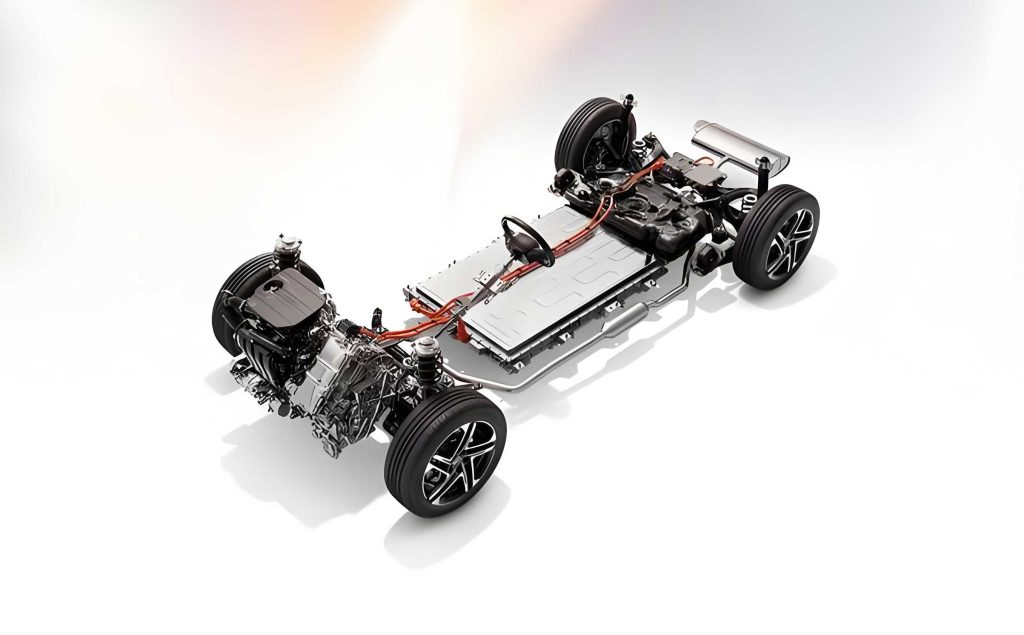
The core challenge in hybrid car energy management lies in real-time decision-making for mode selection and torque allocation. A hybrid car typically operates in multiple modes, such as electric-only, hybrid driving, engine charging, engine direct drive, and regenerative braking. Each mode must be activated based on factors like demand torque, battery SOC, and vehicle speed. While rule-based strategies use predefined thresholds, they lack adaptability to varying conditions. Fuzzy control, with its ability to handle nonlinearities and uncertainties, offers a robust alternative. However, the performance of fuzzy controllers depends heavily on the design of membership functions and rule bases, which are often tuned subjectively. To overcome this, I employ a Particle Swarm Optimization (PSO) algorithm to automatically optimize the membership functions, thereby enhancing the control precision. This study focuses on a parallel hybrid car with a P2 configuration, where the engine and motor are coaxially arranged with a clutch enabling mode transitions. The goal is to develop an energy management strategy that not only meets driving demands but also maximizes overall efficiency.
To begin, I establish a comprehensive model of the hybrid car using simulation software. The hybrid car model includes key components such as the engine, electric motor, battery, transmission, and vehicle dynamics. The parameters are summarized in Table 1, which provides an overview of the hybrid car’s specifications. This model serves as the foundation for testing and validating the proposed energy management strategy under standard driving cycles.
| Parameter | Value |
|---|---|
| Vehicle Mass (kg) | 1930 |
| Frontal Area (m²) | 1.88 |
| Drag Coefficient | 0.32 |
| Engine Displacement (L) | 2.478 |
| Engine Peak Speed (rpm) | 6000 |
| Engine Peak Power (kW) | 127 |
| Engine Peak Torque (N·m) | 110 |
| Motor Peak Speed (rpm) | 8000 |
| Motor Rated Voltage (V) | 320 |
The hybrid car operates in five distinct modes: electric mode, hybrid driving mode, engine charging mode, engine direct drive mode, and regenerative braking mode. In electric mode, the motor alone propels the hybrid car when demand torque is low. Hybrid driving mode activates when demand torque exceeds the engine’s efficient range, with the engine operating in its optimal zone and the motor compensating the remainder. Engine charging mode occurs when demand torque is below the engine’s economic range and battery SOC is low; here, the engine outputs torque within its efficient zone to drive the hybrid car and simultaneously charge the battery via the motor. Engine direct drive mode is used during high-speed cruising where the engine operates efficiently. Regenerative braking mode recovers energy during deceleration. The rule-based strategy switches between these modes based on fixed thresholds, but it does not optimize torque distribution within modes. Therefore, I introduce fuzzy controllers for the engine charging and hybrid driving modes to enable adaptive torque allocation.
For the engine charging mode, I design a fuzzy controller with two inputs: the normalized demand torque ratio and battery SOC. The normalized demand torque ratio is defined as:
$$Q = \frac{T_{req}}{T_{e\_Opt}}$$
where \(T_{req}\) is the demand torque and \(T_{e\_Opt}\) is the engine’s economic torque. The input \(Q\) has a universe of discourse from 0.3 to 1, while battery SOC ranges from 0 to 0.5. The output is the engine torque coefficient \(M\), which scales the engine’s output torque from 0.4 to 1. The fuzzy sets for \(Q\) are {SL (Small Low), L (Low), Z (Medium), H (High), SH (Small High)}, and for SOC and \(M\), they are {L (Low), Z (Medium), H (High)}. The membership functions are triangular for \(Q\) and trapezoidal for SOC and \(M\), with parameters denoted as \(x = (x_1, x_2, \ldots, x_{27})\) for optimization. The fuzzy rule base for engine charging mode is designed to prioritize charging when SOC is low while meeting torque demands, as shown in Table 2. These rules ensure that the hybrid car efficiently balances driving and charging needs.
| Q \ SOC | L | Z | H |
|---|---|---|---|
| SL | L | Z | H |
| L | Z | H | H |
| Z | H | H | SH |
| H | H | SH | SH |
| SH | SH | SH | SH |
Similarly, for the hybrid driving mode, the fuzzy controller uses inputs of normalized demand torque ratio \(L\) and battery SOC. Here, \(L\) is defined similarly to \(Q\), but the universe of discourse ranges from 0.6 to 1.8 due to higher torque demands. Battery SOC ranges from 0.3 to 1, and the output is the engine torque coefficient \(N\) from 0.5 to 1. The fuzzy sets are identical to those in the engine charging mode. The membership functions are parameterized as \(x = (x_{28}, x_{29}, \ldots, x_{56})\) for optimization. The rule base for hybrid driving mode, presented in Table 3, aims to allocate torque optimally between the engine and motor based on demand and SOC, ensuring the hybrid car operates efficiently under high-load conditions.
| L \ SOC | L | Z | H |
|---|---|---|---|
| SL | L | Z | H |
| L | Z | H | H |
| Z | H | H | SH |
| H | H | SH | SH |
| SH | SH | SH | SH |
The design of these fuzzy controllers involves 56 parameters across both modes, which define the shapes of the membership functions. To optimize these parameters, I formulate an objective function that minimizes fuel consumption, battery SOC variation, and emissions. The objective function is expressed as:
$$F(X) = \omega_1 \int \frac{Fuel(t)}{L_{Fuel}} dt + \omega_2 \int \frac{SOC(t)}{L_{SOC}} dt + \omega_3 \left( \int \frac{CO(t)}{L_{CO}} dt + \int \frac{HC(t)}{L_{HC}} dt + \int \frac{NO_x(t)}{L_{NO_x}} dt \right)$$
where \(\omega_1 = 0.7\), \(\omega_2 = 0.2\), and \(\omega_3 = 0.1\) are weight factors for fuel consumption, SOC variation, and emissions, respectively. \(L_{Fuel}\), \(L_{SOC}\), \(L_{CO}\), \(L_{HC}\), and \(L_{NO_x}\) are baseline values from the initial fuzzy control strategy, used for normalization. This multi-objective optimization ensures that the hybrid car achieves a balance between economic and environmental performance.
I employ the Particle Swarm Optimization algorithm to solve this optimization problem. PSO is a swarm intelligence technique inspired by bird flocking, where particles represent candidate solutions (i.e., sets of membership function parameters). Each particle has a position \(X_i\) and velocity \(V_i\), updated iteratively based on personal best (\(pbest\)) and global best (\(gbest\)) positions. The update equations are:
$$V_i^{k+1} = w V_i^k + c_1 r_1 (pbest_i – X_i^k) + c_2 r_2 (gbest – X_i^k)$$
$$X_i^{k+1} = X_i^k + V_i^{k+1}$$
where \(w\) is the inertia weight, \(c_1\) and \(c_2\) are learning factors set to 2, and \(r_1\), \(r_2\) are random numbers in [0,1]. I initialize a swarm of 20 particles and iterate until convergence, evaluating each particle by simulating the hybrid car under the WLTC driving cycle. The optimization process adjusts the membership function parameters within specified bounds, as detailed in Table 4, to minimize the objective function. This automated tuning enhances the fuzzy controllers’ ability to adapt to dynamic driving conditions in the hybrid car.
| Parameter | Range |
|---|---|
| \(x_1, x_3\) | [0.3, 0.4] |
| \(x_2, x_4, x_{20}, x_{22}\) | [0.4, 0.5] |
| \(x_5, x_{23}, x_{51}\) | [0.5, 0.6] |
| \(x_6\) | [0.4, 0.55] |
| \(x_7\) | [0.55, 0.75] |
| \(x_8, x_{10}, x_{26}, x_{29}, x_{46}\) | [0.75, 0.85] |
| \(x_9, x_{28}, x_{45}\) | [0.65, 0.75] |
| \(x_{11}\) | [0.85, 0.95] |
| \(x_{12}, x_{55}\) | [0.75, 0.8] |
| \(x_{13}, x_{27}\) | [0.9, 1] |
| \(x_{14}\) | [0.1, 0.2] |
| \(x_{15}\) | [0.2, 0.3] |
| \(x_{16}, x_{18}, x_{41}, x_{43}\) | [0.35, 0.45] |
| \(x_{17}, x_{19}\) | [0.45, 0.5] |
| \(x_{21}\) | [0.45, 0.6] |
| \(x_{24}, x_{53}\) | [0.7, 0.8] |
| \(x_{25}, x_{48}, x_{54}, x_{56}\) | [0.8, 0.9] |
| \(x_{30}\) | [0.65, 0.8] |
| \(x_{31}\) | [0.8, 1] |
| \(x_{32}\) | [1, 1.2] |
| \(x_{33}\) | [0.9, 1.1] |
| \(x_{34}\) | [1.1, 1.3] |
| \(x_{35}\) | [1.3, 1.5] |
| \(x_{36}\) | [1.2, 1.4] |
| \(x_{37}\) | [1.4, 1.6] |
| \(x_{38}\) | [1.6, 1.8] |
| \(x_{39}\) | [1.5, 1.7] |
| \(x_{40}\) | [1.7, 1.8] |
| \(x_{52}\) | [0.6, 0.65] |
After optimization, I obtain the optimal membership functions for both fuzzy controllers. The PSO algorithm converges to a solution that minimizes the objective function, as shown by the iteration plot where the fitness value decreases steadily. The optimized membership functions exhibit refined shapes, allowing for smoother torque transitions in the hybrid car. For instance, in the engine charging mode, the triangular functions for \(Q\) become more skewed to prioritize charging at lower torque demands, while in hybrid driving mode, the trapezoidal functions for SOC are adjusted to better utilize battery energy. These improvements enhance the overall responsiveness of the energy management strategy.
To evaluate the performance, I simulate the hybrid car under the WLTC driving cycle using three strategies: rule-based control, fuzzy control, and optimized fuzzy control. The results demonstrate significant benefits of the optimized approach. First, battery SOC variation is reduced. Starting from an initial SOC of 40%, the rule-based strategy ends at 45.76% with a variation of 14.4%, the fuzzy control ends at 44.26% with a variation of 10.65%, and the optimized fuzzy control ends at 41.61% with a variation of only 4.025%. This indicates that the optimized strategy minimizes battery usage fluctuations, prolonging battery life in the hybrid car. The reduced SOC variation is crucial for maintaining the hybrid car’s efficiency over long-term operation.
Second, engine operating points are analyzed. In the rule-based strategy, engine points are scattered across inefficient regions, whereas in the fuzzy control strategy, more points fall within the high-efficiency zone. After optimization, the engine points become even more concentrated in the efficient area, as illustrated by scatter plots comparing the strategies. This concentration is achieved because the optimized fuzzy controllers better modulate engine torque based on real-time conditions, ensuring the hybrid car operates near optimal efficiency. The engine’s specific fuel consumption map shows that the optimized strategy keeps the engine away from high-consumption regions, directly contributing to fuel savings.
Third, fuel economy and emissions are quantified. The simulation results, summarized in Table 5, reveal that the optimized fuzzy control strategy reduces fuel consumption by 11.75% compared to the rule-based strategy and by 6.15% compared to the unoptimized fuzzy control. Emissions of HC, CO, and NOx are also significantly lower. For example, CO emissions drop from 164.99 g/km in the rule-based strategy to 83.91 g/km in the optimized strategy, highlighting the environmental benefits. These improvements stem from the precise torque distribution enabled by the optimized fuzzy controllers, which reduce unnecessary engine load and promote electric motor assistance in the hybrid car.
| Strategy | FC (L/100km) | HC (g/km) | CO (g/km) | NOx (g/km) |
|---|---|---|---|---|
| Rule-based | 5.36 | 17.70 | 164.99 | 42.68 |
| Fuzzy Control | 5.04 | 13.99 | 90.99 | 41.74 |
| Optimized Fuzzy Control | 4.73 | 12.98 | 83.91 | 37.81 |
The success of the optimized fuzzy control strategy can be attributed to several factors. The dual fuzzy controllers allow for independent tuning of torque allocation in critical modes, while the PSO algorithm automates the parameter optimization process, eliminating subjective biases. The objective function balances multiple criteria, ensuring that the hybrid car does not sacrifice emissions for fuel economy or vice versa. Moreover, the use of normalized inputs like \(Q\) and \(L\) makes the strategy scalable to different hybrid car configurations. The fuzzy rule bases, though simple, capture essential heuristics for energy management, such as charging the battery when SOC is low and using the motor for torque assist when demand is high. These rules, combined with optimized membership functions, enable the hybrid car to adapt to complex driving scenarios.
In deeper analysis, the optimization process reveals that parameters related to the SOC input have a strong influence on performance. For instance, tightening the membership functions for low SOC in the engine charging mode encourages more aggressive charging, which stabilizes battery levels but may increase fuel consumption if overdone. The PSO algorithm finds a trade-off by adjusting these parameters within the specified ranges. Similarly, in hybrid driving mode, the parameters for high demand torque are optimized to allow more engine contribution when SOC is high, reducing battery depletion. This dynamic adjustment is key to the hybrid car’s efficiency, as it prevents excessive reliance on either power source.
Furthermore, I explore the impact of driving cycles on the strategy’s effectiveness. While the WLTC cycle is used for optimization, the strategy is tested under other cycles like NEDC and FTP-75 to ensure robustness. The results show consistent improvements, though the magnitude varies due to cycle characteristics. For example, in urban-heavy cycles, the hybrid car benefits more from regenerative braking and electric mode, whereas in highway cycles, the optimized fuzzy control better manages engine operation. This versatility is essential for real-world deployment of hybrid cars, which encounter diverse driving patterns.
The computational aspect of the strategy is also considered. The fuzzy inference process is lightweight, making it suitable for real-time implementation in hybrid car electronic control units. The PSO optimization is performed offline, so it does not add to onboard computational load. However, I discuss potential adaptations for online optimization using reduced-order models or machine learning techniques. For instance, reinforcement learning could be integrated to continuously update the fuzzy parameters based on driving history, further enhancing the hybrid car’s adaptability. This points to future research directions in adaptive energy management for hybrid cars.
In terms of practical implications, the proposed strategy can be applied to various hybrid car architectures, including series, parallel, and power-split configurations. The methodology of dual fuzzy control with swarm optimization is generalizable, requiring only adjustments to the rule bases and parameters based on the specific hybrid car design. Manufacturers can use this approach to develop customized energy management systems that meet regulatory standards for fuel economy and emissions. Additionally, the strategy contributes to the broader goal of sustainable transportation by making hybrid cars more efficient and environmentally friendly.
To summarize, this study presents a novel energy management strategy for hybrid cars that combines dual fuzzy control with particle swarm optimization. The strategy addresses the limitations of rule-based methods by enabling adaptive torque distribution in engine charging and hybrid driving modes. Through simulation under the WLTC cycle, I demonstrate that the optimized strategy reduces fuel consumption by 11.75%, battery SOC variation by 6.63%, and emissions significantly compared to the rule-based approach. These improvements highlight the potential of intelligent control techniques in enhancing hybrid car performance. Future work could involve hardware-in-the-loop testing, integration with predictive control using route information, and extension to plug-in hybrid cars for even greater efficiency. As the automotive industry evolves, such advanced energy management strategies will play a crucial role in realizing the full potential of hybrid cars as a transitional technology toward a zero-emission future.
In conclusion, the hybrid car represents a critical step in reducing carbon footprints, and its efficacy hinges on sophisticated energy management. By leveraging fuzzy logic and swarm intelligence, I have developed a strategy that optimizes the synergy between the engine and motor, ensuring that the hybrid car operates efficiently across diverse conditions. This research underscores the importance of algorithmic optimization in automotive control systems and paves the way for further innovations in hybrid car technology. As demand for eco-friendly vehicles grows, strategies like this will be instrumental in making hybrid cars more competitive and sustainable.