
As a researcher in the field of electric vehicle technology, I have dedicated significant effort to understanding the critical role of battery systems in modern transportation. The rapid adoption of electric vehicles (EVs) worldwide, particularly in regions like China, underscores the importance of advancing battery technology to address global challenges such as climate change and fossil fuel depletion. In this comprehensive analysis, I will delve into the performance aspects of EV power batteries, focusing on key metrics like energy density, power density, cycle life, and safety. I will also explore the factors influencing these characteristics and propose effective countermeasures to enhance battery performance. Throughout this discussion, I will emphasize the significance of China EV battery innovations and the broader EV power battery sector, using tables and mathematical formulations to summarize complex concepts. The insights presented here are based on extensive research and aim to contribute to the sustainable development of the EV industry.
The transition from traditional internal combustion engine vehicles to electric vehicles represents a paradigm shift in automotive technology. One of the most striking differences lies in the power source: EVs rely on rechargeable batteries to drive electric motors, whereas conventional vehicles depend on fossil fuels. This fundamental distinction impacts various aspects of vehicle performance, including efficiency, torque delivery, and environmental footprint. In my analysis, I have observed that EVs, particularly those utilizing advanced China EV battery systems, offer instantaneous torque output, leading to superior acceleration compared to traditional cars. For instance, the torque $T$ in an EV motor can be expressed as $T = k \cdot I$, where $k$ is a motor constant and $I$ is the current, allowing for rapid response from a standstill. Additionally, EVs exhibit higher energy conversion efficiencies, often exceeding 85%, as opposed to the 20% typical of internal combustion engines. This efficiency, however, can diminish at high speeds due to motor inefficiencies and battery limitations, highlighting the need for robust EV power battery designs. To illustrate these differences, I have compiled a comparative table below.
| Parameter | Electric Vehicles (EVs) | Traditional Vehicles |
|---|---|---|
| Power Source | EV power battery (e.g., lithium-ion) | Fossil fuels (gasoline/diesel) |
| Energy Conversion Efficiency | Up to 85% or higher | Approximately 20% |
| Instantaneous Torque | High, enabling fast acceleration | Lower, dependent on engine RPM |
| Noise and Vibration | Minimal, providing a smooth ride | Significant, especially at high speeds |
| Environmental Impact | Lower emissions, reliant on electricity source | Higher greenhouse gas emissions |
In the context of China EV battery development, the focus on improving battery performance has intensified. The EV power battery is not just an energy storage unit; it is the heart of the vehicle, dictating range, power output, and overall reliability. As I explore the specific performance metrics, it becomes evident that advancements in materials and management systems are pivotal. For example, the energy density of a battery, defined as the energy stored per unit mass or volume, directly influences the driving range. Mathematically, energy density $E_d$ can be represented as $E_d = \frac{E}{m}$ or $E_d = \frac{E}{V}$, where $E$ is the energy capacity, $m$ is the mass, and $V$ is the volume. Higher energy density, as seen in some China EV battery models, allows for longer distances on a single charge, which is crucial for consumer adoption. Similarly, power density $P_d$, given by $P_d = \frac{P}{m}$ or $P_d = \frac{P}{V}$, where $P$ is the power output, affects acceleration and hill-climbing ability. A high power density enables the EV power battery to deliver bursts of energy efficiently, enhancing dynamic performance.
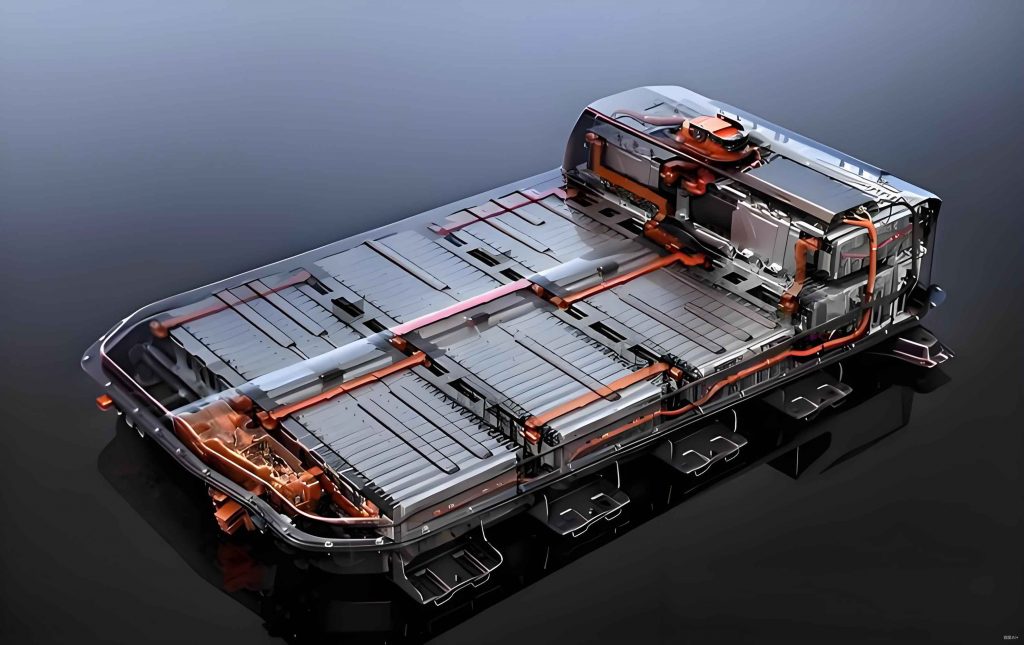
Cycle life and safety are equally critical in evaluating EV power battery systems. Cycle life refers to the number of charge-discharge cycles a battery can undergo before its capacity degrades significantly. In my research, I have modeled cycle life using equations that account for degradation mechanisms, such as $C_n = C_0 \cdot e^{-k \cdot n}$, where $C_n$ is the capacity after $n$ cycles, $C_0$ is the initial capacity, and $k$ is a degradation constant. For China EV battery technologies, extending cycle life is essential for reducing long-term costs and environmental impact. Safety, on the other hand, involves preventing hazards like thermal runaway, which can occur due to overcharging, short circuits, or high temperatures. The heat generation in a battery can be described by $Q = I^2 \cdot R \cdot t$, where $I$ is the current, $R$ is the internal resistance, and $t$ is time. Effective thermal management is vital to mitigate these risks in EV power battery packs. To provide a clearer overview, I have summarized key performance metrics in the table below, highlighting the interplay between these factors.
| Metric | Definition | Impact on EV Performance | Typical Values for China EV Battery |
|---|---|---|---|
| Energy Density | Energy stored per unit mass or volume | Determines driving range; higher values enable longer trips | 150-300 Wh/kg for lithium-ion batteries |
| Power Density | Power output per unit mass or volume | Affects acceleration and load handling; crucial for dynamic driving | 500-2000 W/kg depending on battery type |
| Cycle Life | Number of cycles before capacity drops to 80% of initial | Influences battery longevity and total cost of ownership | 1000-5000 cycles for advanced lithium-ion |
| Safety | Resistance to thermal runaway and other hazards | Ensures user protection and reliability under various conditions | Depends on materials and management systems |
Several factors influence the performance of EV power batteries, and in my analysis, I have identified battery materials, structure, management systems, and charging strategies as primary contributors. Starting with materials, the choice of cathode and anode substances directly affects energy density and safety. For instance, lithium nickel manganese cobalt oxide (NMC) cathodes, commonly used in China EV battery production, offer high energy density but may pose safety risks if not properly managed. The overall performance can be optimized by selecting materials with high ionic conductivity and stability. The structure of the battery, such as cylindrical versus prismatic designs, also plays a role; for example, cylindrical cells may provide better thermal management due to their geometry, which can be described using heat transfer equations like Fourier’s law $q = -k \nabla T$, where $q$ is the heat flux, $k$ is thermal conductivity, and $\nabla T$ is the temperature gradient. Furthermore, the battery management system (BMS) is integral to monitoring and controlling parameters like state of charge (SOC) and state of health (SOH). In advanced EV power battery systems, the BMS uses algorithms to balance cells and prevent over-discharge, extending cycle life. Charging strategies, such as constant current-constant voltage (CC-CV) protocols, impact battery health; for example, the charging efficiency $\eta_c$ can be defined as $\eta_c = \frac{E_{stored}}{E_{input}} \times 100\%$, where $E_{stored}$ is the energy stored and $E_{input}$ is the energy supplied.
To address the challenges in EV power battery performance, I propose several countermeasures based on current research and development trends. First, accelerating the study of new battery materials is crucial. This includes exploring high-energy-density cathodes like lithium-rich layered oxides and silicon-based anodes, which can significantly boost the capabilities of China EV battery systems. Solid-state batteries, which replace liquid electrolytes with solid counterparts, offer enhanced safety and energy density; their development can be guided by equations modeling ion transport, such as the Nernst-Planck equation $J = -D \nabla c – \frac{zF}{RT} D c \nabla \phi$, where $J$ is the ion flux, $D$ is the diffusion coefficient, $c$ is concentration, $z$ is charge number, $F$ is Faraday’s constant, $R$ is the gas constant, $T$ is temperature, and $\phi$ is the electric potential. Second, improving the battery management system is essential for optimizing performance. A smart BMS can implement real-time monitoring using sensors and predictive analytics, such as Kalman filters for SOC estimation: $\hat{x}_{k|k} = \hat{x}_{k|k-1} + K_k(z_k – H_k \hat{x}_{k|k-1})$, where $\hat{x}$ is the state estimate, $K$ is the Kalman gain, $z$ is the measurement, and $H$ is the observation matrix. This enhances the reliability of EV power battery packs, especially in demanding conditions. Additionally, thermal management systems should be integrated to dissipate heat effectively, using methods like liquid cooling, which can be analyzed through computational fluid dynamics simulations.
In conclusion, the evolution of EV power battery technology is central to the success of electric vehicles, particularly in markets like China where innovation is rapidly advancing. Through my analysis, I have highlighted the importance of energy density, power density, cycle life, and safety in determining overall performance. Factors such as materials, structure, and management systems play pivotal roles, and addressing them through research and development can lead to significant improvements. The ongoing efforts in China EV battery sectors are commendable, but continuous innovation is necessary to overcome existing limitations. By fostering collaboration between academia and industry, we can accelerate the adoption of EVs and contribute to a sustainable future. As I reflect on this journey, it is clear that the EV power battery will remain a focal point of automotive engineering, driving progress toward cleaner and more efficient transportation solutions.
To further elaborate on the mathematical aspects, let me provide additional formulas that are relevant to EV power battery analysis. For instance, the overall efficiency of a battery system can be expressed as $\eta_{total} = \eta_{charge} \cdot \eta_{discharge} \cdot \eta_{BMS}$, where each component efficiency contributes to the net performance. In terms of cycle life modeling, the Arrhenius equation is often used to describe temperature-dependent degradation: $k = A e^{-E_a / (RT)}$, where $k$ is the rate constant, $A$ is the pre-exponential factor, $E_a$ is the activation energy, $R$ is the universal gas constant, and $T$ is absolute temperature. This helps in designing thermal management strategies for China EV battery systems. Moreover, the power capability of a battery can be related to its internal resistance $R_i$ by $P_{max} = \frac{V^2}{4R_i}$ for maximum power transfer, which is critical for optimizing EV power battery designs in high-performance applications.
In summary, the integration of advanced materials, intelligent management systems, and robust structural designs will define the next generation of EV power batteries. As we continue to push the boundaries, the role of China EV battery innovations cannot be overstated; they are setting benchmarks for the global industry. I encourage ongoing research and investment in this field to unlock the full potential of electric mobility.