
In recent years, the electric vehicle industry has experienced rapid growth, with China EV markets leading the way in production and adoption. As a researcher focused on automotive energy systems, I have observed how electric vehicle technology has evolved to offer smarter and more convenient driving experiences, attracting increasing consumer interest. According to recent data, China EV sales have consistently set records, highlighting the nation’s pivotal role in the global shift toward sustainable transportation. However, despite these advancements, range anxiety remains a significant concern for electric vehicle users, primarily due to limitations in battery life and overall energy efficiency. Addressing this issue requires a deep understanding of energy consumption patterns, which is where energy flow analysis comes into play. This study delves into the energy flow of a pure electric vehicle, examining how energy is distributed and consumed during operation to identify optimization opportunities for enhancing range and reducing能耗.
Energy flow analysis in an electric vehicle is fundamentally based on the principle of energy conservation, which states that energy cannot be created or destroyed, only transformed or transferred. In the context of a China EV, this involves tracking the path of energy from the battery through various components, including the drive system, auxiliary devices, and recovery mechanisms. The primary focus here is on the discharge path, where energy is expended during vehicle operation. By decomposing and analyzing this flow, we can quantify the real-time energy consumption of key components, providing insights into the overall distribution of energy use. This process is crucial for informing design choices, such as selecting appropriate electrical loads and improving system efficiency, ultimately contributing to extended driving range for electric vehicles.
The significance of energy flow analysis lies in its ability to reveal inefficiencies and guide technological improvements. For instance, by testing actual energy consumption under various conditions, we can pinpoint which components contribute most to energy loss. This knowledge empowers manufacturers to make data-driven decisions, such as optimizing motor efficiency or enhancing thermal management systems, thereby reducing the overall energy footprint of electric vehicles. In China EV development, where competition is intense and consumer demands are high, such analyses are indispensable for staying ahead in the market. Moreover, as global emphasis on sustainability grows, refining energy flow in electric vehicles aligns with broader environmental goals, such as reducing carbon emissions and conserving resources.
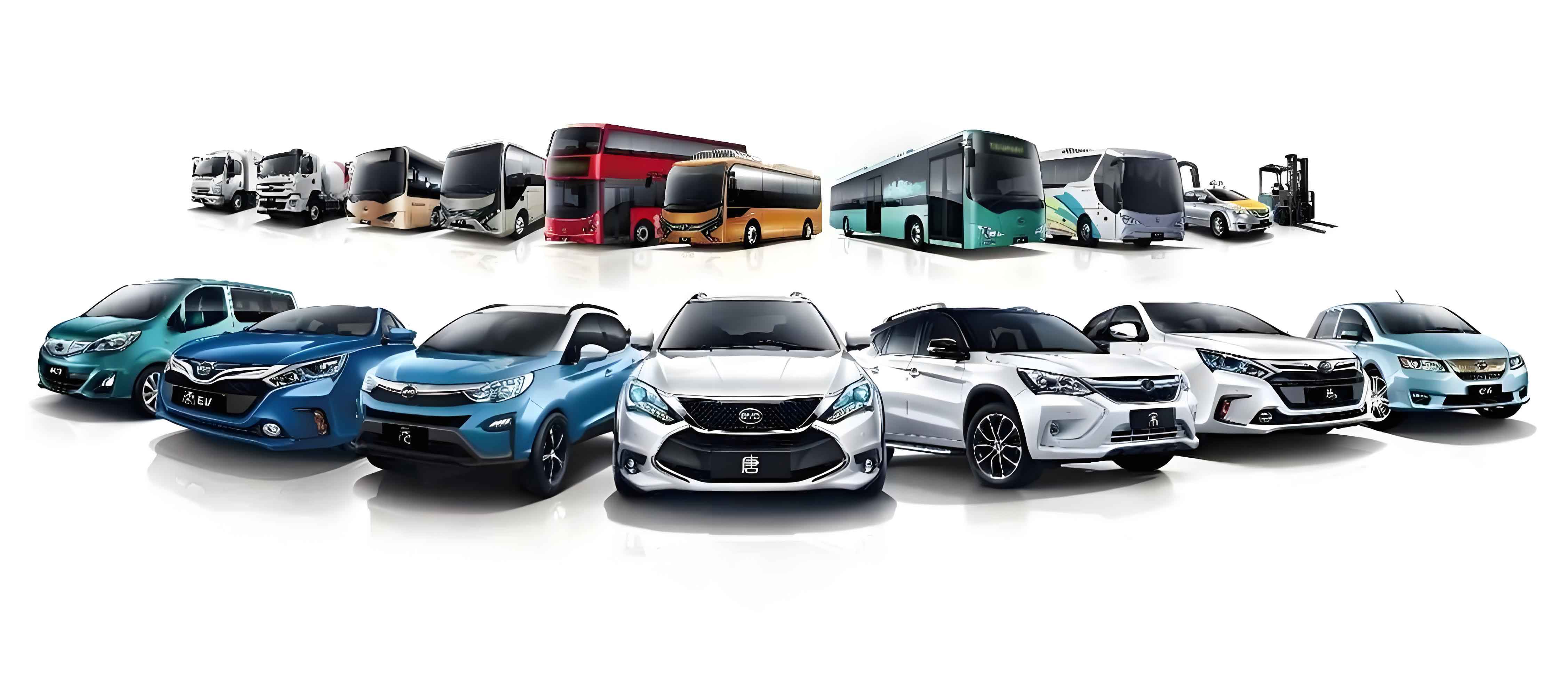
To conduct a detailed energy flow analysis, we selected a pure electric light-duty vehicle as the test subject, representative of common China EV models. This vehicle features a 4×2 rear-wheel drive configuration, with key energy-consuming components summarized in Table 1. The powertrain includes a lithium iron phosphate battery with liquid cooling, a 130kW permanent magnet synchronous motor also liquid-cooled, and an integrated four-in-one high-voltage controller. The air conditioning system employs a high-voltage electric compressor for cooling and a high-voltage PTC heater for warming, serving both the cabin and battery. This setup mirrors typical configurations in modern electric vehicles, allowing for relevant insights into energy distribution.
| Component | Operating Voltage |
|---|---|
| Drive Motor | AC 230V |
| Air Conditioning Compressor | DC 200–450V |
| PTC Heater | DC 250–450V |
| 12V Electrical Devices | DC 12V |
The testing was performed in a controlled environment using a chassis dynamometer equipped with a temperature-regulated chamber, as outlined in Table 2. This setup simulates real-world driving conditions while allowing precise measurement of energy flows. Key instruments included a power analyzer for capturing electrical parameters, a temperature data logger for monitoring thermal effects, and a computer for data acquisition and analysis. Such equipment ensures accurate and repeatable results, which are essential for validating energy flow models in electric vehicle research.
| Equipment |
|---|
| Environmental Chamber |
| Chassis Dynamometer |
| Power Analyzer |
| Temperature Data Logger |
| Computer |
For the test cycle, we adopted the China Light-duty Vehicle Test Cycle (CLTC), specifically the CLTC-C variant for commercial vehicles, which reflects typical driving patterns in China EV usage scenarios. This cycle spans 1800 seconds, covering a distance of 16.43 km with a maximum speed of 92 km/h and an average speed of 41.23 km/h. It is divided into low-, medium-, and high-speed segments, mimicking urban and highway driving with frequent stops and starts. Data collection points were strategically placed to measure energy consumption at critical junctions, as detailed in Table 3. To assess the impact of environmental factors, tests were conducted under high-temperature, normal-temperature, and low-temperature conditions, following the standardized procedures in GB/T 18386.1-2021 for electric vehicle energy consumption and range testing.
| Data Point |
|---|
| Power Battery Output |
| Air Conditioning Compressor High-Voltage Input |
| PTC Heater High-Voltage Input |
| DCDC 12V Low-Voltage Output |
| Motor U/V/W High-Voltage Input |
The test results, summarized in Table 4, reveal the energy consumption in watt-hours (Wh) for each component under different temperature conditions. The total energy discharge from the battery represents the overall vehicle consumption, while separate values are provided for the drive motor, 12V electrical devices, and air conditioning system. Under normal temperatures, the electric vehicle exhibited the lowest energy use, with high and low temperatures leading to increased consumption. This trend underscores the sensitivity of China EV performance to environmental factors, particularly in extreme climates.
| Condition | Normal Temperature | High Temperature | Low Temperature |
|---|---|---|---|
| Battery Discharge | 3566 | 3685 | 4906 |
| Motor Consumption | 3046 | 3053 | 3349 |
| 12V Device Consumption | 166 | 209 | 127 |
| Air Conditioning Consumption | 155 | 223 | 1265 |
Under normal temperature conditions, the energy distribution among major components can be expressed mathematically. Let $$E_{total}$$ represent the total energy discharged from the battery, and $$E_{motor}$$, $$E_{12V}$$, and $$E_{aircon}$$ denote the energy consumed by the drive motor, 12V devices, and air conditioning system, respectively. The relationship is given by:
$$E_{total} = E_{motor} + E_{12V} + E_{aircon} + E_{loss}$$
where $$E_{loss}$$ accounts for any unmeasured losses, such as heat dissipation or inefficiencies in energy conversion. From the data, the drive motor accounts for over 90% of the total consumption, highlighting its dominance in the energy flow of this electric vehicle. This can be quantified using the efficiency ratio $$\eta_{motor}$$ for the motor, defined as:
$$\eta_{motor} = \frac{P_{out}}{P_{in}}$$
where $$P_{out}$$ is the mechanical power output and $$P_{in}$$ is the electrical power input. In practice, $$\eta_{motor}$$ varies with load and temperature, but in this test, it remained relatively stable under normal and high temperatures, with a slight decrease in low temperatures due to increased resistance and lubricant viscosity. The energy share for each component under normal temperature is illustrated through the equation:
$$E_{motor} = 3046 \, \text{Wh}, \quad E_{12V} = 166 \, \text{Wh}, \quad E_{aircon} = 155 \, \text{Wh}$$
Thus, the percentage contribution is calculated as:
$$\text{Motor Share} = \frac{3046}{3566} \times 100\% \approx 85.4\%$$
$$\text{12V Share} = \frac{166}{3566} \times 100\% \approx 4.7\%$$
$$\text{Air Conditioning Share} = \frac{155}{3566} \times 100\% \approx 4.3\%$$
These figures emphasize that optimizing the drive system is paramount for improving the overall efficiency of electric vehicles, especially in the context of China EV advancements where range extension is a key goal.
Environmental temperature profoundly influences energy consumption, as shown in the comparative analysis of component energy use. The drive motor’s energy consumption shows minimal variation between normal and high temperatures, but increases in low temperatures due to factors like higher electrical resistance and reduced lubricant efficiency. Mathematically, this can be modeled as a temperature-dependent function. Let $$T$$ represent the ambient temperature, and $$E_{motor}(T)$$ denote the motor energy consumption. A simple linear approximation might be:
$$E_{motor}(T) = E_{motor,0} + k (T – T_0)$$
where $$E_{motor,0}$$ is the baseline consumption at reference temperature $$T_0$$, and $$k$$ is a coefficient reflecting temperature sensitivity. From the data, $$E_{motor}$$ increases from 3046 Wh at normal temperature to 3349 Wh at low temperature, indicating a positive $$k$$ value in colder conditions. This aligns with typical behavior in electric vehicles, where cold weather impairs battery and motor performance.
For the 12V electrical devices, energy consumption is more volatile with temperature changes. In high temperatures, cooling demands elevate the workload of fans and pumps, leading to higher energy use, whereas low temperatures reduce this consumption. This can be expressed as:
$$E_{12V}(T) = E_{12V,0} + m (T – T_0)$$
with $$m$$ being a coefficient that is positive in this case, as $$E_{12V}$$ rises from 166 Wh at normal temperature to 209 Wh at high temperature. However, the absolute change is small due to the low overall share of 12V devices in total energy flow.
The air conditioning system exhibits the most dramatic temperature dependence, with energy consumption soaring in low temperatures due to PTC heater activation. Specifically, $$E_{aircon}$$ jumps from 155 Wh at normal temperature to 1265 Wh at low temperature, representing an increase of approximately 816%. This surge can be modeled using an exponential relationship for heating demands:
$$E_{aircon}(T) = A e^{B(T – T_c)} + C$$
where $$A$$, $$B$$, and $$C$$ are constants, and $$T_c$$ is a critical temperature threshold. In practical terms, this highlights the inefficiency of resistive heating in electric vehicles and underscores the need for alternatives like heat pump technology to mitigate energy drains in cold climates. For China EV markets, where seasonal temperature variations are significant, addressing this issue is crucial for maintaining consistent range year-round.
To further analyze the energy flow, we can derive overall system efficiency. The total energy efficiency $$\eta_{total}$$ of the electric vehicle is defined as the ratio of useful energy output to total energy input:
$$\eta_{total} = \frac{E_{useful}}{E_{total}}$$
where $$E_{useful}$$ includes energy used for propulsion and essential auxiliaries. In this test, $$E_{useful}$$ can be approximated as $$E_{motor}$$ for traction, but in reality, some motor energy is lost as heat. Thus, a more refined efficiency measure for the drive train is:
$$\eta_{drive} = \frac{E_{mechanical}}{E_{electrical}}$$
with $$E_{mechanical}$$ estimated from the dynamometer readings. Under normal temperature, $$\eta_{drive}$$ might reach 85-90% for a well-designed electric vehicle, but losses accumulate in other components, reducing $$\eta_{total}$$. For instance, the air conditioning system’s efficiency in heating mode is low, as PTC heaters convert electricity directly to heat with near-unity efficiency but high energy cost, leading to overall system inefficiencies.
In conclusion, energy flow analysis provides a comprehensive framework for understanding and optimizing electric vehicle performance. Through this study, we identified that the drive system is the largest energy consumer, and environmental temperature extremes significantly elevate consumption, particularly due to heating demands. For China EV development, focusing on enhancing drive system efficiency—through advanced motor designs, reduced mechanical losses, and regenerative braking—can yield substantial gains. Additionally, replacing or optimizing PTC heaters with technologies like heat pumps or improved control strategies can curtail energy use in cold weather. This research not only charts a path for reducing energy consumption in electric vehicles but also reinforces the importance of holistic design approaches in achieving sustainable transportation solutions. As the electric vehicle industry evolves, continuous energy flow monitoring will be vital for innovating and meeting consumer expectations for range and reliability.