
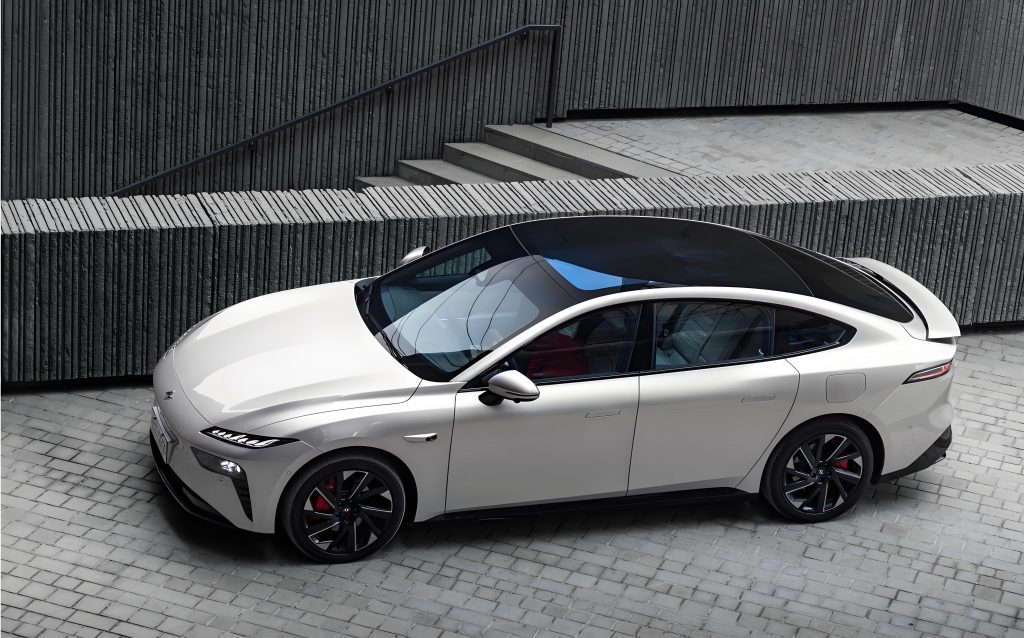
In the context of global environmental awareness and the pursuit of sustainable energy, the electric vehicle car has emerged as a pivotal green transportation solution, gaining widespread adoption. The performance and lifespan of batteries in an electric vehicle car are highly sensitive to temperature; both overheating and excessive cooling can lead to capacity degradation, reduced charging and discharging efficiency, and even safety hazards. Therefore, an efficient battery cooling system is decisive for the performance and safety of an electric vehicle car. Microchannel heat exchangers, with their compact structure and high heat transfer efficiency, are increasingly utilized in electric vehicle car battery cooling systems. In this study, we delve into the performance optimization of these heat exchangers, aiming to enhance the overall performance of electric vehicle cars, address battery thermal management challenges, and promote healthy industry development. Our focus is on systematically analyzing the structure and heat transfer characteristics of microchannel heat exchangers, explaining their working mechanisms and application status in battery cooling systems, exploring key factors affecting performance, and proposing corresponding optimization strategies along with methods for effect evaluation. This research seeks to provide a scientific basis for the design and improvement of battery cooling systems in the field of thermal power engineering for electric vehicle cars, thereby boosting cooling efficiency, ensuring stable and safe battery operation, and advancing the sustainable development of the electric vehicle car industry.
Microchannel heat exchangers consist of numerous microchannels with dimensions ranging from tens to hundreds of micrometers, offering a compact structure and a heat transfer area per unit volume far exceeding that of traditional heat exchangers. The channel shapes vary, including rectangular, circular, and triangular geometries, each influencing fluid flow and heat transfer characteristics differently. Rectangular microchannels are commonly used due to ease of fabrication and relatively high heat transfer efficiency. Regarding heat transfer properties, fluid within microchannels is often in laminar or transitional flow regimes, with thin boundary layers, relying primarily on conduction and convection for heat transfer. The small channel dimensions increase the contact area between the fluid and the wall, and the relatively high fluid velocity collectively enhances the heat transfer coefficient, while maintaining low flow resistance. This allows efficient heat exchange with minimal pump power, reducing system energy consumption. In the battery cooling system of an electric vehicle car, microchannel heat exchangers dissipate battery heat through coolant circulation. Based on heat conduction and convective heat transfer theory, heat generated by the battery is conducted through the casing to the coolant, which then exchanges heat with the channel walls as it flows through the microchannels, ultimately transferring heat to the external environment. Currently, many electric vehicle car manufacturers employ battery cooling solutions based on microchannel heat exchangers. In some high-end models, microchannel heat exchangers collaborate with other thermal management components like radiators and refrigeration systems to form complex and efficient battery thermal management systems. However, in practical operation, issues such as suboptimal heat transfer efficiency and uneven coolant distribution persist, constraining the overall performance of the battery cooling system in an electric vehicle car.
To quantitatively understand the heat transfer process, we consider the fundamental heat transfer equation for convection in microchannels. The heat transfer rate \( Q \) can be expressed as:
$$ Q = h A \Delta T $$
where \( h \) is the convective heat transfer coefficient, \( A \) is the heat transfer area, and \( \Delta T \) is the temperature difference between the battery surface and the coolant. For microchannels, \( h \) is influenced by factors such as fluid properties, flow velocity, and channel geometry. The Nusselt number \( Nu \), which characterizes convective heat transfer, is given by:
$$ Nu = \frac{h D_h}{k} $$
Here, \( D_h \) is the hydraulic diameter of the microchannel, and \( k \) is the thermal conductivity of the coolant. In laminar flow, for rectangular microchannels, \( Nu \) can be approximated as constant for fully developed flow, but it varies with aspect ratio. For instance, for a rectangular channel with aspect ratio \( \alpha = \frac{width}{height} \), the Nusselt number may be expressed empirically. The flow resistance, represented by the pressure drop \( \Delta P \), is crucial for system能耗 and is described by the Darcy-Weisbach equation:
$$ \Delta P = f \frac{L}{D_h} \frac{\rho v^2}{2} $$
where \( f \) is the friction factor, \( L \) is the channel length, \( \rho \) is the coolant density, and \( v \) is the flow velocity. For laminar flow in microchannels, \( f \) can be related to the Reynolds number \( Re = \frac{\rho v D_h}{\mu} \), with \( \mu \) being the dynamic viscosity. Typically, \( f = \frac{C}{Re} \), where \( C \) is a constant depending on channel shape. These formulas underscore the trade-offs between heat transfer enhancement and flow resistance in microchannel design for electric vehicle car battery cooling.
Several key factors affect the performance of microchannel heat exchangers in battery cooling systems for electric vehicle cars. First, the structural parameters of microchannels significantly influence performance. Dimensions such as channel width, height, and length directly relate to fluid flow state and heat transfer efficiency. Smaller dimensions can increase the heat transfer area but may elevate flow resistance. Channel shape also alters fluid distribution and heat transfer characteristics; under identical flow conditions, different shapes yield varying heat transfer coefficients and flow resistance. To illustrate, we summarize the effects of common channel shapes in Table 1.
| Channel Shape | Typical Nusselt Number (Nu) Range | Friction Factor (f) Characteristics | Remarks for Electric Vehicle Car Application |
|---|---|---|---|
| Rectangular | 3.0 – 8.0 | Moderate, depends on aspect ratio | Widely used due to balance of performance and manufacturability |
| Circular | 3.66 (fully developed laminar) | Lowest for given hydraulic diameter | Offers low pressure drop but may have lower area density |
| Triangular | 2.5 – 5.0 | Higher due to sharp corners | Can enhance mixing but increases pumping power |
Second, the physical properties of the coolant profoundly impact performance. Specific heat capacity \( c_p \), a key parameter measuring the coolant’s ability to absorb heat, is crucial; a higher \( c_p \) means more heat absorbed per unit mass for the same temperature rise. In electric vehicle car battery cooling, coolants with high \( c_p \) effectively absorb substantial heat from batteries, slowing temperature rise and maintaining optimal operating conditions. Thermal conductivity \( k \) indicates the efficiency of heat conduction; higher \( k \) enables faster heat transfer within the coolant, accelerating heat movement from the battery to the microchannel walls and strengthening overall heat exchange. This allows the microchannel heat exchanger to remove more heat per unit time, improving cooling efficiency. Viscosity \( \mu \) plays a vital role in flow characteristics. Lower viscosity enhances fluidity, reducing resistance in microchannels and facilitating smooth circulation, which lowers pump energy consumption. However, excessively low viscosity may lead to uneven coolant distribution, impairing heat transfer, while high viscosity significantly increases flow resistance, raising pump power and potentially reducing flow velocity, thus weakening heat transfer capability. We compare typical coolant properties in Table 2.
| Coolant Type | Specific Heat Capacity \( c_p \) (J/kg·K) | Thermal Conductivity \( k \) (W/m·K) | Dynamic Viscosity \( \mu \) (mPa·s at 25°C) | Suitability for Microchannel Systems |
|---|---|---|---|---|
| Water | 4180 | 0.60 | 0.89 | Excellent heat transfer but may freeze or corrode |
| Ethylene Glycol-Water (50:50) | 3500 | 0.40 | 3.5 | Good antifreeze properties, moderate performance |
| Propylene Glycol-Water (50:50) | 3600 | 0.38 | 4.2 | Less toxic, slightly lower conductivity |
| Dielectric Fluids (e.g., PAO) | 2200 | 0.15 | 5.0 | Electrically insulating, but poorer heat transfer |
| Nanofluids (e.g., water with Cu nanoparticles) | ~4200 | ~0.70 | ~1.2 | Enhanced conductivity, but stability challenges |
Coolant flow velocity is another critical factor. Appropriately increasing velocity enables faster removal of absorbed heat and enhances convective heat transfer between the coolant and microchannel walls, strengthening heat transfer. However, excessively high velocity causes a sharp rise in flow resistance, significantly increasing pump power consumption and potentially leading to coolant leakage, compromising system stability and reliability. The heat generation characteristics of the battery are also pivotal. Different battery types exhibit varying heat generation rates and distributions during charging and discharging. These characteristics determine the amount and distribution of heat that the cooling system must remove, so designing microchannel heat exchangers must account for battery heat generation to ensure the system meets散热需求. For lithium-ion batteries commonly used in electric vehicle cars, the heat generation rate \( \dot{Q}_{battery} \) can be modeled using empirical or electrochemical models. A simplified form considers ohmic heating and reversible entropic heat:
$$ \dot{Q}_{battery} = I^2 R + I T \frac{\partial U}{\partial T} $$
where \( I \) is the current, \( R \) is the internal resistance, \( T \) is the absolute temperature, and \( \frac{\partial U}{\partial T} \) is the temperature coefficient of the open-circuit voltage. This highlights the dynamic nature of heat generation in an electric vehicle car battery, necessitating adaptive cooling strategies.
To optimize the performance of microchannel heat exchangers in electric vehicle car battery cooling systems, we propose several strategies. For microchannel structural parameters, we employ a combination of numerical simulation and experimental studies to analyze microchannels with different parameters and explore optimal combinations of channel size and shape. Under the premise of maintaining reasonable flow resistance, we aim to increase the heat transfer area and improve efficiency. For instance, using variable cross-section microchannel designs that adjust dimensions based on fluid temperature and velocity variations along the channel can achieve more uniform heat transfer. The heat transfer enhancement can be quantified by the performance evaluation criterion (PEC), often defined as the ratio of heat transfer improvement to pressure drop penalty:
$$ PEC = \frac{Nu / Nu_0}{(f / f_0)^{1/3}} $$
where \( Nu_0 \) and \( f_0 \) are reference values for a baseline design. Optimizing channel geometry aims to maximize PEC for electric vehicle car applications.
Regarding coolants, selecting appropriate coolants and optimizing their physical properties is essential. We are developing new coolants with higher specific heat capacity and thermal conductivity to enhance散热能力. By adding additives or using nanofluids, we can adjust coolant viscosity to ensure good fluidity while reducing flow resistance. For example, dispersing copper oxide nanoparticles in water can increase thermal conductivity by up to 20%, as shown in Table 2, though stability must be addressed. Rational control of coolant velocity is achieved by optimizing cooling system管路布局 and pump selection to ensure uniform coolant distribution in microchannels and maximize散热功效. The optimal velocity \( v_{opt} \) can be derived from balancing heat transfer and pressure drop considerations. Using the trade-off between \( Nu \) and \( f \), we can solve for velocity that minimizes total energy consumption, including pump work. A simplified objective function \( J \) for an electric vehicle car cooling system might be:
$$ J = \dot{Q}_{cooling} – \beta \cdot P_{pump} $$
where \( \dot{Q}_{cooling} \) is the cooling capacity, \( P_{pump} \) is the pump power, and \( \beta \) is a weighting factor. Maximizing \( J \) leads to an optimal operating point.
Constructing accurate battery heat generation models is core to achieving efficient battery cooling in an electric vehicle car. When developing models, we integrate multiple factors such as battery type, charge-discharge rate, and ambient temperature. Through in-depth study of internal electrochemical reactions, combined with experimental data and theoretical analysis, we apply mathematical modeling to precisely depict heat generation patterns under different operating conditions. These models can accurately predict heat generation rates and distribution during charging and discharging, providing key basis for散热 strategy formulation. Real-time monitoring of battery temperature and heat generation relies on high-precision temperature sensors and data acquisition systems. By deploying sensors at critical locations in the battery pack, we obtain real-time temperature information from various battery parts and swiftly transmit data to the control system. Analyzing this real-time data allows直观了解 of heat generation status and prompt detection of abnormal temperature zones. Based on battery heat generation models and real-time monitoring data, we dynamically adjust cooling system operating parameters according to actual heat generation. When battery heat generation intensifies, the intelligent control system automatically increases coolant flow rate, elevating velocity to enhance散热效果; if battery temperature is low, the system appropriately reduces coolant flow and temperature to avoid over-cooling and energy waste. Simultaneously, by regulating the refrigeration system’s operational intensity, we precisely control coolant temperature, ensuring the battery始终处于最佳工作温度范围, effectively improving battery performance and lifespan, and guaranteeing stable operation of the electric vehicle car. This adaptive control can be formulated as a feedback loop: let \( T_{battery} \) be the battery temperature, \( T_{set} \) be the setpoint temperature, and \( \dot{m} \) be the coolant mass flow rate. A proportional-integral (PI) controller can adjust flow rate:
$$ \dot{m} = K_p (T_{battery} – T_{set}) + K_i \int (T_{battery} – T_{set}) dt $$
where \( K_p \) and \( K_i \) are tuning parameters. Such control strategies are vital for maintaining thermal equilibrium in an electric vehicle car battery.
To evaluate the performance optimization effects of microchannel heat exchangers, we focus on heat transfer efficiency, flow resistance, and battery temperature uniformity. Through experimental testing and numerical simulation, we compare the heat transfer coefficients of microchannel heat exchangers before and after optimization to assess the extent of improvement in heat transfer efficiency. We measure the flow resistance of the cooling system, analyze changes in pump power, and evaluate system energy consumption. Monitoring temperature distribution across the battery under different operating conditions allows evaluation of improvements in battery temperature uniformity. An optimized microchannel heat exchanger should exhibit a higher heat transfer coefficient, more effectively transferring battery heat, with flow resistance within a reasonable range to avoid excessive pump power, and it should reduce temperature differences across battery components, ensuring operation in a stable thermal environment, thereby enhancing battery performance and extending lifespan. By comprehensively assessing these indicators, we holistically gauge the performance optimization effects, providing a basis for further improvements in battery cooling systems for electric vehicle cars. We summarize key evaluation metrics in Table 3.
| Metric | Definition | Optimal Target | Measurement Method |
|---|---|---|---|
| Heat Transfer Coefficient \( h \) | \( h = Q / (A \Delta T) \), in W/m²·K | Maximize while considering constraints | Experimental calorimetry or CFD simulation |
| Pressure Drop \( \Delta P \) | Total flow resistance across exchanger, in Pa | Minimize to reduce pump power | Pressure transducers in flow loop |
| Pump Power \( P_{pump} \) | \( P_{pump} = \dot{m} \Delta P / \rho \eta \), in W | Minimize for energy efficiency | Electrical measurements on pump |
| Battery Temperature Uniformity \( \sigma_T \) | Standard deviation of temperature across battery cells, in °C | Minimize to prevent hot spots | Thermocouple arrays or infrared imaging |
| Overall Cooling Efficiency \( \eta_{cool} \) | \( \eta_{cool} = \dot{Q}_{removed} / \dot{Q}_{generated} \) | Approach 100% | Heat balance calculations |
In our optimization efforts, we have derived several empirical correlations from data. For rectangular microchannels with aspect ratio \( \alpha \) and hydraulic diameter \( D_h \), the optimized Nusselt number under laminar flow can be approximated as:
$$ Nu_{opt} = 4.12 + 0.76 \alpha – 0.12 \alpha^2 \quad \text{for} \quad 0.1 < \alpha < 10 $$
Similarly, the friction factor for these optimized channels follows:
$$ f_{opt} = \frac{68}{Re} \left(1 + 0.03 \alpha^{0.7}\right) $$
These formulas assist in rapid design choices for electric vehicle car applications. Furthermore, the overall system performance can be encapsulated in a coefficient of performance (COP) for the cooling system, defined as:
$$ COP = \frac{\dot{Q}_{cooling}}{P_{total}} $$
where \( P_{total} \) includes pump power and any auxiliary cooling power. Our goal is to maximize COP through integrated optimization of microchannel design, coolant selection, and control strategies.
Looking ahead, we envision continued advancements in microchannel heat exchanger technology for electric vehicle car battery cooling. Emerging trends include the use of additive manufacturing to create complex microchannel geometries, integration of phase-change materials for latent heat absorption, and the development of smart coolants with tunable properties. Moreover, as electric vehicle car batteries evolve towards higher energy densities and faster charging, thermal management demands will intensify, necessitating even more efficient microchannel solutions. We are also exploring multi-objective optimization frameworks that simultaneously consider heat transfer, pressure drop, cost, and reliability, using algorithms like genetic algorithms or neural networks to Pareto-optimal designs. Such approaches will be crucial for next-generation electric vehicle car platforms.
In conclusion, microchannel heat exchangers hold significant application value in battery cooling systems for electric vehicle cars. Optimizing their performance can markedly enhance cooling system efficiency, ensuring safe and stable battery operation. By深入研究 the structure and heat transfer characteristics of microchannel heat exchangers, clarifying their working principles and application status in battery cooling systems, analyzing key influencing factors, and proposing targeted optimization strategies alongside effect evaluation methods, we provide scientific support for the design and improvement of battery cooling systems in electric vehicle cars. In the future thermal power engineering领域, with technological progress and deeper research, the performance of microchannel heat exchangers in electric vehicle car battery cooling systems will continue to be optimized, injecting stronger momentum into the development of the electric vehicle car industry. Our ongoing work focuses on validating these optimizations through large-scale testing and real-world deployment in electric vehicle car fleets, aiming to set new benchmarks for thermal management in sustainable transportation.
To further elaborate on the practical implications, we note that the widespread adoption of electric vehicle cars hinges on overcoming range anxiety and safety concerns, both closely tied to battery thermal management. Microchannel heat exchangers, through continuous optimization, can contribute to faster charging times, longer battery life, and enhanced overall vehicle performance. As regulatory standards for emissions and energy efficiency tighten globally, the role of advanced cooling technologies becomes even more pronounced. We encourage collaboration across academia, industry, and government to accelerate innovation in this field, ensuring that electric vehicle cars remain at the forefront of the green mobility revolution. Ultimately, our research underscores the importance of interdisciplinary approaches—combining heat transfer theory, fluid dynamics, materials science, and control engineering—to tackle the complex challenges of thermal management in electric vehicle cars, paving the way for a cleaner and more sustainable future.