
In recent years, the rapid expansion of the new energy vehicle industry has driven an unprecedented demand for EV charging stations. As the primary charging equipment for electric vehicles, the safety and reliability of EV charging stations are critical to the secure operation and widespread adoption of electric mobility. Through extensive supervision and sampling efforts, I have observed significant variations in the quality of EV charging stations, which pose potential risks to users and the overall ecosystem. This article delves into the current state of the EV charging station industry, analyzes quality issues identified through regulatory inspections, and proposes actionable recommendations for stakeholders. By incorporating data tables and mathematical models, I aim to provide a comprehensive overview that highlights key challenges and solutions in ensuring the dependability of EV charging stations.
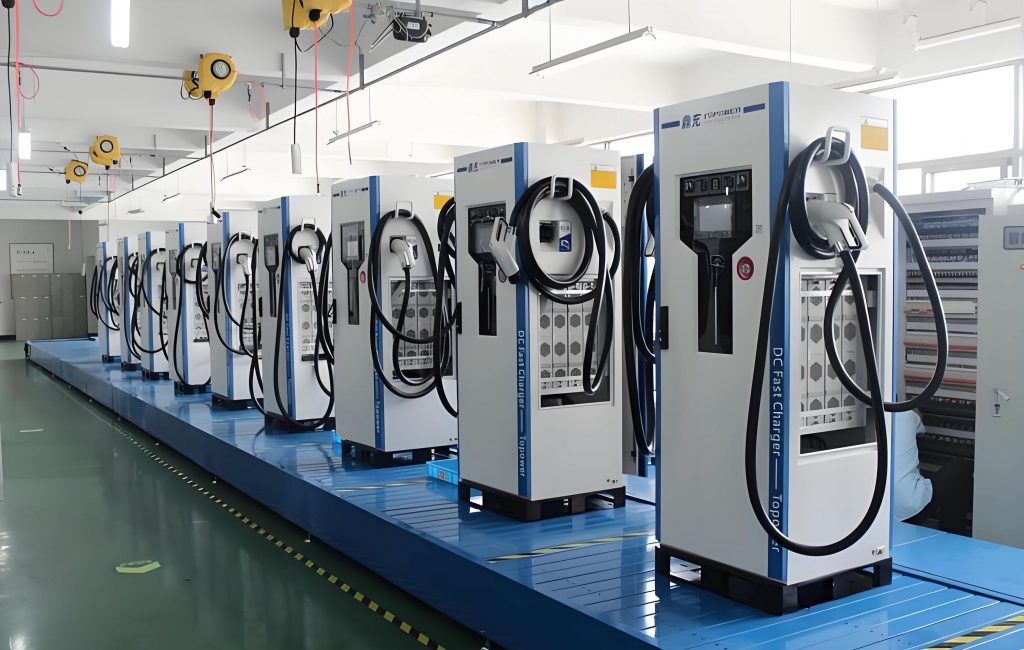
The growth of the EV charging station market has been fueled by supportive policies and subsidies, leading to a surge in installations worldwide. According to industry reports, the ratio of vehicles to EV charging stations has improved, but regional disparities persist. For instance, areas like Guangdong, Jiangsu, and Zhejiang account for a substantial share of public EV charging stations, reflecting concentrated development. To quantify this, I have compiled data on the cumulative number of EV charging stations over recent years, as shown in Table 1. This table illustrates the annual growth rates and highlights the importance of continuous monitoring to maintain quality standards. The expansion of EV charging station infrastructure is not just about quantity; it involves ensuring that each unit meets rigorous safety protocols to prevent incidents such as electrical fires or shocks.
| Year | Global Cumulative EV Charging Stations (Millions) | Annual Growth Rate (%) | Regional Concentration (%) |
|---|---|---|---|
| 2020 | 5.2 | 25.0 | 65.0 |
| 2021 | 7.8 | 50.0 | 67.5 |
| 2022 | 10.5 | 34.6 | 68.9 |
| 2023 | 13.9 | 32.4 | 69.3 |
| 2024 | 17.1 | 23.0 | 70.1 |
Regulatory frameworks have evolved to address the quality concerns surrounding EV charging stations. In my analysis, I refer to supervision sampling results that reveal recurring issues, such as failures in abnormal condition handling and control sequence errors. For example, a national sampling campaign in 2024 identified multiple batches of EV charging stations that did not comply with safety standards, particularly in scenarios where charging should cease under non-standard conditions. To model this, consider the mathematical representation of charging termination under abnormal voltage conditions: if the output voltage \( V_{\text{output}} \) exceeds the vehicle’s maximum allowable voltage \( V_{\text{max}} \), the EV charging station must disconnect within a time frame \( t \leq 1 \) second. This can be expressed as:
$$ \text{If } V_{\text{output}} > V_{\text{max}}, \quad \text{then } \Delta t \leq 1 \text{ s for disconnection} $$
Failure to adhere to this can lead to battery damage, emphasizing the need for robust design in EV charging stations. Additionally, Table 2 summarizes supervision sampling results from various regions, detailing the number of inspected EV charging stations, failure rates, and common non-compliance items. This data underscores the urgency of enhancing production quality and regulatory enforcement for EV charging stations.
| Region | Sampling Batch Size | Non-compliant Batches | Failure Rate (%) | Primary Non-compliance Items |
|---|---|---|---|---|
| National | 47 | 14 | 29.8 | Abnormal charging termination, control sequence errors |
| Shanghai | 15 | 2 | 13.3 | Abnormal charging termination |
| Shandong | 27 | 5 | 18.5 | Insulation detection, emergency stop functions |
| Anhui | 10 | 5 | 50.0 | Radiation disturbance, conduction disturbance |
Delving deeper into the quality issues, I have identified several technical shortcomings in EV charging stations. One major problem involves the control guide signal abnormalities, which can disrupt the charging process. For instance, in DC EV charging stations, the current and voltage must be precisely regulated to avoid overloading. The power transfer during charging can be modeled using the formula:
$$ P_{\text{charge}} = V_{\text{output}} \times I_{\text{charge}} $$
where \( P_{\text{charge}} \) is the charging power, \( V_{\text{output}} \) is the output voltage, and \( I_{\text{charge}} \) is the charging current. If the current exceeds 110% of the rated value for more than 5 seconds, the EV charging station should terminate charging to protect the vehicle’s onboard charger. Mathematically, this condition is:
$$ \text{If } I_{\text{charge}} > 1.1 \times I_{\text{rated}} \text{ for } t \geq 5 \text{ s, then cease charging} $$
Another critical aspect is the insulation resistance, which ensures safety against electric shocks. The insulation resistance \( R_{\text{ins}} \) should meet a minimum threshold, often defined by standards such as:
$$ R_{\text{ins}} \geq \frac{V_{\text{operating}}}{I_{\text{leakage}}} $$
where \( V_{\text{operating}} \) is the operating voltage and \( I_{\text{leakage}} \) is the permissible leakage current. Failures in these areas were frequently observed in sampled EV charging stations, indicating a need for improved manufacturing processes. To illustrate the prevalence of these issues, Table 3 breaks down the frequency of specific non-compliance items in EV charging stations based on recent sampling data. This table highlights how problems like incorrect charging timing and inadequate protection mechanisms are widespread, affecting the reliability of EV charging stations.
| Non-compliance Item | Occurrence Frequency (%) | Impact on Safety | Recommended Threshold |
|---|---|---|---|
| Abnormal charging termination | 40.0 | High | Disconnect within 1 s for overvoltage |
| Control sequence errors | 25.0 | Medium | Adhere to standard timing protocols |
| Insulation detection failures | 20.0 | High | \( R_{\text{ins}} \geq 1 \text{ M}\Omega \) |
| Radiation disturbance | 15.0 | Low | Limit to 30 dBμV/m at 10 m |
From a production standpoint, the quality of EV charging stations is influenced by factors such as component aging, software defects, and environmental conditions. In my evaluation, I emphasize that software integrity is as crucial as hardware in EV charging stations. For example, the charging protocol must accurately interpret vehicle messages to initiate and stop charging safely. A common flaw in DC EV charging stations is the inability to process all vehicle data packets, leading to continued charging during faults. This can be represented by a reliability function \( R(t) \) for an EV charging station:
$$ R(t) = e^{-\lambda t} $$
where \( \lambda \) is the failure rate due to software or hardware issues. Higher \( \lambda \) values indicate poorer reliability, often found in EV charging stations from unverified manufacturers. Moreover, the influx of new producers into the EV charging station market has exacerbated quality inconsistencies, as many prioritize cost-cutting over compliance. To address this, I propose a standardized quality index \( Q_{\text{index}} \) for EV charging stations, which could be calculated as:
$$ Q_{\text{index}} = \frac{\sum_{i=1}^{n} w_i \cdot c_i}{\text{Total Tests}} $$
where \( w_i \) is the weight for each compliance criterion \( c_i \), and \( n \) is the number of tests. This index would help consumers and regulators compare EV charging stations objectively.
To enhance the quality of EV charging stations, I recommend a multi-faceted approach. For consumers, selecting EV charging stations from reputable manufacturers that adhere to international standards is vital. They should verify compatibility with their vehicle models and power specifications, such as ensuring the EV charging station matches the home electrical system. For instance, the power rating should align with the available supply, which can be checked using:
$$ P_{\text{required}} = V_{\text{supply}} \times I_{\text{max}} $$
where \( V_{\text{supply}} \) is the supply voltage and \( I_{\text{max}} \) is the maximum current. For producers, investing in rigorous testing of both hardware and software is essential. This includes simulating abnormal conditions to ensure the EV charging station responds correctly, as per the formulas discussed earlier. Additionally, regulatory bodies should increase the frequency of supervision sampling for EV charging stations, particularly targeting small and medium-sized enterprises that may lack quality controls. Implementing smart monitoring systems for EV charging stations could enable real-time data collection on parameters like voltage and current, allowing for proactive maintenance and reducing failure rates. The efficiency of such a system can be modeled as:
$$ \eta_{\text{monitoring}} = \frac{\text{Number of Issues Detected Early}}{\text{Total Issues}} \times 100\% $$
In conclusion, the EV charging station industry is at a pivotal juncture where quality assurance is paramount for sustainable growth. Through detailed analysis of supervision sampling results, I have highlighted prevalent issues and their implications. By adopting standardized metrics, enhancing regulatory oversight, and promoting consumer awareness, we can foster a safer and more reliable network of EV charging stations. As technology advances, integrating intelligent systems into EV charging stations will further mitigate risks, ensuring that these critical infrastructures support the global transition to electric mobility effectively.