
As a professional deeply involved in the automotive repair industry, I have witnessed firsthand the rapid transformation driven by the rise of electric vehicles (EVs). The shift from traditional internal combustion engines to advanced electric powertrains is not just a trend; it is a fundamental change that demands a complete overhaul of our approach to EV repair and electrical car repair. This evolution brings both opportunities and significant challenges, particularly in how we train technicians, update technologies, and invest in equipment. In this article, I will explore the current landscape of EV repair, the obstacles we face, and the strategies we must adopt to thrive in this new era. The increasing complexity of electrical car repair systems, such as battery management and motor controls, requires a multidisciplinary understanding that many in our field are still grappling with. By sharing my insights, I aim to highlight the critical need for innovation and collaboration in EV repair to ensure we can meet the growing demands of this dynamic market.
The proliferation of electric vehicles has accelerated at an unprecedented pace, reshaping the entire automotive ecosystem. From my experience, the core of this change lies in the intricate systems that define EVs, including high-voltage batteries, electric motors, and sophisticated electronic controls. These components are vastly different from those in conventional cars, making EV repair a specialized field that goes beyond mere mechanical fixes. For instance, diagnosing issues in an electrical car repair scenario often involves analyzing data from onboard computers and using advanced tools to test battery health or motor efficiency. This shift underscores the importance of adapting our skills and knowledge. As I delve into the specifics, I will use tables and formulas to illustrate key points, such as the comparative analysis of repair requirements and mathematical models for battery performance. The journey toward mastering EV repair is fraught with hurdles, but with the right measures, we can turn these challenges into avenues for growth and excellence in electrical car repair.
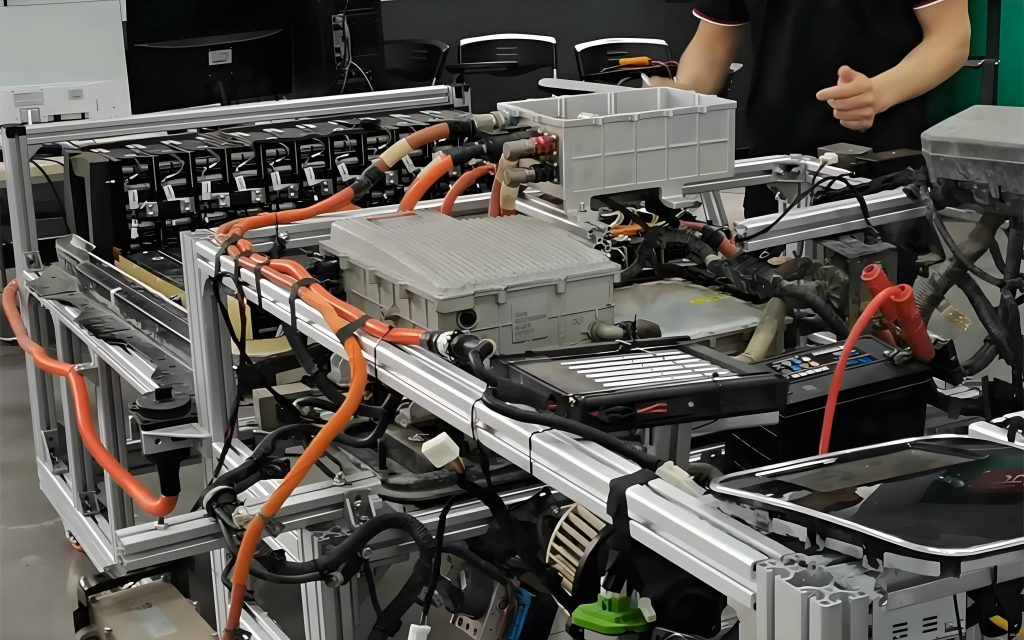
One of the most pressing issues in EV repair is the acute shortage of skilled technicians. Traditional automotive repair focused largely on mechanical systems, but electrical car repair demands expertise in electronics, software, and high-voltage safety. From my observations, many repair shops struggle to find personnel who can handle tasks like battery pack diagnostics or inverter repairs. This talent gap is exacerbated by the rapid technological advancements in EVs, where new models introduce features like regenerative braking or autonomous driving capabilities that require specialized knowledge. To quantify this, consider the following table that compares the skill sets needed for conventional versus EV repair:
| Skill Area | Traditional Repair | EV Repair |
|---|---|---|
| Electrical Systems | Basic wiring and alternators | High-voltage battery management and motor controls |
| Diagnostic Tools | OBD-II scanners | Specialized software for battery and system analysis |
| Safety Protocols | General workshop safety | High-voltage insulation and emergency shutdown procedures |
| Software Knowledge | Limited to engine control units | Firmware updates and network communication systems |
This table highlights how EV repair encompasses a broader range of competencies, many of which are not covered in standard training programs. In my work, I have seen that the demand for electrical car repair services often outstrips the supply of qualified professionals, leading to longer wait times and higher costs for consumers. Moreover, the mathematical aspects of EV repair, such as calculating battery capacity or efficiency, add another layer of complexity. For example, the energy capacity of a battery can be expressed using the formula: $$C = I \times t$$ where \(C\) is the capacity in ampere-hours, \(I\) is the current, and \(t\) is the time. Understanding such equations is crucial for accurate diagnostics in EV repair, as it helps technicians assess battery health and predict lifespan. As we move forward, addressing this talent shortage through education and training will be vital for the sustainability of electrical car repair operations.
Another significant challenge in EV repair is the lag in technology updates within educational and professional settings. In my career, I have noticed that the pace of innovation in electric vehicles far exceeds the rate at which repair methodologies evolve. For instance, new battery technologies like solid-state or lithium-sulfur cells are emerging, but many training curricula still focus on older nickel-metal hydride or lithium-ion systems. This disconnect creates a knowledge gap that hinders effective electrical car repair. To illustrate, consider the efficiency of an electric motor, which can be modeled using the formula: $$\eta = \frac{P_{out}}{P_{in}} \times 100\%$$ where \(\eta\) is efficiency, \(P_{out}\) is output power, and \(P_{in}\) is input power. If technicians are not up-to-date on such concepts, they might misdiagnose issues, leading to inefficient repairs or safety hazards. The following table summarizes the typical technology gaps in EV repair education:
| Technology Aspect | Current Focus in Training | Emerging Trends in EVs |
|---|---|---|
| Battery Systems | Basic lithium-ion handling | Solid-state and fast-charging technologies |
| Motor Types | AC induction motors | Permanent magnet and switched reluctance motors |
| Diagnostic Software | Standard fault code readers | AI-driven predictive maintenance tools |
| Charging Infrastructure | Level 1 and 2 chargers | Wireless and ultra-fast DC charging |
From my perspective, closing these gaps requires a proactive approach to curriculum development. In EV repair, we must integrate real-world case studies and hands-on experiences with the latest technologies. For example, simulating electrical car repair scenarios using virtual reality can help trainees practice high-voltage safety procedures without risks. Additionally, fostering partnerships with EV manufacturers can provide access to cutting-edge tools and data, ensuring that our knowledge remains relevant. The rapid evolution of electrical car repair standards means that continuous learning is no longer optional; it is essential for staying competitive in this field. By embracing these updates, we can enhance the quality and reliability of EV repair services, ultimately benefiting both consumers and the industry.
Equipment investment is a critical yet often overlooked aspect of EV repair. In my experience, many repair facilities hesitate to allocate funds for advanced diagnostic tools due to high costs and rapid obsolescence. However, without proper equipment, electrical car repair becomes inefficient and potentially dangerous. For instance, testing a high-voltage battery requires specialized instruments like insulation testers or thermal imaging cameras, which can cost thousands of dollars. The return on investment might not be immediate, but in the long run, it enables more accurate diagnostics and faster turnaround times. To emphasize this, let’s consider a formula for calculating the payback period of equipment investment in EV repair: $$P = \frac{C}{S \times E}$$ where \(P\) is the payback period in years, \(C\) is the initial cost, \(S\) is the average service revenue per repair, and \(E\) is the efficiency gain factor. This equation shows that even with high upfront costs, improved efficiency can shorten the payback period, making it a worthwhile investment for electrical car repair businesses.
Moreover, the lack of adequate equipment can lead to subpar repairs that compromise vehicle safety and performance. In electrical car repair, for example, using outdated multimeters to measure high-voltage circuits might result in inaccurate readings, increasing the risk of electrical faults. The following table outlines essential equipment for modern EV repair and their approximate costs:
| Equipment Type | Function in EV Repair | Estimated Cost (USD) |
|---|---|---|
| Battery Analyzer | Tests capacity and health of high-voltage batteries | $5,000 – $15,000 |
| Insulation Tester | Checks for electrical leaks in high-voltage systems | $1,000 – $3,000 |
| Motor Diagnostic Tool | Analyzes performance of electric motors | $2,000 – $7,000 |
| Charging Station Simulator | Tests compatibility and functionality of charging systems | $10,000 – $25,000 |
As someone deeply involved in EV repair, I advocate for strategic investments in such tools to build a sustainable business model. Collaborating with financial institutions or government programs can help offset costs through grants or loans. Furthermore, standardizing equipment across the industry can reduce prices through economies of scale. In electrical car repair, having the right tools not only improves service quality but also enhances technician confidence and safety. By prioritizing equipment upgrades, we can address one of the key bottlenecks in EV repair and position ourselves for future growth in the electrical car repair market.
To overcome these challenges, we must focus on building interdisciplinary education and training systems for EV repair. From my viewpoint, this involves creating curricula that blend automotive engineering with electronics and computer science. For instance, courses on battery chemistry and power electronics should be integrated into standard repair training to equip technicians with the knowledge needed for electrical car repair. Practical exercises, such as disassembling and reassembling EV components, can reinforce theoretical concepts. Additionally, partnerships with universities and online platforms can offer flexible learning options, making education more accessible. A formula that often comes to mind in this context is the learning curve model: $$T_n = T_1 \times n^{-b}$$ where \(T_n\) is the time for the nth task, \(T_1\) is the time for the first task, \(n\) is the number of tasks, and \(b\) is the learning rate. Applying this to EV repair training, we can see that as technicians gain experience, their efficiency improves, reducing the time required for complex electrical car repair jobs.
Another effective strategy is strengthening research and development in EV repair technologies. In my work, I have participated in projects aimed at developing innovative diagnostic tools, such as AI-based systems that predict battery failures. These advancements not only streamline electrical car repair processes but also reduce costs by preventing major breakdowns. For example, the degradation of a lithium-ion battery can be modeled using the formula: $$Q = Q_0 \times e^{-kt}$$ where \(Q\) is the current capacity, \(Q_0\) is the initial capacity, \(k\) is the degradation rate, and \(t\) is time. By incorporating such models into diagnostic software, technicians can provide more accurate assessments during EV repair. The table below highlights key R&D areas in electrical car repair:
| R&D Focus | Potential Impact on EV Repair | Example Innovations |
|---|---|---|
| Battery Technology | Longer lifespan and faster charging | Solid-state batteries with higher energy density |
| Diagnostic AI | Predictive maintenance and fault detection | Machine learning algorithms for real-time analysis |
| Tool Development | Enhanced precision and safety | Robotic assistants for high-voltage tasks |
| Recycling Methods | Sustainable disposal of EV components | Closed-loop recycling of battery materials |
Investing in these areas can transform EV repair from a reactive service to a proactive one, where issues are identified and resolved before they escalate. As an advocate for electrical car repair innovation, I believe that collaboration between academia, industry, and government is crucial to fund and scale these initiatives. By doing so, we can not only improve the efficiency of EV repair but also contribute to the overall sustainability of the electric vehicle ecosystem.
International cooperation is another vital component in advancing EV repair capabilities. In my experience, engaging with global experts allows us to share best practices and adopt successful strategies from other regions. For instance, countries like Norway and China have made significant strides in electrical car repair infrastructure, and learning from their models can help us avoid common pitfalls. Participating in international conferences and workshops on EV repair has broadened my perspective on emerging technologies, such as wireless charging systems or hydrogen fuel cell integrations. These insights are invaluable for refining our approaches to electrical car repair. To quantify the benefits, consider the formula for knowledge transfer efficiency: $$E_k = \frac{K_a}{K_t} \times 100\%$$ where \(E_k\) is the efficiency of knowledge transfer, \(K_a\) is the knowledge absorbed, and \(K_t\) is the total knowledge available. By maximizing this efficiency through cross-border collaborations, we can accelerate the adoption of advanced EV repair techniques globally.
Furthermore, standardizing EV repair protocols internationally can reduce inconsistencies and improve service quality. From my involvement in standardization efforts, I have seen how common guidelines for electrical car repair can facilitate technician mobility and certification recognition. The table below compares EV repair standards across different regions:
| Region | Current EV Repair Standards | Key Focus Areas |
|---|---|---|
| North America | SAE J standards for high-voltage systems | Safety and interoperability |
| Europe | ISO 6469 series for electrical safety | Environmental sustainability |
| Asia | GB/T standards in China for charging and repair | Rapid technological adoption |
Aligning these standards can streamline electrical car repair processes and enhance consumer trust. As we expand our international networks, we can also explore opportunities for joint ventures in EV repair training and equipment manufacturing. This global approach not only elevates the professionalism of electrical car repair but also fosters innovation through diverse perspectives. In my view, embracing internationalism is essential for staying at the forefront of the EV repair industry and ensuring that we can meet the demands of an increasingly connected world.
In conclusion, the transition to electric vehicles presents both challenges and opportunities for the repair industry. From my perspective as a dedicated professional, the key to success in EV repair lies in adapting our education systems, investing in technology, and fostering global collaboration. The complexities of electrical car repair require a holistic approach that integrates multiple disciplines and continuous learning. By leveraging formulas like those for battery degradation and equipment payback, we can make informed decisions that enhance efficiency and safety. Tables comparing skills, technologies, and standards help visualize the gaps and pathways for improvement. As the demand for EV repair grows, it is imperative that we build a resilient infrastructure capable of supporting this evolution. Through collective effort and innovation, we can ensure that electrical car repair becomes a cornerstone of the sustainable automotive future, driving progress and reliability for years to come.