
The proliferation of hybrid electric vehicles represents a pivotal shift in the global automotive landscape, aimed at reconciling the demands for mobility with stringent environmental imperatives. As an engineer and researcher focused on automotive diagnostics, I have observed firsthand the increasing complexity of modern powertrains. The hybrid car, particularly the plug-in hybrid electric vehicle (PHEV), ingeniously merges an internal combustion engine (ICE) with one or more electric motors and a sizable battery pack. This integration promises superior fuel economy and reduced emissions but at the cost of significantly increased system intricacy. The powertrain is no longer a purely mechanical entity but a deeply interconnected electromechanical system where a fault in one subsystem can cascade, affecting performance, safety, and efficiency. Traditional diagnostic methods, often reliant on code reading and experiential troubleshooting, are increasingly challenged by the subtle, interdependent faults inherent in these systems. This article, based on my research and analysis, delves into the operational principles of hybrid car powertrains, examines typical fault modes—especially those leading to acceleration anomalies—and proposes a sophisticated diagnostic framework utilizing neural networks to enhance the accuracy and efficiency of fault isolation.
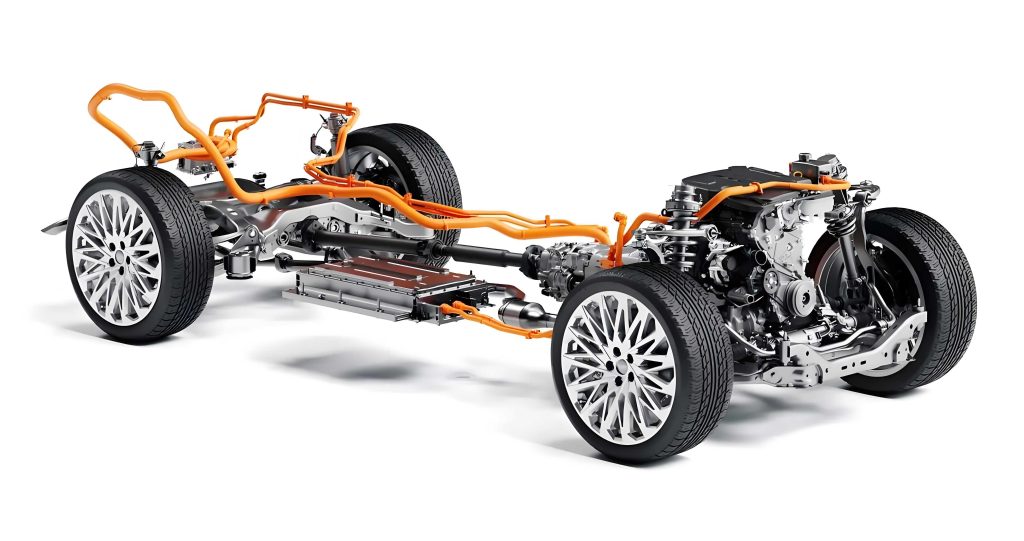
The operational flexibility of a hybrid car is its greatest strength, allowing it to adapt to diverse driving conditions for optimal energy usage. This adaptability is governed by a suite of predefined working modes. The architecture of the powertrain fundamentally influences the available modes and energy flow paths. Generally, hybrid systems are categorized into three primary layouts.
| Powertrain Architecture | Energy Flow Path | Key Characteristics | Primary Working Modes |
|---|---|---|---|
| Series Hybrid | Engine → Generator → Battery → Motor → Wheels | Engine mechanically decoupled from wheels; acts as a mobile generator. Simplifies mechanical design. | 1. Electric Drive 2. Series Charging 3. Battery Charging (from grid) |
| Parallel Hybrid | Engine and/or Motor → Transmission → Wheels | Both engine and motor can directly provide mechanical power to the wheels. Requires complex clutch/transmission control. | 1. Electric Drive 2. Engine-Only Drive 3. Hybrid Drive (Combined) 4. Regenerative Braking 5. Engine-Driven Battery Charging |
| Series-Parallel (Power-Split) Hybrid | Combination of series and parallel paths via a planetary gearset. | Offers maximum flexibility. The engine power can be split to drive the wheels and generate electricity simultaneously. | All modes of parallel hybrid, plus optimized power-split modes for efficiency. |
For the purpose of this analysis, I will focus on a parallel hybrid car configuration, as it presents a clear case of mechanical coupling and interdependent faults. Its common operational modes are critical to understanding subsequent failure scenarios:
- Pure Electric Drive (EV Mode): The vehicle is propelled solely by the electric motor(s), drawing energy from the high-voltage battery pack. The internal combustion engine is completely shut off. This mode is used for short trips, low-speed cruising, and in scenarios demanding zero local emissions.
- Engine-Only Drive: Under steady, moderate-load conditions (e.g., highway cruising), the internal combustion engine engages directly to drive the wheels. The electric motor may be disengaged. In some designs, if engine output exceeds demand, the excess torque can be used to drive a generator and charge the battery.
- Hybrid Drive (Power Assist Mode): During high-load demands such as rapid acceleration, climbing steep grades, or overtaking, both the engine and the electric motor operate in tandem to provide maximum combined torque to the drivetrain. This is a key mode for delivering the promised “powerful” performance of a hybrid car.
- Regenerative Braking: During deceleration or braking, the electric motor operates as a generator, converting the vehicle’s kinetic energy into electrical energy to recharge the high-voltage battery. This process recaptures energy that would otherwise be lost as heat in traditional friction brakes.
- Stationary Engine Charging: If the battery state of charge (SOC) falls below a certain threshold while the vehicle is stationary, the engine may automatically start to drive a generator and recharge the battery to a sufficient level.
The seamless transition between these modes is managed by a sophisticated Vehicle Control Unit (VCU) or Hybrid Control Unit (HCU), which processes inputs from dozens of sensors. Any misinterpretation of sensor data or failure in an actuator can disrupt this delicate balance, leading to performance issues, with acceleration anomaly being one of the most critical and noticeable symptoms for the driver of a hybrid car.
Analysis of Typical Powertrain Faults Leading to Acceleration Anomaly
Acceleration anomaly in a hybrid car—manifesting as sluggish response, unexpected power loss, hesitation, or failure to achieve expected performance—is a symptom with a broad and interconnected fault tree. It can originate from the electrical drive system, the internal combustion engine, the energy storage system, or the complex control network that orchestrates them. My diagnostic experience points to several critical areas.
Critical Sensor Faults
Sensors are the “eyes and ears” of the hybrid control system. Their failure directly leads to erroneous control actions.
1. Manifold Absolute Pressure (MAP) Sensor Fault: In the internal combustion engine subsystem, the MAP sensor is crucial for determining engine load by measuring the pressure inside the intake manifold. The Engine Control Unit (ECU) uses this signal, along with engine speed, to calculate the mass of air entering the cylinders, which determines the required fuel injection pulse width. A faulty MAP sensor providing inaccurate low-pressure readings can be modeled as the ECU calculating an incorrect air mass $m_{air}$:
$$m_{air}(faulty) = \frac{(P_{manifold} – \Delta P_{error}) \cdot V_{cylinder}}{R \cdot T_{manifold}}$$
where $P_{manifold}$ is the actual manifold pressure, $\Delta P_{error}$ is the sensor’s negative bias error, $V_{cylinder}$ is the cylinder volume, $R$ is the specific gas constant, and $T_{manifold}$ is the intake air temperature. This leads to a correspondingly incorrect fuel mass $m_{fuel}$:
$$m_{fuel} = \frac{m_{air}(faulty)}{AFR_{target}}$$
where $AFR_{target}$ is the target air-fuel ratio. The result is a lean mixture, causing engine misfire, hesitation, and a significant loss of torque during acceleration, especially when the hybrid car relies on or combines with engine power. Conversely, a fault indicating erroneously high pressure causes an overly rich mixture, reducing efficiency and potentially causing excessive emissions.
2. Accelerator Pedal Position (APP) Sensor Fault: The APP sensor is the primary interface translating driver demand into powertrain response. In a hybrid car, its signal is used by both the ECU (to control throttle opening and engine torque) and the Motor Control Unit (MCU) (to control motor torque). For safety, dual or triple redundant sensors (e.g., two potentiometers with different output slopes) are used. A fault in one track can cause a mismatch between signals. The VCU monitors this discrepancy. If the variance $\sigma^2_{APP}$ between the signals exceeds a threshold $\tau$, it may trigger a fail-safe mode:
$$\sigma^2_{APP} = \frac{1}{N}\sum_{i=1}^{N} (APP_{1,i} – APP_{2,i})^2 > \tau$$
In fail-safe mode, the vehicle may severely limit torque output (“limp-home mode”) to prevent unintended acceleration, directly causing an acceleration anomaly. Even a small bias error in the signal can lead to a mismatch between driver-requested torque and actual delivered torque, degrading drivability.
3. Motor Resolver (Rotary Transformer) Fault: The resolver provides precise, real-time information on the rotor’s angular position and speed to the MCU. This data is essential for the field-oriented control (FOC) of the permanent magnet synchronous motor (PMSM), which is common in hybrid cars. The MCU uses these signals to calculate the Clarke and Park transforms for optimal torque generation. A fault, such as contamination by metallic debris altering the magnetic coupling or winding short circuits, introduces an angular error $\Delta\theta$ into the position feedback. This error corrupts the Park transform, leading to incorrect current vector alignment:
$$I_d, I_q = Park(I_\alpha, I_\beta, \theta_{actual} + \Delta\theta)$$
where $I_d$ and $I_q$ are the direct and quadrature-axis currents, and $I_\alpha$, $I_\beta$ are the stationary frame currents. Misalignment reduces torque production efficiency $(\eta_{motor})$ and can cause torque ripple, vibration, and even a complete shutdown of the electric drive system for protection. This immediately affects acceleration in EV and hybrid modes.
System-Level Causes of Acceleration Anomaly
Beyond individual sensors, system-level failures are common in the complex ecosystem of a hybrid car.
| Subsystem | Fault Cause | Symptom Impact on Acceleration | Key Diagnostic Parameters |
|---|---|---|---|
| High-Voltage Battery (HV Battery) | Cell imbalance, high internal resistance, State of Health (SOH) degradation, loose connections, Battery Management System (BMS) fault. | Power limitation to protect the pack, rapid voltage sag under load, reduced available power for electric drive. | Pack Voltage, Minimum/Maximum Cell Voltage, Pack Current, Battery Temperature, Isolation Resistance. |
| Electric Drive System | Motor overheating (coolant pump/sensor fault), Inverter fault (IGBT failure), MCU communication loss. | Torque derating or shutdown of electric motor, loss of power assist and EV mode. | Motor Temp, Inverter Temp, DC Link Voltage, Phase Currents, CAN comm. status. |
| Internal Combustion Engine | Mechanical wear (low compression), fuel system issues, ignition faults, turbocharger faults. | Reduced engine torque output, inability to provide base load or power assist. | Engine RPM, Fuel Pressure, Ignition Timing, Mass Air Flow, O2 Sensor readings. |
| Transmission & Drivetrain | Clutch slippage, gearbox bearing/gear failure, differential issues, driveshaft CV joint wear. | Power loss not correlated with engine/motor parameters, unusual noises/vibrations during acceleration. | Input/Output Shaft Speed, Gear Position, Clutch Pressure, Vibration spectra. |
Diagnosing the root cause among these interconnected possibilities using traditional methods—sequential code reading, data stream analysis, and physical inspection—can be time-consuming and often fails to identify intermittent or subtle faults. This necessitates a more intelligent, data-driven approach.
Research on Neural Network-Based Diagnostic Methodology
To address the limitations of conventional diagnosis for hybrid car powertrains, I have explored the application of neural networks. These models can learn complex, non-linear relationships between multiple sensor readings (features) and fault conditions (labels). The process begins with data acquisition and preprocessing. Using a diagnostic scan tool, I collect time-series data streams from the vehicle’s CAN network during various driving cycles, both in healthy states and with induced faults (e.g., simulating a biased MAP sensor by manipulating its signal).
Collected data is high-dimensional, containing potentially correlated and redundant signals. Principal Component Analysis (PCA) is employed for dimensionality reduction and feature extraction. PCA transforms the original correlated variables $X = [x_1, x_2, …, x_p]$ into a new set of uncorrelated variables $Z = [z_1, z_2, …, z_k]$ (principal components, $k < p$) that capture most of the variance in the data. The first principal component $z_1$ is a linear combination:
$$z_1 = w_{11}x_1 + w_{12}x_2 + … + w_{1p}x_p$$
where the weights $w_1$ are chosen to maximize the variance of $z_1$. The reduced feature set $Z$ is then used to train the neural network models, improving training efficiency and reducing the risk of overfitting.
Probabilistic Neural Network (PNN) for Fault Classification
The PNN is a feedforward network based on Bayesian decision theory and non-parametric probability density estimation. It is exceptionally well-suited for classification problems like fault diagnosis. Its structure comprises four layers: Input, Pattern, Summation, and Output.
The core of PNN operation is the estimation of the class-conditional probability density function $P(\mathbf{x}|H_i)$ for each fault class $H_i$ (e.g., $H_1$: Healthy, $H_2$: MAP Sensor Fault, etc.). For a given input feature vector $\mathbf{x}$ from the test data, the Pattern layer computes its similarity to training samples using a kernel function, typically a Gaussian kernel:
$$f_i(\mathbf{x}) = \frac{1}{(2\pi)^{p/2}\sigma^p} \frac{1}{N_i} \sum_{j=1}^{N_i} \exp\left[-\frac{(\mathbf{x} – \mathbf{x}_{ij})^T(\mathbf{x} – \mathbf{x}_{ij})}{2\sigma^2}\right]$$
where $N_i$ is the number of training samples in class $H_i$, $\mathbf{x}_{ij}$ is the $j$-th training sample from class $H_i$, $p$ is the dimensionality of $\mathbf{x}$, and $\sigma$ is the smoothing parameter.
The Summation layer sums the outputs for each class:
$$F_i(\mathbf{x}) = \sum f_i(\mathbf{x})$$
This sum is proportional to the Parzen-window estimate of the conditional density $P(\mathbf{x}|H_i)$. According to Bayes’ theorem, the posterior probability $P(H_i|\mathbf{x})$ that the sample $\mathbf{x}$ belongs to class $H_i$ is:
$$P(H_i|\mathbf{x}) = \frac{P(\mathbf{x}|H_i) P(H_i)}{\sum_{k=1}^{c} P(\mathbf{x}|H_k) P(H_k)} = \frac{F_i(\mathbf{x}) P(H_i)}{\sum_{k=1}^{c} F_k(\mathbf{x}) P(H_k)}$$
where $P(H_i)$ is the prior probability of class $H_i$, often estimated from the training sample frequencies, and $c$ is the total number of fault classes. The Output layer performs a simple decision: it selects the class $H_i$ with the highest posterior probability. This corresponds to the Bayes optimal decision rule for minimizing the probability of classification error.
Backpropagation (BP) Neural Network for Diagnostic Modeling
The BP neural network is a multi-layer perceptron trained with the error backpropagation algorithm. It is a universal function approximator capable of modeling the complex mappings between fault symptoms and their root causes in a hybrid car. A typical three-layer structure (input-hidden-output) is often sufficient.
The forward propagation process for a node $j$ in the hidden layer is as follows. First, the net input $net_j$ is calculated:
$$net_j = \sum_{i=1}^{n} w_{ji}^{(1)} x_i + b_j^{(1)}$$
where $x_i$ are the input features (from PCA), $w_{ji}^{(1)}$ are the weights from input $i$ to hidden node $j$, $b_j^{(1)}$ is the bias for hidden node $j$, and $n$ is the number of input nodes. An activation function $f(\cdot)$ (e.g., sigmoid, ReLU) is then applied:
$$h_j = f(net_j) = f\left(\sum_{i=1}^{n} w_{ji}^{(1)} x_i + b_j^{(1)}\right)$$
The output layer node $k$ computes similarly:
$$y_k = g\left(\sum_{j=1}^{m} w_{kj}^{(2)} h_j + b_k^{(2)}\right)$$
where $g(\cdot)$ is often a softmax function for multi-class classification, producing a probability distribution over the output fault classes.
During training, the network’s predicted output $\mathbf{y}$ is compared to the true label $\mathbf{t}$ using a loss function $E$, such as cross-entropy. The backpropagation algorithm then computes the gradient of the loss with respect to each weight $\frac{\partial E}{\partial w}$. The weights are updated iteratively via gradient descent to minimize $E$:
$$w_{new} = w_{old} – \eta \cdot \frac{\partial E}{\partial w_{old}}$$
where $\eta$ is the learning rate. This process allows the BP network to learn the diagnostic patterns embedded in the hybrid car’s operational data.
In my comparative analysis, both PNN and BP networks showed superior diagnostic accuracy for hybrid car powertrain faults compared to rule-based methods. The PNN offered faster training, while the BP network demonstrated slightly better generalization on complex, multi-symptom fault patterns when properly regularized.
Conclusion
The hybrid car represents a pinnacle of modern automotive engineering, yet its sophisticated powertrain introduces new diagnostic challenges. Acceleration anomalies, as a critical symptom, can stem from a wide array of faults in sensors, actuators, or core subsystems like the battery, motor, and engine. Traditional diagnostic techniques, while foundational, often struggle with the interconnected and data-rich nature of these faults. My research underscores the significant potential of intelligent diagnostic methods, particularly neural networks like PNN and BP. By processing multidimensional data streams and learning the underlying fault patterns, these models can provide faster, more accurate, and more reliable fault isolation. Implementing such systems in diagnostic tools or even onboard for prognostic health management can greatly enhance the reliability, safety, and economic efficiency of hybrid cars. This ensures that the environmental benefits of the hybrid car are not undermined by operational failures, supporting the sustainable future of transportation. Future work will focus on integrating these models with real-time edge computing devices and exploring deep learning architectures for even more robust fault diagnosis.