
As the global emphasis on electric vehicles intensifies, the rapid deployment of EV charging stations has become a critical infrastructure priority, directly influencing the adoption of electric mobility and the transformation of energy consumption patterns. I believe that the metrological accuracy of EV charging stations is paramount, as these devices serve as key instruments for energy measurement and trade settlement. Any discrepancies in their performance can undermine consumer trust and hinder the growth of the electric vehicle ecosystem. In this article, I will explore the current challenges in metrological verification standards and value transmission mechanisms for EV charging stations, and propose comprehensive optimization strategies to enhance reliability and fairness in energy transactions.
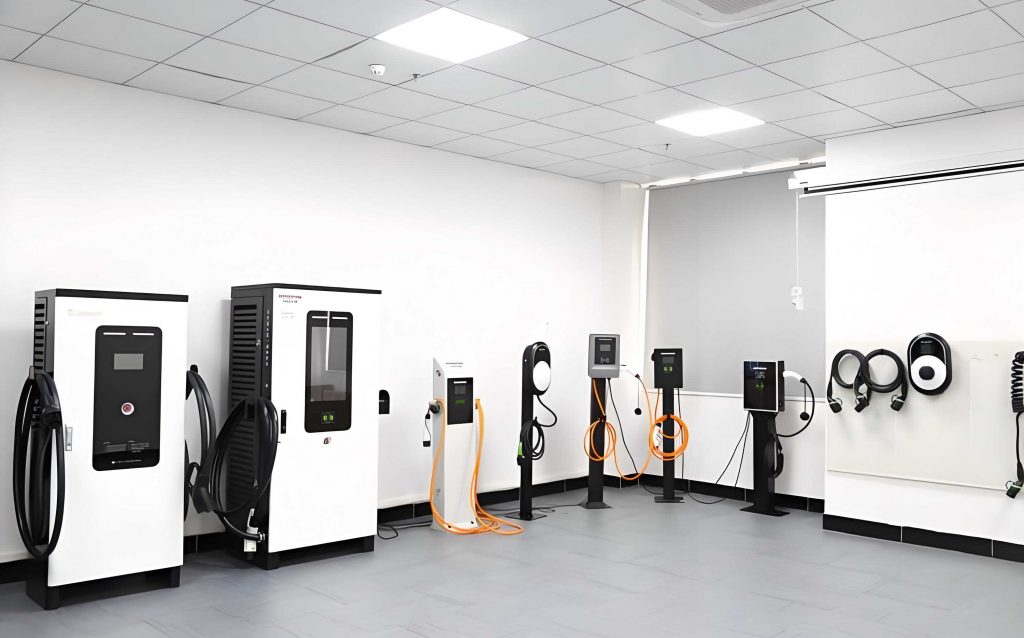
The metrological verification of EV charging stations involves assessing their accuracy in measuring electrical energy consumption, which is crucial for billing and regulatory compliance. Currently, inconsistencies exist between national and local regulations, leading to conflicts in implementation. For instance, national standards like JJG 1148-2018 for AC EV charging stations and JJG 1149-2018 for DC EV charging stations have been established, but local guidelines in regions such as Guizhou and Guangdong vary in scope and requirements. This fragmentation necessitates a unified approach to ensure that every EV charging station operates within defined tolerances, regardless of location. I will delve into the specifics of these standards and highlight the importance of harmonizing them to foster a cohesive metrological framework.
Overview of Metrological Verification Standards for EV Charging Stations
Metrological verification standards for EV charging stations are designed to ensure that these devices accurately measure energy consumption, which directly impacts trade settlements. The national standards, JJG 1148-2018 and JJG 1149-2018, provide a baseline for verification, including items like appearance checks, insulation resistance tests, and work error assessments. However, local regulations introduce variations; for example, some regions cover both AC and DC EV charging stations, while others focus solely on AC types. These differences can lead to inconsistencies in verification outcomes, potentially affecting the reliability of EV charging station operations. To illustrate, I have compiled a table comparing key aspects of local and national standards:
| Region/Standard | Applicable EV Charging Station Types | Verification Items | Accuracy Levels and Maximum Permissible Error |
|---|---|---|---|
| National (JJG 1148-2018) | AC EV charging stations | Appearance, insulation resistance, work error, etc. | Level 1: ±1.0%, Level 2: ±2.0% |
| National (JJG 1149-2018) | DC EV charging stations | Similar to AC, with adaptations for DC parameters | Level 1: ±1.0%, Level 2: ±2.0% |
| Guizhou Local | AC and DC EV charging stations | Includes insulation resistance and clock error | Level 1: ±1.0%, Level 2: ±2.0% |
| Guangdong Local | AC and DC EV charging stations | Focus on work error and appearance | Segmented by voltage/current: ±2.0% to ±2.5% |
| Zhejiang Local | AC EV charging stations only | Basic items like work error | Varies, often aligned with older guidelines |
These discrepancies highlight the need for a standardized framework. The work error, a critical metric for EV charging stations, can be expressed mathematically to quantify accuracy. For instance, the work error \( E_w \) is defined as:
$$E_w = \frac{W_m – W_a}{W_a} \times 100\%$$
where \( W_m \) is the measured energy by the EV charging station and \( W_a \) is the actual energy consumed. This formula underscores the importance of precise measurements in EV charging stations to minimize deviations. Additionally, the insulation resistance test ensures safety and reliability, which is vital for long-term operation of EV charging stations. By analyzing these elements, I aim to demonstrate how unified standards can reduce conflicts and enhance the consistency of metrological verification across all EV charging stations.
Overview of Value Transmission Mechanism for EV Charging Stations
The value transmission mechanism for EV charging stations involves the traceability of measurements from national standards down to individual devices, ensuring that every EV charging station adheres to defined accuracy levels. This process relies on calibration chains, where higher-level standards calibrate lower-level equipment. Currently, mechanisms reference standards like JJG 1085-2013 for AC parameters and JJF 1587-2016 for DC parameters, but practical challenges persist. For example, communication protocol mismatches between EV charging stations and verification devices can hinder efficient data exchange, prolonging verification times. I will outline the typical value transmission path and identify bottlenecks that affect EV charging station reliability.
A multi-level value transmission system is essential for EV charging stations. At the national level, reference standards maintained by institutions like the National Institute of Metrology provide the foundation. These are then passed to provincial centers, which calibrate regional equipment, and finally to municipal agencies that perform on-site verification of EV charging stations. The transmission accuracy can be modeled using a formula for cumulative error \( E_c \):
$$E_c = \sqrt{E_1^2 + E_2^2 + \cdots + E_n^2}$$
where \( E_1, E_2, \ldots, E_n \) represent errors at each transmission level. This equation emphasizes the need to minimize errors at every step to maintain the integrity of EV charging station measurements. In practice, provinces like Anhui and Henan have developed mobile verification systems for EV charging stations, but issues such as non-uniform pulse interfaces and prolonged verification cycles remain. The following table summarizes key components and challenges in the value transmission mechanism for EV charging stations:
| Transmission Level | Role in EV Charging Station Verification | Common Equipment | Typical Challenges |
|---|---|---|---|
| National | Establish reference standards for EV charging stations | High-precision power sources, standard energy meters | Maintaining long-term stability and accuracy |
| Provincial | Calibrate regional standards for EV charging stations | Calibrated power loads, data acquisition systems | Resource allocation and protocol harmonization |
| Municipal | Perform on-site verification of EV charging stations | Portable verification devices, communication interfaces | Time-consuming processes due to interface issues |
By addressing these challenges, we can strengthen the value transmission mechanism for EV charging stations, ensuring that measurements are consistent and traceable. This is crucial for building consumer confidence in EV charging stations as fair and reliable energy sources.
Strategies for Optimizing Metrological Verification Standards of EV Charging Stations
To optimize metrological verification standards for EV charging stations, I propose a multi-faceted approach that focuses on unification, comprehensiveness, adaptability, and enforcement. First, building a unified standard framework is essential. This involves consolidating national and local regulations into a cohesive system that covers all types of EV charging stations, including AC, DC, and hybrid models. By defining key terms and accuracy levels uniformly, we can eliminate regional disparities. For instance, the accuracy levels for EV charging stations should be standardized as Level 1 (±1.0%) and Level 2 (±2.0%), as seen in national standards, to ensure consistency. This framework should also incorporate successful elements from local practices, such as insulation resistance tests, which enhance the reliability of EV charging stations.
Second,完善检定项目与指标 (improving verification items and indicators) requires expanding the scope of mandatory checks for EV charging stations. Beyond basic appearance and work error tests, items like insulation resistance and clock error should be included to cover all aspects of performance. The付费金额误差 (payment amount error) is particularly important for EV charging stations, as it directly affects consumer billing. This can be calculated using a formula that accounts for time-based rates:
$$E_p = \left| \frac{P_d – P_a}{P_a} \right| \times 100\%$$
where \( P_d \) is the displayed payment amount on the EV charging station and \( P_a \) is the actual amount based on energy consumption and tariff. By setting clear thresholds for \( E_p \), we can ensure that EV charging stations provide accurate billing information. The following table outlines recommended verification items and their criteria for EV charging stations:
| Verification Item | Description for EV Charging Stations | Acceptable Error Threshold |
|---|---|---|
| Work Error | Difference between measured and actual energy | Level 1: ±1.0%, Level 2: ±2.0% |
| Insulation Resistance | Measures electrical safety of EV charging stations | Minimum resistance as per standards (e.g., >1 MΩ) |
| Clock Error | Accuracy of time display for time-based billing | Within ±1 second per day |
| Payment Amount Error | Discrepancy in calculated payment | ±0.5% of total amount |
Third, establishing a dynamic update mechanism is crucial for keeping standards relevant as EV charging station technology evolves. This involves periodic reviews, perhaps annually, to incorporate advancements like fast-charging technologies or smart grid integrations. By engaging stakeholders—manufacturers, operators, and verification agencies—we can gather feedback to refine standards continuously. For example, if a new type of EV charging station emerges with unique communication protocols, the standards should be updated to include verification procedures for those features.
Fourth, strengthening standard execution and supervision requires robust monitoring systems. Transition plans should be implemented to phase out outdated local regulations, and cross-regional audits can identify inconsistencies in EV charging station verification. An information management platform could track verification data for every EV charging station, enabling real-time oversight and ensuring that all devices comply with the unified standards. This proactive approach will minimize conflicts and enhance the overall reliability of EV charging stations.
Building an Effective Value Transmission Mechanism for EV Charging Stations
Constructing a robust value transmission mechanism for EV charging stations demands a hierarchical system, standardized paths, technological innovations, and traceability safeguards. I recommend building a multi-level value transmission体系 (system) that spans national, provincial, and municipal tiers. At the national level, high-accuracy reference standards for EV charging stations should be developed and maintained, serving as the ultimate source for traceability. Provincial centers can then calibrate secondary standards, which are used to verify municipal equipment dedicated to EV charging stations. This hierarchy ensures that errors are minimized through controlled transmission, as described by the error accumulation formula earlier. By allocating resources appropriately, we can ensure that every EV charging station benefits from a consistent value chain.
Unifying the value transmission paths is another key step. This involves standardizing the equipment and procedures used to calibrate EV charging stations. For instance, all verification devices should adhere to specified technical parameters, such as voltage and current ranges, to maintain consistency. The transmission cycle for EV charging stations should be standardized—for example, annual recalibrations for critical parameters—to prevent drift in accuracy. Mathematically, the stability \( S \) of a value transmission path for EV charging stations can be expressed as:
$$S = 1 – \frac{\Delta E}{E_0}$$
where \( \Delta E \) is the change in error over time and \( E_0 \) is the initial error. By maximizing \( S \), we can ensure long-term reliability of EV charging station measurements.
Addressing technical bottlenecks is essential for improving the efficiency of value transmission for EV charging stations. Communication protocol standardization is a priority; by adopting universal protocols, we can enable seamless data exchange between verification devices and EV charging stations. Additionally, developing non-pulse interface technologies can reduce verification times for EV charging stations that lack traditional interfaces. Remote calibration techniques, leveraging IoT and cloud computing, can further enhance efficiency by allowing off-site verification of EV charging stations. The table below highlights potential technological solutions and their benefits for EV charging stations:
| Technical Bottleneck | Impact on EV Charging Stations | Proposed Solution | Expected Outcome |
|---|---|---|---|
| Protocol Incompatibility | Delays in data acquisition and verification | Adopt standardized communication protocols (e.g., OCPP) | Faster and more reliable EV charging station checks |
| Lack of Pulse Interfaces | Prolonged on-site verification processes | Develop alternative data capture methods (e.g., wireless sensors) | Reduced time per EV charging station verification |
| Manual Calibration | Human errors and inefficiencies | Implement remote calibration platforms | Scalable and accurate EV charging station monitoring |
Finally,健全量值溯源保障机制 (enhancing the value traceability safeguard mechanism) involves creating a national database for EV charging station verification data. This database would record all calibration events, error histories, and maintenance logs for EV charging stations, enabling full traceability. Regular inter-regional comparisons can identify and rectify deviations in value transmission for EV charging stations. By establishing clear calibration guidelines for verification equipment, we can close gaps in the traceability chain, ensuring that every EV charging station meets the required accuracy standards. This comprehensive approach will bolster consumer confidence and support the sustainable growth of EV charging infrastructure.
Conclusion
In summary, the metrological verification and value transmission for EV charging stations require concerted efforts to standardize practices and overcome technical hurdles. By optimizing standards through unification, dynamic updates, and strict supervision, we can address existing disparities and enhance the reliability of EV charging stations. Similarly, building a multi-level value transmission mechanism with standardized paths and innovative solutions will ensure accurate and traceable measurements for all EV charging stations. As technology advances, these strategies will facilitate the widespread adoption of EV charging stations, promoting fair trade and consumer protection. I am confident that with these improvements, EV charging stations will play a pivotal role in the global shift toward sustainable transportation.