
With the rapid growth of the electric vehicle industry, the accuracy and reliability of EV charging station metering have become critical concerns for consumers and regulators alike. Since January 1, 2023, mandatory verification for AC EV charging stations has been implemented based on the regulation JJG 1148-2022, with a verification cycle of three years. This regulation specifies key verification items, including appearance and functionality checks, operational error testing, and clock time error assessment. In practice, common issues such as functional abnormalities, excessive errors, and inaccurate clock settings frequently arise during the verification of EV charging stations. This article systematically analyzes these problems from a first-person perspective, drawing on field experience, and proposes practical solutions to enhance the metrological accuracy and operational safety of EV charging stations. The analysis emphasizes the importance of adhering to standardized procedures to ensure fair and transparent energy measurement for end-users.
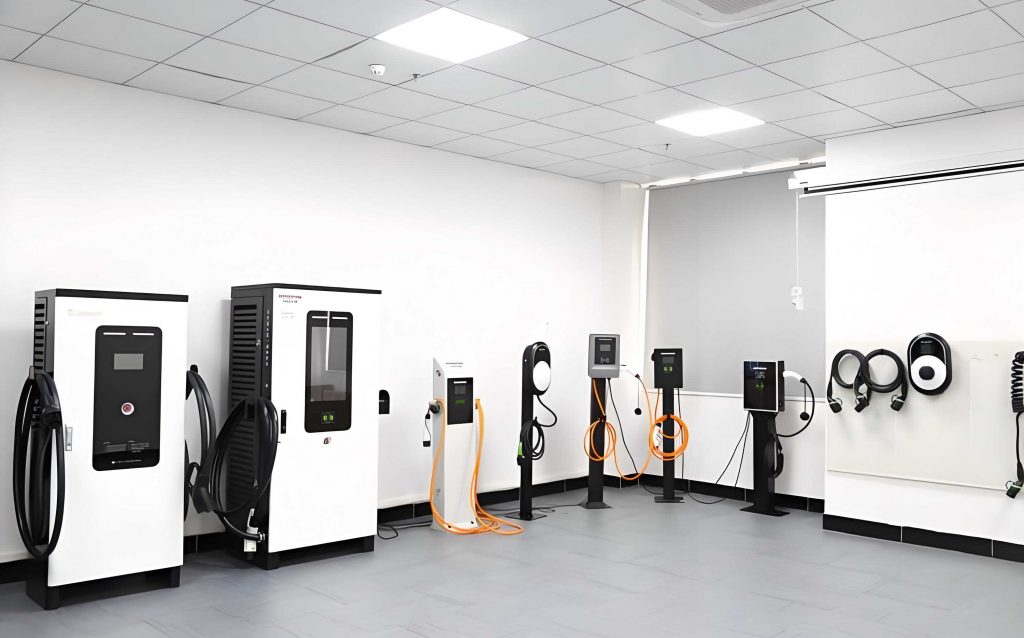
In the verification of EV charging stations, the appearance and functionality inspection is a fundamental step that often reveals compliance issues. For instance, some manufacturers incorrectly label the accuracy class of EV charging stations as 0.5级, whereas JJG 1148-2022明确规定 that accuracy classes should be limited to Level 1 or Level 2. This discrepancy necessitates adjustments by manufacturers to align with regulatory requirements. Additionally, the physical condition of EV charging stations, particularly the charging gun head, requires regular maintenance to prevent safety hazards. Operational management plays a vital role here; charging station operators must enforce standardized procedures and conduct periodic inspections to replace damaged components, thereby ensuring the reliable performance of EV charging stations.
Another significant issue in EV charging station verification involves unauthorized data manipulation. Some manufacturers provide backend access to operators, who may alter parameters like energy meter line loss rates before verification to skew results, ultimately leading to consumer financial losses. This not only disrupts the metrological process but also undermines trust in EV charging station technology. To mitigate this, it is essential to establish strict permission controls and implement regular, unannounced audits by market supervision authorities. Such measures help maintain the integrity of energy measurement in EV charging stations and foster industry credibility.
The display of energy values in EV charging stations is another area prone to non-compliance. According to JJG 1148-2022, the minimum energy variable should be 0.001 kWh, with energy displays showing at least three decimal places. However, in field verifications, many EV charging stations exhibit issues such as minimum energy variables of 0.1 kWh or 0.01 kWh, and displays with only one or two decimal places. Even when three decimals are shown, the third digit may remain static, indicating a pseudo-precision. The root causes often lie in the limitations of the energy meter’s display capabilities or flaws in communication protocols. For example, if the meter only supports two decimal places, data transmitted to the EV charging station’s screen or app will be truncated. To address this, upgrading to meters that support 0.001 kWh resolution and optimizing data parsing mechanisms are recommended. The table below summarizes common display issues and their solutions in EV charging stations:
| Issue Type | Description | Recommended Solution |
|---|---|---|
| Insufficient Decimal Display | Energy display shows only 1 or 2 decimals | Replace with meters supporting 3 decimals; update communication protocols |
| Pseudo-Precision | Third decimal remains fixed during energy accumulation | Treat minimum energy variable as 0.01 kWh; verify true resolution |
| Data Transmission Errors | Discrepancies between screen and app displays | Standardize display logic and enhance data integrity checks |
Basic functionality problems in EV charging stations, such as persistent fault indicators, ground wire issues, and emergency stop button failures, are frequently encountered. For instance, a constantly lit fault light may result from control board damage or loose connections between the board and touchscreen. In such cases, replacing the control board or securing wiring connections can resolve the issue. Ground wire faults, on the other hand, require thorough checks of wiring integrity and voltage measurements. Using a multimeter, the voltage between live (L) and ground (PE) wires, as well as neutral (N) and ground (PE) wires, should be assessed; during charging, the N-PE voltage should not exceed 5 V. Additionally, ground resistance must be measured with a ground resistance tester and should not surpass 4 Ω. If a ground fault occurs in standby mode, it often points to poor installation or live neutral wires. Emergency stop button malfunctions, where the button fails to reset after activation, can be addressed by rotating it clockwise or replacing the button if damaged. Safety is paramount here, as these components may carry 220 V voltage, necessitating power disconnection before any maintenance.
Operational error testing is a core aspect of EV charging station verification, directly impacting measurement accuracy. JJG 1148-2022 specifies that EV charging stations should provide test output interfaces, such as pulse output or photoelectric sampling interfaces. Based on field experience, pulse output interfaces are preferred over photoelectric ones due to their reliability in varying light conditions and higher efficiency. When using pulse output, the pulse constant of the verification device must match that of the energy meter inside the EV charging station. If current transformers are involved, the effective pulse constant is calculated as the nominal pulse constant divided by the transformer’s rated ratio. The operational error for EV charging stations is computed using the formula: $$ \text{Error} = \frac{E_{\text{display}} – E_{\text{standard}}}{E_{\text{standard}}} \times 100\% $$ where \( E_{\text{display}} \) is the energy displayed by the EV charging station, and \( E_{\text{standard}} \) is the reference value from the standard device. Accuracy classes for EV charging stations are defined as Level 1 and Level 2, with minimum energy accumulation requirements: for a minimum energy variable of 0.001 kWh, Level 1 EV charging stations should accumulate at least 0.5 kWh, and Level 2 at least 0.25 kWh; for 0.01 kWh, the values are 5 kWh and 2.5 kWh, respectively. To ensure accuracy, it is advisable to exceed these minima—for example, accumulating up to 1 kWh for Level 1 EV charging stations with 0.001 kWh variables. The following table presents sample operational error test data for multiple EV charging stations, highlighting the variability and need for repeated measurements:
| Measurement Number | Station 1 Error (%) | Station 2 Error (%) | Station 3 Error (%) | Station 4 Error (%) | Station 5 Error (%) |
|---|---|---|---|---|---|
| 1 | +1.158 | -1.026 | +0.525 | -1.063 | +1.555 |
| 2 | -1.263 | -0.261 | -1.568 | -1.674 | +1.256 |
| 3 | -1.338 | +0.156 | -1.233 | -0.268 | -0.652 |
| 4 | +0.469 | +1.422 | +1.699 | +1.050 | -0.906 |
| 5 | +1.401 | -1.320 | +1.055 | +1.551 | +0.295 |
| 6 | -0.333 | +1.012 | -0.790 | -1.223 | -1.905 |
As shown, the repeated measurements reveal significant variability in errors across different EV charging stations, underscoring the importance of multiple tests to obtain reliable data. In cases where EV charging stations exhibit poor repeatability, increasing the number of measurements can help capture the true performance and ensure compliance with accuracy standards.
Clock time error verification is essential for EV charging stations with time-of-use billing capabilities. This involves comparing the EV charging station’s display time with a standard reference, typically synchronized via GPS in the verification device. Visual estimation of time differences can lead to inaccuracies; thus, improved methods such as photographing or video-recording both times simultaneously are recommended for precise comparison. Common issues include EV charging stations being offline for extended periods without GPS time synchronization, resulting in clock drift. Manufacturers should ensure that EV charging stations remain online and enable real-time time calibration to maintain accuracy. For EV charging stations without displays, the time shown on associated charging apps can be used for verification. However, if the app does not display the current time, alternative approaches, such as using the charging session time, may be necessary. The time error can be expressed as: $$ \Delta t = t_{\text{display}} – t_{\text{standard}} $$ where \( \Delta t \) is the clock time error, \( t_{\text{display}} \) is the time shown on the EV charging station or app, and \( t_{\text{standard}} \) is the standard time. Ensuring minimal \( \Delta t \) is crucial for fair billing in time-based tariff systems.
In conclusion, the metrological verification of EV charging stations is a complex process that requires attention to detail and adherence to regulatory standards. From appearance and functionality checks to operational and clock time errors, each aspect plays a vital role in ensuring the accuracy and reliability of EV charging stations. By addressing common issues such as incorrect accuracy labeling, unauthorized data access, display inaccuracies, and functional faults, stakeholders can enhance the performance of EV charging stations. Moreover, employing robust testing methods, including repeated error measurements and advanced time verification techniques, contributes to the overall trustworthiness of these systems. As the adoption of electric vehicles continues to rise, ongoing improvements in EV charging station verification will be essential to support a sustainable and equitable energy ecosystem.