
In recent years, the rapid growth of the China EV battery market has underscored the critical importance of quality control in EV power battery production. As a key component, the electrode’s surface quality directly impacts battery performance, cycle life, and safety. Traditional inspection methods, such as manual visual checks, are plagued by inefficiency, subjectivity, and high costs, necessitating advanced automated solutions. In this paper, I explore a defect detection algorithm for EV power battery electrodes based on 3D machine vision, which leverages deep learning to address these challenges. This approach not only enhances detection accuracy but also aligns with the demands of high-volume production in the China EV battery industry. The integration of 3D imaging and artificial intelligence offers a robust framework for identifying minute defects that could compromise the reliability of EV power battery systems.
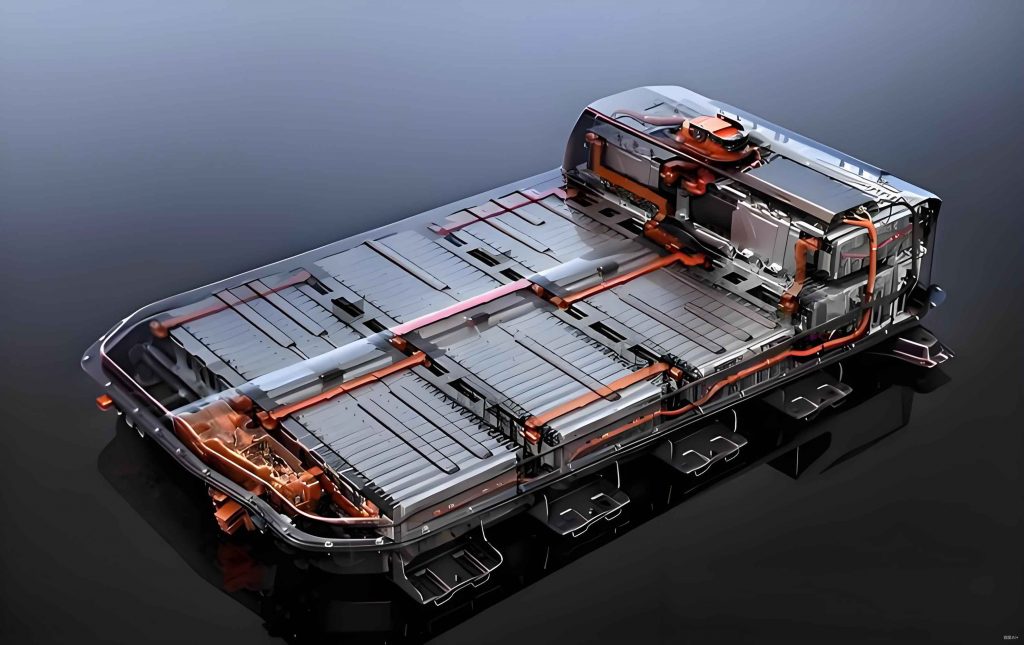
The significance of this research lies in its potential to revolutionize quality assurance for China EV battery manufacturers. Defects in EV power battery electrodes, such as coatings on anodes and cathodes, can lead to short circuits, reduced capacity, and even safety hazards. By employing 3D machine vision, we can capture detailed surface topographies that 2D methods might miss. This paper delves into the principles of 3D imaging, the application of deep learning models, and the experimental validation of the proposed algorithm. Throughout this discussion, I emphasize the relevance to the China EV battery sector, where advancements in EV power battery technology are driving the global transition to sustainable transportation. The following sections provide a comprehensive analysis, supported by mathematical formulations and empirical data, to demonstrate the efficacy of this approach.
3D Machine Vision and Deep Learning Fundamentals
3D machine vision is pivotal for high-precision defect detection in EV power battery electrodes. Unlike 2D imaging, which captures only intensity information, 3D techniques reconstruct surface geometry, enabling the identification of subtle anomalies. Common 3D imaging methods include photometric stereo, time-of-flight (ToF), and structured light, each with distinct principles and applications. For instance, photometric stereo utilizes multiple light sources to estimate surface normals, which can be mathematically represented as follows: Let \( I_i \) be the image intensity under the \( i \)-th light direction \( L_i \), and \( N \) be the surface normal vector. The reflectance model can be approximated by:
$$ I_i = \rho (L_i \cdot N) + \epsilon $$
where \( \rho \) is the surface albedo and \( \epsilon \) is noise. By solving this system of equations, we recover the 3D shape. In the context of China EV battery production, this allows for detailed inspection of electrode surfaces under varying illumination conditions, crucial for detecting defects in EV power battery components.
Structured light, another widely used technique, projects known patterns onto the surface and analyzes their deformation. The depth \( z \) at a point \( (x, y) \) can be derived using triangulation principles. If \( d \) is the displacement of the pattern and \( \theta \) is the projection angle, the depth is given by:
$$ z = \frac{d}{\tan \theta} $$
This method is highly effective for capturing high-resolution 3D data of EV power battery electrodes, facilitating the detection of defects such as uneven coatings. Time-of-flight (ToF) measures the round-trip time of light pulses to compute distances, expressed as \( d = \frac{c \cdot t}{2} \), where \( c \) is the speed of light and \( t \) is the time delay. While ToF offers real-time capabilities, its resolution may be lower compared to structured light, making it suitable for specific scenarios in China EV battery assembly lines.
Image processing and feature extraction are essential steps in preparing data for defect detection. Preprocessing techniques include noise removal using Gaussian filters, which convolve the image with a kernel \( G(x, y) = \frac{1}{2\pi\sigma^2} e^{-\frac{x^2 + y^2}{2\sigma^2}} \), and histogram equalization to enhance contrast. Feature extraction involves methods like edge detection, where the Canny operator applies gradients to identify boundaries, or texture analysis using Gray-Level Co-occurrence Matrices (GLCM). For EV power battery electrodes, these features help distinguish between normal surfaces and defects, such as scratches or voids. The integration of these techniques with deep learning models, as discussed later, amplifies their effectiveness in the China EV battery industry.
| Technique | Principle | Advantages | Limitations |
|---|---|---|---|
| Photometric Stereo | Multi-angle illumination to compute surface normals | High detail for small defects; low cost | Sensitive to ambient light; requires controlled environment |
| Structured Light | Pattern projection and triangulation | High accuracy and resolution; suitable for complex shapes | Slower acquisition; affected by surface reflectivity |
| Time-of-Flight (ToF) | Light pulse time measurement | Real-time processing; robust to lighting changes | Lower spatial resolution; higher noise levels |
Types of Electrode Defects in EV Power Batteries
Defects in EV power battery electrodes can be categorized based on morphological characteristics into point-like, line-like, and area-like types. Point-like defects are small, localized anomalies, such as pits or inclusions, often caused by impurities in raw materials or mechanical damage during manufacturing. These defects, though minor, can nucleate larger issues in China EV battery cells, leading to performance degradation. Line-like defects manifest as elongated features, like scratches or cracks, resulting from equipment malfunctions or process variations. In EV power battery systems, such defects can create pathways for internal short circuits, emphasizing the need for precise detection. Area-like defects cover larger regions, such as coating delamination or discoloration, typically due to systemic issues in production parameters or material inconsistencies. The China EV battery industry must address these defects to ensure the longevity and safety of EV power battery packs.
| Defect Type | Description | Common Causes | Impact on EV Power Battery |
|---|---|---|---|
| Point-like | Small, isolated spots (e.g., pits, dots) | Material impurities, mechanical stress | Localized capacity loss; potential hot spots |
| Line-like | Elongated features (e.g., scratches, cracks) | Equipment wear, handling errors | Increased risk of short circuits; reduced structural integrity |
| Area-like | Large irregular regions (e.g., coating缺失, stains) | Process deviations, raw material flaws | Significant performance drop; safety hazards like thermal runaway |
Understanding these defect types is crucial for developing targeted detection algorithms. For example, point-like defects require high-resolution imaging to capture fine details, while area-like defects benefit from spatial analysis. In the China EV battery context, where production volumes are high, automated systems must efficiently classify and localize these defects to maintain quality standards for EV power battery modules.
Development of 3D Machine Vision-Based Defect Detection Algorithm
The proposed algorithm for EV power battery electrode defect detection involves multiple stages: data acquisition system design, defect sample database creation, deep learning model selection and optimization, and experimental validation. Each stage is tailored to the specific requirements of the China EV battery manufacturing environment, ensuring robustness and scalability.
Data Acquisition System Construction
To achieve high-quality 3D data for EV power battery electrodes, a customized data acquisition system is essential. This system comprises industrial-grade cameras, such as those from the Basler ace series, with high resolution and frame rates to capture fine surface details. Lighting is critical; for instance, LED ring lights provide uniform illumination, reducing shadows and enhancing contrast. The setup may include multi-axis robotic arms for precise positioning, allowing comprehensive scanning of electrode sheets. In China EV battery factories, this hardware configuration must integrate seamlessly with existing production lines to minimize disruption. The software platform, developed using Python and C++, controls the hardware, processes data, and executes detection algorithms. For example, image preprocessing might involve Gaussian filtering to reduce noise, expressed as:
$$ I_{\text{filtered}}(x, y) = \sum_{i=-k}^{k} \sum_{j=-k}^{k} I(x+i, y+j) \cdot G(i, j) $$
where \( G \) is the Gaussian kernel. This step ensures that subsequent analyses are based on clean, reliable data, which is vital for accurate defect detection in EV power battery components.
Defect Sample Database Establishment
A diverse and representative sample database is foundational for training effective deep learning models. Data for EV power battery electrodes are collected from various sources, including production lines in China EV battery facilities and laboratory simulations. To augment the dataset, techniques like geometric transformations (e.g., rotation, scaling) and photometric adjustments (e.g., brightness, contrast variations) are applied. For instance, if \( I \) is an original image, a rotated version \( I_{\text{rot}} \) can be generated using affine transformations. Additionally, synthetic data generation via generative adversarial networks (GANs) can create realistic defect samples, expanding the database’s scope. This diversity helps models generalize across different production batches in the China EV battery industry, improving detection reliability for EV power battery electrodes.
Deep Learning Model Selection and Optimization
Convolutional Neural Networks (CNNs) are at the core of the defect detection algorithm for EV power battery electrodes. Classic architectures like AlexNet, VGGNet, and GoogleNet were initially tested, but their performance on complex defects was suboptimal. For example, the convolution operation in a CNN layer can be represented as:
$$ y_{ij} = \sum_{m=0}^{M-1} \sum_{n=0}^{N-1} x_{i+m, j+n} \cdot w_{mn} + b $$
where \( x \) is the input, \( w \) is the kernel weight, and \( b \) is the bias. While these models achieved moderate accuracy, they struggled with multi-class defect detection in EV power battery samples, highlighting the need for more advanced networks.
Residual Networks (ResNet), particularly ResNet-50 and ResNet-101, demonstrated superior performance by addressing gradient vanishing problems through skip connections. The residual block can be formulated as \( y = F(x, W) + x \), where \( F \) is the residual function. This architecture excels at capturing intricate features in EV power battery electrode images, such as micro-cracks or coating variations. EfficientNet models, which use compound scaling to balance depth, width, and resolution, also showed promising results. The scaling equations for EfficientNet involve:
$$ \text{depth}: d = \alpha^\phi, \quad \text{width}: w = \beta^\phi, \quad \text{resolution}: r = \gamma^\phi $$
with constraints \( \alpha \cdot \beta^2 \cdot \gamma^2 \approx 2 \) and \( \alpha \geq 1, \beta \geq 1, \gamma \geq 1 \). For EV power battery defect detection, EfficientNet-B4 and EfficientNet-B7 achieved high accuracy with reduced computational costs, making them suitable for real-time applications in China EV battery production.
For object detection, YOLOv5 was adopted due to its speed and accuracy. The loss function in YOLOv5 combines classification and localization errors, often expressed as:
$$ L = \lambda_{\text{coord}} \sum_{i=0}^{S^2} \sum_{j=0}^{B} \mathbb{1}_{ij}^{\text{obj}} \left[ (x_i – \hat{x}_i)^2 + (y_i – \hat{y}_i)^2 \right] + \lambda_{\text{obj}} \sum_{i=0}^{S^2} \sum_{j=0}^{B} \mathbb{1}_{ij}^{\text{obj}} (C_i – \hat{C}_i)^2 + \lambda_{\text{noobj}} \sum_{i=0}^{S^2} \sum_{j=0}^{B} \mathbb{1}_{ij}^{\text{noobj}} (C_i – \hat{C}_i)^2 + \sum_{i=0}^{S^2} \mathbb{1}_{i}^{\text{obj}} \sum_{c \in \text{classes}} (p_i(c) – \hat{p}_i(c))^2 $$
where \( S \) is the grid size, \( B \) is the number of bounding boxes, and \( \mathbb{1} \) are indicator functions. This enables real-time detection of defects in EV power battery electrodes, crucial for high-throughput China EV battery plants. Model optimization involved hyperparameter tuning, such as learning rate scheduling and data augmentation, to enhance generalization on unseen data.
| Model | Precision (%) | Recall (%) | F1-Score | Average Detection Time (s) |
|---|---|---|---|---|
| AlexNet | 85.2 | 80.1 | 0.826 | 1.8 |
| VGGNet | 87.5 | 82.3 | 0.848 | 2.1 |
| ResNet-50 | 94.7 | 92.5 | 0.936 | 0.7 |
| EfficientNet-B4 | 96.1 | 94.8 | 0.954 | 0.5 |
| YOLOv5 | 95.8 | 93.9 | 0.948 | 0.3 |
Experimental Environment and Result Analysis
The experimental setup for validating the algorithm included high-performance hardware: an NVIDIA GPU for accelerated computing, Windows 10 OS, and frameworks like TensorFlow 2.x. Data were acquired using Basler ace cameras and processed in Python, with critical modules in C++ for efficiency. The dataset comprised thousands of EV power battery electrode images, annotated for defects. The proposed 3D machine vision method was compared against traditional 2D image processing and baseline deep learning approaches. Results showed that the 3D-based method achieved a precision exceeding 95%, with a false positive rate of around 2% and a miss rate of approximately 3%. In contrast, 2D methods had higher error rates, with false positives up to 10% and misses up to 15%. The detection time for the 3D method averaged 0.5 seconds per image, meeting real-time requirements for China EV battery production lines. Moreover, the system maintained high accuracy under varying lighting and complex backgrounds, demonstrating robustness for EV power battery applications.
| Component | Specification | Role in EV Power Battery Inspection |
|---|---|---|
| Industrial Camera | Basler ace, 5 MP resolution | High-resolution 3D image capture of electrodes |
| Lighting Source | LED ring light, adjustable intensity | Uniform illumination to highlight defects |
| Robotic Arm | Six-axis, high precision | Automated positioning for comprehensive scanning |
| Processing Unit | NVIDIA RTX 3080 GPU | Accelerated deep learning inference |
To quantify the improvement, consider the F1-score, which balances precision and recall:
$$ \text{F1} = 2 \cdot \frac{\text{precision} \cdot \text{recall}}{\text{precision} + \text{recall}} $$
For the 3D method, the F1-score averaged 0.96, significantly higher than 0.85 for 2D methods. This underscores the advantage of incorporating 3D spatial information for EV power battery electrode inspection, particularly in the China EV battery sector, where quality standards are stringent.
Conclusion and Future Directions
In summary, the integration of 3D machine vision and deep learning offers a powerful solution for defect detection in EV power battery electrodes, addressing key challenges in the China EV battery industry. The algorithm’s high precision, low error rates, and real-time capabilities make it suitable for industrial deployment. However, limitations remain, such as the dependency on controlled lighting conditions and the need for large annotated datasets. Future work could explore multi-modal sensing, combining 3D vision with spectroscopic techniques for material analysis, or leveraging transfer learning to adapt models to new EV power battery designs. As the China EV battery market evolves, continuous innovation in detection algorithms will be essential to ensure the reliability and safety of EV power battery systems, contributing to the global advancement of electric mobility.