
As a researcher in the field of electric vehicle technology, I have observed the rapid growth of the China EV battery industry, driven by global emphasis on energy conservation and environmental protection. The EV power battery serves as the core component of new energy vehicles, directly influencing their safety, reliability, and lifespan. However, factors such as material properties, manufacturing processes, and operating environments can lead to various failures in China EV batteries, including capacity degradation, increased internal resistance, and insulation failures, which may trigger safety incidents and hinder the widespread adoption of electric vehicles. Therefore, in-depth research on fault diagnosis and exclusion methods for EV power batteries is crucial to ensure the safe operation of new energy vehicles. In this article, I will analyze common fault types, explore key diagnostic technologies, and propose effective exclusion strategies for China EV batteries, incorporating tables and formulas to summarize critical aspects. The discussion will emphasize the importance of advanced monitoring and management systems for maintaining the performance of China EV battery systems.
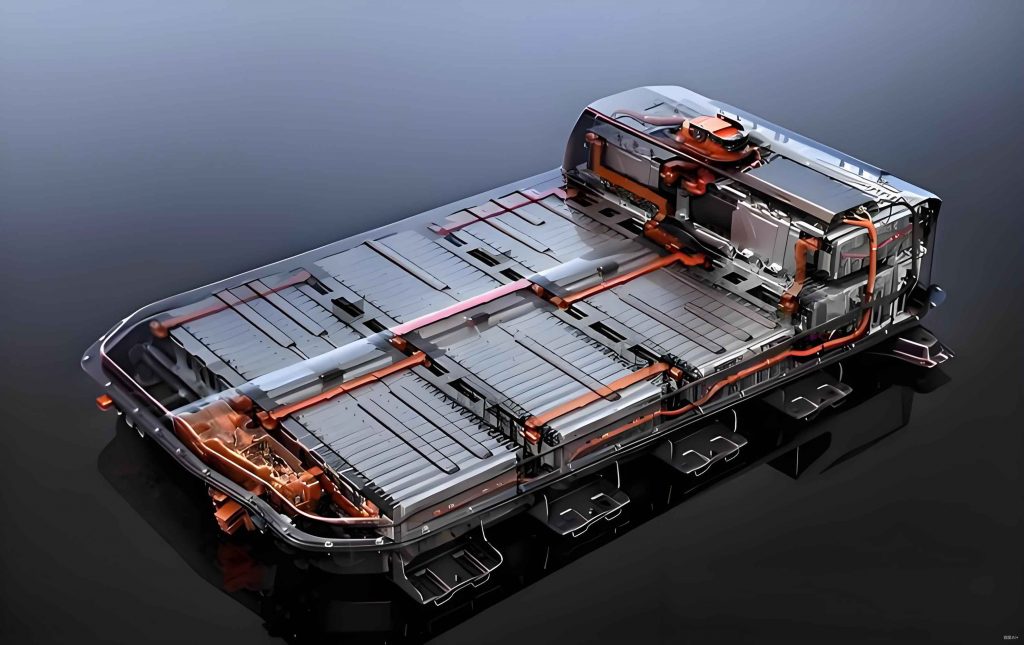
To begin, I will outline the common fault types in China EV batteries, which can be categorized into cell-level, system-level, and battery management system (BMS) faults. At the cell level, issues such as capacity fade, increased internal resistance, and accelerated self-discharge are prevalent. For instance, capacity fade results from irreversible losses due to factors like active material detachment and SEI film thickening, which can be modeled using degradation equations. The capacity at any time \( t \) can be expressed as $$ C(t) = C_0 \cdot e^{-kt} $$ where \( C_0 \) is the initial capacity, and \( k \) is the degradation rate constant. Increased internal resistance, often caused by electrolyte drying or material corrosion, leads to reduced efficiency and heating, with the internal resistance \( R_i \) given by $$ R_i = R_0 + \Delta R $$ where \( R_0 \) is the initial resistance and \( \Delta R \) is the resistance increase over time. Self-discharge加剧 can be quantified by the self-discharge current \( I_{sd} \), which affects the state of charge (SOC) over time.
| Fault Type | Causes | Impact on EV Power Battery |
|---|---|---|
| Capacity Fade | Active material loss, SEI growth | Reduced range and performance |
| Increased Internal Resistance | Electrolyte degradation, corrosion | Heating and efficiency drop |
| Accelerated Self-Discharge | Side reactions, impurities | Faster capacity loss during storage |
At the system level, China EV battery packs face issues like cell imbalance and connection faults. Cell imbalance arises from manufacturing variations in capacity and internal resistance among cells, leading to performance degradation. The imbalance can be characterized by the standard deviation of cell voltages \( \sigma_V \), where higher values indicate severe imbalance. Connection faults, such as loose bolts or corroded busbars, increase contact resistance \( R_c \), causing localized heating and voltage drops. Insulation degradation is another critical system fault, where reduced insulation resistance \( R_{ins} \) can lead to leakage currents and short circuits, posing safety risks. For example, the leakage current \( I_{leak} \) can be estimated using $$ I_{leak} = \frac{V}{R_{ins}} $$ where \( V \) is the operating voltage. These system-level faults highlight the need for robust design and monitoring in EV power battery systems.
Moving to the battery management system (BMS), faults in sensors, drive circuits, and software can compromise the entire China EV battery operation. Sensor failures, such as voltage or temperature sensor drift, result in inaccurate state estimations, while drive circuit faults in balancing or contactor control can cause functional failures. Software issues, including algorithm errors or parameter mismatches, may lead to protection failures or communication errors. To address these, I emphasize the importance of redundant designs and real-time diagnostics in BMS for China EV batteries.
In the realm of fault diagnosis technologies, state of health (SOH) assessment is fundamental for China EV batteries. SOH indicates the degradation level relative to the initial state, typically defined as $$ \text{SOH} = \frac{C_{\text{current}}}{C_{\text{initial}}} \times 100\% $$ where \( C_{\text{current}} \) is the current capacity and \( C_{\text{initial}} \) is the initial capacity. Various methods are employed for SOH estimation, as summarized in the table below. Direct measurement involves using specialized equipment to measure capacity and internal resistance, but it is time-consuming and not suitable for onboard applications. Equivalent circuit models (ECM) represent the battery dynamics using circuits, with parameters identified online; for example, a common ECM includes a resistor-capacitor network where the state equations are $$ V_t = OCV(SOC) – I \cdot R_0 – V_p $$ and $$ \frac{dV_p}{dt} = -\frac{1}{R_p C_p} V_p + \frac{I}{C_p} $$ where \( V_t \) is terminal voltage, \( OCV \) is open-circuit voltage, \( I \) is current, \( R_0 \) is ohmic resistance, and \( V_p \) is polarization voltage. Data-driven approaches, such as machine learning, use historical data to map features like voltage curves to SOH, offering adaptability but requiring large datasets. For China EV battery applications, I recommend hybrid methods that combine model-based and data-driven techniques for accurate SOH estimation.
| Method | Description | Advantages | Limitations |
|---|---|---|---|
| Direct Measurement | Physical testing of capacity and resistance | High accuracy | Destructive, offline |
| Equivalent Circuit Model | Online parameter identification | Real-time capability | Model dependency |
| Data-Driven | Machine learning algorithms | Adaptive to variations | Data quality sensitivity |
Another critical technology is state of charge (SOC) estimation, which determines the remaining energy in a China EV battery. Common methods include ampere-hour integration, open-circuit voltage (OCV) correlation, and Kalman filtering. The ampere-hour method calculates SOC as $$ SOC(t) = SOC_0 – \frac{1}{C_n} \int_0^t \eta I(\tau) d\tau $$ where \( SOC_0 \) is initial SOC, \( C_n \) is nominal capacity, \( \eta \) is coulombic efficiency, and \( I \) is current. However, this method suffers from error accumulation due to sensor inaccuracies. OCV-SOC relationships, often derived from experimental data, provide a reference but require resting periods. Kalman filters, such as the extended Kalman filter (EKF), offer robust SOC estimation by modeling system dynamics and correcting for noise. The EKF equations include the state update: $$ \hat{x}_k^- = f(\hat{x}_{k-1}, u_{k-1}) $$ and measurement update: $$ K_k = P_k^- H_k^T (H_k P_k^- H_k^T + R_k)^{-1} $$ where \( \hat{x} \) is state estimate, \( u \) is input, \( K \) is Kalman gain, \( P \) is error covariance, \( H \) is measurement matrix, and \( R \) is noise covariance. For China EV battery systems, I advocate for adaptive algorithms that incorporate temperature and aging effects to enhance SOC accuracy, as SOC errors can lead to range anxiety and safety issues in EV power batteries.
Thermal management strategy optimization is vital for maintaining China EV battery performance and safety. Batteries generate heat during operation, and excessive temperatures can accelerate aging or cause thermal runaway. The heat generation rate \( \dot{Q} \) can be modeled as $$ \dot{Q} = I^2 R_i + I \left( \frac{\partial OCV}{\partial T} \right) \Delta T $$ where \( T \) is temperature. Cooling methods include liquid cooling, air cooling, and phase change materials, each with efficiency metrics. For instance, liquid cooling systems use coolant flow rates optimized via control strategies like predictive control based on vehicle load and ambient conditions. A table comparing thermal management approaches is provided below. I stress that effective thermal management not only prevents faults but also extends the lifespan of EV power batteries, especially in diverse climatic conditions in China.
| Method | Mechanism | Efficiency | Application in EV Power Battery |
|---|---|---|---|
| Liquid Cooling | Coolant circulation through channels | High | Common in high-power systems |
| Air Cooling | Forced convection with fans | Moderate | Cost-effective for standard packs |
| Phase Change | Material latent heat absorption | Variable | Emerging technology |
For short-circuit fault diagnosis, I focus on techniques like impedance spectroscopy and model-based detection. A sudden drop in voltage or rise in current can indicate a short circuit, with the fault current \( I_{fault} \) given by $$ I_{fault} = \frac{V}{R_{short}} $$ where \( R_{short} \) is the short-circuit resistance. Advanced BMS in China EV batteries often use real-time monitoring to isolate faulty cells and prevent cascading failures.
Regarding exclusion methods for typical faults, cell imbalance in China EV batteries can be addressed through balancing control strategies. Passive balancing dissipates excess energy from high-SOC cells using resistors, with power loss \( P_{diss} = I_{bal}^2 R_{bal} \), where \( I_{bal} \) is balancing current and \( R_{bal} \) is resistance. Active balancing, however, transfers energy between cells using circuits like switched capacitors, with efficiency \( \eta_{bal} \) defined as $$ \eta_{bal} = \frac{P_{out}}{P_{in}} $$ where \( P_{out} \) is output power and \( P_{in} \) is input power. I recommend active balancing for high-performance EV power batteries due to better energy utilization, though it involves higher complexity and cost.
For temperature anomalies, thermal management control strategies include predictive control based on models that forecast battery temperature \( T_{bat} \) using $$ \frac{dT_{bat}}{dt} = \frac{\dot{Q} – hA(T_{bat} – T_{amb})}{mC_p} $$ where \( h \) is heat transfer coefficient, \( A \) is surface area, \( T_{amb} \) is ambient temperature, \( m \) is mass, and \( C_p \) is specific heat. Zone-based control applies differentiated cooling to hot spots, while fault-triggered responses limit power or activate cooling upon detecting overheating. In China EV battery applications, integrating these strategies with BMS ensures safe operation under extreme conditions.
Internal resistance突变, often a sign of aging, requires accurate diagnosis and maintenance. If internal resistance \( R_i \) increases abruptly, it may indicate irreversible degradation. The SOH can be correlated with internal resistance using $$ \text{SOH} = a \cdot e^{-b \Delta R_i} + c $$ where \( a, b, c \) are constants derived from experimental data. Maintenance actions include adjusting charge protocols or replacing cells based on SOH assessments. For China EV batteries, I propose routine testing and machine learning-based prognostics to schedule maintenance, thereby optimizing the lifecycle of EV power batteries.
Overcharge and over-discharge faults are mitigated through voltage and current limits in BMS. For example, the charging current \( I_{charge} \) should satisfy $$ I_{charge} \leq \frac{C_n}{t_{charge}} $$ where \( t_{charge} \) is charging time, and voltage limits prevent exceeding safe thresholds. In China EV battery systems, robust BMS algorithms with multi-layer protection are essential to avoid these faults.
In conclusion, the advancement of China EV battery technology hinges on comprehensive fault diagnosis and exclusion methods. By analyzing fault mechanisms, implementing key technologies like SOH and SOC estimation, and applying tailored exclusion strategies, we can enhance the safety and reliability of EV power batteries. Future integration of AI and big data will further revolutionize this field, supporting the sustainable growth of the electric vehicle industry. As I reflect on these insights, continuous innovation in China EV battery systems will play a pivotal role in global energy transitions.