
In the era of Industry 4.0, I have observed a profound transformation in manufacturing, driven by intelligent, digital, and networked trends that are reshaping production processes, enhancing efficiency, and improving product quality. As an integral part of this revolution, electric vehicles, particularly in the context of China EV markets, are emerging as pivotal players in the automotive industry’s future. These vehicles are celebrated for their environmental benefits, energy efficiency, and sustainable development potential. The mechanical transmission system within an electric vehicle plays a critical role, as it is responsible for transmitting torque and rotational speed, directly influencing driving efficiency and energy consumption. Therefore, optimizing this system is essential for boosting the overall performance of electric vehicles. In this article, I will delve into the optimization strategies for mechanical transmission systems under Industry 4.0, emphasizing digital design, intelligent control, material innovations, and system integration, with a focus on electric vehicle applications, including the rapidly growing China EV sector.
Industry 4.0, originating from Germany, represents a significant shift toward smart manufacturing, characterized by intelligent factories, production, logistics, and services. This paradigm aims to achieve comprehensive optimization and intelligent management of production flows. The mechanical transmission system, serving as a bridge between the power source and execution mechanisms, ensures the transmission of torque and speed, which is vital for the smooth operation of mechanical systems. In electric vehicles, key components like reducers, differentials, and drive shafts are integral to the transmission system, and their optimization is crucial for enhancing driving efficiency. With the advent of Industry 4.0, digitalization, networking, and intelligence introduce new challenges and opportunities. On one hand, design requirements have become more refined, necessitating multi-factor collaborative optimization; on the other hand, the application of intelligent technologies enables performance improvements and predictive fault detection in mechanical transmission systems.
To better understand the core components of power systems in electric vehicles, I have analyzed the mechanical transmission system’s role in broader动力 systems. Typically, a power system includes an energy conversion device (e.g., an electric motor), an energy storage unit (e.g., batteries), a control system for regulating power output, and the mechanical transmission system. The latter acts as a critical link, transferring mechanical energy from the power source to the final execution components. Its functions extend beyond basic torque and speed transmission to optimizing power output characteristics through precise gear ratios, thereby improving overall efficiency and reducing energy consumption. Moreover, the design must account for dynamic loads and impacts, ensuring high strength, reliability, and longevity under various complex conditions. However, current developments face challenges such as weight control, noise and vibration suppression, and the need for higher transmission precision and stability to meet the demands of intelligent, high-precision control in applications ranging from electric vehicles to industrial automation and aerospace.
In the context of Industry 4.0, I propose several optimization strategies for mechanical transmission systems in electric vehicles. First, digital design has become a cornerstone, leveraging tools like CAD (Computer-Aided Design) and CAE (Computer-Aided Engineering) for precise 3D modeling, simulation, and optimization. Simulation plays a key role in predicting performance under various operating conditions, such as transmission efficiency, noise, and vibration, allowing designers to identify and resolve issues early, thus avoiding costly modifications later. For instance, the transmission efficiency can be modeled using the formula: $$ \eta = \frac{P_{\text{out}}}{P_{\text{in}}} $$ where \( \eta \) is the efficiency, \( P_{\text{out}} \) is the output power, and \( P_{\text{in}} \) is the input power. This helps in optimizing gear designs for electric vehicles, including those in the China EV market, to achieve higher efficiency targets.
| Tool Type | Application | Benefits | Challenges |
|---|---|---|---|
| CAD Software | 3D modeling and design visualization | Enables precise component design and integration | Requires high computational resources |
| CAE Simulations | Performance analysis under load conditions | Predicts efficiency, noise, and vibration early | Dependent on accurate input parameters |
| Finite Element Analysis (FEA) | Stress and strain evaluation | Improves durability and reduces weight | Time-consuming for complex systems |
Second, intelligent control is another vital strategy I have explored. By integrating smart sensors and control systems, real-time monitoring of parameters like temperature, pressure, and vibration becomes possible. This facilitates predictive maintenance based on big data and AI, where historical data analysis builds fault prediction models. For example, the probability of a transmission failure can be estimated using statistical models, enabling timely maintenance and reducing downtime. The control algorithm might involve equations such as: $$ \tau = k_p e + k_i \int e \, dt + k_d \frac{de}{dt} $$ where \( \tau \) is the control torque, \( e \) is the error signal, and \( k_p, k_i, k_d \) are PID gains. This approach is particularly relevant for electric vehicles, as it enhances adaptability to driving conditions and improves energy efficiency in China EV applications.
Third, materials and technological innovations are essential for advancing mechanical transmission systems. I have investigated the use of new materials like high-strength alloys and composites, which offer improved strength, wear resistance, and weight reduction. Additionally, advanced transmission technologies, such as continuously variable transmission (CVT), allow for seamless ratio changes, increasing flexibility. The stress on a gear tooth can be calculated using: $$ \sigma = \frac{F}{A} $$ where \( \sigma \) is the stress, \( F \) is the force applied, and \( A \) is the cross-sectional area. By applying lightweight materials, the overall mass of the transmission system decreases, which is crucial for extending the range of electric vehicles, including those in the China EV sector.
| Material Type | Density (g/cm³) | Tensile Strength (MPa) | Application in Transmission | Impact on Electric Vehicle Efficiency |
|---|---|---|---|---|
| High-Strength Steel | 7.85 | 800-1200 | Gears and shafts | Improves durability but increases weight |
| Aluminum Alloy | 2.70 | 300-500 | Housing and lightweight components | Reduces weight, enhancing range for China EV |
| Carbon Fiber Composite | 1.75 | 1500-2000 | High-stress parts | Significant weight savings and corrosion resistance |
Fourth, system integration and optimization are key to achieving holistic improvements. I have focused on the integration of mechanical transmission systems with other components like motors and batteries to enable efficient energy transfer and conversion. Optimizing transmission ratios, efficiency, and weight through comprehensive design is vital. For instance, the overall efficiency of a transmission system can be expressed as: $$ \eta_{\text{total}} = \prod_{i=1}^{n} \eta_i $$ where \( \eta_i \) represents the efficiency of each component. Lightweight design further contributes to better performance and extended range in electric vehicles, which is a priority in the competitive China EV market.
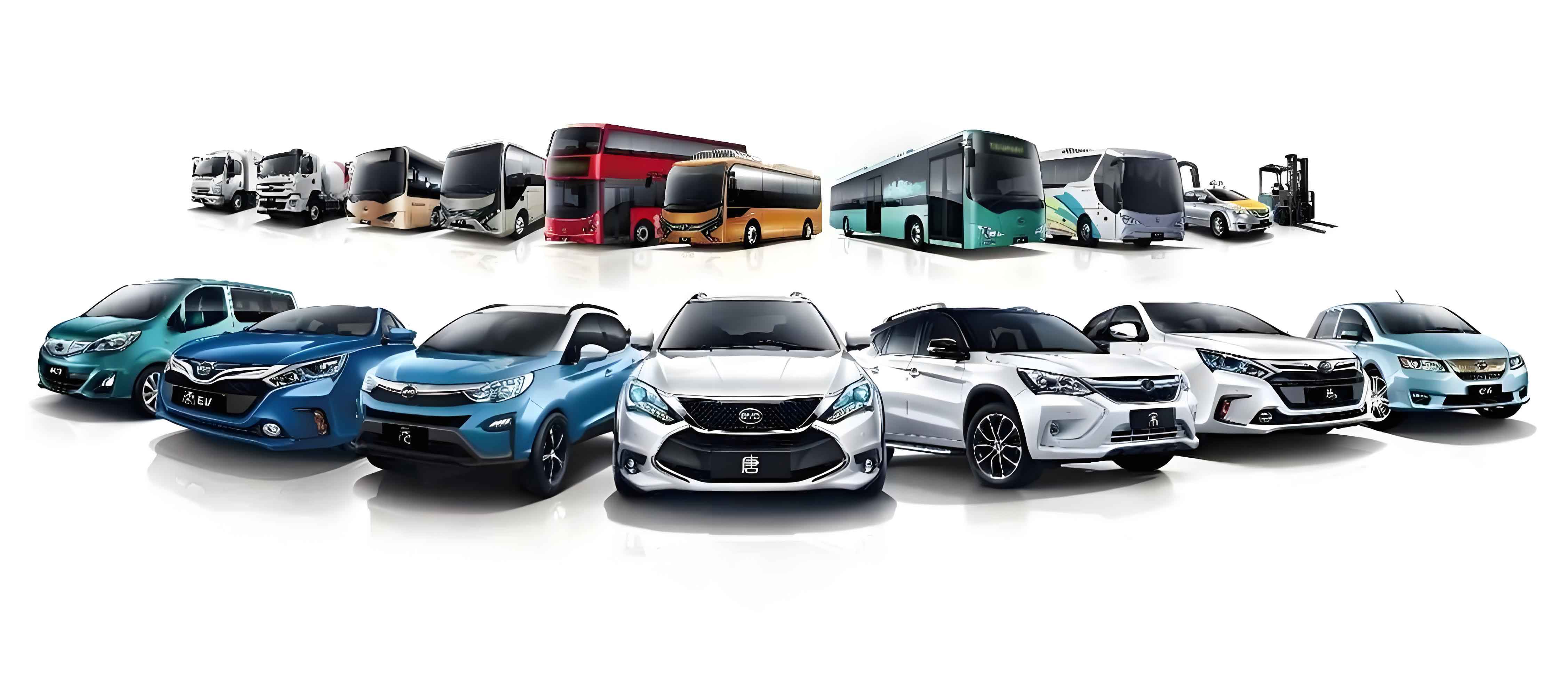
To illustrate these strategies, I conducted a case study on a representative electric vehicle model, which aligns with the advancements in the China EV industry. The background involves a high-performance electric vehicle facing challenges such as suboptimal transmission efficiency, excessive weight, and issues with noise and vibration. The optimization方案 included digital design using CAD and CAE tools to refine gear profiles and material selection, intelligent control with sensors for real-time monitoring and predictive maintenance, and the adoption of new materials like advanced alloys and CVT technology. The implementation led to measurable improvements: transmission efficiency increased by approximately 5%, noise and vibration reduced by about 20%, and overall vehicle performance enhanced, with acceleration times slightly improved and range extended by around 3%. This case underscores the effectiveness of Industry 4.0-driven optimizations for mechanical transmission systems in electric vehicles, particularly in the context of China EV developments.
In conclusion, I have summarized that digitalization, intelligence, and technological innovation are paramount in optimizing mechanical transmission systems under Industry 4.0, significantly boosting the performance, reliability, and sustainability of electric vehicles. The repeated emphasis on electric vehicle and China EV keywords highlights the global and regional importance of these advancements. Looking ahead, I believe future efforts should focus on lightweight design, refined intelligent control algorithms, and the development of novel transmission materials to further enhance the efficiency and range of electric vehicles. The integration of these strategies will continue to drive progress in the automotive sector, solidifying the role of electric vehicles, including those in China EV markets, as leaders in sustainable transportation.
Throughout this discussion, I have incorporated formulas and tables to encapsulate key concepts, such as the relationship between transmission efficiency and power output, as well as material properties affecting electric vehicle performance. For example, the gear ratio optimization can be described by: $$ i = \frac{N_2}{N_1} $$ where \( i \) is the gear ratio, \( N_1 \) is the number of teeth on the driving gear, and \( N_2 \) is the number on the driven gear. This mathematical approach aids in designing transmission systems that meet the specific demands of electric vehicles, ensuring they remain competitive in evolving markets like China EV. By adhering to these optimization strategies, I am confident that the mechanical transmission systems in electric vehicles will achieve greater heights, contributing to a greener and more efficient future.