
The transition to electrified commercial vehicles introduces unique engineering challenges, particularly concerning the energy storage system. Unlike passenger EVs, which often utilize a single, large-format battery pack, commercial vehicles such as buses, trucks, and heavy-duty equipment demand significantly higher power and energy capacities. To meet these requirements efficiently, a modular design approach is frequently adopted, employing multiple standardized EV battery pack units connected in series-parallel configurations. While this strategy offers advantages in development flexibility, cost reduction, and simplified packaging, it introduces complex failure modes not typically prevalent in single-pack designs. Among these, a critical and hazardous scenario is the unintentional charging of a single EV battery pack by several others connected in series, a fault that can precipitate rapid thermal runaway and catastrophic failure.
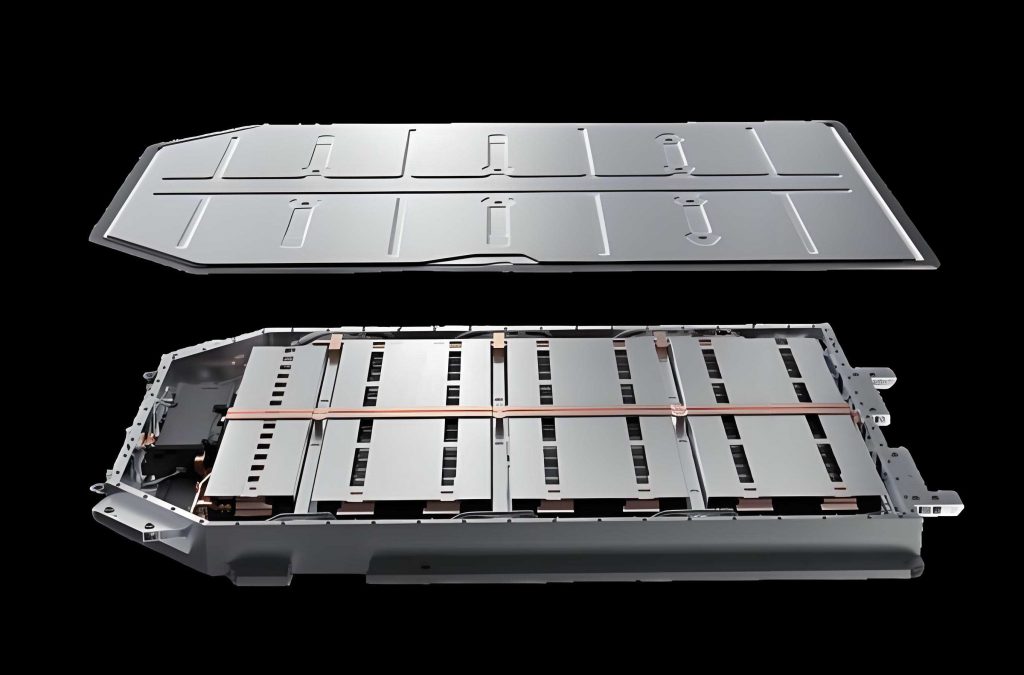
This analysis delves into the root causes, thermodynamic consequences, and potential mitigation strategies for this specific failure mode. We will construct a detailed model based on a common architecture and explore the underlying electro-thermal coupling that leads from an electrical fault to cell venting and fire.
Architecture of a Multi-Pack EV Battery System
The core design principle for high-energy commercial vehicle applications involves connecting several identical EV battery pack modules. A standard EV battery pack typically contains its own battery management system (BMS), thermal management interfaces, and safety devices. To achieve a high system voltage while maintaining sufficient current capability, these packs are arranged in a combined series-parallel topology.
A prevalent configuration is the 4-series, 2-parallel (4S2P) system, comprised of eight standard packs. As shown conceptually in the figure, four EV battery pack units are connected in series to form a high-voltage string. Two such identical strings are then connected in parallel at the main DC bus to double the available current and energy capacity. Each EV battery pack within this network usually incorporates a manual service disconnect (MSD). For cost optimization, a single fuse is often placed in the MSD of one pack per series string, with solid busbars used in the MSDs of the remaining packs in that string. An alternative configuration for even higher capacity is the 4S3P system using twelve EV battery pack units. The fundamental vulnerability stems from this interconnectedness: a single-point failure, such as an insulation breach or wiring error, can reconfigure the entire network’s current paths.
| Parameter | Value | Unit |
|---|---|---|
| Cell Chemistry | Lithium Iron Phosphate (LFP) | – |
| Cell Nominal Capacity | 200 | Ah |
| Cells per Pack (in series) | 48 | – |
| Pack Nominal Voltage (Vpack) | 153.6 (48 * 3.2V) | V |
| Pack State of Charge (SOC) Range | 10% – 100% | % |
| Continuous Charge/Discharge Rate | 1C | – |
| Peak Current Capability (30s) | 2C | – |
| Internal Resistance (Pack, DC) | ~5 | mΩ |
Fault Mechanism: Series Packs Charging a Single Pack
The hazardous scenario unfolds when faults create a low-resistance path between the negative terminal of one EV battery pack in a string and the positive terminal of another pack in a parallel string, or a common ground point. Consider the 4S2P system. Under normal operation, the two parallel strings have equal voltages. A catastrophic fault condition occurs if, for instance, the negative terminal of Pack 1 (in String A) and the negative terminal of Pack 8 (the last pack in String B) both suffer insulation failure to chassis ground, or if they are mistakenly connected during servicing.
This fault effectively places the full series voltage of String B (approximately 4 * Vpack ≈ 614.4V) directly across Pack 1 of String A. Simultaneously, the remaining three packs in String A (Packs 2, 3, 4) become short-circuited through this fault path. The resulting circuit forces a massive current from the four series-connected packs in String B into the single recipient EV battery pack in String A. The driving force is the voltage differential (ΔV).
$$ \Delta V = (n \cdot V_{pack\_B}) – V_{pack\_A} $$
where \( n \) is the number of series packs from the source string involved in charging the target pack (n=4 for the worst case, n=2 for a less severe but still dangerous fault). The initial fault current \( I_{fault} \) is limited primarily by the total internal resistance of the loop \( R_{loop} \), which includes the internal resistance of the source packs, the recipient pack, and all interconnecting resistances.
$$ I_{fault}(t=0) \approx \frac{\Delta V}{R_{loop}} $$
This current can be enormous, far exceeding the designed C-rate of the cells within the recipient EV battery pack. For example, with a ΔV of ~460V (for 4 packs charging 1) and a very low \( R_{loop} \) of 20 mΩ, the initial current could theoretically approach 23,000 Amperes, equivalent to over 115C for a 200Ah pack. In reality, contact resistance and cell polarization will reduce this, but currents in the range of several thousand amperes are plausible, as confirmed by experimental data.
| Fault Scenario | Source Packs (n) | Approx. ΔV (V) | Recipient Pack(s) | Primary Risk |
|---|---|---|---|---|
| Full String to Single Pack | 4 | ~460 | 1 Pack | Extreme Overcharge (Very High I) |
| Partial String to Single Pack | 2 | ~154 | 1 Pack | High-Rate Overcharge (High I) |
| String to Partial String | 4 | ~308 | 2 Series Packs | High-Rate Overcharge & Imbalance |
From Electrical Fault to Thermal Runaway: The Path of Failure
The recipient EV battery pack experiences violent abusive overcharging. The massive influx of current drives the cell voltages far beyond their upper cut-off limit (typically 3.65V for LFP). The overcharge process initiates a sequence of exothermic chemical reactions within the cells:
- Lithium Plating & SEI Decomposition: Excess lithium ions cannot be intercalated into the anode and plate as metallic lithium. The Solid Electrolyte Interphase (SEI) layer begins to exothermically decompose. $$ \text{SEI} \rightarrow \text{Heat} + \text{Gases (CO, C}_2\text{H}_4, \text{etc.)} $$
- Electrolyte Decomposition & Gas Generation: The electrolyte solvent oxidizes at the high-voltage cathode and reduces at the anode, generating significant heat and flammable gases (H2, CO, CO2, hydrocarbons). Internal pressure rises rapidly.
- Separator Meltdown & Internal Short Circuit: The generated heat melts the polyolefin separator (shutdown temperature ~130-140°C), causing its pores to close. With continued heating, the separator collapses entirely, leading to a large-area internal short circuit between the anode and cathode.
- Catastrophic Thermal Runaway: The internal short circuit dumps the remaining cell energy as heat in a very short time, causing temperatures to spike to 500-800°C. This triggers the decomposition of the cathode material and the reaction of the anode with the electrolyte, releasing more heat and oxygen. The cell vents violently, ejecting hot gases, particles, and electrolyte, which can ignite upon contact with air.
The heat generation rate \( \dot{Q}_{gen} \) within a cell during overcharge can be modeled as a combination of joule heating and reaction heat:
$$ \dot{Q}_{gen} = I^2 \cdot R_{int}(T, SOC) + \sum_i A_i \cdot \exp\left(-\frac{E_{a,i}}{RT}\right) \cdot f_i(SOC, V) $$
where \( I \) is the overcharge current, \( R_{int} \) is the cell’s temperature (T) and state-of-charge (SOC) dependent internal resistance, \( A_i \) is the pre-exponential factor, \( E_{a,i} \) is the activation energy, and \( f_i \) is a state function for the \( i \)-th exothermic reaction (SEI decomposition, electrolyte reaction, etc.). When \( \dot{Q}_{gen} \) exceeds the system’s heat dissipation capability \( \dot{Q}_{diss} \), thermal runaway becomes inevitable.
Experimental Data and Fuse Limitations
Experimental tests simulating these faults reveal the critical role of protection devices. In a test simulating four packs charging one (4 vs. 1), the voltage across the recipient EV battery pack surged from ~158V to ~250V. The fault current spiked to approximately 8,500A before settling around 2,500A. A 500A fuse in the circuit successfully interrupted the fault within about 1.25 seconds. Despite the recipient pack being subjected to a ~12.5C overcharge pulse, the rapid interruption prevented thermal runaway.
However, in a two-packs-versus-one (2 vs. 1) test, the outcome was starkly different. The pack voltage rose to ~210V, with a peak current of ~5,800A that decayed to a steady ~1,300A. This steady-state current, while still a severe 6.5C overcharge, was below the instantaneous melting threshold of the standard 500A fuse. The fuse failed to clear the fault. The recipient EV battery pack experienced continuous abusive charging, leading to cell venting around 40 seconds and full thermal runaway with smoke emission by 85 seconds.
| Test Case | Steady ΔV (V) | Steady Fault Current (A) | Equivalent C-rate | Fuse Action (500A) | Outcome |
|---|---|---|---|---|---|
| 4 Packs → 1 Pack | ~92 | ~2,500 | ~12.5C | Cleared in ~1.25s | Safe, No TR |
| 2 Packs → 1 Pack | ~52 | ~1,300 | ~6.5C | Did Not Clear | Thermal Runaway |
This highlights a fundamental limitation of traditional fuses: they provide excellent protection against high-magnitude short circuits but can be ineffective against sustained overcurrents that are only 2-3 times their rating, which are still catastrophically high for an EV battery pack. The fuse’s time-current characteristic (TCC) curve has a minimum melting time for a given current. The fault must persist long enough with sufficient current to generate the \( I^2t \) (ampere-squared-seconds) energy required to melt the fuse element.
Mitigation Strategies and Advanced Solutions
To design safer multi-pack EV battery systems and mitigate this specific risk, several strategies can be employed, often in combination.
1. Architectural Shift: Move to Higher Voltage Series-Only Systems
The root cause is the parallel connection of strings at similar voltages. By moving to higher-voltage platforms (e.g., 800V or 1000V), the need for parallel strings can be reduced or eliminated. For instance, instead of an 8-pack 4S2P system using 200Ah cells, a 6-pack series-only system using higher-capacity 300Ah cells could be designed. This increases system voltage from ~614V to ~922V and removes the parallel connection points where the fault manifests. The total system power increases, and the fault path for multi-pack charging is eliminated by design.
2. Enhanced Protection: Intelligent Fuses or Pyro-Fuses
Replacing standard fuses with “intelligent” or “active” fuses in every EV battery pack is a highly effective solution. These devices combine a high-current switch (like a MOSFET or pyro-fuse) with a current sensor and control logic. The BMS or a dedicated circuit can monitor for abnormal current flow (direction or magnitude) that indicates a fault like series-pack charging. Upon detection, it can send a signal to trigger the pyro-fuse or open the semiconductor switch, reliably interrupting the circuit within milliseconds, regardless of the fault current magnitude, provided it is above a very low threshold. This offers full-range protection.
$$ t_{clearance}^{intelligent} \approx t_{sense} + t_{actuation} < 0.5 \text{ s} $$
3. Robust System Design and Diagnostics
– Insulation Monitoring Device (IMD): A high-performance, continuously operating IMD is essential to detect the initial insulation resistance degradation that could lead to the fault, allowing for preventive action.
– Connector and Harness Design: Using keyed, fool-proof high-voltage connectors and robust harness routing with ample strain relief can prevent misconnection and damage during assembly or collision.
– Advanced BMS Logic: The master BMS should implement algorithms to detect implausible voltage differences between parallel strings or abnormal current flows between packs, which are hallmarks of this fault mode, and initiate a safe system shutdown.
| Strategy | Key Mechanism | Advantages | Challenges/Costs |
|---|---|---|---|
| Series-Only High-Voltage Architecture | Eliminates parallel connections, removing the fault path. | Architecturally safe, increases efficiency, supports fast charging. | Requires higher-voltage components, cell capacity/availability. |
| Intelligent Fuse per EV Battery Pack | Active monitoring and ultra-fast (<0.5s) interruption of any overcurrent. | Provides full-range protection, adaptable to various faults. | Higher unit cost per pack, requires control logic and wiring. |
| Enhanced Conventional Fusing | Using fuses with carefully selected TCC curves for each pack. | Lower cost than intelligent fuses, passive and reliable. | May not protect against all moderate overcurrent scenarios (gapped protection). |
| Advanced BMS Diagnostics | Software detection of abnormal string/pack voltages and currents. | Low incremental cost, can enable early warning. | Cannot physically interrupt very high currents; a supplemental hardware protection layer is still required. |
Theoretical Modeling of Pack-to-Pack Fault Dynamics
To quantitatively assess the risk, a coupled electrical-thermal model for the faulted EV battery pack is essential. The electrical model describes the current flow, while the thermal model predicts the temperature rise.
Electrical Model:
The fault loop can be simplified as a voltage source (the series-connected source packs) driving current through a resistance network. The recipient pack’s voltage \( V_{rec}(t) \) is not constant; it increases due to overcharge and is a function of its SOC and internal polarization voltage \( V_{pol} \).
$$ \Delta V(t) = V_{source}(t) – V_{rec}(SOC(t), I_{fault}(t)) $$
$$ I_{fault}(t) = \frac{\Delta V(t)}{R_{loop} + R_{pol}(I_{fault}, t)} $$
$$ \frac{d(SOC)}{dt} = \frac{I_{fault}(t)}{C_{nominal}} $$
where \( R_{pol} \) represents the increasing polarization resistance as the cell is driven into severe overcharge, which acts to limit the current but also generates more heat.
Thermal Model (Lumped Mass):
Assuming the recipient EV battery pack’s cells heat uniformly, the temperature change is governed by:
$$ m C_p \frac{dT}{dt} = I_{fault}^2(t) \cdot R_{int}(T, SOC) + \dot{Q}_{rxn}(T, SOC) – h A (T – T_{ambient}) $$
Here, \( m \) and \( C_p \) are the mass and specific heat of the cell/pack, \( hA \) is the heat transfer coefficient, and \( \dot{Q}_{rxn} \) is the total heat from exothermic side reactions, which becomes dominant at high temperatures and SOC > 100%. A critical condition for thermal runaway is when the heat generation term exceeds dissipation, leading to a positive feedback loop (thermal instability). This can be expressed as finding if there exists a temperature where:
$$ \frac{\partial}{\partial T} \left( I_{fault}^2 \cdot R_{int} + \dot{Q}_{rxn} \right) > \frac{\partial}{\partial T} \left( h A (T – T_{amb}) \right) $$
Typically, the right side is constant or linear, while the left side increases exponentially with T due to the Arrhenius dependence of \( \dot{Q}_{rxn} \), leading to the instability point.
Conclusion
The use of multiple, standardized EV battery pack units in series-parallel configurations is a pragmatic solution for high-energy commercial vehicle applications. However, this design introduces a latent but severe failure mode where insulation faults or wiring errors can cause several series-connected EV battery pack units to force current into a single recipient pack, leading to catastrophic thermal runaway. Experimental data confirms that traditional fuse protection has a critical gap: it may not clear sustained fault currents that are several times the fuse rating but below its instantaneous trip threshold, yet are still high enough to drive an EV battery pack into thermal runaway within tens of seconds.
To ensure safety, a paradigm shift in system design is recommended. The most robust solution is an architectural move towards higher-voltage, series-only configurations, which inherently eliminates the parallel connections that enable this fault. Where parallel connections remain necessary, equipping every EV battery pack with an intelligent fuse or pyro-fuse capable of sub-500ms interruption based on current monitoring logic is essential to provide full-range protection. This must be complemented by rigorous system-level design for insulation, connectivity, and diagnostic monitoring. As EV battery pack technology evolves towards higher energies and more complex topologies, proactively designing out such systemic fault modes is paramount to ensuring the safety and reliability of commercial electric vehicles.