
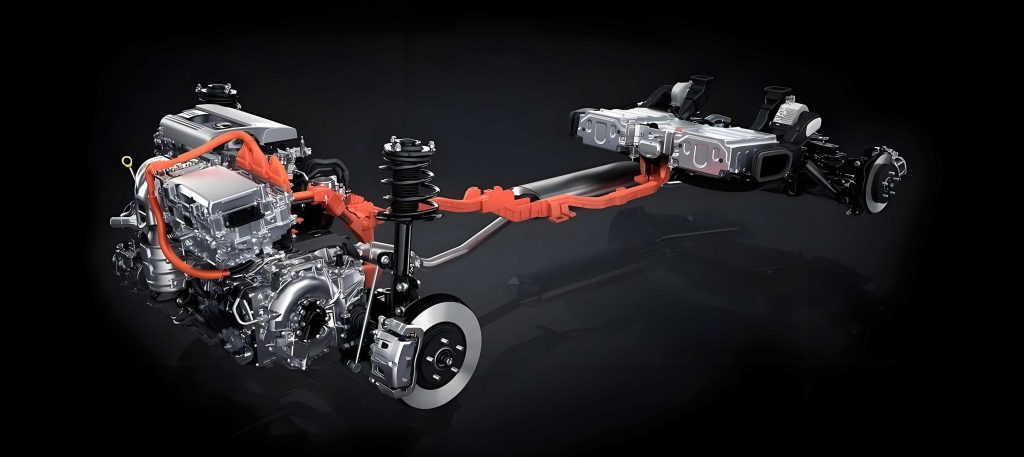
The quest for enhanced efficiency and extended driving range is a central pillar in the development of modern hybrid cars. Among the various technologies employed, regenerative braking stands out as a defining feature that distinguishes hybrid cars from conventional internal combustion engine vehicles. This technology captures a portion of the vehicle’s kinetic energy during deceleration or braking, converting it into electrical energy for storage in the onboard battery, rather than dissipating it entirely as heat through friction brakes. The effective implementation of this technology not only improves the overall energy economy of the hybrid car but also contributes to reduced brake wear. However, the design of a control strategy for braking energy recovery is multifaceted, involving critical trade-offs between energy recuperation, braking safety, and vehicle stability.
The core challenge lies in the coordinated management of two distinct braking systems: the regenerative braking system (typically via the electric motor/generator) and the conventional friction braking system. An optimal control strategy must intelligently distribute the total driver-requested braking force between these two systems while adhering to physical and safety constraints. This involves addressing two primary sub-problems: the distribution of braking force between the front and rear axles to maintain vehicle stability (preventing wheel lock-up), and the allocation between regenerative and friction braking to maximize energy recovery.
Mathematical Foundation of Brake Force Distribution
The foundation for any braking strategy in a hybrid car, or any vehicle, is the mechanics of brake force distribution. During braking, inertial forces cause a dynamic load transfer from the rear axle to the front axle. This shift alters the vertical loads on the tires, which in turn limits the maximum braking force that can be applied at each axle before the wheels lock. The figure below shows the forces acting on a vehicle during braking on a level road.
$$F_{z1} = \frac{G}{L}(b + \varphi h_g)$$
$$F_{z2} = \frac{G}{L}(a – \varphi h_g)$$
Where:
- $G$ is the vehicle weight.
- $a$ and $b$ are the distances from the vehicle’s center of gravity to the front and rear axles, respectively.
- $L$ is the wheelbase ($L = a + b$).
- $\varphi$ is the road adhesion coefficient.
- $h_g$ is the height of the center of gravity.
- $F_{z1}$ and $F_{z2}$ are the vertical loads on the front and rear axles.
The ideal braking condition, which utilizes the available road adhesion most effectively and generally provides good directional stability, is achieved when both the front and rear wheels are on the verge of locking simultaneously. This condition defines the Ideal Brake Force Distribution (I-curve), expressed by the following relationship between the front brake force ($F_{\mu1}$) and the rear brake force ($F_{\mu2}$):
$$F_{\mu1} + F_{\mu2} = \varphi G$$
$$\frac{F_{\mu1}}{F_{\mu2}} = \frac{b + \varphi h_g}{a – \varphi h_g}$$
By eliminating $\varphi$, the I-curve equation is obtained:
$$F_{\mu2} = \frac{1}{2}\left[ \frac{G}{h_g} \sqrt{b^2 + \frac{4h_g L}{G} F_{\mu1}} – \left( \frac{Gb}{h_g} + 2F_{\mu1} \right) \right]$$
In practice, most vehicles use a fixed proportional split between front and rear brake forces due to cost and complexity, defined by the brake force distribution coefficient $\beta$:
$$\beta = \frac{F_{\mu1}}{F_{\mu}}$$
where $F_{\mu} = F_{\mu1} + F_{\mu2}$ is the total friction brake force.
This creates a linear distribution known as the $\beta$-line. A common empirical design is to use a two-stage $\beta$ value based on the braking intensity $z$ (deceleration in $g$ units):
$$
\beta =
\begin{cases}
0.5, & 0 < z < 0.4 \\
0.6, & z \geq 0.4
\end{cases}
$$
This simple approach, while not ideal across all conditions, is a common baseline. The following table summarizes key parameters and their role in brake force distribution.
| Symbol | Parameter | Role in Brake Force Distribution |
|---|---|---|
| $G$, $a$, $b$, $h_g$ | Vehicle Geometry & Mass Properties | Define the static and dynamic weight transfer, setting the fundamental limits for the I-curve. |
| $\varphi$ | Road Adhesion Coefficient | Determines the maximum total braking force available. A variable and often unknown parameter. |
| $z$ | Braking Intensity | Directly related to $\varphi$ under optimal braking ($z=\varphi$). Used to trigger different phases of fixed $\beta$ strategies. |
| $\beta$ | Brake Force Distribution Coefficient | The design parameter defining the fixed or variable split between front and rear axle braking forces. |
| $F_{\mu1}$, $F_{\mu2}$ | Front/Rear Friction Brake Force | The outputs of the distribution algorithm, subject to the constraints of the I-curve and $\beta$-line. |
Fuzzy Logic Control Strategy for Regenerative Braking
For a hybrid car, the total demanded braking force ($F_{total}$) must be split into a regenerative component ($F_{reg}$) handled by the electric motor and a friction component ($F_{fric}$). The primary goal is to maximize $F_{reg}$ to recover energy, but it is constrained by several factors: the motor/generator’s maximum regenerative torque (a function of speed), the battery’s State of Charge (SOC) and its ability to accept charge, and the need to always meet the driver’s demand while maintaining stability.
Classical control strategies like parallel distribution or fixed torque blending often fail to optimize across the entire operating envelope of the hybrid car. Fuzzy logic control, however, is well-suited for this multi-constraint, nonlinear problem. It can incorporate heuristic knowledge and empirical rules to manage the trade-offs effectively.
The proposed hierarchical control strategy for a hybrid car consists of two main modules:
- Regenerative Braking Ratio Module (Fuzzy Controller): Determines the proportion of the total braking force that should be assigned to regenerative braking ($K_d = F_{reg} / F_{total}$).
- Friction Brake Distribution Module: Allocates the remaining friction braking force ($F_{fric} = F_{total} – F_{reg}$) between the front and rear axles according to the predefined $\beta$-line strategy to ensure basic stability.
Fuzzy Controller Design: A Mamdani-type fuzzy inference system with two inputs and one output is designed.
- Input 1 – Vehicle Speed ($V$): Domain [0, 120] km/h. The regenerative capability of a motor is typically low at very low speeds and increases up to a certain point, after which it may decline. Five fuzzy sets are defined: Very Small (VS), Small (S), Medium (M), Big (B), Very Big (VB).
- Input 2 – Battery State of Charge ($SOC$): Domain [0, 1]. To prevent overcharging and to prioritize regeneration when the battery has ample storage capacity. Five fuzzy sets: Very Small (VS), Small (S), Medium (M), Big (B), Very Big (VB).
- Output – Regenerative Braking Ratio ($K_d$): Domain [0, 1]. The desired fraction of total braking to be performed regeneratively. Five fuzzy sets: Very Low (VL), Low (L), Medium (M), High (H), Very High (VH).
Triangular and trapezoidal membership functions are typically used for their computational simplicity. The core of the controller is the rule base, which encapsulates the control strategy logic. For a hybrid car, the rules are formulated based on engineering intuition and simulation analysis:
| Rule Logic | Vehicle Speed ($V$) | ||||
|---|---|---|---|---|---|
| Battery SOC | VS | S | M | B | VB |
| VS | VL | L | M | H | VH |
| S | VL | L | M | H | VH |
| M | VL | L | M | H | H |
| B | VL | VL | L | L | L |
| VB | VL | VL | VL | VL | VL |
The rule interpretation is straightforward: When the battery SOC is low (e.g., VS, S), the hybrid car should prioritize high regenerative braking ($K_d$ is H or VH) to recharge the battery, especially at medium to high speeds where the motor is effective. When the SOC is very high (VB), regeneration must be minimized (VL) to protect the battery, regardless of speed. At medium SOC, a balanced approach is taken, with regeneration tapering off at very high speeds due to potential motor power limits. The fuzzy inference process aggregates the outputs of all fired rules, and the resulting fuzzy set for $K_d$ is defuzzified using the centroid method to obtain a crisp output value.
$$K_d^{crisp} = \frac{\sum_{i=1}^{N} \mu_i \cdot c_i}{\sum_{i=1}^{N} \mu_i}$$
where $\mu_i$ is the firing strength of the $i$-th rule and $c_i$ is the centroid of its output fuzzy set.
Simulation Modeling and Comparative Analysis
To validate the effectiveness of the fuzzy logic-based strategy for a hybrid car, a simulation study is conducted. The proposed controller is implemented in MATLAB/Simulink. This model is then integrated as a custom control module within the ADvanced Vehicle SimulatOR (ADVISOR) software environment, a widely-used tool for modeling and analysis of hybrid and electric vehicles. The simulation uses a model of a front-wheel-drive parallel hybrid car, similar to the Honda Insight. The Urban Dynamometer Driving Schedule (UDDS) cycle is employed as the test driving cycle, which features frequent stops and starts, making it ideal for evaluating regenerative braking performance.
Two control strategies are compared:
- ADVISOR Default Strategy: A baseline strategy which typically uses a simpler, often speed-dependent algorithm for allocating regenerative braking force.
- Proposed Fuzzy Logic Strategy: The two-input (Speed, SOC) fuzzy controller described above.
The key performance metric is the net change in the battery’s State of Charge (SOC) over the drive cycle. A higher final SOC indicates that more energy has been recaptured than consumed by the hybrid car’s accessories and auxiliary loads, directly reflecting the effectiveness of regenerative braking. The simulation results show a clear distinction.
With the default ADVISOR strategy, the battery SOC shows a gradual net decline over the UDDS cycle. While small regenerative events cause temporary increases, the overall trend is negative, indicating that the energy consumed for propulsion is not fully offset by recovered energy.
In contrast, the hybrid car utilizing the fuzzy logic control strategy demonstrates a net increase in battery SOC over the same cycle. The final SOC value is approximately 7% higher than that achieved with the default strategy. Analysis of the motor power trace reveals why: the fuzzy controller results in more frequent and often larger instances of negative motor power (generating mode), particularly during medium-level deceleration events where the rules optimally balance speed and SOC conditions. This demonstrates the fuzzy controller’s superior ability to maximize regenerative energy capture across the hybrid car’s variable operating conditions.
Discussion and Future Perspectives for Hybrid Cars
The simulation results confirm the tangible benefits of applying a fuzzy logic control strategy to the braking energy recovery system of a hybrid car. By systematically incorporating multiple relevant inputs—specifically vehicle speed and battery SOC—the fuzzy controller makes more nuanced decisions than a single-input baseline strategy. This leads to a significant improvement in energy recuperation, directly extending the electric driving range and improving the overall fuel economy of the hybrid car.
However, the study also highlights areas for further development. The friction brake distribution in this analysis relied on a fixed $\beta$-line. While simple, this approach does not adapt to changing road conditions ($\varphi$) and can lead to premature wheel lock-up on low-adhesion surfaces, potentially compromising safety and stability. The next logical step in advancing the control strategy for hybrid cars is the integration of regenerative braking with an Anti-lock Braking System (ABS).
A future, more advanced control hierarchy for a hybrid car could involve three layers:
- Upper Layer (ABS / Stability Control): Determines the maximum allowable braking force at each wheel to prevent lock-up and maintain yaw stability, based on wheel speed sensors and inertial measurements. This defines a dynamic, optimal force envelope that supersedes the fixed I-curve or $\beta$-line.
- Middle Layer (Regen/Friction Allocation): Uses a fuzzy or model predictive controller to allocate the total desired force within the ABS-defined envelope between the regenerative brake (on the driven axle, typically front for FWD hybrid cars) and the friction brakes on all four wheels.
- Lower Layer (Actuator Control): Precisely commands the motor torque controller and the electro-hydraulic brake actuators to deliver the requested forces.
Furthermore, the control strategy can be extended to other hybrid car architectures. For a through-the-road hybrid or an all-wheel-drive hybrid car with multiple electric motors, regenerative braking can be distributed not only between front and rear axles but also between left and right wheels, opening the possibility for torque-vectoring during braking to further enhance stability while recovering energy.
In conclusion, intelligent control is paramount for unlocking the full potential of regenerative braking in hybrid cars. Fuzzy logic provides a robust and effective framework for managing the complex allocation problem. As hybrid car technology evolves towards greater electrification and integration with vehicle dynamics control systems, the braking energy recovery strategy will become even more sophisticated, playing a crucial role in achieving the ultimate goals of efficiency, range, and safety.