
The rapid advancement of electric vehicles (EVs) is fundamentally tied to the performance and efficiency of their energy storage systems. The heart of this system is the EV battery pack, a complex assembly whose enclosure is critical for structural integrity, safety, and overall vehicle performance. As consumer demand for longer range increases, the mass of the battery pack becomes a paramount concern. A heavier EV battery pack not only reduces driving range but also adversely affects vehicle dynamics, handling, and energy consumption. Consequently, lightweight design of the battery pack enclosure is not merely an optimization step but a necessity for the next generation of electric mobility. This study focuses on the application of Finite Element Method (FEM) to achieve a significant mass reduction in an EV battery pack enclosure while ensuring it meets all stringent static and dynamic performance requirements.
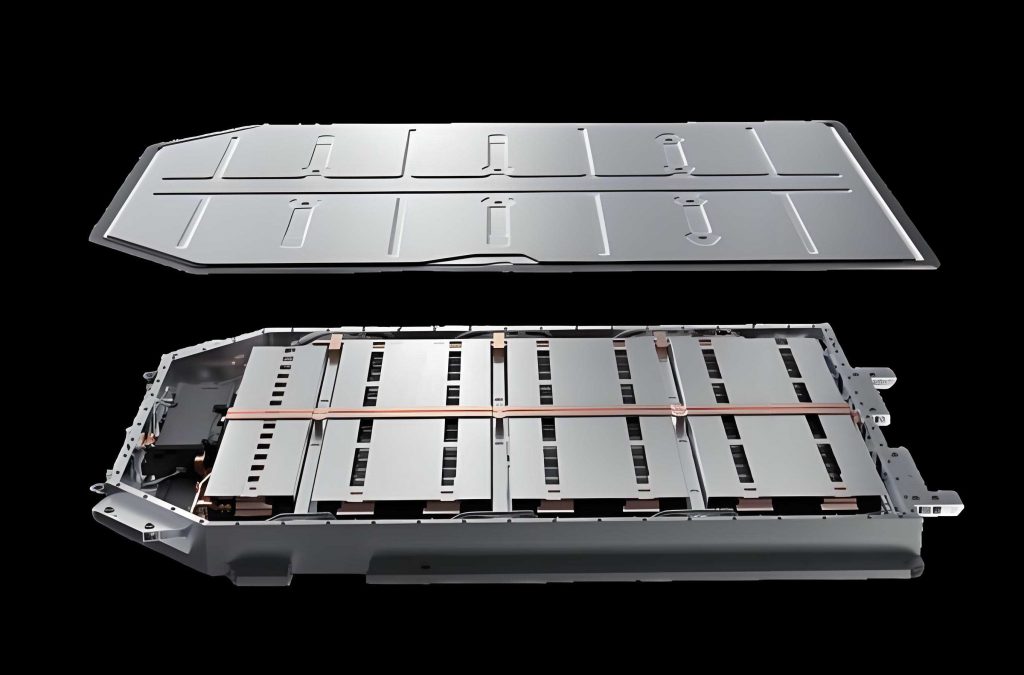
The enclosure of an EV battery pack serves multiple vital functions: it houses the delicate battery modules and management electronics, provides protection against mechanical impacts and environmental hazards, and often integrates with the vehicle’s cooling system. Traditionally, the design of such enclosures has relied heavily on iterative, experience-based methods, often leading to over-engineering with excessive material usage and unnecessary structural redundancy. This approach is both time-consuming and costly. The adoption of computational tools like Finite Element Analysis (FEA) offers a paradigm shift, enabling a systematic, simulation-driven design process. FEA allows engineers to virtually test the EV battery pack enclosure under a wide array of loading conditions, identify stress concentrations and deformation patterns, and iteratively optimize the geometry and material distribution before any physical prototype is built. This paper details a comprehensive FEA-based methodology applied to a specific EV battery pack enclosure, leading to a substantial lightweight achievement without compromising safety or performance.
Methodology: Simulation Model Development and Performance Baseline
The initial phase of any simulation-driven design involves creating an accurate yet computationally efficient digital model. The subject of this study is a modular EV battery pack enclosure constructed primarily from steel ST14. The baseline design consists of a lower tray and an upper cover, forming a rectangular box. The material properties for ST14, which are essential inputs for the finite element model, are summarized in Table 1.
| Property | Symbol | Value | Unit |
|---|---|---|---|
| Young’s Modulus | E | 207 | GPa |
| Poisson’s Ratio | ν | 0.30 | – |
| Density | ρ | 7.85e-6 | kg/mm³ |
| Yield Strength | σ_y | 232 | MPa |
| Tensile Strength | σ_u | 270 | MPa |
To balance simulation accuracy with computational efficiency, the 3D CAD model was simplified. Non-structural components with negligible mass, such as small relays, sensors, and wiring harnesses, were removed. Major internal masses, namely the battery modules and the thermal management system, were represented by concentrated mass points. This approach accurately captures the inertial loading on the EV battery pack enclosure without modeling the complex internal geometry. The simplified model was then meshed using tetrahedral elements with a global size control of 1.2 mm, resulting in a high-fidelity finite element mesh suitable for detailed stress analysis.
The performance criteria for the EV battery pack enclosure were defined based on material limits and functional requirements: maximum deformation should not exceed 3.5 mm to prevent interference with internal components; the maximum von Mises stress must remain below the material yield strength of 232 MPa to avoid permanent plastic deformation; and strain should be within acceptable limits to ensure structural integrity over the vehicle’s lifespan.
Baseline Static Analysis
The static analysis simulates the condition when the vehicle is stationary. The primary load is the gravitational force from the mass of the battery modules (210 kg). The enclosure is constrained at its mounting points (the four lifting lugs), simulating its connection to the vehicle chassis. The analysis of the baseline design yielded the following results, confirming its structural adequacy but also revealing potential for optimization:
- Maximum Displacement: 0.9723 mm, located centrally on the enclosure floor.
- Maximum Stress: 95.25 MPa, found near the sidewalls of the lower tray.
- Maximum Strain: 0.31462.
All values were well within the design limits, indicating a conservative initial design for the EV battery pack enclosure.
Baseline Dynamic Analysis
Real-world driving subjects the EV battery pack to complex dynamic loads. Two critical load cases were selected to represent severe service conditions: “Bump & Cornering” and “Bump & Emergency Braking.” These cases combine inertial loads from vertical acceleration (bump) with lateral or longitudinal accelerations. The acceleration factors applied are standard engineering values for such extreme events. The loads applied in the finite element model are body forces calculated using these acceleration factors and the total mass of the pack.
The dynamic performance is governed by Newton’s second law, where the equivalent inertial force $F_{inertial}$ applied to the EV battery pack enclosure is:
$$ F_{inertial} = m_{pack} \cdot a $$
where $m_{pack}$ is the total mass of the battery pack and $a$ is the design acceleration. The specific load factors for the two cases are detailed in Table 2.
| Load Case | Description | Acceleration Factors (Multiples of gravity, g) |
|---|---|---|
| 1 | Bump & Cornering | Vertical (Z): 3.0g; Lateral (Y): 1.85g |
| 2 | Bump & Emergency Braking | Vertical (Z): 3.0g; Longitudinal (X): 3.2g |
The analysis results for the baseline EV battery pack enclosure under these dynamic conditions were as follows:
Load Case 1 (Bump & Cornering):
$$ \delta_{max} = 2.0372 \text{ mm}, \quad \sigma_{max} = 113.56 \text{ MPa}, \quad \epsilon_{max} = 0.31993 $$
Load Case 2 (Bump & Braking):
$$ \delta_{max} = 2.6731 \text{ mm}, \quad \sigma_{max} = 118.62 \text{ MPa}, \quad \epsilon_{max} = 0.86261 $$
While all metrics remained within the safe design window, the significant margin between the achieved stress (max ~119 MPa) and the material yield strength (232 MPa) for the EV battery pack enclosure was a clear indicator of excessive material usage and a prime opportunity for lightweighting.
Lightweight Design Strategy and Structural Optimization
The core principle of the optimization was to reduce material mass where it was not critically needed for load-bearing, while reinforcing areas prone to high stress or deformation. The strategy involved a two-pronged approach: global thickness reduction and local reinforcement via ribbing.
The primary design variable was the sheet metal thickness. The baseline thickness was uniformly 6 mm. The FEA results showed that stress levels were far below the yield limit, suggesting this thickness was excessive. A radical global reduction was proposed. However, simply reducing thickness would lead to unacceptable increases in displacement and stress. To compensate for the loss of bending stiffness from thickness reduction, a network of reinforcing ribs was added to the floor and sidewalls of the EV battery pack enclosure. The ribs increase the sectional moment of inertia, thereby restoring stiffness and strength with minimal added mass.
The bending stiffness of a plate is proportional to the cube of its thickness ($t^3$). Reducing thickness drastically reduces stiffness. The moment of inertia $I$ for a ribbed section can be approximated and compared to a flat plate to justify the design. For a flat plate of width $b$ and thickness $t$, the moment of inertia per unit width is:
$$ I_{plate} \propto \frac{t^3}{12} $$
The new, optimized design for the EV battery pack enclosure featured:
- A global sheet thickness reduction from 6 mm to 3 mm.
- Addition of a strategic network of ribs (2 mm wide, 1.5 mm high) on all major panels.
The mass of the enclosure was calculated from the material volume and density:
$$ m_{enclosure} = \rho \cdot V_{total} $$
where $V_{total}$ is the total volume of the enclosure material. This optimization led to a dramatic reduction in the mass of the EV battery pack enclosure.
Performance Validation of the Optimized Design
The optimized EV battery pack enclosure model was subjected to the same suite of static and dynamic analyses to verify its performance. The key results are summarized and compared with the baseline in Table 3.
| Performance Metric | Baseline Design | Optimized Design | % Change | Design Limit | Status |
|---|---|---|---|---|---|
| Mass | 110.56 kg | 62.74 kg | -43.25% | – | Goal Achieved |
| Static Analysis | |||||
| Max. Displacement | 0.9723 mm | 1.0688 mm | +9.92% | 3.5 mm | OK |
| Max. Stress | 95.25 MPa | 103.56 MPa | +8.72% | 232 MPa | OK |
| Max. Strain | 0.31462 | 0.37571 | +19.42% | 0.95 | OK |
| Dynamic Analysis: Bump & Cornering | |||||
| Max. Displacement | 2.0372 mm | 2.7167 mm | +33.35% | 3.5 mm | OK |
| Max. Stress | 113.56 MPa | 125.73 MPa | +10.72% | 232 MPa | OK |
| Max. Strain | 0.31993 | 0.37571 | +17.44% | 0.95 | OK |
| Dynamic Analysis: Bump & Emergency Braking | |||||
| Max. Displacement | 2.6731 mm | 3.1423 mm | +17.55% | 3.5 mm | OK |
| Max. Stress | 118.62 MPa | 131.52 MPa | +10.88% | 232 MPa | OK |
| Max. Strain | 0.86261 | 0.93453 | +8.34% | 0.95 | OK |
The data conclusively demonstrates the success of the optimization. The mass of the EV battery pack enclosure was reduced by 43.25%, a highly significant lightweight achievement. As expected, the performance metrics (displacement, stress, strain) all increased compared to the over-designed baseline. However, critically, every single value for the optimized EV battery pack enclosure remains safely within the pre-defined design limits. The maximum displacement in the worst-case scenario (3.14 mm) is below the 3.5 mm threshold. The maximum stress (131.5 MPa) is well under the 232 MPa yield strength, maintaining a substantial safety factor. The strains are also within the acceptable range.
Discussion and Implications
This case study underscores the power of simulation-driven design for automotive lightweighting. The finite element method provided clear insights into the structural behavior of the EV battery pack enclosure, identifying areas of low stress utilization. The chosen optimization strategy—aggressive thickness reduction coupled with strategic ribbing—proved extremely effective. The ribs act as a lightweight skeleton, efficiently distributing loads and maintaining stiffness, allowing the primary panels to be made much thinner. This approach is often more mass-efficient than using uniformly thick panels.
The successful lightweighting of the EV battery pack enclosure has direct positive implications for the overall electric vehicle. A reduction in pack mass improves the vehicle’s gravimetric energy density (Wh/kg), which can translate directly into extended driving range or allow for the use of a smaller, less costly battery for the same range. Furthermore, reducing the unsprung mass (or mass positioned low in the chassis) improves vehicle dynamics, handling, and ride comfort. It also reduces the loads on other vehicle components like suspensions and brakes. From a sustainability perspective, less material usage reduces the environmental footprint associated with material extraction, processing, and manufacturing of the EV battery pack.
The process also highlights an optimization balance, often formalized as a constraint minimization problem. The objective was to minimize the mass $m$ of the EV battery pack enclosure:
$$ \text{Minimize: } m(\mathbf{x}) $$
subject to the constraints:
$$ g_1(\mathbf{x}) = \delta_{max} – 3.5 \le 0 $$
$$ g_2(\mathbf{x}) = \sigma_{max} – 232 \le 0 $$
$$ g_3(\mathbf{x}) = \epsilon_{max} – 0.95 \le 0 $$
where $\mathbf{x}$ represents the design variables (like sheet thickness and rib geometry). The presented solution successfully found a design that sits on the Pareto frontier, optimally balancing minimal mass with compliance to all performance constraints for the EV battery pack enclosure.
Conclusion
This work presents a complete engineering workflow for the lightweight design of an electric vehicle battery pack enclosure using the Finite Element Method. Starting from a conservative baseline design, detailed static and dynamic finite element analyses were conducted to establish a performance benchmark. The analysis revealed substantial margins in stress and deformation, clearly indicating potential for mass reduction. A targeted optimization strategy was implemented, drastically reducing the base material thickness and adding a network of stiffening ribs. The final, optimized EV battery pack enclosure achieved a remarkable 43.25% reduction in mass. Comprehensive validation analyses under static, bump/cornering, and bump/braking conditions confirmed that all performance criteria—maximum displacement, stress, and strain—remained within the required safety and functional limits. This study validates that through systematic simulation and intelligent design, significant lightweighting of critical EV components like the battery pack enclosure is not only feasible but essential for advancing electric vehicle efficiency, performance, and sustainability. The methodologies and results demonstrated here provide a valuable reference for engineers working on structural optimization in the automotive electrification sector.