
As the global push for green transportation and energy efficiency intensifies, the electric vehicle industry, particularly in China, is experiencing unprecedented growth opportunities. In this context, motor components serve as the “heart” of electric vehicles, and their performance and quality directly influence the overall functionality and market competitiveness of China EV models. However, many manufacturers of these components face significant challenges in production, where traditional methods struggle to keep pace with rapidly evolving market demands. Lean production, as an advanced operational philosophy, emphasizes waste elimination, continuous improvement, and perfection. Applying this model to the production of electric vehicle motor components holds practical significance; by innovating lean production approaches, we can effectively address existing issues such as inefficiencies, quality inconsistencies, and cost overruns. This article explores the innovation of lean production modes for electric vehicle motor components, analyzing current problems and proposing solutions from perspectives like process optimization, quality control enhancement, and cost management strategies, ultimately aiming to boost productivity, product quality, and economic benefits for the sustainable development of the China EV industry.
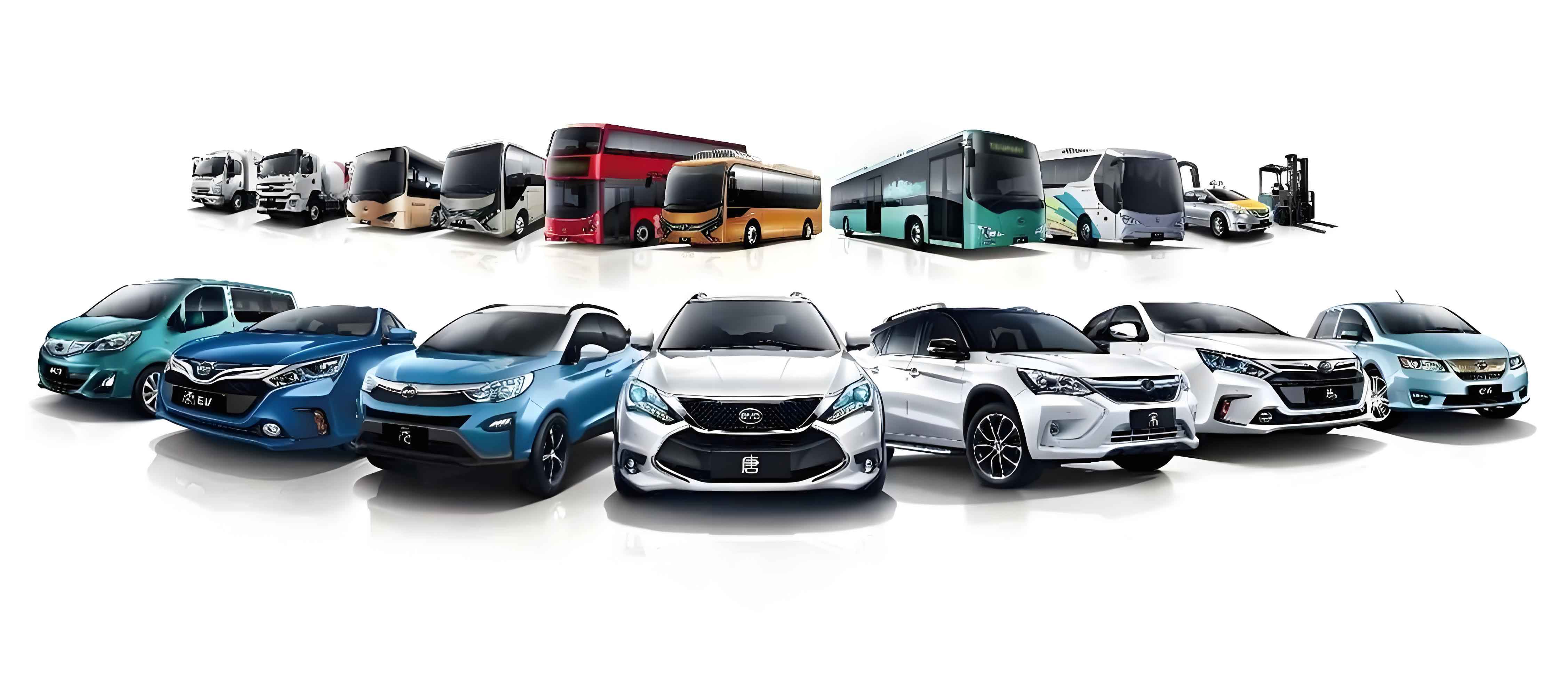
In the electric vehicle sector, motor components are critical to the performance and reliability of China EV models. The current production landscape, however, is plagued by several inefficiencies that hinder optimal output. For instance, production processes often involve disjointed workflows, leading to prolonged material handling times and underutilized equipment. When components are machined, complex transportation logistics between warehouses and workshops result in extended turnover periods, delaying the redeployment of machinery for subsequent production cycles. Additionally, production planning lacks scientific rigor and flexibility, failing to adapt to market fluctuations or equipment conditions. This often results in either task overloads or idle resources, severely impacting overall efficiency. To quantify this, we can use the Overall Equipment Effectiveness (OEE) formula, which measures production efficiency: $$OEE = Availability \times Performance \times Quality$$ where Availability refers to the ratio of actual operating time to planned production time, Performance relates to the speed efficiency, and Quality indicates the rate of defect-free products. In many electric vehicle motor component factories, OEE values often fall below 85% due to these issues, highlighting the need for lean innovations.
Quality control presents another major challenge in the production of electric vehicle motor components. The stringent requirements for these parts are often compromised by unstable raw material quality, inadequate supplier management, and imprecise control of process parameters. For example, in the winding process of motor stators, parameters like tension and number of turns must be meticulously controlled; deviations can lead to reduced winding density, coil deformation, and ultimately, impaired electrical performance and thermal stability. This not only shortens the lifespan of the components but also affects the reliability of the entire electric vehicle. Current quality inspection methods are often outdated, relying on manual checks that fail to detect hidden defects in real-time, allowing substandard products to proceed to subsequent stages or enter the market. To address this, we can model quality variability using statistical process control formulas, such as the standard deviation for process capability: $$\sigma = \sqrt{\frac{\sum_{i=1}^{n}(x_i – \bar{x})^2}{n}}$$ where \(x_i\) represents individual measurements, \(\bar{x}\) is the mean, and \(n\) is the sample size. High \(\sigma\) values indicate poor consistency, common in electric vehicle component production due to uncontrolled parameters.
Cost control is equally problematic, with high production expenses placing substantial pressure on manufacturers of electric vehicle motor components. Raw material procurement costs constitute a significant portion, often inflated by limited sourcing options and weak negotiation strategies with suppliers. Moreover, energy consumption and material waste are prevalent in processes like heat treatment, where low energy efficiency leads to unnecessary losses. In production areas, scrap materials and by-products are frequently discarded without proper recycling, exacerbating costs. Inventory management issues further strain resources, as excess stock ties up capital and increases storage and administrative expenses. To analyze cost inefficiencies, we can apply the total cost formula: $$TC = FC + VC \times Q$$ where \(TC\) is total cost, \(FC\) is fixed cost, \(VC\) is variable cost per unit, and \(Q\) is quantity produced. Inefficiencies in electric vehicle component production often drive up \(VC\), making cost control a priority for lean innovation in the China EV market.
To tackle these challenges, we must re-engineer production layouts as a foundational step in lean production innovation for electric vehicle motor components. By adopting cellular manufacturing layouts, we can group related equipment and processes into dedicated units, minimizing material movement distances and times. For instance, integrating machining equipment for motor stators and rotors into a single cell allows operators to complete processing within a compact area, significantly enhancing efficiency. This approach reduces non-value-added activities and aligns with lean principles focused on flow and pull systems. The following table summarizes key benefits of cellular layout implementation in electric vehicle component production:
| Aspect | Traditional Layout | Cellular Layout | Impact on Electric Vehicle Production |
|---|---|---|---|
| Material Handling | Long distances, multiple transfers | Short, direct paths | Reduces delays by up to 30% in China EV component lines |
| Equipment Utilization | Low due to idle time | High with synchronized workflows | Improves OEE for electric vehicle motors |
| Flexibility | Rigid, hard to adapt | Easily reconfigurable for different China EV models |
In addition to layout optimization, enhancing production planning and management is crucial for lean production in electric vehicle motor component manufacturing. We should implement advanced production planning software that integrates demand forecasting, equipment capacity, and raw material availability to develop dynamic schedules. These plans must be forward-looking and adaptable, allowing for rapid adjustments in response to market shifts or operational disruptions. For example, during surges in demand for China EV components, the system can instantly ramp up production, while equipment failures trigger rescheduling to prioritize critical orders. Moreover, strengthening cross-departmental collaboration is essential; by establishing communication channels between design, process, and production teams, we ensure that manufacturability is considered early, and feedback loops facilitate continuous improvement. This synergy extends to upstream and downstream partners, such as fostering long-term relationships with suppliers to guarantee timely delivery of quality materials and maintaining close ties with customers to align production with evolving electric vehicle needs.
Quality management systems require thorough enhancement to support lean production innovations for electric vehicle motor components. We begin by reinforcing raw material quality control through rigorous supplier evaluation and selection criteria. This involves assessing production capabilities, quality certifications, and historical performance to ensure consistency. For each batch of materials, standardized sampling and testing protocols using advanced equipment help verify compliance with specifications, reducing the risk of defects in electric vehicle parts. Simultaneously, precise control of process parameters is vital; we develop comprehensive parameter management systems that define acceptable ranges and adjustment rules for each production step. Operator training, combined with real-time monitoring via sensors and IoT devices, enables immediate corrections, such as adjusting temperature or speed in casting processes to prevent defects. The integration of non-destructive testing techniques, like ultrasonic or magnetic particle inspection, further elevates quality assurance by detecting internal flaws without damaging components. For instance, in the production of electric vehicle motor housings, ultrasonic testing can identify micro-cracks that compromise integrity, ensuring only high-quality parts proceed. The relationship between parameter control and defect rate can be expressed as: $$P_d = k \cdot e^{-\alpha \cdot C}$$ where \(P_d\) is the probability of defects, \(k\) and \(\alpha\) are constants, and \(C\) represents the level of control precision. As \(C\) increases, \(P_d\) decreases, underscoring the importance of tight parameter management in China EV component manufacturing.
To cultivate a culture of quality, we focus on fostering全员质量意识 (whole-team quality awareness) through targeted training and incentive programs. Regular workshops and case studies highlight the consequences of quality lapses and the benefits of excellence, empowering employees to take ownership. Incentive mechanisms, such as awards for “Quality Champion” or “Innovation in Improvement,” motivate proactive participation, while penalties for negligence reinforce accountability. This holistic approach ensures that every team member contributes to the reliability of electric vehicle motor components, supporting the long-term success of the China EV industry.
Cost control strategies in lean production for electric vehicle motor components must be innovative and multifaceted. We start by optimizing raw material procurement through diversified sourcing and strategic negotiations to reduce purchase prices. Additionally, minimizing energy consumption and material waste is critical; for example, in heat treatment processes for electric vehicle motors, we can implement energy-efficient technologies and recycle scrap materials. The following table outlines key cost-saving measures and their potential impact:
| Strategy | Description | Expected Savings in Electric Vehicle Production |
|---|---|---|
| Energy Efficiency | Upgrade to high-efficiency furnaces and monitors | Reduce energy costs by 15-20% for China EV components |
| Waste Reduction | Recycle metal scraps and implement lean warehousing | Cut material costs by 10% annually |
| Inventory Management | Adopt just-in-time (JIT) systems | Decrease holding costs by 25% in electric vehicle supply chains |
Inventory management improvements are particularly vital; by adopting just-in-time (JIT) principles, we align production with demand, reducing excess stock and associated costs. Furthermore, strengthening cost accounting and analysis enables us to track expenses in real-time, identify variances, and implement corrective actions. For instance, using activity-based costing (ABC), we can allocate overheads more accurately: $$Cost_{activity} = \sum (Rate_{driver} \times Volume_{driver})$$ where \(Rate_{driver}\) is the cost rate per activity driver, and \(Volume_{driver}\) is the consumption volume. This helps pinpoint inefficiencies in electric vehicle motor component production, facilitating targeted cost reductions.
In conclusion, innovating lean production modes for electric vehicle motor components is a systematic endeavor that requires continuous refinement across process optimization, quality management, and cost control. By rethinking production layouts, enhancing planning systems, and fostering collaboration, we can significantly improve efficiency. Through robust quality controls, precise parameter management, and advanced detection methods, we elevate product reliability. And by implementing strategic cost-saving measures, we ensure economic sustainability. As technology advances and market dynamics evolve, the lean production model for electric vehicle components must adapt iteratively, driving the China EV industry toward higher quality and competitiveness. The future of electric vehicle manufacturing hinges on such innovations, ensuring that China EV models remain at the forefront of global green transportation.
The journey toward lean excellence in electric vehicle motor component production is ongoing, with potential for further integration of digital tools like AI and big data. For example, predictive maintenance algorithms can optimize equipment availability, modeled as: $$R(t) = e^{-\lambda t}$$ where \(R(t)\) is reliability over time, and \(\lambda\) is the failure rate. By reducing \(\lambda\) through lean practices, we enhance the resilience of electric vehicle production lines. Ultimately, embracing these innovations will solidify the position of China EV manufacturers as leaders in the global market, contributing to a sustainable automotive future.