
In the context of global energy transition, the EV power battery stands as the core component of new energy vehicles, with its performance directly determining vehicle competitiveness. As a researcher in this field, I have observed that lithium-ion batteries currently dominate the market due to their high energy density, but they face persistent challenges such as lifespan degradation and thermal runaway. Through the integration of artificial intelligence, big data, and vehicle networking technologies, battery management systems (BMS) are undergoing intelligent upgrades, enabling multi-source data fusion and health state prediction. In this paper, we analyze the current technological landscape from perspectives of material innovation, intelligent management, and ecosystem synergy, while展望ing the industrialization prospects of new systems like solid-state batteries and sodium-ion batteries. By combining policy trends and technological pathways, we propose突破 strategies to support sustainable industry development. The rapid adoption of new energy vehicles is a critical measure for low-carbon transportation transformation. In 2023, global sales of new energy vehicles exceeded 14 million units, with a penetration rate of over 18%. The EV power battery accounts for approximately 40% of total vehicle cost, and its performance directly impacts range, safety, and user experience. Although lithium-ion batteries continue to be optimized, they are still constrained by energy density bottlenecks, low-temperature performance衰减, and recycling difficulties. Intelligent technologies, such as multi-source data fusion and AI algorithms, are driving BMS toward precise, full-lifecycle management. This paper systematically examines the current state, challenges, and future directions of China EV battery technology, emphasizing the evolution toward smarter, safer, and more efficient solutions.
Current Status of EV Power Battery Technology
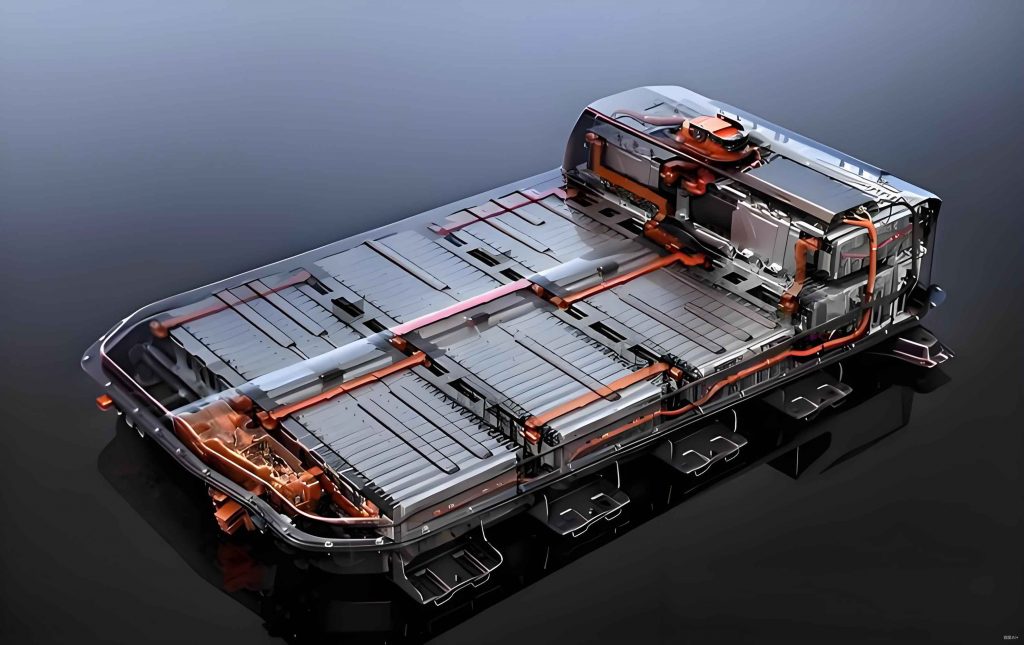
The China EV battery market is primarily dominated by ternary lithium batteries and lithium iron phosphate (LFP) batteries, which complement each other in terms of performance and cost. Ternary lithium batteries, utilizing nickel-cobalt-manganese (NCM) or nickel-cobalt-aluminum (NCA) as cathode materials, achieve energy densities of 200–300 Wh/kg, making them the preferred choice for high-end models. For instance, some premium electric vehicles equipped with NCA batteries can achieve ranges exceeding 600 km. However, their thermal stability is relatively poor, necessitating complex thermal management systems, such as liquid or air cooling, to mitigate thermal runaway risks. In contrast, LFP batteries, with lithium iron phosphate as the cathode, offer energy densities of 150–200 Wh/kg but excel in cycle life (over 2000 cycles) and cost (20–30% lower than ternary batteries). Their thermal runaway temperature exceeds 500°C, providing significant safety advantages. Structural innovations, like blade battery designs, have improved volume utilization, enabling LFP batteries to achieve ranges beyond 600 km and promoting their adoption in mid-to-low-end vehicles. Solid-state batteries represent the next generation of technology, replacing liquid electrolytes with solid alternatives, which could push energy densities above 400 Wh/kg and eliminate flammability concerns. Companies like Toyota have developed laboratory prototypes, with mass production expected by 2030. The advancement of China EV battery technology relies heavily on intelligent management systems and ecosystem collaboration, which we will explore in detail.
| Battery Type | Energy Density (Wh/kg) | Cycle Life (Cycles) | Cost Relative to Ternary | Key Applications |
|---|---|---|---|---|
| Ternary Lithium (NCM/NCA) | 200–300 | 1000–1500 | Baseline | High-end EVs |
| Lithium Iron Phosphate (LFP) | 150–200 | >2000 | 20–30% lower | Mid-to-low-end EVs |
| Solid-State (Prototype) | >400 (projected) | Under research | Higher initially | Future premium models |
Intelligent management systems are crucial for enhancing the performance and safety of EV power batteries. By integrating IoT, big data, and AI, BMS is transitioning from passive monitoring to active prediction. Multi-source data fusion and state of health (SOH) prediction are key aspects. Modern BMS incorporate sensors for temperature, voltage, current, and internal resistance, combined with vehicle operational data like charging frequency and environmental temperature, to build battery health models. For example, AI-driven BMS developed by industry leaders can predict capacity衰减 trends up to 30 days in advance with error rates below 2%. Fault diagnosis and warning mechanisms leverage machine learning algorithms, such as support vector machines and random forests, to identify latent issues like internal short circuits or lithium plating. Some automotive manufacturers use vibration sensors and thermal imaging data to achieve precise warnings 30 seconds before thermal runaway, triggering active cooling systems. Intelligent charging and energy management integrate high-precision maps and real-time charging station data to dynamically optimize charging paths. Reinforcement learning algorithms, for instance, enable fast-charging solutions that replenish 10% to 80% of charge in 30 minutes while reducing lithium dendrite formation risks. Additionally, vehicle-to-grid (V2G) technology allows batteries to store energy during off-peak hours and discharge during peak times, improving overall energy efficiency. The SOH can be modeled using the formula: $$ SOH = \frac{C_{\text{actual}}}{C_{\text{rated}}} \times 100\% $$ where \( C_{\text{actual}} \) is the measured capacity and \( C_{\text{rated}} \) is the nominal capacity. This approach is integral to the evolution of China EV battery systems.
Ecosystem synergy and data sharing are vital for the progress of EV power battery technology. On the material front, cathode material producers collaborate with battery manufacturers to develop high-nickel, low-cobalt cathodes, reducing reliance on critical raw materials. Anode companies employ nanotechnology to enhance the cyclic stability of silicon-carbon composites. In recycling, enterprises have established systems for echelon use and regenerative recovery, where retired batteries are repurposed for energy storage base stations before being disassembled to extract metals like lithium and cobalt, achieving resource recovery rates over 95%. Data sharing platforms, supported by national policies, cover the entire lifecycle from production to recycling, providing a basis for battery residual value assessment and insurance pricing. This collaborative environment fosters innovation in the China EV battery sector, driving down costs and improving sustainability.
Technical Challenges and Bottlenecks
Despite advancements, the China EV battery industry faces several technical challenges. Material and process limitations are prominent, as energy densities of ternary lithium batteries are approaching their theoretical limit of around 350 Wh/kg. Further突破 require new materials like silicon-based anodes, which have a theoretical capacity of 4200 mAh/g, or lithium-rich manganese-based cathodes, but issues such as high volume expansion and short cycle life remain unresolved. Fast-charging technologies present another bottleneck; rapid charging can cause uneven lithium-ion deposition on the anode, leading to dendrite formation that may pierce separators and cause short circuits. While some high-end vehicles support 800V high-voltage fast charging, this necessitates specialized electrolytes and cooling systems, increasing costs by 15–20%. Low-temperature performance is also a concern, with LFP batteries experiencing up to 40% capacity loss at -20°C, limiting their use in cold climates. These challenges highlight the need for continuous innovation in EV power battery design and materials.
Safety and cost contradictions persist in the development of China EV battery systems. Thermal runaway prevention remains difficult; even with intelligent BMS, extreme conditions like collisions or overcharging can trigger thermal propagation. Past incidents involving battery pack sealing defects have led to short circuits and fires, underscoring the importance of robust safety measures. Recycling economic viability is another issue; battery disassembly often requires manual sorting, and hydrometallurgical processes are energy-intensive, making recycled materials more expensive than virgin ores. This economic disparity hinders the scalability of recycling initiatives for EV power batteries.
Standardization and data silos pose additional hurdles. Fragmentation in battery specifications, interfaces, and communication protocols across different automakers impedes the adoption of battery-swapping models. For instance, swapping stations from various brands are incompatible due to differing battery sizes. Data barriers between battery manufacturers and vehicle companies also hinder collaborative algorithm training and optimization. Addressing these issues is essential for the cohesive growth of the China EV battery ecosystem. The charging time for fast-charging can be approximated by: $$ t_{\text{charge}} = \frac{E}{P} $$ where \( E \) is the energy capacity and \( P \) is the charging power. Optimizing this equation is critical for overcoming current limitations.
Future Prospects and Trends
The future of China EV battery technology is poised for transformative changes, with next-generation battery systems nearing industrialization. Solid-state batteries are accelerating toward commercialization; major players plan to launch electric vehicles equipped with all-solid-state batteries by 2027, offering charge times as short as 10 minutes and ranges up to 1200 km. Sodium-ion batteries are emerging as a competitive alternative, with energy densities reaching 160 Wh/kg and excellent low-temperature performance (80% capacity retention at -40°C), at costs 30% lower than lithium batteries. These are suitable for compact vehicles and energy storage applications. Exploratory technologies like lithium-sulfur batteries, with theoretical energy densities exceeding 2600 Wh/kg, and zinc-air batteries, which operate through catalytic redox reactions, are in laboratory stages but face challenges such as polysulfide shuttle effects and low power density. The progression of these innovations will reshape the EV power battery landscape, enhancing the global competitiveness of China EV battery products.
Intelligent management technologies are evolving to leverage vehicle networking for dynamic energy allocation. Through V2X technology, vehicles can access real-time data on road gradients and traffic flow, adjusting motor output and energy recovery strategies accordingly. For example, advanced driver-assistance systems combine navigation data to prioritize regenerative braking on long descents, reducing mechanical brake wear. Emotion recognition and personalized management, inspired by smart cabin technologies, enable BMS to monitor driver physiological traits like heart rate and fatigue, automatically switching to low-power modes when attention is diverted to extend range. Blockchain technology ensures immutable data throughout the battery lifecycle, facilitating carbon footprint accounting and green financial products. These advancements underscore the integration of digitalization in the EV power battery domain.
| Battery Technology | Energy Density (Wh/kg) | Charge Time (Minutes) | Cost Reduction | Expected Commercialization |
|---|---|---|---|---|
| Solid-State | >400 | 10–15 | Moderate over time | 2027–2030 |
| Sodium-Ion | 160–200 | 30–45 | 30% vs. Lithium | 2025 onward |
| Lithium-Sulfur | >2600 (theoretical) | Under research | Potentially high | Post-2030 |
Policy drivers and ecosystem coordination are critical for the future of China EV battery development. Global policies, such as the EU’s new battery regulations mandating a 50% reduction in carbon footprint by 2030, and incentives under the U.S. Inflation Reduction Act for localized production, are shaping industry standards. China’s “dual-credit” policy accelerates electrification转型. Battery-swapping models and standardization efforts are advancing, with national standards for battery pack dimensions promoting uniformity. Companies have built extensive swapping networks, serving hundreds of vehicles daily, significantly improving efficiency over traditional charging. Deep industry-academia collaborations, such as joint research institutes focusing on solid electrolyte materials and AI-BMS algorithms, are fostering innovation. These initiatives will help overcome existing challenges and propel the China EV battery sector toward sustainable growth.
Conclusion
In summary, China EV battery technology is at a critical juncture, transitioning from incremental improvements to disruptive innovations. In the short term, lithium-ion batteries will continue to lead the market, with intelligent management and data fusion serving as core pathways for performance enhancement. In the medium to long term, new systems like solid-state and sodium-ion batteries are expected to redefine the industry landscape. Future efforts should focus on three key areas: technological突破, such as accelerating the development of high-energy-density materials and addressing interface resistance in solid-state batteries or cycle life issues in sodium-ion batteries; ecosystem building, by promoting cross-industry data sharing and完善ing battery recycling systems to form a closed-loop from production to regeneration; and policy guidance, through strengthened standard-setting and carbon footprint management, along with incentives for technological innovation and business model exploration. Through multi-stakeholder collaboration, China EV battery technology will advance toward higher safety, longer lifespan, and lower cost, providing essential support for global low-carbon transportation转型. The evolution of EV power battery systems is not just a technical journey but a holistic endeavor integrating material science, digital intelligence, and sustainable practices.
The continuous improvement in battery efficiency can be modeled using degradation formulas, such as: $$ C(t) = C_0 \cdot e^{-\lambda t} $$ where \( C(t) \) is the capacity at time \( t \), \( C_0 \) is the initial capacity, and \( \lambda \) is the degradation rate. Optimizing this rate through intelligent BMS is crucial for extending the life of EV power batteries. As we look ahead, the synergy between innovation and collaboration will ensure that China EV battery solutions remain at the forefront of the global energy transition.