
As a researcher deeply involved in the advancement of electric vehicle technologies, I have dedicated significant effort to understanding the limitations of current battery systems and exploring innovative solutions. The electric vehicle market is rapidly expanding, but consumer adoption hinges on two critical factors: safety reliability and driving range. Traditional liquid lithium-ion batteries, while widely used, face challenges such as thermal runaway risks and limited energy density. In my work, I have focused on solid state batteries as a transformative technology that can overcome these hurdles. Solid state batteries replace the flammable liquid electrolyte with a solid medium, offering the potential for higher energy density, enhanced safety, and longer lifespan. This article delves into the characteristics, advantages, technical pathways, challenges, and commercialization prospects of solid state batteries, providing a comprehensive analysis from my perspective.
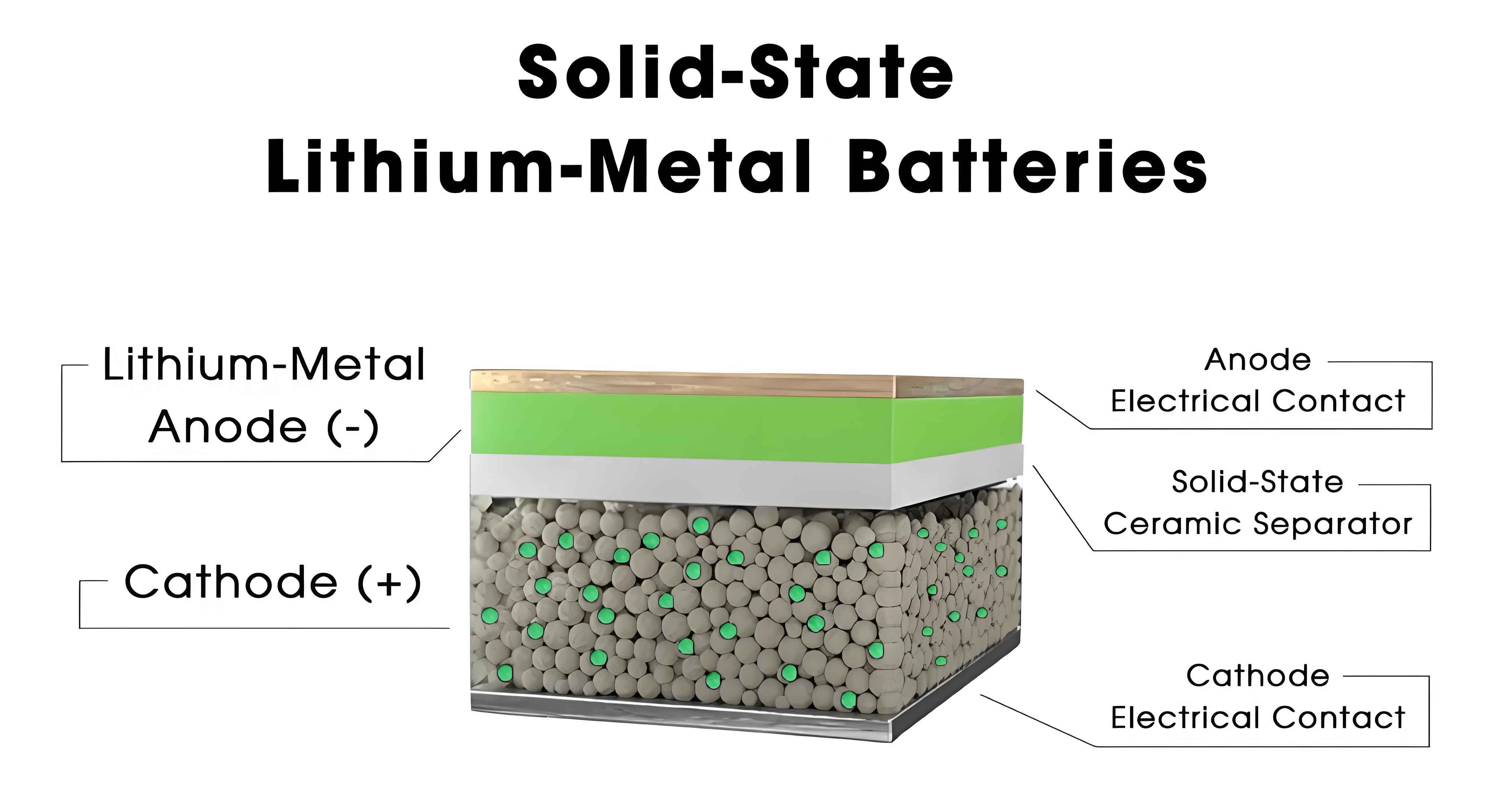
To begin, it is essential to classify lithium batteries based on their electrolytes. Broadly, they fall into two categories: liquid batteries and solid state batteries. Liquid batteries, which dominate the current market, employ organic solvents with lithium salts as electrolytes, alongside graphite anodes and lithium-ion oxide cathodes. However, these organic solvents are highly flammable and corrosive, posing safety risks like thermal runaway. In contrast, solid state batteries utilize solid electrolytes, which can be partially or fully solid, leading to subcategories such as semi-solid, quasi-solid, and all-solid-state batteries. Based on the electrolyte material, solid state batteries are further divided into polymer-based and inorganic-based types, with the latter including oxide, sulfide, and halide systems. The structural difference between liquid and all-solid-state batteries is significant; for instance, all-solid-state batteries eliminate the need for separators and liquid components, enabling a more compact design. Below is a comparison table highlighting key parameters:
| Battery Type | Liquid Content (wt%) | Electrolyte | Separator | Anode | Cathode | Packaging | Energy Density (Wh/kg) |
|---|---|---|---|---|---|---|---|
| Liquid | 25 | Organic solvent, LiPF6, additives | Traditional separator | Graphite | Ternary or LiFePO4 | Winding or stacking, prismatic or cylindrical or pouch | 250 |
| Semi-Solid | 5-10 | Composite electrolyte (polymer, oxide, solvent, LiTFSI, additives) | Separator, oxide-coated | Silicon, graphite | High-nickel ternary or LiFePO4 | Winding/stacking, prismatic or pouch | 350 |
| All-Solid-State | 0 | Polymer or oxide or sulfide | No separator | Silicon, graphite or lithium | High-nickel ternary or LiFePO4 or nickel-manganese oxide or lithium-rich manganese-based | Stacking, pouch | 500 |
The transition to solid state batteries is driven by their numerous advantages over liquid counterparts. From my analysis, solid state batteries exhibit superior safety due to the absence of flammable electrolytes, which reduces the risk of fires and explosions. Additionally, the use of lithium metal anodes in solid state batteries significantly boosts energy density; theoretically, solid state batteries can achieve up to 700 Wh/kg, far exceeding the 300 Wh/kg limit of liquid batteries. This is because solid electrolytes allow for thinner cell designs, reducing the volume occupied by non-active materials. For example, in liquid batteries, separators and electrolytes account for about 40% of the volume and 25% of the mass, whereas solid state batteries can minimize this, leading to higher energy density per unit volume. Moreover, solid state batteries offer better thermal stability, with some inorganic electrolytes withstand temperatures up to 1000°C, compared to the lower thresholds of liquid systems. The flexibility of solid state batteries also enables applications in wearable devices, as they can endure hundreds of bends without performance degradation. Furthermore, the simplified assembly process, such as series-parallel configurations without complex thermal management, enhances pack efficiency and space utilization. Recycling is another area where solid state batteries excel, as the solid components are easier to handle and process.
In terms of technical pathways, solid state batteries have evolved along multiple material lines, each with distinct properties. Polymer solid state batteries, typically based on poly(ethylene oxide) with lithium salts, offer ease of processing and compatibility with existing manufacturing equipment. However, their ionic conductivity is relatively low, around $$10^{-5} \, \text{S/cm}$$ at room temperature, and they suffer from poor thermal stability below 200°C. Sulfide-based solid state batteries, on the other hand, demonstrate high ionic conductivities, up to $$10^{-2} \, \text{S/cm}$$, rivaling liquid electrolytes. Materials like $$ \text{Li}_{10}\text{GeP}_2\text{S}_{12} $$ exhibit three-dimensional lattice structures that facilitate lithium-ion movement. Nonetheless, sulfides are sensitive to moisture, releasing toxic H₂S gas, and require inert atmospheres for production, increasing costs. Oxide-based solid state batteries, such as those using $$ \text{Li}_7\text{La}_3\text{Zr}_2\text{O}_{12} $$ (LLZO), provide excellent thermal and chemical stability, with conductivities around $$10^{-5} \, \text{to} \, 10^{-3} \, \text{S/cm}$$. They are less prone to reaction with air but face challenges like brittleness and high sintering temperatures. Halide solid state batteries, with general formulas like $$ \text{Li}_a\text{M}X_b $$ (where X is Cl, Br, or F), show promise due to weak ion interactions and high oxidation potentials, achieving conductivities up to $$10^{-2} \, \text{S/cm}$$. However, they are susceptible to hydrolysis and phase transitions. Globally, research efforts vary: Japan focuses on sulfides, Europe on polymers, the U.S. on multiple routes, and China primarily on oxides. In my view, the diversity in approaches reflects the need to balance performance, safety, and manufacturability for solid state batteries.
Despite the potential, solid state batteries face several technical bottlenecks that must be addressed for widespread adoption. One major issue is the low ionic conductivity of solid electrolytes compared to liquids. For instance, the ionic conductivity $$ \sigma $$ can be modeled as $$ \sigma = n e \mu $$, where $$ n $$ is the charge carrier density, $$ e $$ is the elementary charge, and $$ \mu $$ is the mobility. In solid state batteries, $$ \mu $$ is often lower due to rigid crystal structures, leading to reduced power output and charging rates. Another challenge is the high interfacial resistance between solid electrolytes and electrodes. Unlike liquid electrolytes that wet surfaces, solid-solid contacts create point interfaces, increasing impedance and hindering ion transport. This can be quantified by the interfacial resistance $$ R_{\text{int}} $$, which adds to the overall cell resistance $$ R_{\text{cell}} = R_{\text{bulk}} + R_{\text{int}} $$, where $$ R_{\text{bulk}} $$ is the bulk resistance of the electrolyte. During cycling, electrode volume changes cause microcracks, further degrading performance. To overcome these, strategies like element doping have been employed; for example, adding $$ \text{LiZrO}_2 $$ to electrolytes enhances ionic conductivity and interface stability. Interface modification layers, such as $$ \text{LiNbO}_3 $$ or $$ \text{Al}_2\text{O}_3 $$, reduce impedance and prevent side reactions. Composite electrodes, combining solid electrolytes with flexible materials, improve adhesion and accommodate volume changes. These approaches are crucial for advancing solid state battery technology toward practical applications.
The commercialization of solid state batteries is progressing, with numerous companies outlining ambitious产能 plans. In my assessment, the shift from liquid to solid state batteries will be gradual, starting with semi-solid variants as an intermediate step. For instance, several Chinese automakers plan to integrate semi-solid batteries by 2025, while Japanese firms like Toyota aim for all-solid-state batteries by 2027. The table below summarizes key industry developments:
| Company | Updates |
|---|---|
| Ganfeng Lithium | Xinyu base has 2 GWh solid state battery capacity; Chongqing plant under construction for 20 GWh; supplies solid state batteries to Dongfeng E79 and Seres. |
| ProLogium | Semi-solid battery capacity reached 1 GWh in 2021; investing $8 billion for production base; plans mass production of all-solid-state batteries by 2024; supplies to Mercedes and Vinfast. |
| WeLion New Energy | Building production bases in Beijing, Jiangsu, Zhejiang, and Shandong; investing 40 billion RMB in Shandong for 100 GWh solid state battery base; supplies to NIO and Geely. |
| Qing Tao Energy | Established 10 GWh solid state battery production line in Chengdu; planning 15 GWh line with 10 billion RMB investment; supplies to SAIC and BAIC. |
| Farasis Energy | Developing semi-solid batteries in generations; supplies to Dongfeng Voyah. |
| QuantumScape | Mass production of all-solid-state batteries by 2024; delivered 24-layer lithium solid state batteries for testing; supplies to Volkswagen and Toyota. |
| TaiLan New Energy | Building 1.2 GWh semi-solid battery production line in Chongqing. |
| SES | Signed agreement for 10 GWh production base in Anhui with 7 billion RMB investment. |
| Guoxuan High-Tech | 1 GWh Shanghai plant completed; supplies to GM, Hyundai, and Honda. |
| Solid Power | Semi-solid batteries delivered in bulk; plans production of all-solid-state batteries with energy density over 400 Wh/kg by 2025. |
From my perspective, the commercialization timeline indicates that solid state batteries will initially target high-end electric vehicles, with mass adoption expected around 2030. Factors like cost reduction—currently around 40 RMB/Wh for sulfide-based solid state batteries—and scaling production are critical. Innovations, such as high-entropy materials from Tokyo Institute of Technology, have doubled ionic conductivity, shortening charging times. However, challenges in yield, cost, and cycle life persist for semi-solid batteries. I believe that hybrid solid-liquid batteries will serve as a transitional solution, leveraging existing infrastructure while improving safety and energy density. For automakers, early investment in solid state battery technology is vital to maintain competitiveness and avoid being outpaced in the premium segment.
In conclusion, solid state batteries represent a paradigm shift in energy storage, with the potential to address the core limitations of liquid lithium-ion batteries. My research underscores that while all-solid-state batteries offer the highest performance, their development is contingent on overcoming material and interfacial challenges. In the short term, semi-solid and hybrid configurations will dominate, providing a balance between innovation and manufacturability. The global race in solid state battery technology underscores its strategic importance, and I advocate for continued collaboration between academia and industry to accelerate progress. As we move forward, solid state batteries will not only enhance electric vehicles but also enable advancements in renewable energy storage and portable electronics, shaping a sustainable future.